
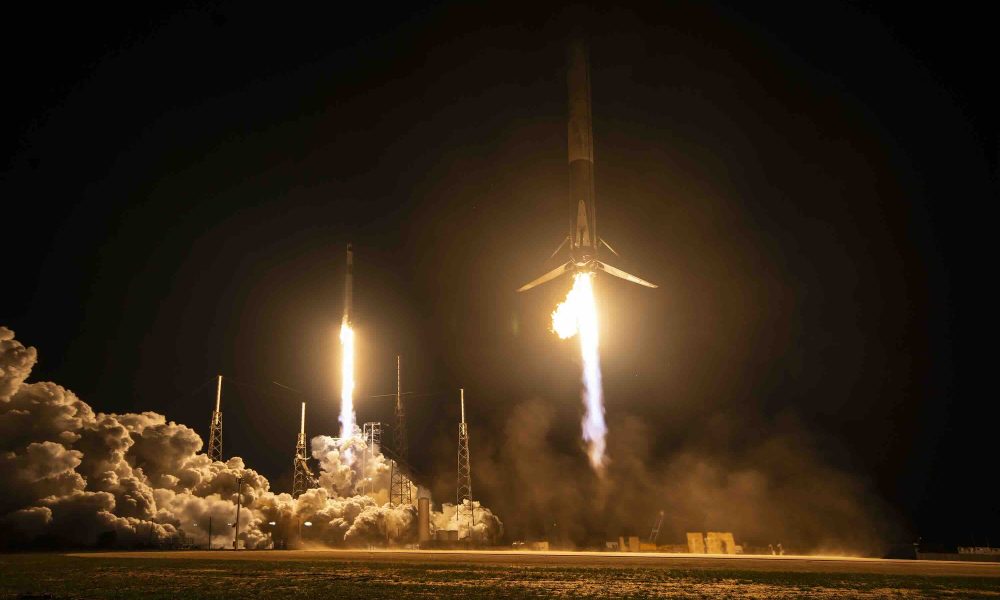
SpaceX marked a significant day on February 13, 2026, with a successful launch of the Crew-12 mission to the International Space Station (ISS) and the inaugural landing of a Falcon 9 booster at its newly designated Landing Zone 40 (LZ-40) at Cape Canaveral Space Force Station.
Successful Crew Launch and ISS Rendezvous
The Falcon 9 rocket lifted off precisely at 5:15 a.m. Eastern time from Space Launch Complex 40 (SLC-40). The mission successfully propelled the Crew Dragon spacecraft, named Freedom, into orbit. The Crew-12 mission is carrying a diverse international crew, including NASA astronauts Jessica Meir and Jack Hathaway, ESA astronaut Sophie Adenot, and Roscosmos cosmonaut Andrey Fedyaev. The spacecraft is slated to dock with the ISS on February 14 and is expected to remain in orbit for approximately eight months.

Historic Booster Landing at New Recovery Site
In a notable first for SpaceX’s Florida recovery operations, the first stage booster of the Falcon 9 returned to Earth and executed a flawless landing at Landing Zone 40. This new landing pad is situated adjacent to SLC-40, the same launch complex from which the crew departed.
The establishment of LZ-40 signifies a strategic shift for SpaceX, as it replaces Landing Zone 1, which has been reassigned by the U.S. Space Force to other launch providers. Locating the landing zone in close proximity to the launch complex is expected to streamline operations by reducing transport time and simplifying the processing of boosters between flights.
Bill Gerstenmaier, SpaceX’s vice president of build and flight reliability, commented on the efficiency gained by this setup, stating that landing close to the pad keeps “launch and landing in the same general area.” SpaceX employs a similar integrated launch and landing configuration at Vandenberg Space Force Base in California.

Strategic Relocation of Crew Operations
The Crew-12 launch also highlights NASA’s ongoing transition of crewed Dragon operations to SLC-40. Historically, astronaut missions have launched from Launch Complex 39A at Kennedy Space Center. This relocation is part of a plan to reserve LC-39A for Falcon Heavy missions and future Starship flights, optimizing the use of launch infrastructure.