
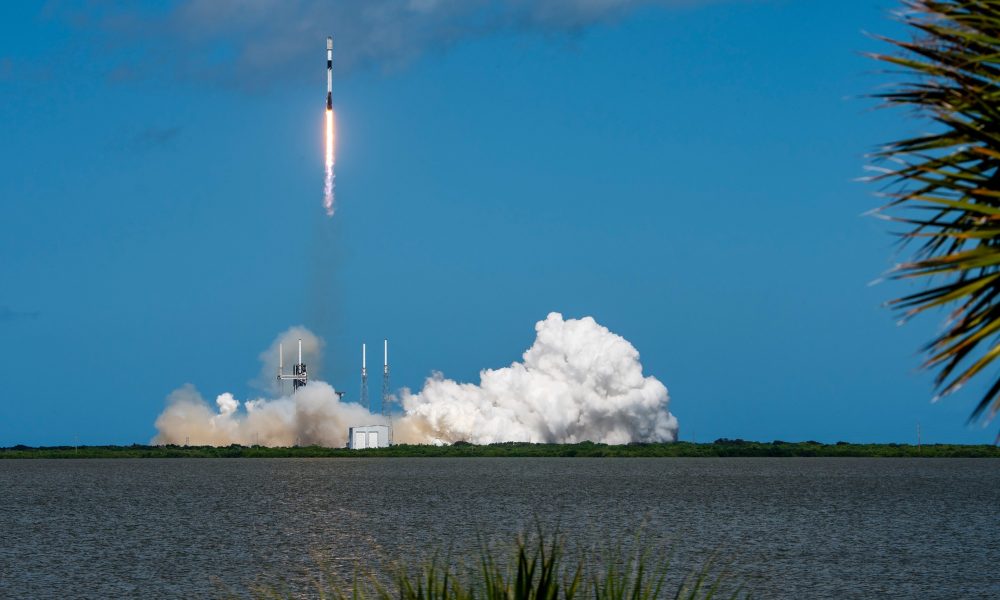
SpaceX plans to commence launching its forthcoming Starlink V2 satellites aboard its Starship vehicle beginning in mid-2027. This strategic shift aims to accelerate the deployment of its advanced satellite constellation.
Starship to Revolutionize Satellite Deployment
The announcement was made by SpaceX President Gwynne Shotwell and Starlink Vice President Mike Nicolls during their participation in the Mobile World Congress (MWC) held in Barcelona, Spain. The integration of Starship is expected to significantly enhance SpaceX’s ability to deploy its satellite network rapidly.

“With Starship, we’ll be able to deploy the constellation very quickly,” stated Nicolls. He elaborated on the ambitious goal to establish a constellation capable of providing global and contiguous coverage within an accelerated timeframe of six months, requiring approximately 1,200 satellites.
Once fully operational, Starship is designed to carry and deploy around 50 of the larger, more powerful Starlink V2 satellites in a single launch. This represents a substantial increase in payload capacity compared to current methods.
Expanding Global Coverage and Capacity
The initial deployment of approximately 1,200 next-generation satellites is targeted at achieving comprehensive global and contiguous coverage. Following this phase, SpaceX intends to further expand the system to ensure “truly global coverage, including the polar regions,” Nicolls added.

Currently, all Starlink satellites are launched using SpaceX’s reliable Falcon 9 rocket. However, the introduction of Starship, which is undergoing continued development and testing, marks a significant upgrade in launch capabilities for the Starlink program. SpaceX is reportedly targeting its next Starship test flight, featuring an upgraded version of the rocket, for later in the current month.
Starlink’s Dominance and Future Revenue Potential
Starlink has already established itself as the largest satellite network currently in orbit, with close to 10,000 satellites deployed. Industry analysis suggests a strong financial outlook for the service.
Bloomberg Intelligence has projected that the Starlink business could generate approximately $9 billion in revenue for SpaceX in 2026, highlighting its significant economic impact.
Rebranding of Direct-to-Cell Service
In related developments, Nicolls confirmed that SpaceX is rebranding its direct-to-cell service. The service will now be known as Starlink Mobile, signaling a unified approach to its connectivity offerings.
The Starlink Mobile service currently utilizes 650 satellites that are capable of connecting directly to standard smartphones. The service boasts approximately 10 million monthly active users, with projections indicating substantial growth.
SpaceX anticipates this user base to expand significantly, potentially exceeding 25 million monthly active users by the close of 2026, underscoring the growing demand for seamless satellite connectivity.