
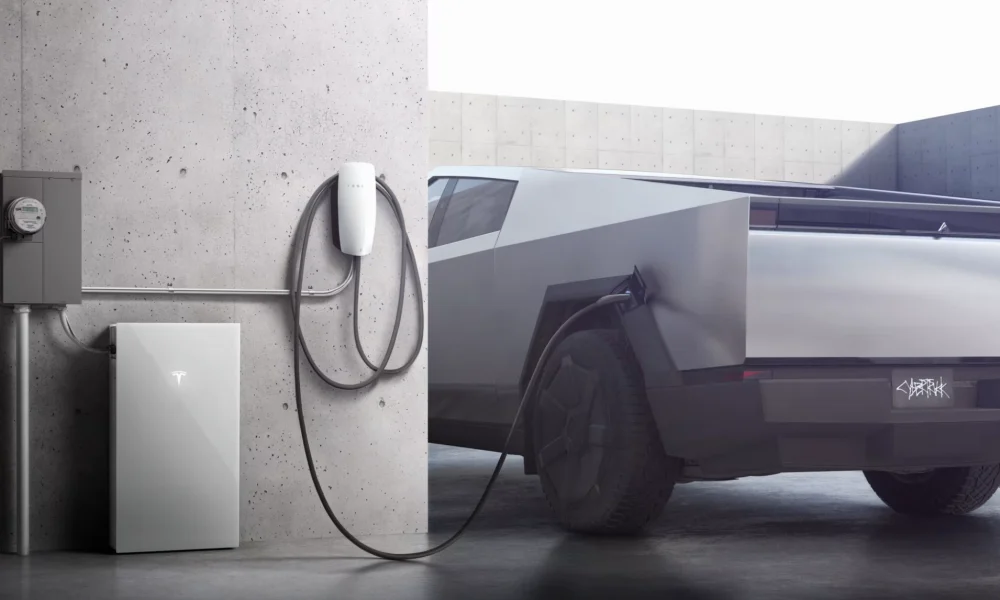
Tesla has officially rolled out its vehicle-to-grid (V2G) program in Texas, enabling select Cybertruck owners to contribute energy back to the electrical grid and earn credits on their utility bills. The program, named Powershare Grid Support, was announced via the official Tesla Energy account on the social media platform X.
Texas Cybertruck V2G Initiative
The Powershare Grid Support program will commence soon in select Texas markets, according to Tesla Energy’s announcement on X. Eligible Cybertruck owners who have also installed the Powershare home backup hardware can opt into the program through the Tesla app. This allows their vehicles to participate in short-notice grid stress events by automatically discharging excess energy.
This function supports local utilities like CenterPoint Energy and Oncor. Participants will receive compensation in the form of bill credits for their contributions. Tesla has stated that the program is currently invitation-only, marking an initial rollout phase for early adopters. This initiative builds upon the Cybertruck’s existing Powershare capability, which can deliver up to 11.5 kW of power for home backup. Tesla also indicated plans to expand the program to California, with utilities such as PG&E, SCE, and SDG&E being targeted.
Vehicle to Grid coming soon
Starting in select Texas markets, owners of @cybertruck + Powershare will be able to participate in our first Powershare Grid Support Program

This allows you to earn money while supporting your community
Details → https://t.co/wEo7e4A99H— Tesla Energy (@teslaenergy) February 5, 2026
How Powershare Grid Support Works
To join the program in Texas, Cybertruck owners must reside in service areas of CenterPoint Energy or Oncor, have the Powershare equipment installed, be enrolled in the Tesla Electric Drive plan, and opt-in via the Tesla app. Once registered, their vehicles can supply power during high-demand periods, thereby helping to stabilize the grid. Tesla advises participants that grid events may occur with little notice and encourages them to keep their Cybertrucks plugged in at home. Owners should also manage their discharge limits according to their personal energy needs. Compensation levels will vary based on the specific electricity plan, similar to how Powerwall owners have earned credits through Virtual Power Plant (VPP) programs in certain areas.