
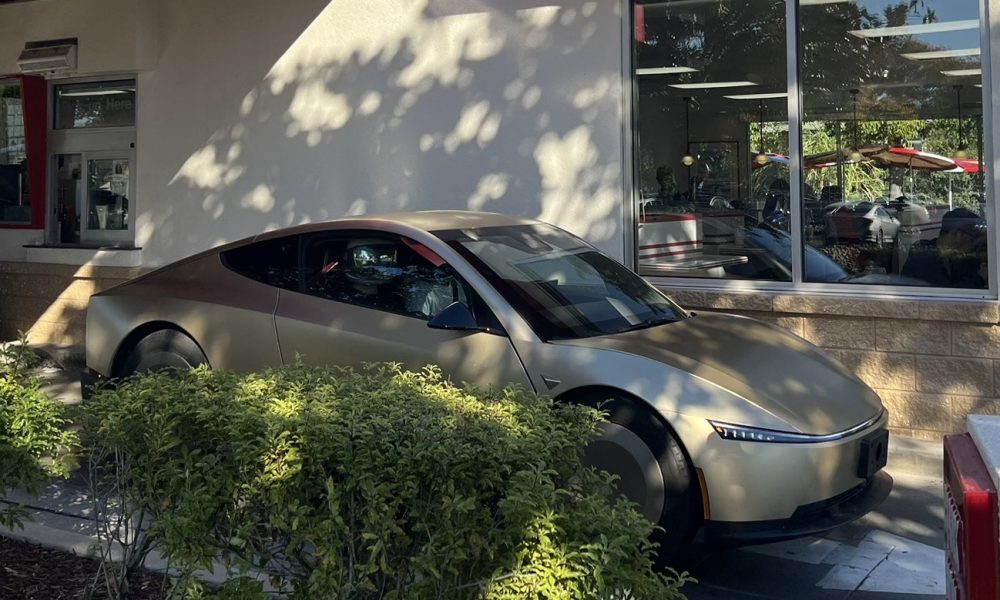
Tesla has achieved a significant regulatory milestone, receiving approval from the Federal Communications Commission (FCC) for its innovative wireless charging system designed for the Cybercab. This approval utilizes Ultra-Wideband (UWB) radio technology, clearing a key hurdle for the company’s plans to deploy autonomous electric vehicles with contactless charging capabilities.
FCC Grants Waiver for Outdoor Wireless Charging
The FCC decision grants Tesla a crucial waiver that permits the Cybercab’s wireless charging system to be installed on fixed outdoor equipment. This regulatory exemption is vital for enabling the deployment of the wireless charging pads in real-world environments, potentially at homes, businesses, or public charging locations.
The technology, as described in official documents, functions as an impulse UWB radio system. It facilitates peer-to-peer communication between a UWB transceiver integrated into the electric vehicle (EV) and a second UWB transceiver located on a ground-level pad. This system is specifically designed to guide the EV into the optimal position for wireless power transfer.
How the Wireless Charging System Works
Before the UWB system activates, the Cybercab utilizes Bluetooth technology. This initial step allows the vehicle to discover the location of the ground pad and engage in necessary data exchange, ensuring the vehicle is within proximity for wireless charging. This Bluetooth function is not subject to the FCC waiver.
Once the vehicle is close to the charging pad, the UWB transceivers become active. Their primary function is to precisely track the vehicle’s position, confirming that it has achieved the optimal alignment over the pad before initiating wireless power charging. This ensures efficient and safe energy transfer.

Low Power and Short-Range Operation Key to Approval
Tesla emphasized that the UWB signals are brief and localized, primarily occurring when the vehicle is maneuvering over the pad. Critically, the signals are mostly at ground level, operating in short range between the vehicle and the pad. Furthermore, the vehicle’s body significantly attenuates these signals when positioned overhead, minimizing potential interference.
According to Tesla watcher Sawyer Merritt, the FCC’s decision to grant the waiver was based on several factors. These include the very low power output of the Cybercab’s wireless charging system, its brief activation during parking, its limited operational range, and its minimal potential to interfere with other electronic systems. These characteristics address common regulatory concerns regarding radio frequency emissions.
Cybercab’s Charging Flexibility
While the FCC approval paves the way for Tesla’s advanced wireless charging solution, the Cybercab is not solely reliant on this technology. Prototypes of the Cybercab have frequently been observed charging at standard Tesla Supercharger stations across the United States.
This observation suggests that the Cybercab is designed to integrate seamlessly with Tesla’s existing charging infrastructure. It implies that even as the wireless charging system is developed and deployed, the vehicle can operate effectively within the current Supercharger network. Consequently, it is anticipated that early production models of the Cybercab delivered to consumers may primarily utilize conventional Superchargers.
The FCC’s approval marks a notable step forward for Tesla’s autonomous vehicle ambitions, particularly for its planned robotaxi service. The ability to offer convenient, wire-free charging could significantly enhance the user experience and operational efficiency of the Cybercab fleet.