
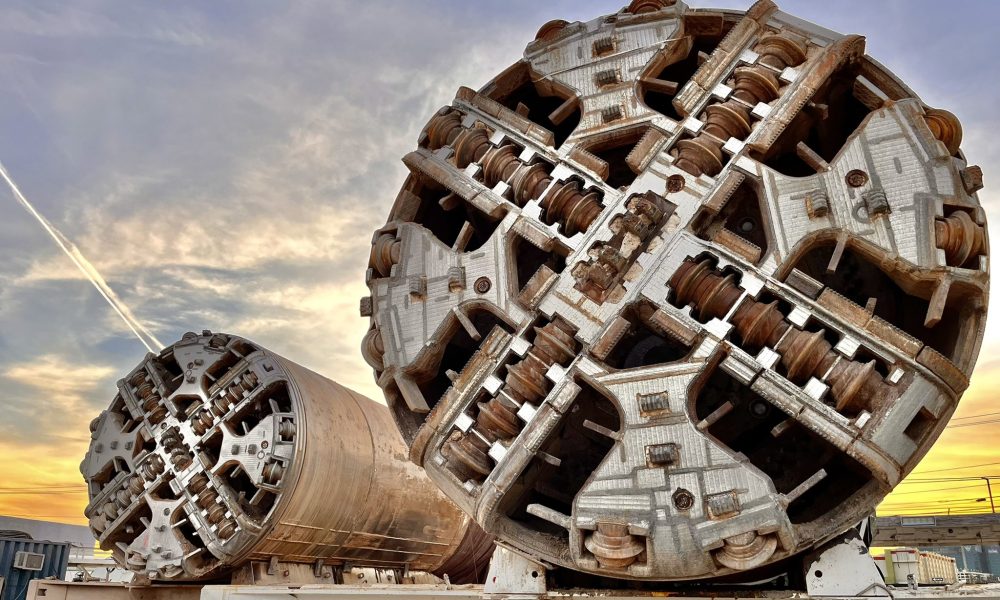
Recent analyses on social media are spotlighting The Boring Company’s potential to revolutionize tunnel construction, with its proposed Music City Loop project in Nashville at the forefront.
Disrupting Tunnel Construction Costs
Tech commentator Aakash Gupta recently shared insights on X, arguing that the core of The Boring Company’s innovation lies in its aggressive cost-reduction strategy for tunneling. Gupta’s analysis, which gained traction online, contrasts the projected costs of The Boring Company’s Nashville project with existing urban transit initiatives.

Nashville’s own 2018 light rail proposal was reportedly estimated at approximately $200 million per mile. Further comparisons highlight significantly higher figures for other major projects: New York’s East Side Access project is cited with a cost of around $3.5 billion per mile, and Los Angeles Metro expansion projects have approached the $1 billion per mile mark.
In stark contrast, The Boring Company has indicated that it can construct the 13 miles of twin tunnels for the Music City Loop for a total cost ranging between $240 million and $300 million. This translates to an estimated cost of about $25 million per mile, representing a potential reduction of roughly 95% compared to the industry averages previously mentioned.
Innovative Technologies Driving Cost Savings
The substantial cost savings are attributed to several departures from conventional tunneling methods employed by The Boring Company. These include the construction of smaller, 12-foot diameter tunnels, a departure from the larger bores typically required for traditional rail or road projects.
Furthermore, the company utilizes fully electric Prufrock tunneling machines. These machines are designed for continuous mining operations without the need for personnel inside the tunnel, enhancing safety and efficiency. Their unique “porpoise” capability is engineered to facilitate easy launch and retrieval, further streamlining the construction process.
Elon Musk, CEO of Tesla and SpaceX, acknowledged the significance of this development, responding to Gupta’s post on X with the statement, “Tunnels are so underrated.”
Expanding Tunnel Applications and Momentum
The Boring Company appears to be building momentum, having recently secured a construction contract in Dubai. Progress is also reportedly being made on the Universal Orlando Loop project. Additionally, there have been reports suggesting potential tunnel construction to alleviate traffic congestion near the Giga Nevada facility.
While The Boring Company’s operational systems, like the one in Las Vegas, currently function as Loop systems primarily for ride-hailing services, Elon Musk has indicated that the scope of these underground passages could be broader.
Responding to a query on X about the Music City Loop’s specifications, Musk clarified that “any fully autonomous electric cars can use the tunnels.” This suggests a future where various autonomous electric vehicles, potentially including those equipped with systems like Tesla’s FSD Supervised, could utilize these tunnels, irrespective of brand.
This flexibility in vehicle compatibility could significantly broaden the applicability and adoption of underground tunnel networks for urban transportation solutions, further underscoring The Boring Company’s disruptive potential in the infrastructure sector.