
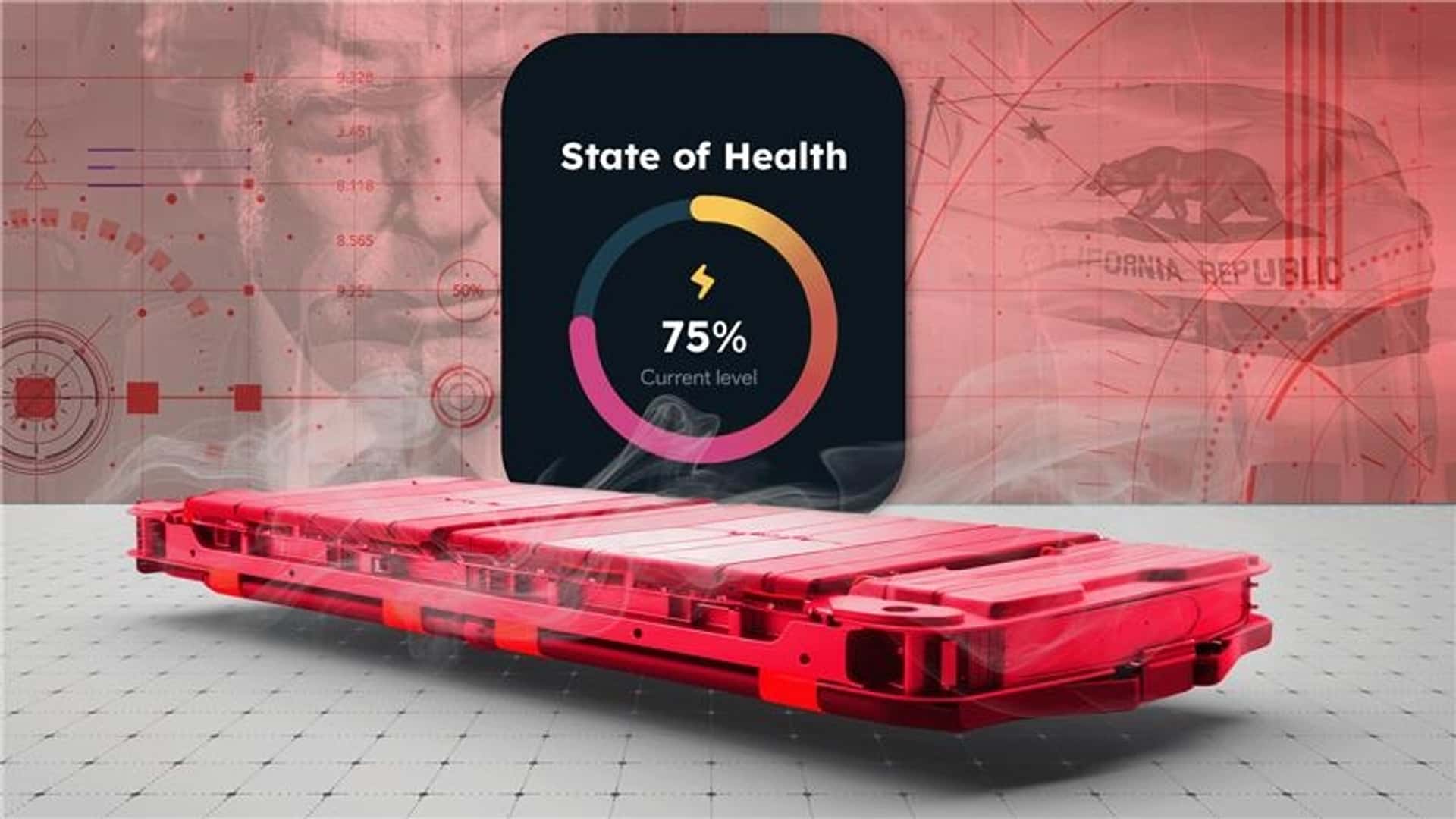
The prospect of easily verifying the health of a used electric vehicle (EV) battery, akin to checking a smartphone’s battery status, has encountered significant setbacks due to policy shifts associated with the Trump administration. This development complicates the burgeoning used EV market, leaving potential buyers with less clarity on a vehicle’s long-term viability and maintenance costs.
The Growing Appeal and Challenge of Used EVs
The market for pre-owned electric vehicles is becoming increasingly attractive, with models like the Polestar 2 and Mustang Mach-E GT offering performance levels comparable to luxury sports cars at a fraction of their original price. These vehicles, often only a few years old, present a compelling value proposition, especially when contrasted with the rising costs of new car purchases.

However, a significant barrier to entry for many consumers, including experienced EV enthusiasts, is the difficulty in assessing the actual health of an EV’s battery. Unlike smartphones, which typically feature integrated battery health monitoring systems, EVs have historically been more opaque.
This lack of transparency creates considerable uncertainty for buyers, making it challenging to confidently invest in a used electric car. The recent rollback of key environmental regulations has exacerbated this issue, potentially hindering the development of standardized battery health diagnostics.
Why Standardized Battery Health Monitoring is Crucial
Battery degradation is an inevitable consequence of use and time for all electric vehicles. Factors such as charging cycles, climate, and driving habits contribute to the gradual decline in battery capacity and range.

A critical question for prospective buyers is the battery’s current state of health (SOH) and whether its history is marked by frequent fast charging, which can accelerate degradation. Without accessible data, consumers are left relying on vague assurances from sellers.
The original author recounts a past experience with a Mitsubishi i-MiEV, where a third-party tool allowed for detailed cell-level diagnostics. However, this level of access is increasingly rare in newer EVs.
Manufacturer-Specific Diagnostic Hurdles
Modern EVs often require specialized, dealer-exclusive diagnostic tools and software to retrieve detailed battery information. For instance, accessing diagnostic data for Polestar or Volvo vehicles necessitates the use of VIDA, a proprietary software program that requires an internet connection and server validation.
Similar requirements for specialized software and trained technicians exist for brands such as Hyundai, General Motors, Volkswagen, and Ford. These systems can be prohibitively expensive for independent repair shops or individual consumers, limiting the practicality of pre-purchase inspections.
Tesla offers a somewhat more accessible battery health test through its service mode. However, this feature is restricted to once every six months and requires a prolonged connection to a Level 2 charger. Furthermore, Tesla does not typically perform third-party pre-purchase inspections, adding another layer of complexity for buyers.
The Reliability of Modern EV Batteries
Despite these diagnostic challenges, studies indicate that modern EV batteries are generally robust and designed for longevity. Degradation rates are often lower than initially feared, and manufacturers provide substantial warranties.
Several private companies are developing proprietary tools and methods to assess battery capacity and health. While the odds favor a battery being in good condition, outliers with premature failures can occur, making due diligence essential.
Comparison with Internal Combustion Engine Vehicles
Assessing the health of traditional gasoline-powered vehicles is often more straightforward. Standardized diagnostic tools like OBD-II scanners can easily retrieve error codes, and specialized tests such as compression tests can provide in-depth insights into engine condition.
For EVs, particularly concerning battery-related issues, obtaining a comprehensive health assessment can be significantly more complicated, creating a disparity in buyer confidence.
Potential for Improved Battery Transparency
The need for greater transparency in EV battery health monitoring has been recognized by regulatory bodies. The California Air Resources Board (CARB) Advanced Clean Cars II (ACCII) legislation, intended to promote EV adoption, included provisions for standardized battery health monitors starting with the 2026 model year.
These provisions mandated that zero-emission vehicles (ZEVs) feature an integrated battery health monitor within their infotainment systems and aimed to establish clearer warranty standards for batteries. While based on range rather than direct energy capacity, this initiative would have standardized expectations for aging EV batteries.
CARB’s rationale emphasized the importance of enabling consumers, especially those in the used vehicle market, to accurately assess a vehicle’s condition and the battery’s health. This information is crucial for informed purchasing decisions and fair valuation of used ZEVs. Additionally, the agency highlighted the need for independent repair technicians to access vehicle data and diagnostic tools for accurate assessments and repairs.
The U.S. Environmental Protection Agency (EPA) echoed these sentiments in its 2027-2032 Multi-Pollutant Standards, finalized in 2024. These rules included requirements for battery durability and mandated the implementation of operator-accessible battery health monitors on 2027 model year vehicles and newer, recognizing that durable EVs are key to reducing carbon emissions.
Industry Support for Battery Monitoring
Chris Harto, manager of sustainability advocacy at Consumer Reports, views standardized battery SOH monitoring as a vital consumer protection measure, particularly for the used vehicle market. He stated, “Having credible battery SOH monitoring on all EVs is an obvious and important consumer protection, and is extremely valuable for helping to ensure that used vehicle buyers know the condition of the specific vehicle they are considering buying.”
Some manufacturers are already integrating these features. The 2026 Volvo EX30 Cross Country, for example, includes a battery health status monitor. Hyundai and Kia have also implemented similar monitoring in their 2026 model year vehicles, with Hyundai confirming compliance with ACC II as the reason for the addition.
Regulatory Reversals and Their Impact
The landscape of environmental regulations has shifted dramatically under the Trump administration’s approach to policy. President Trump has signaled intentions to roll back stricter emissions standards, including those set by California. In late 2025, Congress moved to revoke California’s EPA waivers, effectively nullifying the ACC II legislation.
At the federal level, the EPA has also seen its regulatory authority curtailed. The agency rescinded the 2009 Greenhouse Gas Endangerment Finding, which undermines the legal basis for regulating carbon emissions. Consequently, provisions within existing regulations, such as the mandated battery monitoring software for EV batteries, have been removed.
The EPA, in a final rule published on February 18, stated, “Note that we are nevertheless finalizing the proposed change to remove 40 CFR 85.2103(d)(3), which established the newly required battery monitor as the basis for making battery-related warranty claims; since we are removing the requirement to install these dashboard-mounted battery monitors in this rulemaking, warranty implementation will necessarily proceed without the benefit of information from the battery monitor.”
These regulatory changes are being contested, with legal experts suggesting potential illegality and several states and environmental groups filing lawsuits. The future of U.S. environmental regulations remains a subject of ongoing legal and political debate.
Consequences for Consumers and the Market
While some vehicle models may retain battery health monitors implemented to meet previous regulations, others may not. This creates an uneven playing field for consumers, impacting their ability to make informed decisions.
Dealerships also benefit from greater transparency, enabling more accurate pricing of used vehicles. Manufacturers, too, stand to gain from clear battery health reporting.
Harto suggests that implementing such systems is in manufacturers’ best interests: “I would think it would be in the manufacturer’s best interest to implement these systems in their vehicles, regardless of if they are required to do so by regulators. Trusted and credible battery state of health should help support resale values, which should help both buyers of their vehicles and their leasing operations.”
Ultimately, consumers deserve a clear understanding of their vehicle’s condition, especially for a significant component like the battery. The ease of checking a smartphone’s battery health should ideally extend to electric cars, ensuring greater consumer confidence and a more robust used EV market.