

The upcoming Volvo EX60 is set to introduce a groundbreaking battery architecture, dubbed ‘cell-to-body,’ which integrates the battery pack directly into the vehicle’s structure. This innovative approach promises significant improvements in range, efficiency, and manufacturing processes for electric vehicles.
Revolutionary Battery Design for Enhanced Performance
The Volvo EX60, slated for arrival in the U.S. this spring, is positioned to become Volvo’s most advanced electric vehicle to date. While smaller than the EX90 model, the EX60 boasts an impressive range of up to 400 miles and charging speeds reaching up to 370 kilowatts. This leap in performance is largely attributed to its cutting-edge structural battery design.
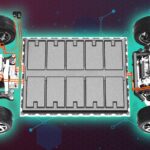
The ‘Cell-to-Body’ Concept Explained
Unlike conventional electric vehicles that utilize a modular battery system – where cells are assembled into modules, and then into a pack – the EX60’s ‘cell-to-body’ design eliminates the need for these intermediate modules. Instead, the battery cells are integrated directly into the vehicle’s chassis, with sections of the floor becoming a load-bearing component of the battery pack itself.
Anders Bell, Chief Engineering and Technology Officer at Volvo Cars, highlighted the significance of this architectural shift. “It’s an architectural breakthrough for us in terms of how we build the car,” Bell stated in an interview. “It’s a massive [improvement], we save a lot of weight, we save a lot of cost, which is important because that means we can lower the price for the customers and sell more BEVs.”
Key Advantages of the New Architecture
This integration offers several key benefits:

- Increased Energy Density: Volvo claims a 20% improvement in energy density, allowing for more power in a smaller footprint.
- Weight Reduction: By eliminating modules and structural components, the overall weight of the vehicle is reduced.
- Cost Efficiency: Fewer parts and simpler assembly contribute to lower manufacturing costs.
- Improved Range: The EX60’s top P12 AWD trim features a 117 kWh battery (112 kWh usable), delivering up to 400 miles of range, a feat achieved in a vehicle shorter than the EX90.
- Faster Charging: The company reports a 31% increase in charging speed.
- Reduced Environmental Impact: A 37% reduction in CO2 footprint is attributed to this structural battery design.
Battery Suppliers and Repairability
The EX60 utilizes high-nickel battery chemistry. The 80 kWh and 91 kWh (usable) battery options are supplied by Sunwoda, while CATL provides the larger 112 kWh battery, according to reports from Out Of Spec Reviews.
Regarding serviceability, Volvo asserts that the ‘cell-to-body’ design does not impede repairs. Technicians can access battery electronics by opening an enclosure from under the rear seats, avoiding the need to remove the entire battery pack, a process common in older EV designs. Volvo notes that over 90% of battery-related service issues typically involve electronics rather than the cells themselves.
The Future of EV Manufacturing
The adoption of ‘cell-to-body’ or similar structural battery designs by manufacturers like Tesla, Porsche, and numerous Chinese automakers signals a significant trend in electric vehicle production. This innovative approach is poised to become the standard for how future EVs are built, driving further advancements in performance, efficiency, and sustainability.
Additional reporting by Mack Hogan.