
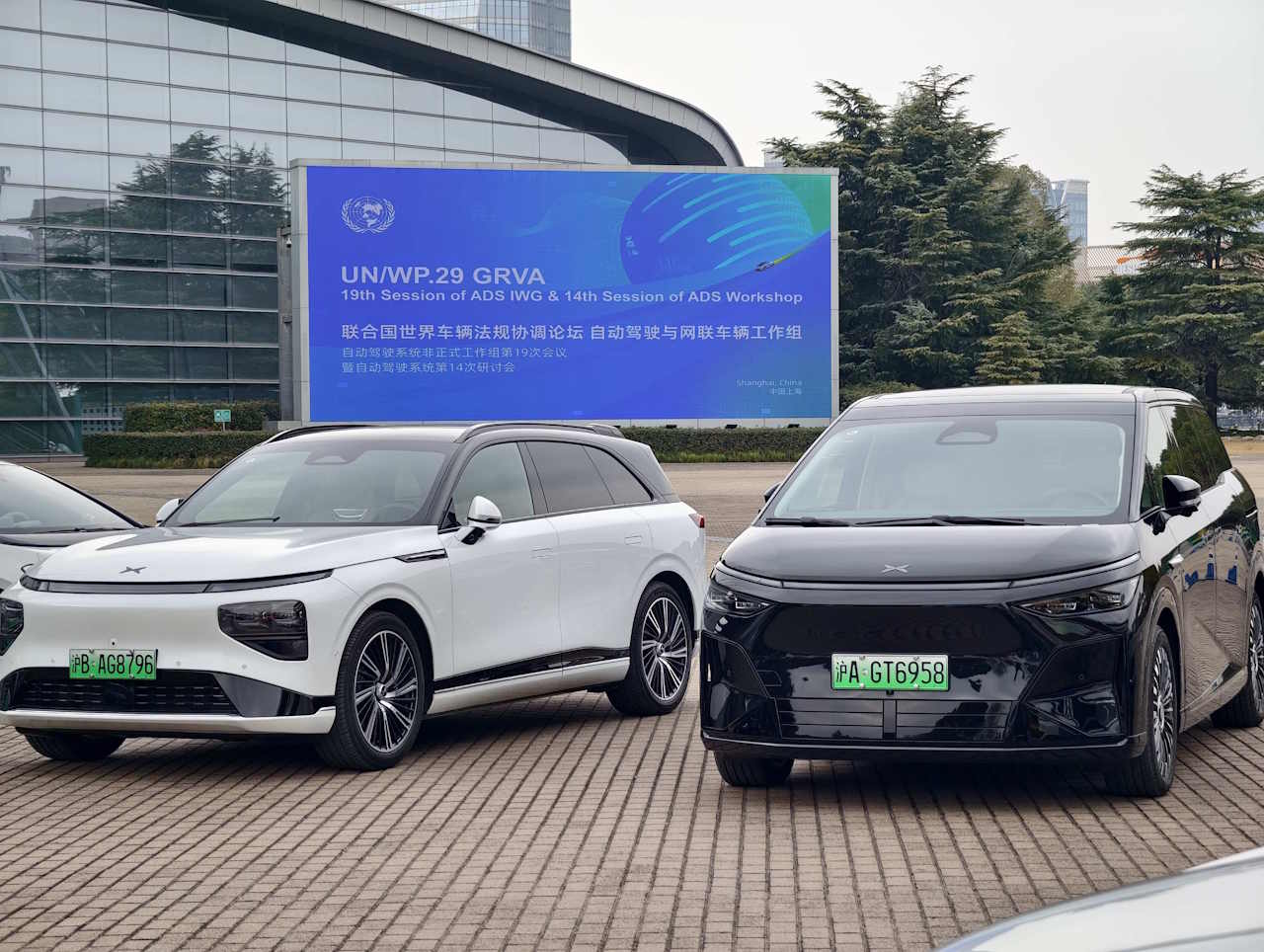
Xpeng, a prominent Chinese electric vehicle (EV) manufacturer, recently demonstrated its advanced artificial intelligence (AI)-driven Advanced Driver Assistance Systems (ADAS) to international delegates during live road demonstrations in Shanghai. The event, held last week, was part of a United Nations informal working group focused on ADAS.
Global Scrutiny of Autonomous Driving Technology
The demonstrations took place during a session of the United Nations Economic Commission for Europe (UNECE) World Forum for Harmonization of Vehicle Regulations (WP.29) Informal Working Group on Automated Driving Systems (IWG ADS). This group comprises government and industry representatives dedicated to sharing technical expertise on automated driving systems.
Xpeng has been an active participant in discussions related to Driver Control Assistance Systems (DCAS) through the Taskforce on Advanced Driver Assistance Systems (TF ADAS) since 2023. The company formally joined the IWG ADS meetings in 2025.
Xpeng Leads with Live Demonstrations
At the recent Shanghai session, Xpeng distinguished itself as the sole emerging Chinese automaker to participate fully. Significantly, it was also the only company to provide live, real-world demonstrations of its technology, differentiating its approach from other participants who opted for technical presentations.
Officials from major global automotive markets, including Canada, the European Union (EU), Japan, the United Kingdom, and the United States, experienced Xpeng’s in-house developed XNGP ADAS firsthand. The delegates rode in Xpeng EVs, witnessing the system’s performance in both urban and highway environments.

Real-World Performance Under the Microscope
A statement following the demonstrations highlighted the event’s significance. “The session provided global delegates with firsthand exposure to how large-scale, data-driven AI systems perform in the variability and unpredictability of real traffic environments,” read the press release.
Participants observed the XNGP driving system’s core functionalities, including its real-time perception, decision-making, and control capabilities. The integrated safety framework, encompassing driver status monitoring, human-machine interaction logic, and safety design, was also under review.
According to Xpeng, these advanced capabilities resulted in a seamless and reliable driving experience for delegates navigating complex traffic scenarios on both city streets and highways.
Future Vision: VLA 2.0 Architecture and Robotaxi Plans
During the IWG session, Xpeng also shared insights into its forthcoming VLA 2.0 (Vision-Language-Action) architecture. This next-generation AI foundation is designed to enhance intelligent driving systems by optimizing the translation of visual input into vehicle actions.
The VLA 2.0 architecture promises faster response times, reduced information loss, and a more human-like driving performance. Xpeng is leveraging this advanced technology as a key component in its strategy to advance its Robotaxi roadmap in China.
The company plans to initiate trial operations for its Robotaxi services later this year, marking a significant step towards integrating autonomous driving solutions into public transportation infrastructure.