
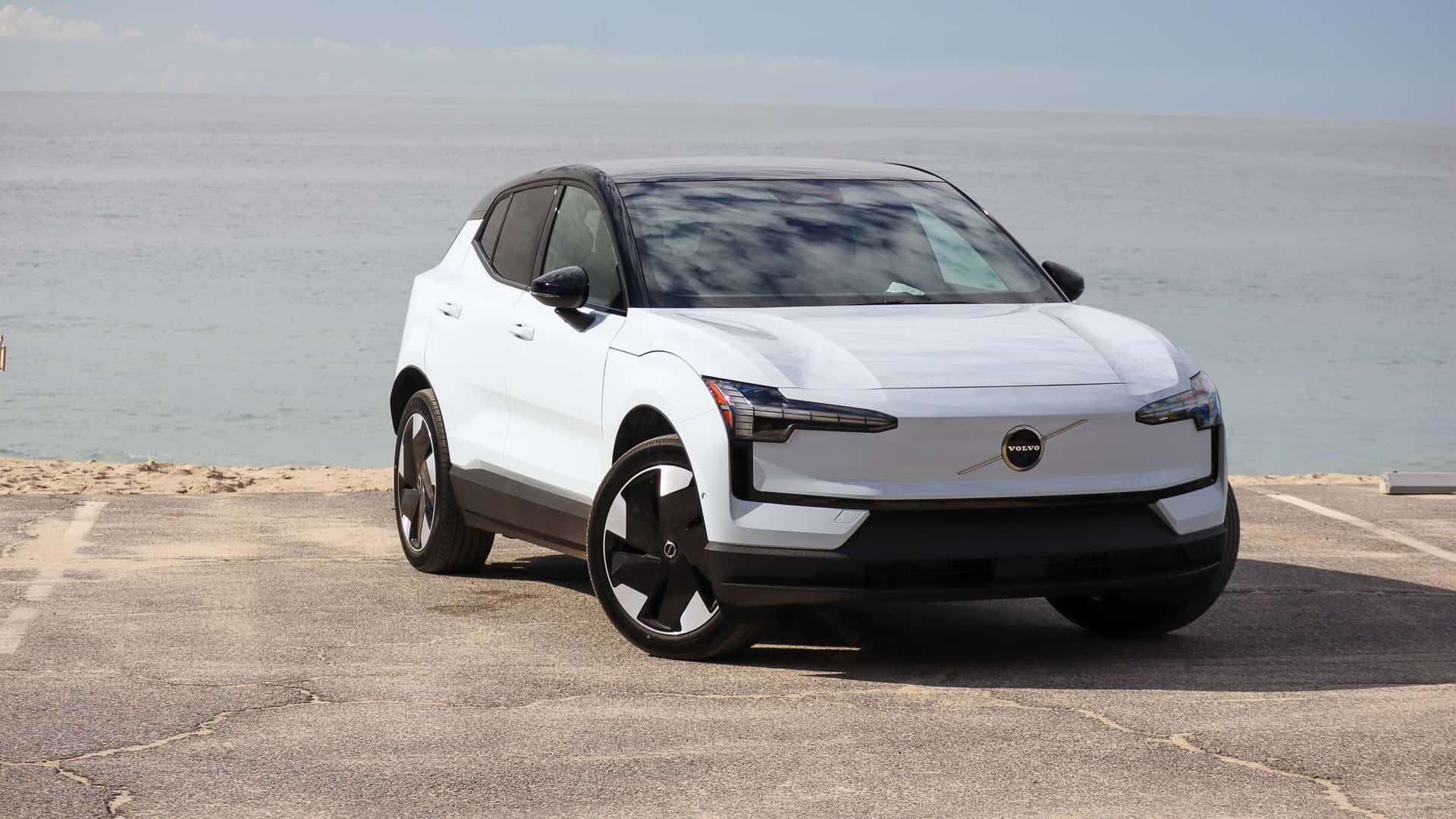
The 2026 Volvo EX30: A Capable EV, But Is It the Best on Geely’s Versatile SEA Platform?
Geely’s smallest SEA platform variant proves that shared architecture can yield vastly different results. We explore how the Volvo EX30 measures up against its siblings.
The concept of platform sharing, once a red flag for automotive enthusiasts, has become a crucial strategy for manufacturers. While it might evoke images of badge engineering, the true artistry lies in how automakers transform a common foundation into distinct and compelling vehicles. Some brands master this alchemy, while others struggle to rise above the basics.
Having spent time with a significant number of vehicles built on Geely’s SEA (Sustainable Experience Architecture) platform, particularly its compact variant, we’ve seen firsthand the spectrum of results. This includes the Volvo EX30, Zeekr X, Smart #3, and Lynk & Co Z20. While the SEA platform is a testament to differentiated engineering, not every iteration shines equally bright. Here’s a ranking of Geely’s smallest SEA platform electric vehicles based on our experiences.

Last Place: Volvo EX30
The 2026 Volvo EX30 boasts a clean, minimalist Scandinavian design and compact dimensions that are undeniably appealing. It is, in fact, the smallest vehicle built on the SEA-1 (the smallest SEA variant) platform, even more so than the diminutive Smart #1. Despite its size, it often features a potent dual-motor setup delivering up to 422 horsepower, a performance level that the EX30 manages with impressive composure, outperforming some China-spec variants of the Smart #3 Brabus and Zeekr X, which could be overly eager with their power delivery.
However, the EX30’s interior falls short. While the use of recycled, eco-friendly materials is commendable, their perceived quality is merely average. Soft-touch materials are scarce, and the infotainment system is arguably the weakest link. Compared to its platform mates, the EX30’s central screen interface feels cluttered, uninspired, and less intuitive. Interior space is also a constraint, with the EX30’s footprint closely resembling that of a Ford Fiesta.
For the American market, the EX30 is currently the sole offering from this SEA family. However, consumers in other regions have access to more compelling alternatives within the same architectural family.

Third Place: Zeekr X
The Zeekr X presents an unusually luxurious experience for a vehicle of its size. It comes loaded with premium features, including self-closing doors, multiple refrigerators for both front and rear occupants, a HEPA filter, and facial recognition for entry. In the Chinese market, the Zeekr X’s sliding infotainment screen is a notable, albeit niche, feature. The cabin itself exudes richness, with abundant use of genuine leather and soft-touch materials. Coupled with an exceptionally smooth ride and a quiet cabin, the Zeekr X offers a level of opulence rarely found in vehicles under 180 inches.
Yet, this opulence might be its undoing. The Zeekr X’s extensive equipment list, while impressive, can feel excessive for its class. It often commands a premium price, though recent adjustments have brought it closer to the Volvo EX30’s pricing in many markets. Despite these adjustments, the Zeekr X hasn’t achieved widespread market resonance, even in China where it’s significantly more affordable (starting around $21,000 USD compared to approximately $46,000 USD in Europe). Its sales figures lag behind other premium small crossovers.
Furthermore, the soft suspension and plush ride come at the cost of dynamic prowess. The Zeekr X’s handling characteristics lean more towards a comfortable cruiser than a nimble compact crossover, which may deter buyers seeking a more engaging driving experience.
Second Place: Smart #3
The Smart #3 stands apart in this group. While the Smart brand is now fully integrated into the Geely Group, it retains a connection to Mercedes-Benz, evident in its styling cues. Despite sharing the fundamental chassis, battery, and up to 422 horsepower with the Volvo EX30 and Zeekr X, the Smart #3 (and its sibling, the #1) offers a distinctly different feel.
Positioned as a rival to Mini, the Smart #3 aims for a premium yet playful driving experience. Its unique features include a cartoon fox as a vehicle assistant and simulated engine and acceleration sounds. Personally, the #3 is a favorite for its driving position, which is relatively low, and its longer wheelbase contributes to greater stability in corners. Like other models, the all-wheel-drive variants are brisk, though the Brabus version can feel surprisingly tail-happy for a small car. The Smart variants on this platform possess significant character, even if interior quality and software are only marginally superior to the EX30.
However, the most accomplished all-rounder emerges from another Geely Group brand.
Top Billing: Lynk & Co Z20
The Lynk & Co Z20 represents the latest refinement of Geely’s compact SEA platform and appears to be its most successful execution to date. It skillfully blends the strengths of previous variants while introducing efficiency enhancements. The Z20’s interior rivals the luxurious feel of the Zeekr X, but avoids an overabundance of superfluous luxury features.
Its extended wheelbase provides a more practical rear seat, while maintaining dimensions suitable for many European markets. In China, the Z20 is available from approximately $19,000 USD, and while the European Lynk & Co 02 is expected to be priced higher at around $41,000 USD, it remains competitive and undercuts its Volvo sibling.
Although lacking an all-wheel-drive option, the Z20 compensates with a new Zeekr-developed rear motor. This motor offers a power output that bridges the gap between rear-wheel-drive and all-wheel-drive variants, while promising improved efficiency. The 335-horsepower rear motor propels the car to 100 km/h (62 mph) in a respectable 5.3 seconds. Crucially, its suspension tuning is significantly more resolved than the Zeekr X’s, offering a well-balanced calibration between comfort and sportiness, unlike the Zeekr X’s singular focus on comfort.
The Lynk & Co Z20 emerges as a truly well-rounded product, arguably the most balanced offering within this platform family.
Verdict
Despite the varying levels of execution across its derivatives, Geely deserves commendation for successfully differentiating each vehicle built on the SEA platform. As the automotive industry electrifies and manufacturers increasingly rely on shared architectures, maintaining distinct brand identities is a significant challenge.
Geely has demonstrated that differentiation is possible, though it remains a complex undertaking. The 2026 Volvo EX30 is a capable electric vehicle, but when viewed alongside its siblings on the versatile SEA platform, it becomes clear that other iterations offer compelling alternatives, with the Lynk & Co Z20 standing out as the most comprehensively executed.
Contact the author: kevin.williams@insideevs.com