
Europe’s EV Boom Was Real in 2025. The Real Fight Starts In 2026
The European continent is teeming with EVs, and it’s never been easier to own and charge one. But everything is under China’s shadow.
Europe witnessed a significant surge in electric vehicle (EV) adoption throughout 2025, driven not just by environmental consciousness but by increasingly practical and compelling reasons for consumers. Despite a slowdown in demand growth and a pullback in some government incentives, EV sales across the continent continued to climb. However, as the industry looks towards 2026, the true battles for market dominance, particularly against formidable Chinese competition, are set to intensify.
Charging Infrastructure Reaches New Milestones
The ease of owning and operating an EV in Europe has been dramatically enhanced by the rapid expansion of public charging infrastructure. Finding a functional and available charger is no longer the hurdle it once was. The European Commission reports that the European Union now boasts over 1 million charging points, a figure that excludes the robust networks in countries like Switzerland and Norway. The Netherlands leads the charge with nearly 200,000 public chargers, offering extensive charging options, albeit many at lower power levels. Norway, a global frontrunner in EV adoption, maintains around 30,000 charging stations, a substantial portion of which are DC fast chargers.

Personal experience driving EVs across Europe in 2025 confirmed this improved accessibility. For owners of 800-volt EVs, achieving an 80% charge in approximately 20 minutes made long-distance travel nearly as convenient as with traditional internal combustion engine vehicles.
EV Incentives Wane, But Demand Persists
While many European nations scaled back or eliminated EV subsidies and tax benefits in 2025, consumer appetite for electric mobility remained strong. According to a report by Benchmark Mineral Intelligence, which encompasses the EU, Switzerland, Norway, and the UK, sales of plug-in vehicles increased by 33% through November compared to the previous year. This growth outpaced China’s 19% expansion, though China still sold a considerably higher volume of plug-in vehicles, exceeding 11.6 million units.
Within the European Union, pure electric vehicles accounted for 16.9% of all new car registrations from January to November, a notable increase from 13.4% in the same period of 2024, as reported by the European Automobile Manufacturers’ Association (ACEA). Germany, Belgium, the Netherlands, and France were the primary markets driving this adoption. November 2025 saw a particularly strong performance, with EV sales in the EU up by 44.1% year-on-year, complemented by a 38.4% rise in plug-in hybrid (PHEV) sales.

This surge in EV popularity has inevitably impacted sales of traditional combustion engine cars. France experienced a 32% decline in gasoline car sales over the first eleven months of 2025, with an EU-wide drop of 18.6%.
The Unshakeable Influence of Chinese Manufacturers
A significant and growing portion of Europe’s electric vehicle market is now supplied by Chinese brands such as BYD and Geely. A Forbes report, citing Schmidt Automotive Research, indicated that the market share of Chinese-brand plug-in vehicles in Europe nearly doubled in 2025, rising from 3.4% to 6%, with projections for continued growth in the coming years.
In stark contrast to Europe’s charging infrastructure, China’s scale is vastly larger. The country reported 4.63 million public and 14.7 million private chargers, totaling approximately 19.3 million charging points, with an average public network power of 45.34 kW. China is also at the forefront of charging technology, with some new EVs capable of megawatt charging. Europe, while advancing, typically tops out around 350–400 kW, though networks like Ionity are beginning to deploy hardware capable of 1 MW, initially capped at 600 kW.
EV Ownership is Easy, Supply Chain Control is Not
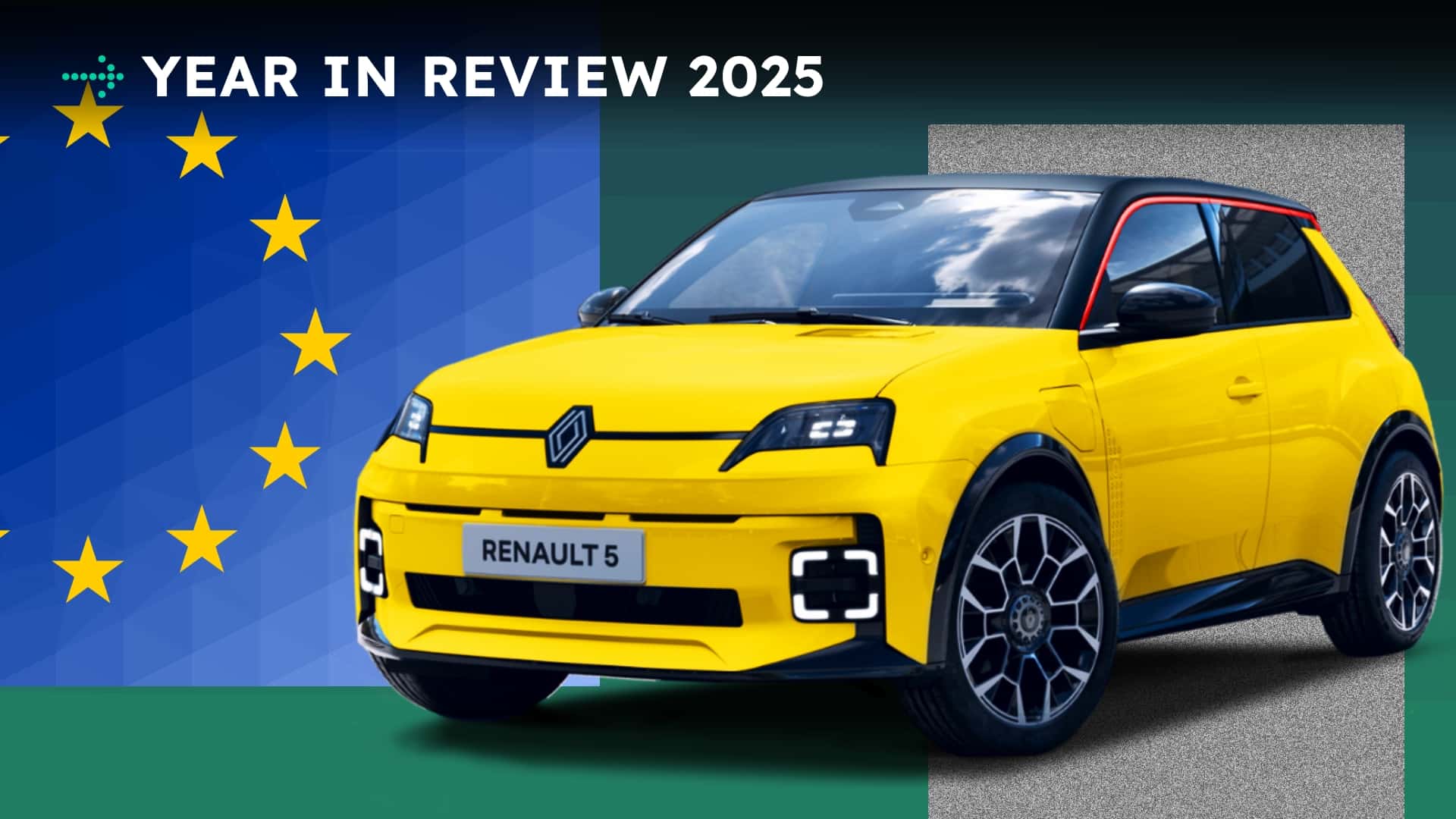
The trends of 2025 underscore a clear consumer preference for EVs in Europe, irrespective of fluctuating incentives. The increasing availability of more affordable models has made EVs a more attainable choice than ever before. The Renault 5 E-Tech, a standout performer in the European market, has offered a glimmer of hope for local automakers looking to compete with Chinese manufacturers, with over 100,000 units produced in its first 15 months. Renault is further bolstering its affordable EV offerings with the upcoming Twingo E-Tech, and its budget brand Dacia is developing a similarly priced model.
Despite the growing ease of EV adoption and ownership, the dominance of Chinese manufacturers in the global supply chain, particularly in battery production, presents a significant challenge for Europe. China holds a near-monopoly on battery manufacturing, and a substantial percentage of battery cells and upstream materials used in European EVs still originate from China. This creates a potential risk of Europe trading its dependence on imported oil for a dependence on Chinese EV technology and components.
To navigate this, Europe must first succeed in producing EVs that consumers genuinely prefer over Chinese alternatives. The emergence of next-generation EVs from Western manufacturers shows promise. Crucially, Europe needs to localize its battery and EV technology supply chains to mitigate its reliance on China. The developments in 2026 will be pivotal in shaping the trajectory of the electric vehicle landscape for the remainder of the decade.