
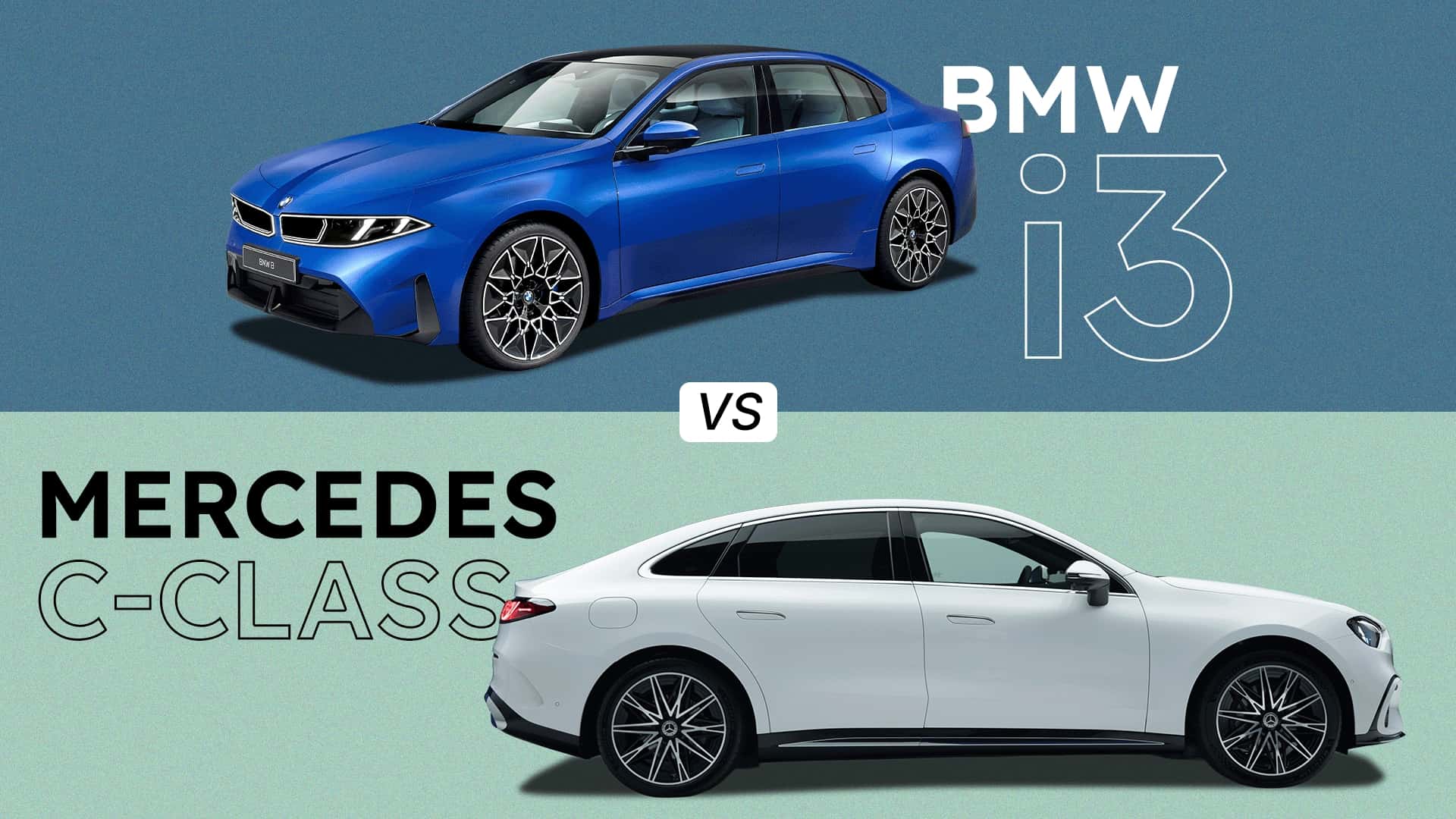
The electric vehicle landscape is poised for a significant transformation with the imminent arrival of two formidable rivals: the 2027 Mercedes C-Class EV and the 2027 BMW i3. These premium electric compact executive sedans are set to ignite a fresh chapter in a long-standing automotive rivalry, albeit with entirely new rules governed by electric propulsion. While both vehicles leverage advanced 800-volt platforms, ensuring rapid charging capabilities and enhanced efficiency, their philosophies diverge considerably in addressing the evolving demands of the electric luxury segment.
Mercedes-Benz, in its latest iteration of the C-Class EV, asserts its position by blending high-performance attributes with its characteristic opulent luxury. The German automaker proudly labels it “the sportiest C-Class ever,” yet it distinctly maintains a posture of refined comfort. Conversely, the 2027 BMW i3 embraces electrification as an opportunity to innovate and break with tradition, focusing heavily on cutting-edge EV technology and a distinct user experience.

Early indications suggest the BMW i3 holds an advantage in projected range and charging efficiency, signaling a robust commitment to core EV metrics. However, the launch specification of the 2027 Mercedes C-Class EV boasts superior power and torque figures, promising exhilarating acceleration. While comprehensive specifications for both models are still emerging, sufficient details have been disclosed to draw a clear preliminary comparison between these two highly anticipated electric sedans.
Key Takeaways
- Platform: Both utilise advanced 800-volt architectures for enhanced charging and efficiency.
- Performance: The 2027 Mercedes C-Class EV (C400 4Matic) offers higher initial power and quicker acceleration than the 2027 BMW i3 (i3 xDrive 50).
- Range & Charging: The BMW i3 leads in WLTP range with a larger battery and superior peak charging speeds.
- Dimensions: The C-Class EV is physically larger, aligning more with an E-Class, while the i3 maintains a 3 Series footprint.
- Technology & Philosophy: Mercedes prioritises overt luxury displays, including a massive optional screen, while BMW adopts a ‘shy tech’ approach with subtle integration and advanced driving dynamics facilitated by its ‘Heart of Joy’ supercomputer.
- Driver Experience: Mercedes offers adaptive air suspension and rear-wheel steering for comfort and agility, features absent in the i3. BMW focuses on refined driving dynamics and innovative braking.
Dimensions and Interior Space: A Tale of Two Sizes
Despite competing within the same compact executive sedan segment, the 2027 Mercedes C-Class EV and the 2027 BMW i3 present notably different physical footprints. The Mercedes C-Class EV measures 192.2 inches (4.88 meters) in length, complemented by a substantial 116.6-inch (2.96 meters) wheelbase. This makes it a considerably larger vehicle when directly compared to the BMW i3.
The BMW i3, in contrast, spans 187.4 inches (4.76 meters) in length and features a 114.1-inch (2.89 meters) wheelbase. This translates to the C-Class EV being 4.8 inches (12 centimeters) longer, with a 2.5-inch (6.5 centimeters) longer wheelbase. Furthermore, the Mercedes is 1.1 inches (2.7 centimeters) wider and 0.9 inches (24 millimeters) taller, positioning it closer in size to Mercedes’ combustion-powered E-Class sedan.

The BMW i3, by its dimensions, is more akin to the conventional 3 Series, adhering more closely to the traditional compact executive footprint. This size difference has implications for interior spaciousness. While the 2027 Mercedes C-Class EV is larger externally, initial assessments suggest rear occupants might find less legroom and footwell space than anticipated for a vehicle of its stature. Conversely, the marginally smaller BMW i3 appears to offer a more generous rear passenger experience.
In terms of practicality, the C-Class EV offers a respectable 16.6 cubic-foot (470-liter) trunk. This is further supplemented by a 3.6 cubic-foot (101-liter) frunk, providing additional storage capacity. BMW has yet to release official cargo volume figures for the new i3, making a direct comparison on this specific metric currently unfeasible.
Powertrain and Performance: Unveiling Raw Power
The performance capabilities of these two electric contenders highlight distinct engineering approaches. The launch specification of the 2027 Mercedes C-Class EV, designated as the C400 4Matic, features a potent dual-motor powertrain. This setup delivers a combined output of 482 horsepower and an impressive 590 pound-feet (800 Nm) of torque, enabling a rapid acceleration from a standstill to 62 mph (100 km/h) in just 3.9 seconds.
A notable innovation in the C-Class EV’s powertrain is the rear motor’s connection to a two-speed transmission. Mercedes-Benz states that this design contributes to both enhanced acceleration and improved efficiency. Moreover, the front motor can mechanically decouple from the wheels, a feature engineered to conserve energy and optimise range during cruising scenarios.
In direct opposition, the 2027 BMW i3 xDrive 50, which serves as its launch specification, shares its powertrain with the equivalent iX3 model. This configuration provides 469 horsepower and 476 pound-feet (645 Nm) of torque. Consequently, the BMW i3 trails the comparable Mercedes variant by 13 horsepower and 114 pound-feet (155 Nm) of torque. While BMW has not yet published an official acceleration figure for the i3, an informed estimate places its 0-62 mph time at approximately 4.5 seconds, considering the heavier iX3 achieves the same in 4.9 seconds.
Both Mercedes-Benz and BMW have confirmed plans to introduce additional model variants post-launch. These are expected to include more efficient single-motor configurations, practical wagon versions, and high-performance models bearing the prestigious AMG and M badges, respectively. Speculation suggests the electric M3 equivalent will feature an advanced quad-motor setup with sophisticated torque vectoring, promising significantly more power than current combustion models. Similarly, the AMG version of the electric C-Class is reportedly being developed with a three-motor arrangement to deliver a compelling performance proposition.
Battery Technology, Range, and Charging Prowess
In the crucial metrics of battery capacity and driving range, the 2027 BMW i3 demonstrates a clear advantage over the 2027 Mercedes C-Class EV. The BMW i3 is equipped with a larger 108.7 kWh battery pack, surpassing the C-Class EV’s 94.3 kWh unit. This greater energy capacity translates into a WLTP (Worldwide Harmonised Light Vehicle Test Procedure) range of 559 miles (900 km) for the i3, significantly outperforming its rival’s 473 miles (762 km) WLTP rating. It is important to note that WLTP figures typically present a more optimistic range estimate compared to the EPA (Environmental Protection Agency) ratings, which have not yet been released for either vehicle.
Charging capabilities further solidify the BMW i3’s lead. It boasts an impressive peak charging power rating of 400 kW, enabling it to add an estimated 249 miles (400 km) of range in approximately 10 minutes. Furthermore, the i3 can replenish its battery from 10% to 80% in around 21 minutes. The Mercedes C-Class EV, while still offering rapid charging, has a slightly lower peak rating of 330 kW. This allows it to gain approximately 202 miles (325 km) of range in 10 minutes and complete a 10% to 80% charge in 22 minutes. Observations from other Mercedes EQ models, like the GLC EV, suggest the C-Class EV might exceed its stated maximum charging rate under optimal conditions, potentially reaching over 350 kW.
Leaks regarding the single-motor, smaller-battery iX3 variant indicate an 82.6 kWh battery capable of a 395-mile (620 km) WLTP range. This version also features a single rear motor producing 315 horsepower, accelerating to 62 mph in 5.9 seconds. BMW is highly likely to mirror these specifications in a future i3 variant, possibly even introducing a single-motor configuration with the larger battery to achieve an exceptionally long driving range.
Both the 2027 Mercedes C-Class EV and the 2027 BMW i3 incorporate vehicle-to-load (V2L) bidirectional charging, allowing users to power external devices. Expanding on this utility, BMW has additionally confirmed that the i3 will support vehicle-to-home (V2H) and vehicle-to-grid (V2G) charging functionalities, offering greater energy flexibility and integration with smart home and grid systems.
Technological Integration and User Experience
Both electric sedans represent pinnacles of automotive advancement, yet they interpret and display their integrated technologies in fundamentally different ways. The 2027 BMW i3 adopts a ‘shy tech’ philosophy, where many advanced features are subtly integrated into the design, becoming prominent only when required or actively engaged by the user. In contrast, the 2027 Mercedes C-Class EV embraces a more overt and expressive approach, showcasing its technological prowess with bold, highly visible features.
A prime example of Mercedes’ ‘flaunt tech’ strategy is the optional 39.1-inch pillar-to-pillar dashboard display in the C-Class EV. This expansive, single screen represents a significant visual statement, positioning the vehicle as unequivocally futuristic. The standard configuration, however, consists of three separate, albeit still advanced, screens. The 2027 BMW i3 presents a more restrained interior. While its 17.9-inch parallelogram-shaped center screen is visually distinctive—designed to evoke the driver-centric angled center consoles of classic BMWs—it functions as a sophisticated, yet conventional, infotainment display.
BMW further differentiates its tech presentation with a 43-inch panoramic display that spans the entire lower edge of the windshield. Functioning as a hybrid between a traditional screen and a head-up display, it projects essential driving information directly in the driver’s line of sight, along with six customizable widget slots. This setup, previously experienced in the iX3 SUV, has garnered praise for its intuitiveness and effectiveness.
In terms of driving dynamics and comfort, the optional Comfort and Agility Package for the C-Class EV introduces adaptive air suspension and 4.5 degrees of rear-wheel steering. These features are designed to provide the C-Class with a broader spectrum of driving characteristics, from supreme comfort to enhanced agility. If these systems perform as effectively as they do in other Mercedes EQ models, the 2027 Mercedes C-Class EV could offer a level of ride quality and adaptability that the BMW i3, which lacks these specific features, cannot match.
BMW, for its part, has heavily promoted its ‘Heart of Joy’ supercomputer, which meticulously controls the i3’s driving dynamics. This advanced system, experienced in the iX3, delivers a remarkably smooth, precise, and controlled driving experience. It also facilitates sophisticated torque vectoring, making dynamic maneuvers both engaging and manageable. A unique feature enabled by this system is the ‘limo stop,’ which gracefully brings the vehicle to a halt without the typical jarring sensation. While the Mercedes also offers a smooth braking experience, the BMW’s innovative system is noted for its exceptional refinement in this regard.
The Enduring Rivalry: New Era, New Battleground
The impending arrival of the 2027 Mercedes C-Class EV and 2027 BMW i3 marks the resurgence of an iconic automotive rivalry, now redefined by the electric era. Both German titans are vying for the attention of discerning buyers in the burgeoning electric luxury sedan market, yet their foundational philosophies on what constitutes a compelling electric vehicle have notably diverged. Mercedes-Benz appears to be focused on seamlessly translating its established brand values of luxury, refinement, and performance into the electric age, offering an EV that feels inherently like a Mercedes.
BMW, conversely, is leveraging electrification as a catalyst for innovation and a departure from certain traditions, even while retaining elements of its rich heritage. The brand’s approach with the i3 leans towards showcasing advanced EV technology and a distinct, modern driving experience. Fundamentally, this competition extends beyond a simple comparison of specification sheets, where the BMW i3 appears to hold certain advantages in efficiency metrics.
Ultimately, the choice between the 2027 Mercedes C-Class EV and the 2027 BMW i3 will hinge on a buyer’s preference for two very different visions of future mobility. The i3 presents itself as the more overtly advanced and futuristic electric car, pushing boundaries in range, charging, and dynamic control. The C-Class EV, while technologically sophisticated, aims to be a comprehensively well-rounded luxury sedan that happens to be electric, prioritising established comfort and prestige. The definitive victor in this renewed rivalry will only be clear after back-to-back road tests, but the continuation of this age-old competition into the electric vehicle landscape is undoubtedly an exciting prospect for the industry and consumers alike.
Frequently Asked Questions (FAQ)
What are the primary differences in philosophy between the 2027 Mercedes C-Class EV and the 2027 BMW i3?
The Mercedes C-Class EV aims to integrate Mercedes’ traditional luxury and comfort into an electric platform. The BMW i3, however, uses electrification to introduce new technologies and design approaches, offering a more futuristic and tradition-breaking experience while still respecting its heritage.
Which electric sedan offers better range and charging capabilities?
The 2027 BMW i3 generally outperforms the 2027 Mercedes C-Class EV in both range and charging. The i3 features a larger 108.7 kWh battery for a WLTP range of 559 miles (900 km) and boasts a higher peak charging power of 400 kW.
How do the performance figures compare between the launch models?
The launch-spec Mercedes C400 4Matic offers 482 hp and 590 lb-ft of torque, achieving 0-62 mph in 3.9 seconds. The BMW i3 xDrive 50 delivers 469 hp and 476 lb-ft, with an estimated 0-62 mph time of 4.5 seconds, giving Mercedes an edge in raw power and initial acceleration.
What are the notable technology features in each vehicle?
The Mercedes C-Class EV offers an optional 39.1-inch pillar-to-pillar display and adaptive air suspension with rear-wheel steering. The BMW i3 features a 43-inch panoramic windshield display and is managed by its ‘Heart of Joy’ supercomputer, enhancing driving dynamics and introducing innovative functions like ‘limo stop’.
Will there be other variants of these electric sedans?
Yes, both manufacturers plan to release additional variants, including more efficient single-motor versions, practical wagon body styles, and high-performance models under the AMG (Mercedes) and M (BMW) badges, potentially featuring multi-motor setups.
Do these vehicles support bidirectional charging?
Both the 2027 Mercedes C-Class EV and the 2027 BMW i3 support vehicle-to-load (V2L) charging. Additionally, BMW has confirmed that the i3 will also offer vehicle-to-home (V2H) and vehicle-to-grid (V2G) functionalities, enhancing energy management options.