
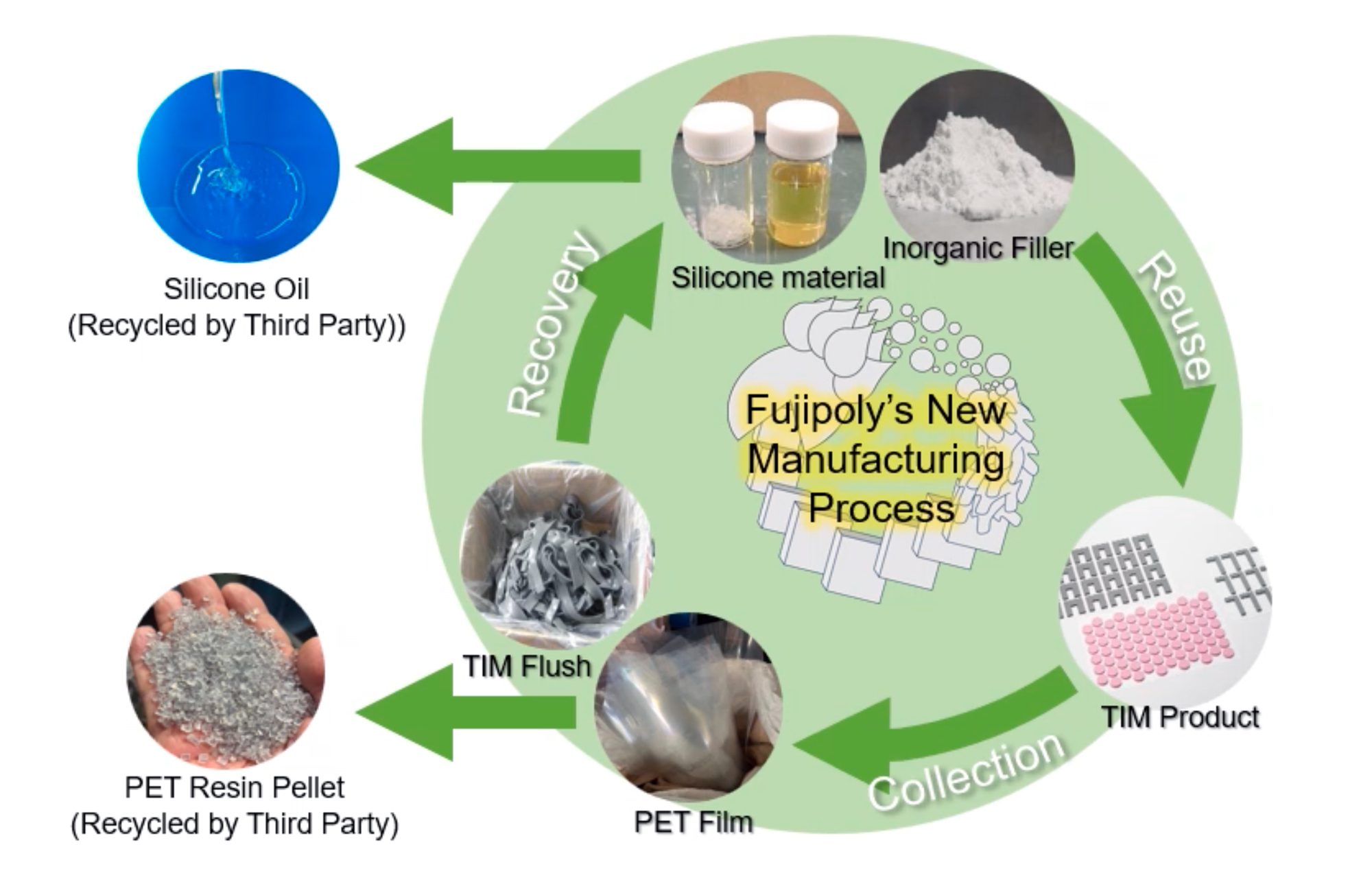
In the rapidly evolving landscape of electric vehicle (EV) engineering, the role of thermal interface materials (TIMs) is becoming increasingly critical. These materials are instrumental in extending the lifespan of EV components and significantly boosting energy efficiency, thereby contributing to a more sustainable future. However, a significant challenge persists: many advanced TIMs are based on thermoset polymers, such as silicone, which are not recyclable and often contribute to industrial waste streams.
Addressing the Challenge of TIM Waste
Fujipoly, a prominent manufacturer specializing in silicone-based thermal interface sheets, has long been committed to minimizing waste at the customer level. Despite these efforts, the company acknowledges that its own production processes inherently generate waste, including auxiliary material byproducts and unused product offcuts. This realization has spurred Fujipoly to launch proactive initiatives aimed at finding innovative ways to reuse these valuable byproducts.

The overarching goal is to establish a closed-loop system, thereby advancing circular manufacturing practices within the electric vehicle sector and beyond. This strategic shift reflects a growing industry-wide awareness and commitment to sustainability and resource efficiency.
Webinar Focuses on Rethinking Waste in Thermal Management
To shed light on these crucial developments, Fujipoly is hosting a webinar designed to explore how the company is fundamentally rethinking its approach to waste. Attendees will gain insights into the practical steps being taken to foster a more sustainable future in thermal management solutions. The session promises to offer a detailed look at Fujipoly’s innovative strategies.
The webinar is scheduled for March 12, 2026, at 12:00 pm EDT. Registration for this informative session is currently open and is free of charge. This accessibility ensures that valuable knowledge and best practices are shared broadly across the industry.

Comprehensive Virtual Conference on EV Engineering
This webinar is part of a larger Virtual Conference on EV Engineering, which is broadcasting live from March 9 to March 12, 2026. The conference agenda is designed to cover the entirety of the EV engineering supply chain and ecosystem. Topics span a wide range of critical areas, including motor and power electronics design and manufacturing, advancements in cell development, sophisticated battery systems, rigorous testing methodologies, powertrain innovations, efficient thermal management, essential circuit protection, wire and cable technology, and electromagnetic interference (EMI) and electromagnetic compatibility (EMC) solutions.
The Virtual Conference on EV Engineering offers a unique platform for industry professionals, engineers, and stakeholders to engage with the latest trends, technologies, and challenges shaping the future of electric mobility. The comprehensive nature of the conference underscores the interconnectedness of various engineering disciplines required to advance EV technology.
Other Featured Sessions at the Conference
Alongside Fujipoly’s session on TIM waste reduction, the Virtual Conference on EV Engineering features a diverse array of expert-led presentations. These sessions delve into critical aspects of e-mobility development:
Advanced Power Electronics and E-Mobility Solutions
- Automotive CoolGaN™ Enabling Highly-Efficient & Affordable E-Mobility: This session explores the benefits and applications of Gallium Nitride (GaN) technology in enhancing the efficiency and cost-effectiveness of electric vehicles.
- Unlocking Next-Gen xEV Power Conversion: New CoolSiC™ Devices: This presentation focuses on silicon carbide (SiC) devices and their role in advancing power conversion systems for next-generation hybrid and electric vehicles.
- Full‑Power EV Inverter Validation Using Power HIL Systems: Discusses the use of Hardware-in-the-Loop (HIL) simulation to validate the performance and reliability of EV inverters under full power conditions.
Battery Technology and Safety Innovations
- Designing Safer E-Mobility Battery Packs: Materials And Testing Insights: This session provides crucial information on material selection and testing protocols for enhancing the safety of EV battery packs.
- Applying Functional Safety To eMobility Battery Systems: Addresses the critical principles and implementation of functional safety standards in the design of battery systems for electric vehicles.
- Designing Batteries For Upcoming Regulations: No Flame Out, No Explosion: Focuses on engineering battery solutions that meet stringent future regulations concerning thermal runaway and explosion prevention.
Emerging Technologies and System Integration
- Exclusive Introduction To LOCTITE SOLVE: AI-powered Virtual Adhesives Hub: An introduction to an AI-driven platform designed to assist in selecting and applying adhesives for automotive applications.
- Modeling Hydrogen Fuel Cells And Electrolyzers: Explores the simulation and modeling techniques used for hydrogen fuel cell and electrolyzer systems, relevant for future mobility solutions.
- Building Realistic And Dynamic Testing Environments For EV Technology Verification: Details the creation of advanced testing environments to accurately verify the performance of EV technologies.
Power Management and Charging Infrastructure
- New Strategies For High Voltage Fault Management In Next-Gen EVs: Presents innovative approaches to managing high-voltage faults within advanced EV architectures.
- Megawatt Charging Systems: Accelerated Testing Of Power‑Level Charging And Communication Control: Focuses on the testing methodologies for high-power megawatt charging systems crucial for commercial EVs.
Addressing Design and Protection Challenges
- Reset Instead Of Replace: Solving EV Circuit Protection Challenges: Offers solutions for circuit protection in EVs, emphasizing methods that allow for resetting components rather than outright replacement, improving cost and sustainability.
The conference, running from March 9-12, 2026, provides a comprehensive look at the state of EV engineering. Registration for these live or on-demand webinar sessions is free, making it an invaluable resource for anyone involved in the electric mobility sector.