
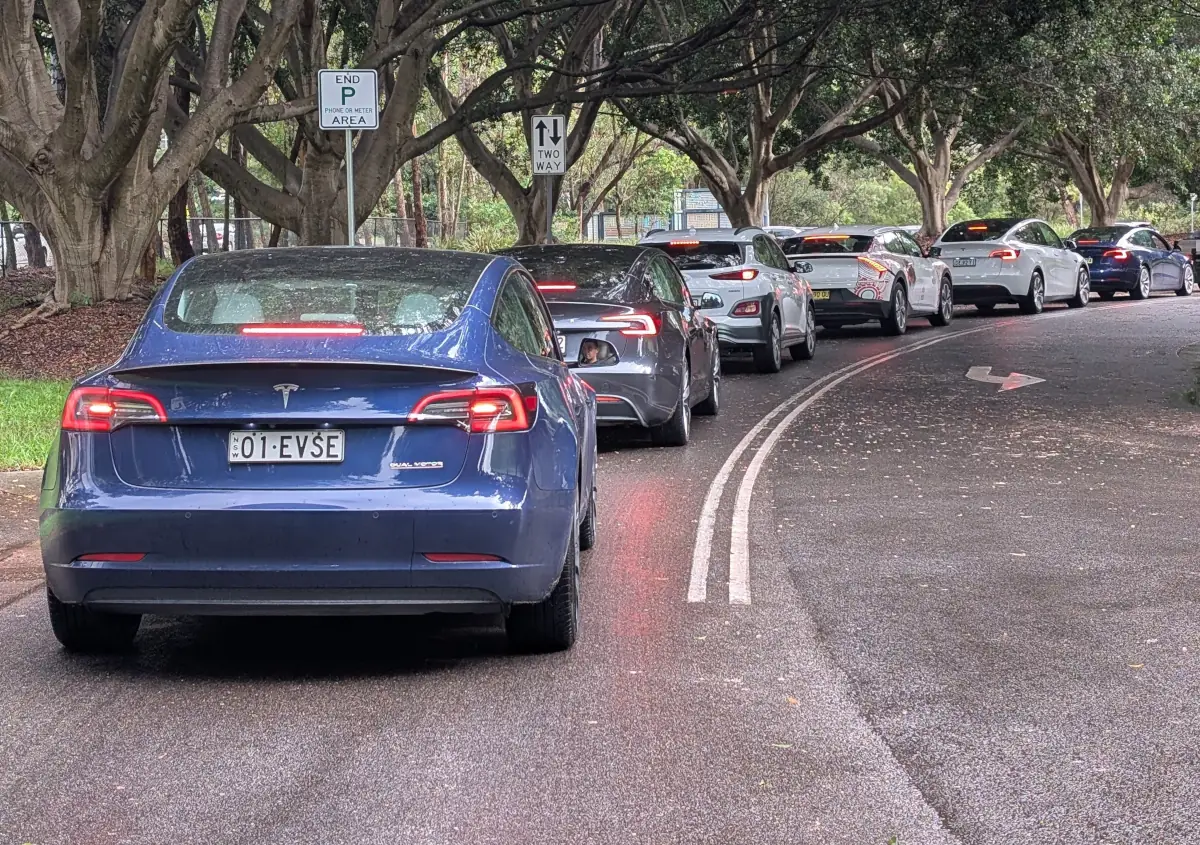
The Australian Electric Vehicle Association (AEVA) recently orchestrated a pioneering electric vehicle (EV) rally, drawing nearly 50 EVs to traverse a significant 230 km route through the scenic Blue Mountains. The event, a key component of Climate Action Week Sydney, aimed to spotlight electric vehicles as a practical and compelling alternative to traditional fossil fuel-powered transportation.
A Collaborative Effort for Climate Action
This significant initiative was brought to fruition through a collaborative partnership involving the NSW Department of Climate Change, Energy, the Environment and Water (DCCEEW), and Everything Electric. Representatives from numerous EV manufacturers and dealerships also lent their support, underscoring the growing industry commitment to electrification.

The convoy, comprising close to 50 electric vehicles from 22 distinct brands, embarked on the Destination NSW EV-friendly Greater Blue Mountains Route. This route is strategically designed with extensive charging infrastructure, featuring a dozen fast-charging sites, including some of the nation’s most rapid 400 kW chargers.
Proving EV Range and Capability
The rally effectively demonstrated the impressive range capabilities of modern electric vehicles. Participants in the four-wheeled EVs reported arriving at the finish line without needing to recharge, maintaining a substantial 30-40% battery charge. Even two Fonz electric scooters, though requiring a top-up during the journey, successfully completed the rally, proving the versatility of EVs across different vehicle types and sizes for road trips.
A Legacy of Driving Electric Alternatives
AEVA boasts a rich history, having been founded in 1973 in direct response to the OAPEC oil crisis, a period marked by severe oil shortages and global economic disruption. Speaking at a luncheon held at the Blue Mountains Botanic Gardens in Mount Tomah, AEVA National President James Pickering drew striking parallels between historical events and the present day.

“53 years ago the world stopped. In October 1973, following the Yom Kippur war, members of the OPEC countries embargoed all shipments of oil destined for Israel, US, Canada, Netherlands and Japan,” Pickering stated. “The impact was immediate. Fuel rationing, long lines, the cost of everything went up.”
He continued, “Shortly after this, a group of concerned scientists, engineers, energy and transport professionals – visionary Australians formed the Australian Electric Vehicle Association with the collective goal of advancing electric alternatives to fossil fuels.”
AEVA’s Enduring Mission
Highlighting the association’s consistent focus, Pickering emphasized, “Over 53 years our mission has remained the same, to accelerate the transition of Australia’s transport networks to electric drive as quickly as possible. AEVA is the world’s longest continuously running EV association, member-led, volunteer run and not for profit. It’s the primary voice for the EV consumer in Australia.”
Australia’s Opportunity in the EV Transition
Despite Australia’s current heavy reliance on imported liquid fuels, with over 90% being imported, the nation is strategically positioned to significantly reduce this vulnerability by accelerating its adoption of electric vehicles. This transition is further bolstered by Australia’s abundant renewable energy resources.
Pickering outlined the critical factors needed for Australia to lessen its dependence on foreign oil and leverage its natural advantages. “We have some of the best and cheapest wind and solar resources in the world, with stable government, strong corporate controls and an educated populace.”
He further elaborated on Australia’s capacity for rapid technological adoption: “We are typically a fast follower nation when it comes to technology adoption, and with the right incentives and the right policy environment, we are very fast. 1 in 3 houses deploying solar, the fastest takeup of home batteries in the world, the first nation to deploy 1 GWh of battery per 1 million people.”
A Call for Policy and Incentives
The message from AEVA is clear: a concerted effort in policy-making and incentive structures is paramount for a successful EV transition. “The message is clear, get the incentives right, build the right policy framework across government, invest in infrastructure, match products to need, deliver clear and simple messaging and Australians and industry will respond at a world beating pace. Every generation gets its own oil shock, but we are the first to have abundant solutions,” Pickering concluded.
For individuals interested in supporting the shift towards electric mobility and participating in future events, AEVA encourages them to visit their website and consider becoming a member.