
Coperion K-Tron, a leading name in feeding and extrusion technologies, has officially launched its RF400 Roller Feeder, a groundbreaking system designed to significantly improve consistency in dry-electrode processing for battery manufacturing. This new innovation targets the critical laboratory and pilot-scale stages of battery production, promising to refine a method central to the next generation of energy storage.
The introduction of the RF400 marks a pivotal step in addressing some of the most persistent challenges associated with dry-electrode manufacturing. By focusing on uniform material deposition and waste reduction, Coperion K-Tron aims to provide battery developers and manufacturers with a tool that enhances both the efficiency and reliability of their processes.

Advancing Battery Production: The RF400 Solution
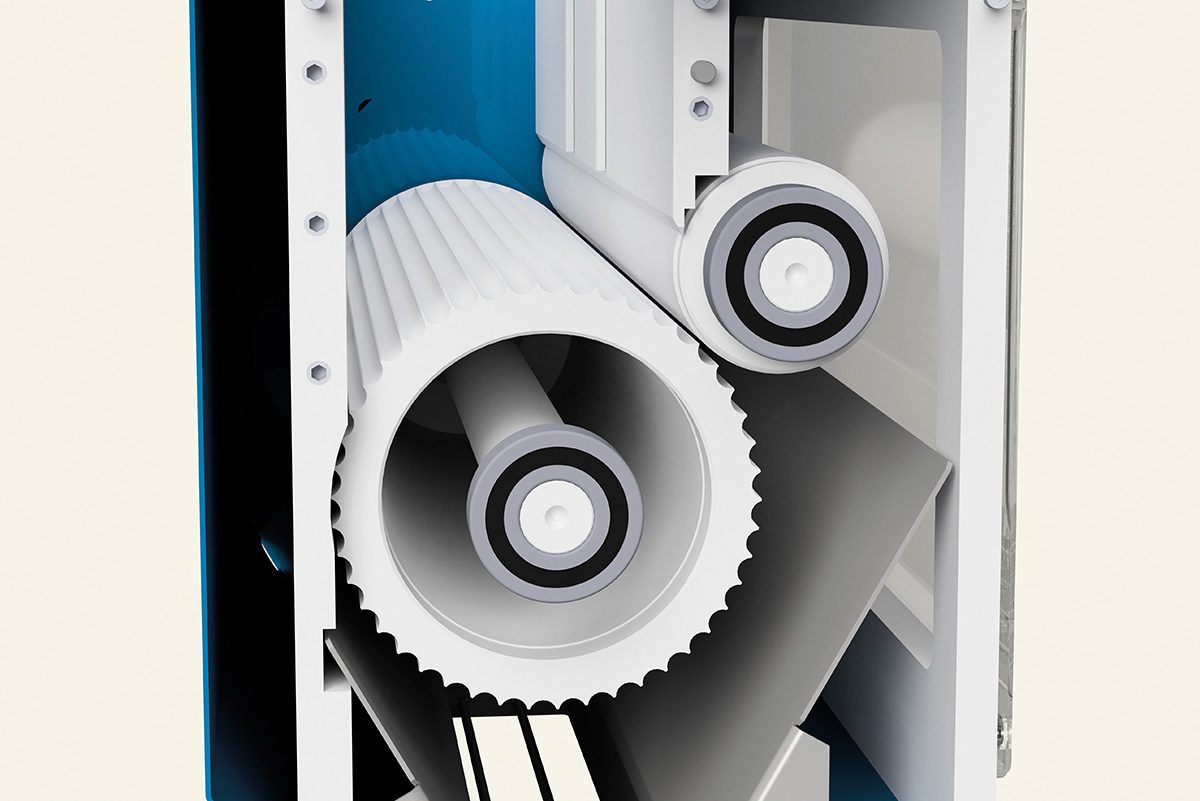
At the core of the RF400’s design is a sophisticated mechanism engineered to deliver unparalleled consistency. The system features a grooved feed roller meticulously paired with a smooth scraper roller. This combination is crucial for gently yet consistently feeding dry blend materials, a process notoriously difficult to execute uniformly.
This innovative roller configuration works to actively prevent material bridging at the outlet, a common hindrance in traditional feeding systems that can lead to inconsistencies. Furthermore, it significantly improves the distribution of the dry electrode material across the calender roller positioned below, ensuring a more homogenous product layer.
The ability of the RF400 to maintain uniform deposition is paramount in dry-electrode manufacturing, where even slight variations can compromise the performance and longevity of the final battery. By mitigating these issues, the new feeder contributes directly to higher quality and more reliable battery cells.

Understanding Dry-Electrode Manufacturing Challenges
Dry-electrode manufacturing has garnered substantial attention within the battery industry due to its inherent advantages over conventional wet coating methods. Primarily, it offers the promise of lower energy consumption, significantly reducing the environmental footprint of battery production. Additionally, it minimises the need for solvent handling, a process that typically involves complex recovery systems and poses safety concerns.
Despite these compelling benefits, the transition to dry-electrode manufacturing has been complicated by several technical hurdles. Material handling and achieving truly uniform deposition of electrode dry blends present considerable engineering challenges. The intricate nature of dry powders often leads to inconsistencies, affecting overall process stability and end-product quality.
Traditional feeding systems often struggle with the delicate balance required to manage these dry materials, frequently resulting in non-uniform layers, material waste, and increased production variability. It is precisely these challenges that the RF400 Roller Feeder has been engineered to overcome, providing a robust solution for an increasingly vital manufacturing process.
Precision Engineering: How the RF400 Works
The RF400’s design directly addresses the core difficulties of dry-electrode manufacturing. The grooved feed roller is engineered to cradle and guide the delicate dry blend, ensuring a steady and controlled flow. Complementing this, the smooth scraper roller meticulously controls the thickness and consistency of the material layer as it exits the feeder.
This dual-roller approach creates a highly controlled feeding environment, drastically reducing the chances of material agglomeration or uneven distribution. The precise mechanical interaction ensures that the electrode material is spread uniformly, which is critical for achieving optimal electrochemical performance in the subsequent battery cell.
Beyond its mechanical ingenuity, the RF400 is designed for operational flexibility. It supports a coating width adjustable up to 400 mm, a feature that makes it exceptionally well-suited for a range of lab and pilot-scale battery production setups. This adaptability ensures that researchers and manufacturers can experiment with different material formulations and configurations without needing to invest in multiple, specialised pieces of equipment.
Real-Time Control and Scalability for Pilot Lines
A significant strength of the RF400 lies in its seamless integration with Coperion K-Tron’s established control systems. The unit works in conjunction with the company’s KCM-III controls and Smart Force Transducer weighing technology. This integration empowers operators with real-time monitoring capabilities, offering immediate insights into the feeding process.
The sophisticated control architecture enables precise feed-rate control, allowing for minute adjustments to be made on the fly. This level of responsiveness is crucial for adapting to changing material characteristics, which can vary even within the same batch of dry electrode blend. The ability to make such dynamic adjustments minimises waste and maximises the consistency of the final product.
For laboratory and pilot-scale operations, where experimentation and optimisation are key, this level of control is invaluable. It allows for rapid iteration of designs and processes, accelerating the development cycle for new battery technologies. The RF400’s modular design and adaptable coating width further underscore its utility in these dynamic environments, bridging the gap between research and eventual large-scale production.
Industry Implications and Expert Commentary
The advancements in dry-electrode manufacturing represented by systems like the RF400 are critical for the broader electric vehicle (EV) industry. As global demand for EVs continues to surge, the need for more efficient, cost-effective, and environmentally friendly battery production methods becomes increasingly urgent. Dry processing holds the potential to significantly reduce the capital expenditure and operational costs associated with battery cell production, making EVs more accessible.
Jay Daniel, Head of R&D Feeders and Feeding Systems at Coperion K-Tron, underscored the transformative potential of this new technology. “The RF400 will set a new standard in the industry,” Daniel stated, highlighting the feeder’s anticipated impact on the evolving landscape of battery manufacturing. His statement reflects the confidence in the RF400’s capacity to address long-standing challenges and accelerate innovation in the sector.
The development aligns with Coperion K-Tron’s long-standing reputation for engineering precision feeding solutions across various industries. By focusing on the unique demands of battery manufacturing, the company reinforces its commitment to supporting emerging technologies that drive sustainable development.
The Future of Sustainable EV Battery Production
The launch of the RF400 Roller Feeder represents more than just a new piece of equipment; it symbolises a forward-looking approach to sustainable industrial practices within the EV battery sector. By refining dry-electrode manufacturing, Coperion K-Tron is contributing to the development of batteries that are not only high-performing but also produced with a significantly reduced environmental footprint.
As the electric vehicle market continues its rapid expansion, innovations in dry-electrode manufacturing will play a crucial role in meeting demand while adhering to increasingly stringent environmental regulations. The RF400 stands as a testament to the ongoing drive for efficiency, precision, and sustainability in the global race towards cleaner energy and mobility solutions.
The ability to produce more consistent and higher-quality battery electrodes at pilot scale directly translates to faster development cycles for next-generation batteries. This acceleration will, in turn, contribute to the faster adoption of electric vehicles, ultimately helping to shape a more sustainable future for transportation worldwide.