
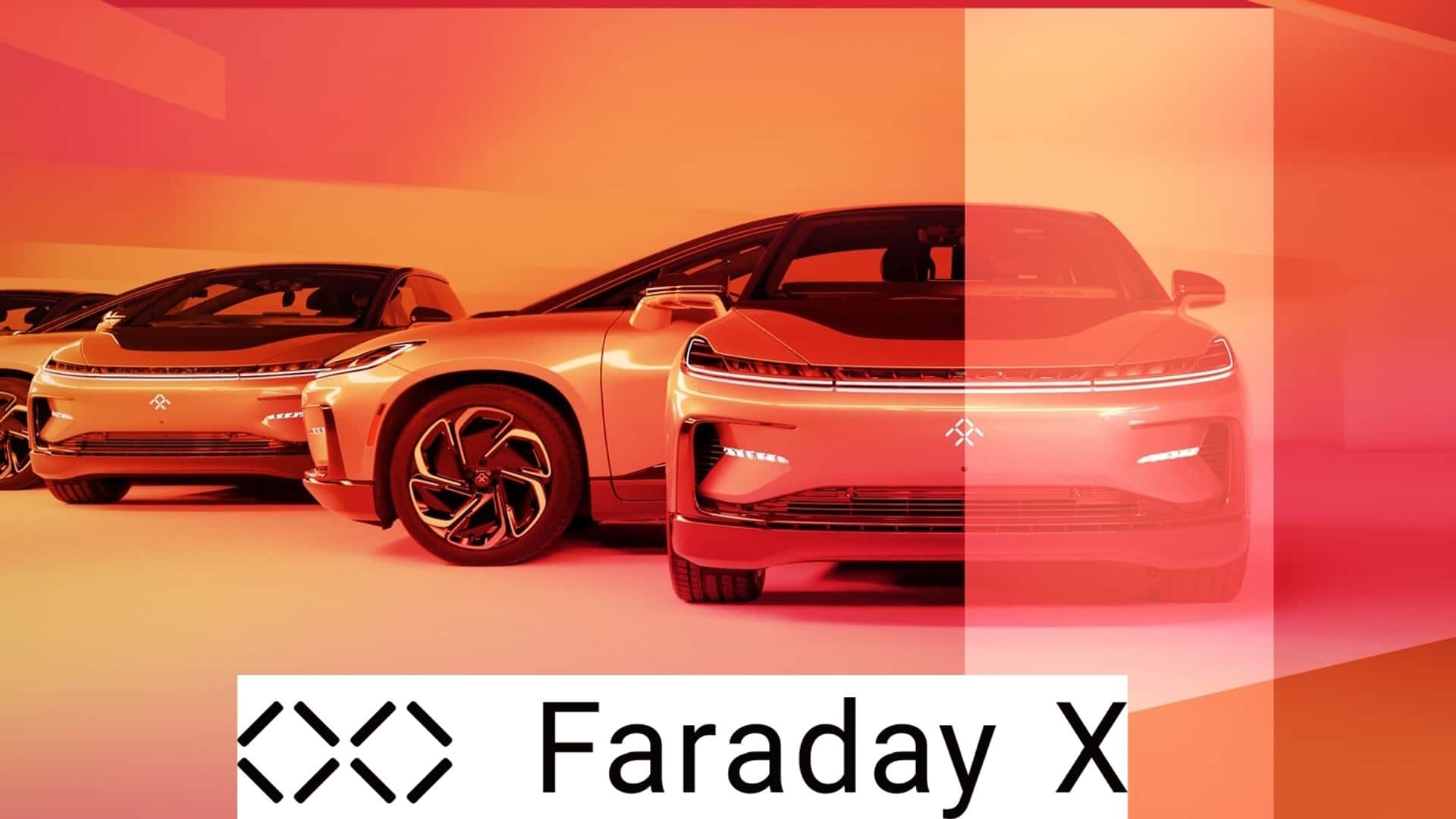
Key Takeaways:
- Faraday Future (FF) has launched a new sub-brand, Faraday X, at CES 2025, aiming for the affordable electric vehicle (EV) and plug-in hybrid (PHEV) market segments, priced between $20,000 and $50,000.
- Faraday X plans to introduce the FX 5, FX 6, and a luxury MPV called the “Super One,” with production for the Super One slated for late 2025 at its California facility.
- The company heavily emphasizes Artificial Intelligence (AI) integration, branding its vehicles as “AI-EVs” or “RE-AIEVs,” though current prototypes show basic voice commands and flawed AI companions.
- Despite optimistic projections from CEO Max Ma, Faraday Future faces significant credibility challenges stemming from a decade of financial instability, unfulfilled promises (like the FF 91), and the unresolved personal debts of its founder, Yueting “YT” Jia.
- The Super One prototype observed was largely a rebadged Chinese MPV, suggesting a reliance on external partners rather than entirely bespoke development, which adds to the skepticism about Faraday Future’s unique offerings and production timelines.
LAS VEGAS – At CES 2025, Faraday Future, the long-troubled electric vehicle manufacturer, presented a renewed vision for its future, anchored by a new sub-brand, Faraday X. Max Ma, CEO of Faraday X, articulated an optimistic strategy focused on overcoming a decade of operational hurdles to deliver higher-volume, more accessible electric vehicles and plug-in hybrids. His narrative is one of perseverance, promising deeply integrated AI experiences and vehicles priced between $20,000 and $50,000. However, the legacy of Faraday Future’s complex history casts a long shadow over these ambitious projections.

A Decade of Unfulfilled Promises and Financial Turmoil
The name Faraday Future evokes a convoluted history marked by corporate intrigue, geopolitical complexities, and a trail of undelivered commitments. Central to this narrative is its founder, Yueting “YT” Jia, once heralded as a visionary Chinese internet entrepreneur. Jia’s ambitious ventures, including a Netflix-like streaming service (Leshi) and a diverse conglomerate (LeEco) spanning televisions and smartphones, often blurred lines with Faraday Future’s operations.
His considerable personal debts ultimately led to a U.S. bankruptcy filing, though lingering issues in mainland China continue to impact his standing. Faraday Future’s financial travails have been extensive, including a period where it was rescued by Evergrande, the now-collapsed Chinese property giant, further complicating its already precarious financial footing.
The Genesis and Disappointment of the FF 91
The FF 91, unveiled at CES 2017, served as the initial beacon of Faraday Future’s aspirations. It promised groundbreaking specifications for its time: over 1,000 horsepower, an impressive 378 miles of electric range, and Level 4 autonomous driving capabilities. The company initially targeted a production start in 2018 at a purpose-built factory in Nevada, distinguishing itself from rivals like Tesla and Rivian, which often utilized retrofitted plants.

However, the promised Nevada factory never fully materialized. Work on the facility ceased even before the FF 91’s grand reveal, prompting the Nevada treasurer at the time to label the venture a “Ponzi scheme.” Eight years after the factory halt, seven years post-introduction, and six years beyond its projected production date, Faraday Future has reportedly produced only 16 FF 91 units. Most, if not all, of these vehicles have been allocated to employees, paid spokespeople—including the perpetually controversial American singer Chris Brown—and other company advocates, raising questions about the company’s strategic choices and market readiness.
Faraday X: A New Chapter or Another Chapter of Promises?
Returning to CES with a new sub-brand, Faraday X, the company asserts that this iteration will be different. While the flagship FF 91 commands a price tag exceeding $300,000, Faraday X aims to democratize access to electric mobility with vehicles in the $20,000 to $50,000 range. The proposed lineup includes the FX 5, targeting the $20,000-$30,000 segment, the FX 6, priced between $30,000 and $50,000, and the “Super One,” a luxury minivan with an undisclosed price point.
Details about the FX 5 and FX 6 remain sparse. However, Faraday X showcased a prototype of the Super One, announcing plans for its production by the end of 2025 at the company’s California manufacturing facility. The Super One is positioned to introduce the American market to the concept of “luxury MPVs,” a popular segment in Asian markets. This vehicle aims to blend the opulence of a Cadillac Escalade with the practicality of a Toyota Sienna, featuring lavish reclining seats and advanced technology.
The Vision Behind Faraday X and Max Ma’s Leadership
Max Ma characterizes this moment as a “Nokia and iPhone moment” for the brand, suggesting a disruptive innovation poised to “open people’s hearts.” Ma, an engineer by training with over a decade at Faraday Future, brings a robust automotive background, including engineering work for Porsche supplier Altran and Bosch, where he contributed to Volkswagen Group’s high-performance V-8, W-12, and W-16 engines. His personal experience, driving a Kia Carnival, informs his belief in a market gap for ultra-luxury minivans.
“Today, the celebrities are using Escalades. [It’s] big, but there’s no real luxury, top luxury, or, you know, space and comfort. There’s no AI. And then if you want to drive yourself, it’s very hard to drive. It’s a big car, right? At the same time, celebrities are starting to modify their Mercedes Sprinter vans because they do want to have [this experience],” Ma explained, outlining the niche the Super One aims to fill.
AI at the Core, but Practicality Raises Questions
Faraday Future has consistently leveraged AI buzzwords, and at CES 2025, this commitment was more pronounced than ever. The FF 91 is not merely an EV; it’s an “AI-EV.” The Super One transcends the definition of an MPV to become a “Luxury AI MPV.” With plans for a plug-in hybrid variant, it will be branded as a “Range Extended Artificial Intelligence Electric Vehicle,” or “RE-AIEV.”
Both Faraday X CEO Max Ma and Faraday Future CEO Matthias Aydt underscored AI’s centrality to their mission during the press briefing. (Notably, Yueting “YT” Jia was removed as CEO in 2022 after an internal investigation but remains with the company as Chief Product Officer.) While pitching AI as a core differentiator is strategically sound in today’s tech landscape, hands-on observation of the prototypes revealed certain discrepancies.
The Super One Prototype: A Rebadged Reality?
During a tour of the Super One prototype, it became apparent that Faraday X is collaborating with a Chinese partner, utilizing a mature design. The prototype was, essentially, a rebadged Chinese plug-in hybrid MPV, equipped with FF’s proprietary technology. While Faraday X did not permit photography, the interior bore strong resemblances to a vehicle like the Dongfeng Voyah Dream.
Crucially, the tech stack was incomplete, with the dashboard obscured by black cloth, a common practice in prototypes. The focus instead was on the plush rear recliners, which offered power recline and massage functions—a clear upgrade from standard high-end minivans like the Toyota Sienna or Kia Carnival. However, concrete AI features were conspicuously absent. When queried about AI integration, a product representative vaguely stated it would include “voice controls and have semi-autonomous driving features.” This response fell short of expectations, particularly given Ma’s claims of no other MPV product featuring AI, as these functionalities are standard across many contemporary vehicles.
A demonstration of the FF 91 showcased more advanced voice commands, successfully locating and navigating to a specific Italian restaurant while understanding contextual cues. Yet, the “large language model” AI companion on the rear screen proved less impressive. A spokesperson demonstrated its ability to pull up relevant stock tickers for videos, but after several attempts, the displayed stock prices were either several months out of date or entirely fabricated, bearing no relation to current market values. This specific flaw in a production-ready FF 91 highlights a potential disconnect between Faraday Future’s AI aspirations and its current implementation.
The Lingering Shadow of YT Jia
Yueting “YT” Jia, Faraday Future’s founder and Chief Product Officer, remains a pivotal yet controversial figure. His absence from the CES meeting was noticeable, and Max Ma confirmed his continued legal entanglements in China. Jia’s personal debt, secured against Faraday Future stock, and subsequent failure to repay creditors led to his U.S. bankruptcy and ongoing issues in China.
“Under U.S. law, YT has been through a successful personal restructuring,” Ma stated. “And within [Chinese] law, there have been certain small amounts of funding that need to be further cleared. So that’s the reason why he’s still working very hard to, kind of through different means, to try to earn money and pay the debt back to the debt creditors.”
This situation places Jia, and by extension Faraday Future, in a vulnerable position. His past financial difficulties, coupled with the company’s own history of near-collapse and reliance on now-defunct entities like Evergrande, contribute to persistent investor and public skepticism. Despite these concerns, Faraday Future CEO Matthias Aydt emphasized Jia’s critical role in the company. “His role is pretty important. He’s the founder of the company,” Aydt told InsideEVs. “He has given his ideas to the products. So from that perspective, he’s an essential and crucial element for our leadership team. He’s reporting in parallel to me, directly to the board, so his role is focusing very much on product and the user ecosystem.” Aydt dismissed concerns about Jia’s personal issues, characterizing them as separate from the company’s financial health and expressing personal trust in Jia’s character.
Forging a Path Forward Amidst Skepticism
Max Ma’s appeal for more positive media perception, a rare request from a CEO addressing journalists, underscores the monumental task facing Faraday Future. He paints a picture of a resilient company that has endured corporate takeovers, factory failures, and a protracted journey to launch the FF 91. His unwavering commitment is palpable, reflecting a deep-seated desire to finally realize the company’s potential.
Acknowledging the public’s difficulty in lending credibility to Faraday Future, Ma stated, “We have been trained, with big hearts, with resilience, with hard [work.] We also want to have this big opportunity to prove that we can do it again, right?” He added, “There’s also activities about a reputational issue. But today we have cleared up all those issues. It’s all behind us. We want to have a fresh start.” The ultimate test for Faraday Future and its new Faraday X sub-brand will be whether its current ambitious pledges translate into tangible, reliable products and sustained market presence, finally turning a decade of promises into concrete achievements.
Frequently Asked Questions (FAQ)
What is Faraday Future’s new sub-brand?
Faraday Future has launched a new sub-brand called Faraday X. This initiative aims to diversify the company’s product offerings beyond its ultra-luxury FF 91, targeting more accessible and higher-volume market segments with a range of new electric and plug-in hybrid vehicles.
What products does Faraday X plan to offer?
Faraday X plans to introduce the FX 5, an electric vehicle priced between $20,000-$30,000, and the FX 6, targeting the $30,000-$50,000 range. Additionally, it will launch the “Super One,” a luxury electric/plug-in hybrid minivan, with production expected to begin by late 2025.
What is the “Super One” luxury MPV?
The Super One is a luxury minivan (Multi-Purpose Vehicle) that Faraday X intends to introduce to the American market. It aims to offer Cadillac Escalade-level luxury within a minivan form factor, complete with plush reclining seats and advanced technology, positioned to fill a gap between high-end minivans and super-luxury SUVs.
What role does AI play in Faraday Future’s strategy?
Artificial Intelligence (AI) is presented as a core differentiator for Faraday Future and Faraday X. Vehicles are branded as “AI-EVs” or “RE-AIEVs,” emphasizing deeply integrated AI experiences. While voice control demonstrations showed promise, the current AI companion on the FF 91 production car exhibited notable inaccuracies, raising questions about practical implementation.
What are the main challenges Faraday Future faces?
Faraday Future’s primary challenges include overcoming a decade of financial instability, unfulfilled promises (such as the delayed FF 91 production and the unbuilt Nevada factory), and persistent skepticism regarding its operational execution. Additionally, the unresolved personal debts of founder Yueting “YT” Jia continue to affect the company’s public perception and credibility.
Who is YT Jia and what is his connection to Faraday Future?
Yueting “YT” Jia is the founder and current Chief Product Officer of Faraday Future. Once a prominent Chinese internet entrepreneur, his ventures led to significant personal debt, impacting Faraday Future. Although he underwent a personal restructuring in the U.S., he still faces ongoing legal and financial issues in China, which remain a point of scrutiny for the company.
What is the pricing strategy for Faraday X vehicles?
Faraday X’s pricing strategy is designed to appeal to a broader market, with vehicles ranging from $20,000 to $50,000. This is a significant shift from the flagship FF 91, which costs over $300,000. The FX 5 is targeting the lower end at $20,000-$30,000, while the FX 6 aims for $30,000-$50,000.