
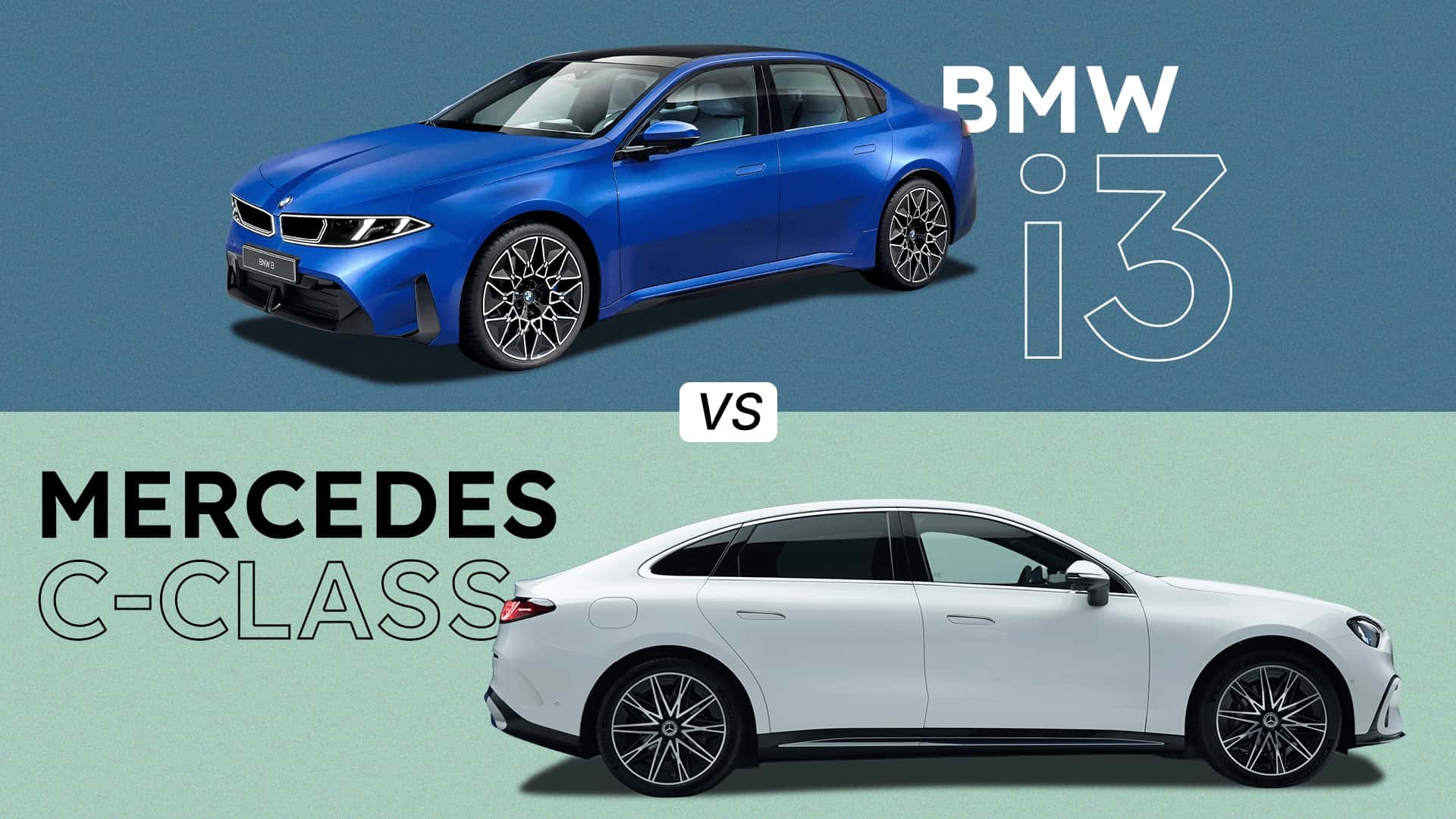
The automotive world is bracing for a significant showdown in the luxury electric sedan segment with the recent unveiling of the 2027 Mercedes C-Class EV, positioning it as a direct contender to BMW’s 2027 i3. These highly anticipated vehicles, while direct rivals, present distinctly different philosophies in their approach to the electric compact executive sedan market.
Both models are built upon advanced 800-volt architectures, a common ground that promises cutting-edge charging capabilities and enhanced performance. They also incorporate features that would have seemed futuristic in earlier generations of electric vehicles from both manufacturers. Despite Mercedes-Benz’s assertion that the new C-Class EV represents “the sportiest C-Class ever,” its design and engineering ethos lean heavily into traditional luxury and comfort. In contrast, BMW’s i3 embraces a more radical approach, emphasizing pure EV technology and a deliberate departure from established conventions.

Preliminary specifications suggest the BMW i3 holds an advantage in charging speed and projected range. However, the initial launch variant of the Mercedes C-Class EV boasts superior power and torque figures. While a comprehensive list of specifications for both luxury electric sedans is yet to be fully released, the available data offers a clear glimpse into their respective strengths and the fierce competition ahead.
Key Takeaways (TL;DR)
- **Divergent Philosophies:** Mercedes C-Class EV focuses on traditional luxury and comfort, while BMW i3 prioritizes advanced EV tech and breaking heritage.
- **Shared Foundation:** Both premium electric sedans feature 800-volt platforms for rapid charging.
- **Size & Practicality:** The C-Class EV is larger overall, closer to an E-Class in dimensions, but surprisingly, the i3 appears to offer more rear passenger space. The C-Class provides a frunk; i3’s cargo figures are pending.
- **Performance Edge:** The launch-spec Mercedes C400 4Matic delivers 482 hp and 590 lb-ft, accelerating from 0-62 mph in 3.9 seconds, outperforming the i3 xDrive 50’s 469 hp and 476 lb-ft.
- **Range & Charging:** BMW’s i3 leads with a larger 108.7 kWh battery offering a WLTP range of 559 miles (900 km) and 400 kW peak charging. The C-Class EV has a 94.3 kWh battery, 473 miles (762 km) WLTP range, and 330 kW peak charging.
- **Technological Approach:** Mercedes features a prominent, optional 39.1-inch pillar-to-pillar display. BMW adopts ‘shy tech’ with a unique 17.9-inch center screen and an innovative 43-inch panoramic windshield display.
- **Driving Dynamics:** C-Class offers adaptive air suspension and rear-wheel steering (optional). BMW highlights its ‘Heart of Joy’ supercomputer for refined driving and ‘limo stop’ functionality.
- **Bidirectional Charging:** Both support V2L; BMW i3 extends to V2H and V2G.
The Evolving Segment of Luxury Electric Sedans
The compact executive sedan segment has long been a battleground for Mercedes-Benz and BMW. As the automotive industry shifts towards electrification, this rivalry intensifies, but with new rules. Both manufacturers are leveraging their expertise to define the next generation of luxury electric sedans, aiming to capture a discerning clientele eager for sophisticated, sustainable mobility solutions.
The decision to build on an 800-volt platform is a critical one for both vehicles. This advanced electrical architecture is fundamental to achieving ultra-rapid charging speeds, significantly reducing downtime and enhancing the practicality of long-distance electric travel. It underscores a commitment to delivering a truly competitive EV experience, matching or even surpassing the convenience of traditional internal combustion engine vehicles.

Dimensions and Practicality: A Tale of Two Sizes
When comparing their physical presence, these two luxury electric sedans reveal distinct sizing strategies. The 2027 Mercedes C-Class EV measures an imposing 192.2 inches (4.88 meters) in length, with a wheelbase stretching 116.6 inches (2.96 meters). It is also 1.1 inches (2.7 cm) wider and 0.9 inches (24 mm) taller than its BMW counterpart.
These dimensions place the C-Class EV closer in size to the conventional E-Class sedan, suggesting a more substantial road presence. Despite its larger exterior, internal assessments indicate that rear passenger space in the C-Class EV might be less generous than anticipated, with a six-foot individual potentially finding limited foot and knee room. This observation suggests that Mercedes has prioritized other aspects of the interior, perhaps driver-centric luxury or advanced technological integration.
Conversely, the 2027 BMW i3 is slightly more compact, measuring 187.4 inches (4.76 meters) in length and featuring a 114.1-inch (2.89 meters) wheelbase. This sizing aligns it more closely with BMW’s traditional 3 Series, a benchmark for sporty executive sedans. Despite its marginally smaller exterior, the i3 appears to offer a more accommodating rear seating experience, a potentially critical factor for buyers who frequently transport passengers.
In terms of cargo capacity, the C-Class EV offers a practical 16.6 cubic-foot (470-liter) trunk, complemented by an additional 3.6 cubic-foot (101-liter) frunk. This dual storage solution enhances everyday usability. BMW, however, has not yet released official cargo volume figures for the i3, precluding a direct comparison on this specific metric. Both luxury electric sedans are poised to offer station wagon variants in the future, further expanding their practicality for diverse consumer needs.
Performance and Powertrain: Powering the Electric Future
The initial launch specifications highlight a clear performance advantage for the Mercedes-Benz C-Class EV. The C400 4Matic variant features a robust dual-motor powertrain, generating a combined output of 482 horsepower and an impressive 590 pound-feet (800 Nm) of torque. This significant power enables the C-Class EV to achieve a sprint from a standstill to 62 mph (100 km/h) in a swift 3.9 seconds.
A key engineering detail in the C-Class is its rear motor, which provides the primary propulsion and is paired with a two-speed transmission. Mercedes-Benz states that this configuration enhances both acceleration and overall efficiency. Furthermore, the front motor can mechanically decouple from the wheels, a design choice aimed at conserving energy and optimizing range during certain driving conditions. These sophisticated engineering solutions underscore Mercedes’ commitment to high-performance luxury electric sedans.
The BMW i3 xDrive 50, its launch-spec model, is equipped with a powertrain similar to the recently reviewed iX3. This setup delivers 469 horsepower and 476 pound-feet (645 Nm) of torque. While substantial, these figures place it 13 horsepower and 114 pound-feet (155 Nm) behind the equivalent Mercedes variant. BMW has not yet published an official acceleration figure for the i3. However, considering that the heavier iX3 with the same powertrain completes the 0-62 mph sprint in 4.9 seconds, a reasonable estimate for the lighter i3 would be approximately 4.5 seconds.
Both Mercedes-Benz and BMW are expected to broaden their respective lineups with additional model variants. These will likely include more efficient single-motor configurations for mainstream appeal, as well as high-performance versions. Future AMG variants of the electric C-Class are reportedly set to feature a three-motor setup, promising extreme power. Similarly, the electric M3 equivalent from BMW is anticipated to utilize an advanced quad-motor system with sophisticated torque vectoring, signaling a new era for performance luxury electric sedans.
Range and Charging: Endurance and Efficiency Benchmarks
In the crucial metrics of range and charging capabilities, the BMW i3 appears to hold a significant lead over the Mercedes C-Class Electric. The i3 is equipped with a larger 108.7 kWh battery pack, surpassing the C-Class’s 94.3 kWh unit. This larger capacity translates into a World harmonized Light vehicles Test Procedure (WLTP) range of 559 miles (900 km) for the i3, considerably higher than its rival’s 473 miles (762 km) WLTP rating. It is important to note that WLTP figures are typically more optimistic than the EPA range figures, which are yet to be released for both models.
The BMW i3 also boasts superior charging speeds, with a peak charging power rating of 400 kW. This enables it to add an impressive 249 miles (400 km) of range in just 10 minutes and recharge its battery from 10% to 80% in approximately 21 minutes. The Mercedes C-Class EV, while still offering rapid charging, has a lower peak rating of 330 kW. It can replenish 202 miles (325 km) in 10 minutes and complete a 10% to 80% charge in 22 minutes. Mercedes vehicles, such as the GLC EV, have demonstrated the ability to exceed their stated maximum charging ratings under ideal conditions, potentially reaching over 350 kW.
Details regarding a single-motor, smaller-battery variant of the iX3 have already emerged, featuring an 82.6 kWh battery with a WLTP range of 395 miles (620 km) and a 315-horsepower rear motor. BMW is highly likely to offer similar specifications in a future i3 variant. There is also the potential for a single-motor i3 with the larger battery, which could deliver an exceptionally long range, setting new benchmarks for luxury electric sedans.
Both models are designed to support vehicle-to-load (V2L) bidirectional charging, allowing users to power external devices. Expanding on this capability, BMW has confirmed that the i3 will also support vehicle-to-home (V2H) and vehicle-to-grid (V2G) charging, offering advanced energy management options for homeowners and utilities.
Technological Innovation and Cabin Experience
Both luxury electric sedans are equipped with highly advanced technological features, yet their presentation of these innovations differs markedly. BMW adopts a ‘shy tech’ philosophy, where much of its integrated technology remains discreetly hidden until activated or required for interaction. In stark contrast, Mercedes-Benz opts for a more overt display of its features, showcasing its technological prowess more prominently within the cabin.
A prime example of Mercedes’ approach is the optional, enormous 39.1-inch pillar-to-pillar dashboard display in the C-Class EV. This expansive single screen represents a bold statement, aiming to convey a strong sense of futurism and digital immersion. For those who prefer a more conventional setup, the standard configuration consists of three separate, well-integrated screens.
The BMW i3, however, maintains a more restrained aesthetic. While its 17.9-inch parallelogram-shaped central screen is visually distinctive—designed to evoke the driver-angled center consoles of classic BMWs—it functions as a high-quality, albeit conventional, infotainment display. The true innovation in the i3’s display technology comes in the form of a 43-inch panoramic display that stretches across the entire lower edge of the windshield. This unique system blends elements of a traditional screen with a head-up display, presenting crucial information directly in the driver’s line of sight and offering six customizable widget slots for additional data. The user experience with a similar setup in the iX3 SUV was particularly well-received, suggesting BMW’s approach in this area may offer superior driver engagement.
Driving Dynamics and Ride Quality
The 2027 Mercedes C-Class EV emphasizes adaptability and comfort, particularly with its optional Comfort and Agility Package. This premium package includes adaptive air suspension and 4.5 degrees of rear-wheel steering. These features are designed to endow the C-Class with a broad spectrum of driving personalities, ranging from plush, compliant cruising to more agile and responsive handling. If these features perform as effectively as they did in the GLC EV, the C-Class EV will offer levels of comfort and dynamic flexibility that the BMW i3, lacking these specific features, may struggle to match.
BMW, for its part, has made considerable advancements in driving intelligence with its ‘Heart of Joy’ supercomputer, which meticulously controls the i3’s driving dynamics. This system, also experienced in the iX3 SUV, delivers a remarkably smooth, sharp, and controlled driving experience. It is engineered to make provoking and managing oversteer both engaging and predictable for the driver. A notable feature enabled by this sophisticated computing power is the ‘limo stop,’ which brings the car to a graceful halt without the typical jarring associated with braking, enhancing passenger comfort. While the Mercedes also aims for smooth stops, the BMW’s dedicated system appears to offer a superior level of refinement in this specific aspect of luxury electric sedans.
A New Chapter in an Enduring Rivalry
The forthcoming launch of the 2027 Mercedes C-Class EV and the 2027 BMW i3 marks a pivotal moment in an age-old rivalry, now redefined by electrification. Both manufacturers are vying for the same discerning buyers in the luxury electric sedans market, yet their interpretations of what constitutes a compelling electric sedan have distinctly diverged. Mercedes-Benz appears intent on translating its established brand values of opulent luxury and refined comfort into the electric era, ensuring a seamless transition for its loyal clientele.
In contrast, BMW is leaning into electrification as a catalyst for innovation, using it as a justification to break with certain traditions while still drawing inspiration from its rich heritage. The i3 thus positions itself as a more advanced, potentially more futuristic electric vehicle. This comparison extends beyond a simple spec sheet analysis, where the BMW generally holds an edge in range and charging. It delves into two fundamentally different visions of what consumers will seek in the next generation of premium electric vehicles.
Ultimately, the definitive choice between these two exceptional luxury electric sedans will likely come down to a hands-on driving experience and individual preference. What is clear, however, is that this enduring rivalry continues to thrive, promising exciting advancements and diverse options for consumers in the rapidly evolving electric vehicle landscape.
FAQ
Q1: What are the main differences in philosophy between the 2027 Mercedes C-Class EV and BMW i3?
The Mercedes C-Class EV leans towards traditional luxury and comfort, translating its established brand values into an electric platform. The BMW i3, conversely, fully embraces advanced EV technology and aims to break with tradition, offering a more futuristic and radical electric experience.
Q2: Which vehicle offers better range and faster charging?
The BMW i3 surpasses the C-Class EV in both range and charging speed. It features a larger 108.7 kWh battery for a 559-mile (WLTP) range and supports peak charging at 400 kW. The C-Class EV has a 94.3 kWh battery, offering 473 miles (WLTP) range, with a 330 kW peak charging rate.
Q3: How do their power and acceleration compare?
The launch-spec Mercedes C400 4Matic is more powerful, delivering 482 hp and 590 lb-ft of torque, achieving 0-62 mph in 3.9 seconds. The BMW i3 xDrive 50 produces 469 hp and 476 lb-ft, with an estimated 0-62 mph time of around 4.5 seconds.
Q4: What are the key differences in their interior technology and displays?
Mercedes flaunts its tech with an optional 39.1-inch pillar-to-pillar dashboard display. BMW adopts ‘shy tech’ with a unique 17.9-inch center screen and an innovative 43-inch panoramic display across the windshield, which functions as an advanced head-up display.
Q5: Do both models support bidirectional charging?
Yes, both the 2027 Mercedes C-Class EV and the 2027 BMW i3 support vehicle-to-load (V2L) bidirectional charging. Additionally, BMW has confirmed that the i3 will also support vehicle-to-home (V2H) and vehicle-to-grid (V2G) capabilities, offering more comprehensive energy management options.
Q6: Will there be performance variants of these luxury electric sedans?
Yes, both manufacturers are expected to launch high-performance variants. The electric C-Class is reportedly getting an AMG version with a three-motor setup, while the electric M3 equivalent from BMW is believed to feature an advanced quad-motor configuration for superior torque vectoring and power.