
Key Takeaways
- Despite robust consumer interest, exemplified by a third of US new-vehicle buyers considering Chinese-made cars, a complex web of tariffs, regulatory issues, and outright bans currently prevents their widespread availability in the United States.
- Internet influencers, such as Richard Benoit and Marques Brownlee, play a significant role in introducing American audiences to advanced Chinese electric vehicle (EV) models, generating millions of views and substantial consumer inquiries.
- A 100% tariff imposed by the Biden administration in 2024, coupled with the necessity for Chinese EVs to meet specific US Environmental Protection Agency (EPA) and Department of Transportation (DOT) standards, forms the primary impediment to market entry.
- Claims of drastically cheaper Chinese EVs are often misleading, as vehicle pricing and design would need extensive customization (homologation) for the US market, adding significant costs and aligning prices with market expectations.
- While major Chinese automakers like BYD and Xiaomi currently deny US market entry plans, subtle groundwork, including sponsored influencer trips and market evaluations by companies like Geely (owner of Zeekr), suggests a potential long-term strategic interest.
A burgeoning paradox is taking shape within the United States automotive landscape, where a significant segment of consumers expresses keen interest in advanced Chinese electric vehicles (EVs), even as stringent governmental barriers prevent their entry into the market. This scenario highlights a growing tension between consumer demand, driven by digital influence, and protectionist policies aimed at safeguarding domestic industries.
While often regarded as a forbidden fruit for American buyers, Chinese electric vehicles are increasingly capturing the imagination of early adopters across the US. This evolving consumer sentiment is largely attributable to the expansive reach of internet influencers who are showcasing the capabilities and perceived value of these overseas models to millions.

Growing Consumer Appetite for Chinese Electric Vehicles
Data from an annual survey by the research firm Strategic Vision, conducted in 2026, reveals a compelling shift in consumer attitudes. The findings indicate that a substantial one-third of new-vehicle buyers in the United States have expressed a willingness to consider purchasing a vehicle manufactured in China. This statistic underscores a notable openness among American consumers to exploring non-traditional automotive options, provided they meet quality and value expectations.
This surge in interest is not merely anecdotal; it is demonstrably amplified by the powerful platform of social media. Prominent online personalities have leveraged their extensive reach to introduce American audiences to a range of Chinese electric vehicles, effectively bypassing conventional marketing channels and directly engaging potential buyers.
The Influencer Effect: Driving Curiosity and Demand
One notable example is Richard Benoit, host of the widely followed Rich Rebuilds YouTube channel. Approximately a year ago, Benoit undertook a journey to Alaska specifically to test-drive several of China’s latest electric vehicle models. His subsequent video, provocatively titled “I drove the cheap Chinese cars that are illegal in the USA. Now I know why,” quickly garnered over 2 million views.
Benoit consistently observes heightened engagement from his US subscriber base whenever he features Chinese electric vehicles. He articulated this phenomenon to Bloomberg, stating, “The second I mention a Chinese car, the videos skyrocket.” This clear indication of consumer eagerness led him to conclude, “Americans want these cars.”
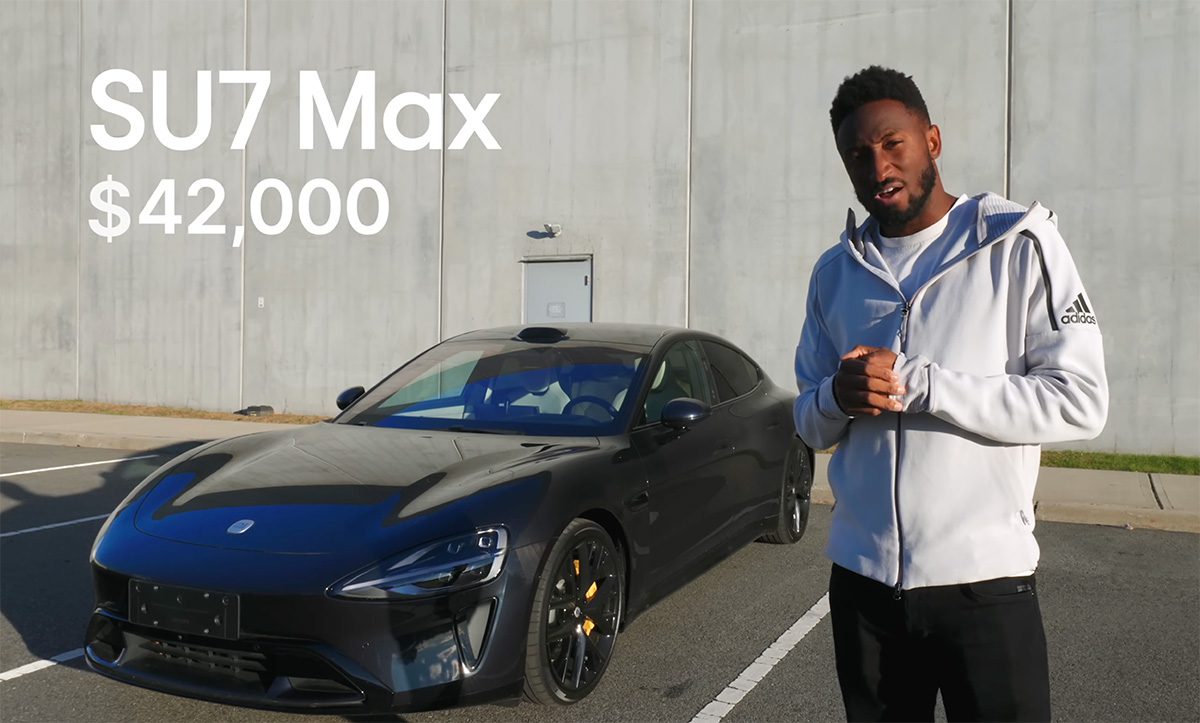
Similarly, Marques Brownlee, a respected tech pundit commanding an audience of 21 million YouTube subscribers, significantly contributed to this trend. His review of the Xiaomi SU7, published in December, attracted an impressive 10 million views. The immediate aftermath of Brownlee’s video saw a direct impact on interest, with China EV Marketplace, an exporter specializing in Chinese electric vehicles, reporting an influx of 1,000 requests for price quotes originating from the United States.
Navigating the Labyrinth of Tariffs and Regulations
Despite the evident consumer demand and the widespread interest generated by online content creators, the path for these potential orders to be fulfilled remains blocked. A complex interplay of trade tariffs, specific regulatory requirements, and outright bans currently acts as an impenetrable barrier, preventing the direct import and sale of Chinese electric vehicles in the US market.
In 2024, the US government significantly tightened its stance on Chinese imports. President Joe Biden notably imposed a 100% tariff on Chinese electric vehicles. This substantial tariff effectively doubles the import cost of such vehicles, rendering their direct entry into the US market economically unfeasible for most consumers and distributors.
Key Impediments: Tariffs, Bans, and Homologation
Beyond financial deterrents, the US has also implemented prohibitions on the import of vehicles containing specific components manufactured in China, further complicating the supply chain for any potential imports. However, the most formidable obstacle remains regulatory in nature.
Chinese automakers have not, to date, designed their vehicles to comply with the stringent standards set by the US Environmental Protection Agency (EPA) for emissions and fuel economy, nor those mandated by the Department of Transportation (DOT) for safety. Without meeting these critical federal regulations, Chinese electric vehicles cannot be legally insured or titled for road use within the United States, effectively preventing their sale and operation.
Dispelling Misconceptions About Pricing
The narrative surrounding Chinese electric vehicles has often been colored by sensational claims, particularly regarding their affordability. A recent article by Reuters, for instance, carried the headline “For the average price of a car in the US, you could buy 5 new Chinese EVs.” While attention-grabbing, such statements are widely regarded as misleading and fail to account for the economic realities of international trade and automotive market dynamics.
The notion that one could purchase five new Chinese electric vehicles for the price of one average American car is geographically constrained. This economic disparity in pricing applies exclusively within China’s domestic market. For a vehicle to be introduced into the US market, automakers must undertake a process known as ‘homologation.’ This involves customizing and modifying cars to meet the distinct and often rigorous regulatory standards of different markets, such as those in the United States, a process that invariably adds significant costs to manufacturing and development.
Furthermore, automotive pricing is not uniform across global markets; it is strategically set based on what each local market can bear and what consumers are willing to pay. While Chinese electric vehicles would likely be highly competitive in the US at prices slightly below those of comparable American models, there is little incentive for manufacturers to price them 80% lower than their local competitors. As EV expert John Voelcker pertinently observed, many of the ultra-cheap models frequently cited in such comparisons are often tiny subcompacts, a vehicle segment that historically has not garnered widespread popularity among US buyers.
Evolving Political Landscape and Industry Stances
The political discourse surrounding the potential entry of Chinese automakers into the US market has been marked by a degree of inconsistency. In January, President Biden made remarks to a group of business leaders in Detroit, suggesting an openness to the idea of allowing Chinese automakers to establish production facilities within the US. This approach mirrors existing foreign manufacturing operations in Mexico and potentially Canada, where Chinese firms are already building vehicles.
However, this contemplation has met with significant opposition. Influential Democratic lawmakers and powerful US auto industry groups have vocally urged the administration to abandon any such plans, citing concerns over national security, economic competition, and the protection of American jobs.
Automaker Perspectives and Subtle Market Signals
Against this backdrop, the official positions of major Chinese automakers regarding US market entry remain varied. Geely, the parent company of the prominent EV brand Zeekr, has publicly stated its active evaluation of the US market, with a potential decision expected within the next two to three years. In contrast, BYD, which already operates electric bus manufacturing facilities in the US, has indicated no current intentions to enter the US passenger car market. Similarly, Xiaomi has communicated to Bloomberg that it has no immediate plans for US sales.
Despite these official declarations, subtle activities suggest that groundwork for future US market engagement may be underway. DCar, a Chinese automotive content platform, has been actively cultivating relationships with American influencers. This platform, which maintains it operates independently from specific car manufacturers, reportedly funded the shipment of a selection of Chinese electric vehicles to Alaska for review purposes and financed travel for several automotive reviewers.
Moreover, Zeekr has also supported reviewers’ expenses, a common industry practice, for them to test-drive some of its electric vehicles in California. A spokesperson for Geely addressed these collaborative efforts, noting to Bloomberg, “While we love the positive reception from US reviewers, these collaborations are not a signal of an imminent US launch.”
Influencer Advocacy for Competition and Consumer Choice
The role of influencers in this evolving narrative extends beyond merely showcasing vehicles. Forrest Jones, a prominent US auto influencer with 8.9 million TikTok followers, has confirmed collaborations with DCar and directly with Chinese automakers. Jones acknowledges the controversial nature of promoting Chinese electric vehicles in the American market but staunchly believes that robust competition is ultimately beneficial for the automotive industry as a whole.
Jones articulates a vision where consumer awareness, even for products not immediately available, can drive market improvements. He conveyed to Bloomberg, “Even if we don’t get them here, I would like consumers to know what’s out there and have that ammunition to demand more from the brands we do have access to.” This perspective underscores the power of informed consumer choice and its potential to push existing domestic and international brands to innovate further and offer more competitive products.
Frequently Asked Questions (FAQ)
Why can’t Chinese electric vehicles be widely bought in the US?
Chinese electric vehicles face significant barriers due to a 100% tariff imposed by the US government in 2024, strict import bans on specific components, and a crucial lack of compliance with US Environmental Protection Agency (EPA) and Department of Transportation (DOT) safety and environmental standards, which prevents legal registration.
Are Chinese electric vehicles truly much cheaper than US models?
The perception of Chinese EVs being drastically cheaper largely applies to prices within China. For these vehicles to enter the US market, they would require extensive modifications (homologation) to meet regulatory standards, adding significant costs. Automakers also price vehicles according to market demand, making drastic price reductions unlikely.
How are US consumers learning about Chinese electric vehicles?
Internet influencers play a pivotal role. Popular YouTube personalities and TikTok creators, like Richard Benoit and Marques Brownlee, test-drive and review Chinese EVs, generating millions of views and sparking considerable interest among American audiences who are eager to learn about global automotive innovations.
What is the US government’s stance on Chinese EV imports?
The US government has taken a complex stance. While President Biden imposed a 100% tariff in 2024, he has also suggested openness to Chinese automakers potentially producing vehicles within the US. However, this idea faces strong opposition from Democratic lawmakers and domestic auto industry groups.
Are Chinese automakers planning to enter the US market soon?
Officially, most major Chinese automakers like BYD and Xiaomi state no immediate plans for US passenger car market entry. However, Geely (owner of Zeekr) is evaluating the market, and some Chinese content platforms and automakers are engaging with US influencers, suggesting potential long-term strategic interest.