
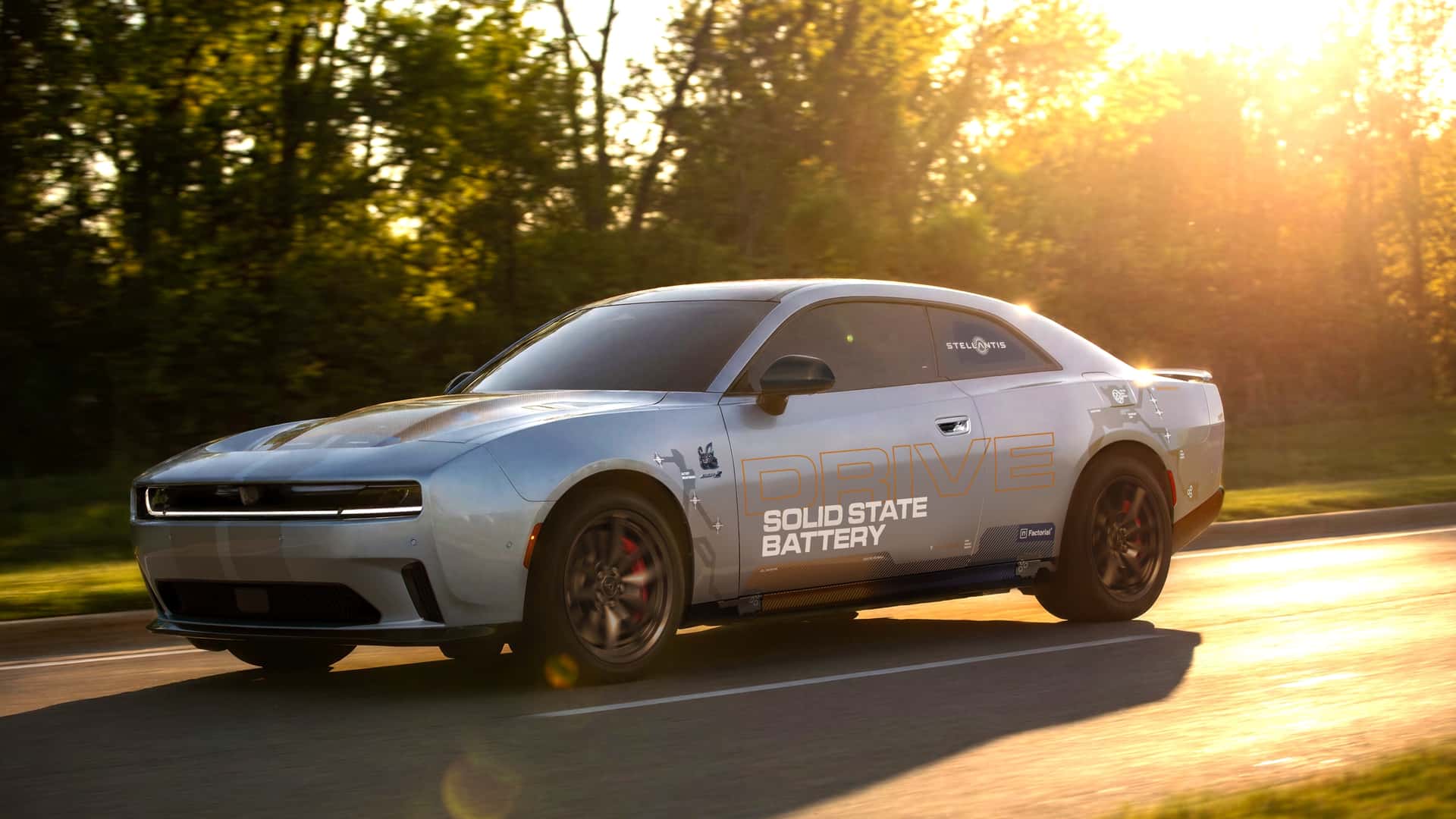
In a significant stride towards the next generation of electric vehicle (EV) technology, Stellantis, the global automotive giant and parent company of iconic brands such as Jeep, Ram, and Dodge, has initiated comprehensive real-world tests for its semi-solid-state battery technology. The high-stakes evaluation is being conducted using a prototype of the highly anticipated Dodge Charger EV, marking a crucial phase in the development of advanced energy storage solutions for future electric mobility.
This pioneering program underscores Stellantis’s commitment to pushing the boundaries of EV performance, aiming to overcome existing limitations in range, charging speed, and cost. The integration of experimental semi-solid-state batteries into a mainstream model like the Dodge Charger EV signals a serious intent to validate the technology under genuine operating conditions.
The Dawn of Semi-Solid-State Technology in EVs
The quest for superior battery technology has been a cornerstone of EV innovation. While conventional lithium-ion batteries have seen continuous advancements and benefit from well-established supply chains, their inherent limitations in energy density and charging efficiency have prompted automakers to explore more advanced alternatives.
Solid-state batteries, often hailed as the ‘holy grail’ of EV power, promise revolutionary improvements in energy density, safety, and charging times by replacing liquid electrolytes with solid ones. However, their development and large-scale manufacturing have proven notoriously complex, facing significant engineering and cost hurdles.
Semi-solid-state batteries emerge as a promising intermediate solution, utilizing a gel-like electrolyte instead of a fully solid one. This approach aims to capture many of the benefits of solid-state technology while mitigating some of the manufacturing challenges, offering a viable pathway to higher-performance EVs in the near term.

Stellantis’s Strategic Partnership with Factorial Energy
At the core of Stellantis’s ambitious testing initiative is a strategic collaboration with Factorial Energy, a Massachusetts-based battery startup specializing in semi-solid-state technology. The Dodge Charger EV test mule has been outfitted with a semi-solid-state battery pack developed by Factorial, showcasing a tangible progression from laboratory research to practical application.
This development vehicle will serve as a critical platform to fine-tune and validate the battery pack’s essential attributes. Extensive real-world tests will scrutinize its safety protocols, evaluate performance metrics under varying loads, and assess long-term reliability in actual charging and diverse driving conditions.
Ned Curic, Stellantis’s chief engineering and technology officer, emphasized the importance of this milestone, stating, “This milestone shows we are bringing solid-state batteries closer to our customers with the potential for longer range, faster charging, and lower costs.” His statement highlights the strategic objectives behind integrating this advanced battery chemistry.
Unpacking the Performance Potential: Factorial’s FEST Cell
The semi-solid-state battery pack undergoing testing features Factorial’s innovative FEST cell chemistry. This technology boasts an impressive energy density of 375 watt-hours per kilogram (Wh/kg). To put this in perspective, conventional lithium-ion batteries typically operate within a range of 200-300 Wh/kg, making Factorial’s solution a substantial leap forward in energy storage capability.
Beyond increased energy density, the FEST cell promises significantly improved charging performance. Stellantis reports that the pack can charge from 15% to 90% in just 18 minutes. This represents a meaningful enhancement over the current production Dodge Charger EV’s lithium-ion pack, which requires approximately 30 minutes to charge from 10% to 80%.
Furthermore, the Factorial battery demonstrates robust thermal stability, capable of operating across a wide temperature range from -22 degrees Fahrenheit (-30 degrees Celsius) to 113 degrees Fahrenheit (45 degrees Celsius). Such resilience is crucial for reliable EV performance in diverse global climates.
Siyu Huang, CEO of Factorial, underscored the collaborative effort, remarking, “Real-world road testing is exactly the kind of deep full-stack collaboration that solid-state has always required.” This sentiment highlights the complex interplay between battery developers and automakers required to bring such cutting-edge technologies to fruition.
Integration and Future Pathways for the Dodge Charger EV
Stellantis engineers have ingeniously integrated the Factorial semi-solid-state battery into the existing battery pack design. This was achieved using a newly patented mechanical architecture specifically engineered to extract maximum performance and efficiency from the advanced cells. This integration approach minimizes radical redesigns, potentially accelerating the path to commercialization.
Factorial Energy has previously indicated that the insights gained from these semi-solid-state cells will be instrumental in the development of its forthcoming all-solid-state Solstice battery. Thus, the real-world validation with the Dodge Charger EV is not merely about optimizing the current technology but also laying the groundwork for even more advanced solutions.
Previous Road Tests and Industry-Wide Pursuit
This is not Factorial’s first foray into real-world testing outside the laboratory. In a notable instance last year, Factorial’s semi-solid-state cells were integrated into a Mercedes-Benz EQS prototype. This vehicle undertook an extensive cross-country road trip across Europe, reportedly covering an impressive 749 miles on a single charge, with 85 miles of range still available at the journey’s conclusion. This demonstration provided compelling evidence of the technology’s potential.
The pursuit of solid-state and semi-solid-state battery technology is a global race among leading automakers. Last year, BMW commenced testing all-solid-state cells from Colorado-based startup Solid Power in a prototype i7. The German automaker has also enlisted Samsung SDI to assist in the development and validation of Solid Power’s cells.
Toyota, a pioneer in hybrid technology, maintains its own robust solid-state battery program. Concurrently, several prominent Chinese automakers, including BYD, Nio, and MG Motor, are also actively engaged in research and development to bring solid-state batteries to the market, underscoring the industry’s collective bet on this transformative technology.
The Promise of a New Era for Electric Vehicles
The successful integration and rigorous testing of semi-solid-state batteries in the Dodge Charger EV prototype represent a significant step towards a new era of electric mobility. This technology holds the promise of electric vehicles that offer substantially longer driving ranges, dramatically reduced charging times, and potentially lower overall production costs, making EVs more accessible and practical for a wider consumer base.
Furthermore, the enhanced safety profile often associated with solid-state electrolytes could bolster consumer confidence in EVs. As Stellantis continues to validate and refine this technology, its efforts with the Dodge Charger EV will undoubtedly contribute invaluable data and insights, accelerating the global transition to sustainable transportation.
Key Takeaways
- Stellantis is conducting real-world tests of semi-solid-state batteries in a Dodge Charger EV prototype.
- The initiative is a collaboration with battery startup Factorial Energy, utilizing their FEST cell technology.
- The experimental battery boasts 375 Wh/kg energy density, significantly higher than conventional lithium-ion batteries (200-300 Wh/kg).
- It promises rapid charging, achieving 15-90% in just 18 minutes, compared to 10-80% in 30 minutes for current models.
- Factorial’s semi-solid-state cells were previously tested in a Mercedes-Benz EQS, achieving 749 miles on a single charge.
- This testing aims to validate safety, performance, reliability, and inform future all-solid-state battery development.
- The automotive industry, including BMW, Toyota, BYD, Nio, and MG Motor, is actively pursuing advanced solid-state battery solutions.
Frequently Asked Questions (FAQ)
What is a semi-solid-state battery?
A semi-solid-state battery is an advanced type of electric vehicle battery that uses a gel-like electrolyte instead of a purely liquid one, found in conventional lithium-ion batteries, or a fully solid one, found in solid-state batteries. This design aims to combine the benefits of both technologies, offering higher energy density and improved safety.
Why is Stellantis testing this technology in a Dodge Charger EV?
Stellantis is utilizing a Dodge Charger EV prototype as a test mule to conduct rigorous real-world validation of Factorial’s semi-solid-state battery technology. This practical application allows engineers to fine-tune the battery’s safety, performance, and reliability under actual driving and charging conditions, crucial for future production models.
What are the key advantages of semi-solid-state batteries?
Key advantages include significantly higher energy density, enabling longer vehicle ranges, and substantially faster charging times compared to conventional lithium-ion batteries. They also offer improved thermal stability, allowing for efficient operation across a wider temperature spectrum, and potentially enhanced safety due to the less volatile electrolyte.
How does the charging speed compare to current EV batteries?
The semi-solid-state battery in the Dodge Charger EV prototype can charge from 15% to 90% in approximately 18 minutes. This is a considerable improvement over the current Dodge Daytona EV’s lithium-ion pack, which typically takes around 30 minutes to charge from 10% to 80%, demonstrating a major leap in charging efficiency.
Which other automakers are developing solid-state batteries?
Many major automotive manufacturers are investing heavily in solid-state and semi-solid-state battery research. Notable players include BMW, which is testing Solid Power’s cells; Toyota, with its own dedicated program; and Chinese automakers like BYD, Nio, and MG Motor, all aiming to integrate these next-generation battery technologies into their future EV lineups.
What is the energy density of Factorial’s FEST cell?
Factorial’s FEST cell, the semi-solid-state battery undergoing testing in the Dodge Charger EV, boasts an energy density of 375 watt-hours per kilogram (Wh/kg). This is notably higher than the typical range of 200-300 Wh/kg found in most conventional lithium-ion batteries, contributing to the potential for extended EV range.