
Key Takeaways:
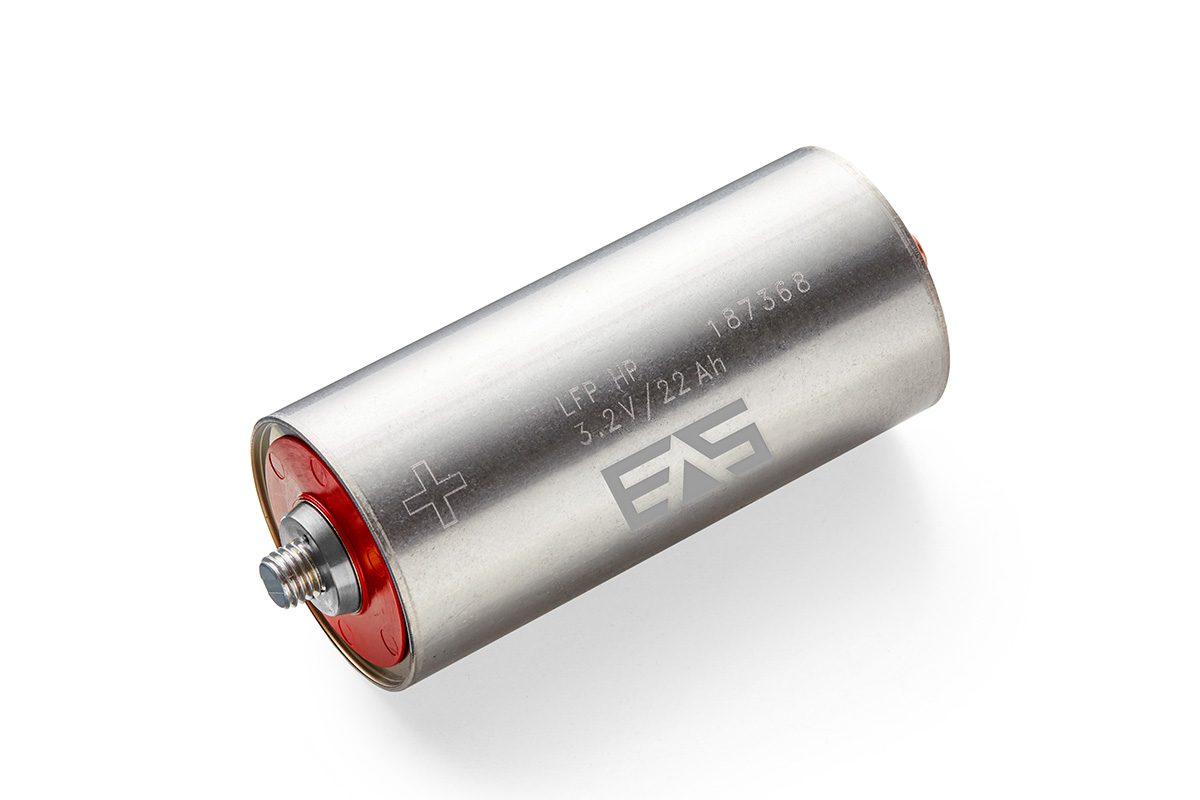
- German manufacturer EAS Batteries has launched its UHP601300 LFP 22, a large-format cylindrical LFP cell.
- The new cell integrates Asahi Kasei’s Acetolyte, an advanced acetonitrile-based electrolyte, enhancing performance.
- This innovative electrolyte significantly boosts ionic conductivity and reduces internal resistance, leading to a 60% improvement in continuous power.
- The technology promises better performance across a wider temperature range, addressing critical challenges in conventional lithium-ion batteries.
- EAS and Asahi Kasei are also developing a 46xxx cylindrical format, targeting low-voltage EV batteries and global sublicensing opportunities.
German battery innovator EAS Batteries has announced the commercial availability of its UHP601300 LFP 22, a groundbreaking large-format cylindrical lithium iron phosphate (LFP) cell. This new offering leverages Asahi Kasei’s proprietary Acetolyte, an advanced acetonitrile-based electrolyte, designed to deliver unparalleled performance characteristics across various demanding applications. The partnership between EAS Batteries and Asahi Kasei marks a significant stride in battery technology, promising enhanced efficiency and durability.

According to both companies, the integration of the acetonitrile-based electrolyte provides substantial benefits over conventional carbonate-solvent electrolytes. These advantages include superior ionic conductivity, notably lower internal resistance, and a significantly improved rate capability across a broader operational temperature spectrum. These enhancements are critical for applications requiring sustained high power and reliable performance in diverse environmental conditions.
Transforming Power Delivery with Advanced Cell Chemistry
The UHP601300 LFP 22 cell represents a paradigm shift in LFP battery capabilities. Comparative data from EAS Batteries highlights the dramatic improvements achieved by incorporating the acetonitrile-based electrolyte. For instance, the nominal capacity of the new cell stands at 22 Ah, setting a new benchmark for its class.
In terms of continuous discharge, the Acetolyte-equipped cell boasts an impressive 2,550 W/kg, translating to 880 A at 40C. This is a remarkable 60% increase compared to conventional EAS cells, which typically offer 1,550 W/kg or 550 A at 25C. This significant power density gain directly addresses the needs of high-rate applications where sustained current delivery is paramount.
While the pulse discharge gain is more modest, approximately 10%, the new cell still achieves 3,760 W/kg or 1,320 A at 60C for a two-second pulse, compared to 3,420 W/kg or 1,320 A at 60C for conventional cells. This sustained power capability underscores its utility in demanding scenarios.
Furthermore, the cycle life of the UHP601300 LFP 22 is rated at 2,400 cycles when discharged and charged at 5C (5C/5C) with 100% Depth of Discharge (DoD), retaining 80% of its initial capacity. This extended cycle life enhances the long-term viability and cost-effectiveness of battery systems.
Real-World Impact Across Industries
The substantial improvement in continuous power—a 60% gain—is particularly impactful for industries that rely on high-rate applications. Sectors such as motorsport, aerospace, and heavy industrial equipment often require batteries capable of delivering sustained, high current without significant performance degradation. For these applications, the ability to maintain consistent power output over extended periods is more critical than brief peak capability.
EAS Batteries confirms that samples of the UHP601300 LFP 22 are currently undergoing rigorous customer evaluation across a multitude of industries. This evaluation phase is crucial for validating the cell’s performance and reliability in real-world operational environments, paving the way for broader adoption.
Addressing Temperature Challenges in Battery Performance
One of the persistent challenges in conventional lithium-ion cells, particularly those utilizing carbonate electrolytes, has been their performance at extreme temperatures. Asahi Kasei asserts that its Acetolyte, the innovative acetonitrile-based electrolyte, effectively mitigates these issues.
The advanced electrolyte enables superior power output even at low temperatures, a critical factor for automotive applications in colder climates or industrial machinery operating in chilly conditions. Concurrently, it offers improved durability at high temperatures, which helps to prevent accelerated degradation and ensures longer operational life in warm environments. These thermal stability improvements are pivotal for enhancing the overall reliability and lifespan of battery systems.
Strategic Expansion into EV and Global Markets
Beyond the UHP601300 LFP 22, the collaboration between EAS Batteries and Asahi Kasei is actively exploring the potential of the 46xxx cylindrical format. This format is increasingly gaining traction in the electric vehicle (EV) sector due to its optimal balance of energy density, power delivery, and manufacturing efficiency.
Prototypes of the 46xxx cylindrical cells featuring the acetonitrile-based electrolyte are already available for testing and evaluation. The companies harbor ambitious plans to officially launch this product within the current year, aiming to capitalize on the rapidly expanding EV market. The 46xxx format is specifically designed to cater to low-voltage EV batteries, which are crucial components in various electric mobility solutions.
A core part of their strategy involves sublicensing the combined technology—the advanced LFP cell design paired with the unique acetonitrile-based electrolyte—to global Original Equipment Manufacturers (OEMs) and battery manufacturers. This approach aims to accelerate the widespread adoption of this superior battery technology, contributing to the broader electrification of transportation and industrial sectors worldwide.
A Testament to Collaborative Innovation
The swift progression from concept to commercialization underscores the robust collaboration between the two industrial powerhouses. Osamu Matsuzaki, Senior Executive Officer and Head of Corporate R&D and IP at Asahi Kasei, commented on the rapid development timeline, stating, “The short time from signing our license agreement in November 2025 to the start of serial production in March 2026 reflects the focused and highly collaborative efforts between EAS Batteries and Asahi Kasei.” This statement highlights the efficiency and synergy achieved through their combined expertise.
The successful development and launch of the UHP601300 LFP 22, featuring the pioneering acetonitrile-based electrolyte, represents a significant advancement in battery technology. It promises to enhance performance, expand application possibilities, and accelerate the transition towards more sustainable and efficient energy storage solutions across multiple industries globally.
Frequently Asked Questions (FAQ)
What is the primary innovation in EAS Batteries’ new LFP cell?
The main innovation is the integration of Asahi Kasei’s Acetolyte, an acetonitrile-based electrolyte. This advanced electrolyte significantly improves ionic conductivity, reduces internal resistance, and enhances the rate capability of the lithium iron phosphate (LFP) cell, leading to superior overall performance, especially in power delivery and temperature resilience.
How does the acetonitrile-based electrolyte improve battery performance?
The acetonitrile-based electrolyte improves performance by offering higher ionic conductivity and lower internal resistance compared to conventional carbonate-based electrolytes. This results in a 60% increase in continuous power, better power output at low temperatures, and enhanced durability at high temperatures, extending the battery’s operational range and lifespan.
What are the key performance metrics of the UHP601300 LFP 22?
The UHP601300 LFP 22 boasts a nominal capacity of 22 Ah. It offers a continuous discharge of 2,550 W/kg (880 A at 40C) and a pulse discharge (2-sec) of 3,760 W/kg (1,320 A at 60C). The cell also demonstrates an impressive cycle life of 2,400 cycles at 5C/5C, 100% DoD, retaining 80% capacity.
Which industries stand to benefit most from this new battery technology?
Industries requiring high-rate applications and sustained power delivery will benefit significantly. This includes sectors such as motorsport, aerospace, and heavy industrial equipment, where reliable and consistent current output in diverse temperature conditions is crucial for operational efficiency and safety. Customer evaluations are currently underway across multiple industries.
What are EAS Batteries and Asahi Kasei’s future plans for this technology?
EAS Batteries and Asahi Kasei are actively exploring the 46xxx cylindrical format, primarily for low-voltage EV batteries, with prototypes already available and a product launch anticipated this year. They also plan to sublicense their combined technology to global OEMs and battery manufacturers to accelerate its adoption across the electric vehicle and broader energy storage markets.