
Key Takeaways
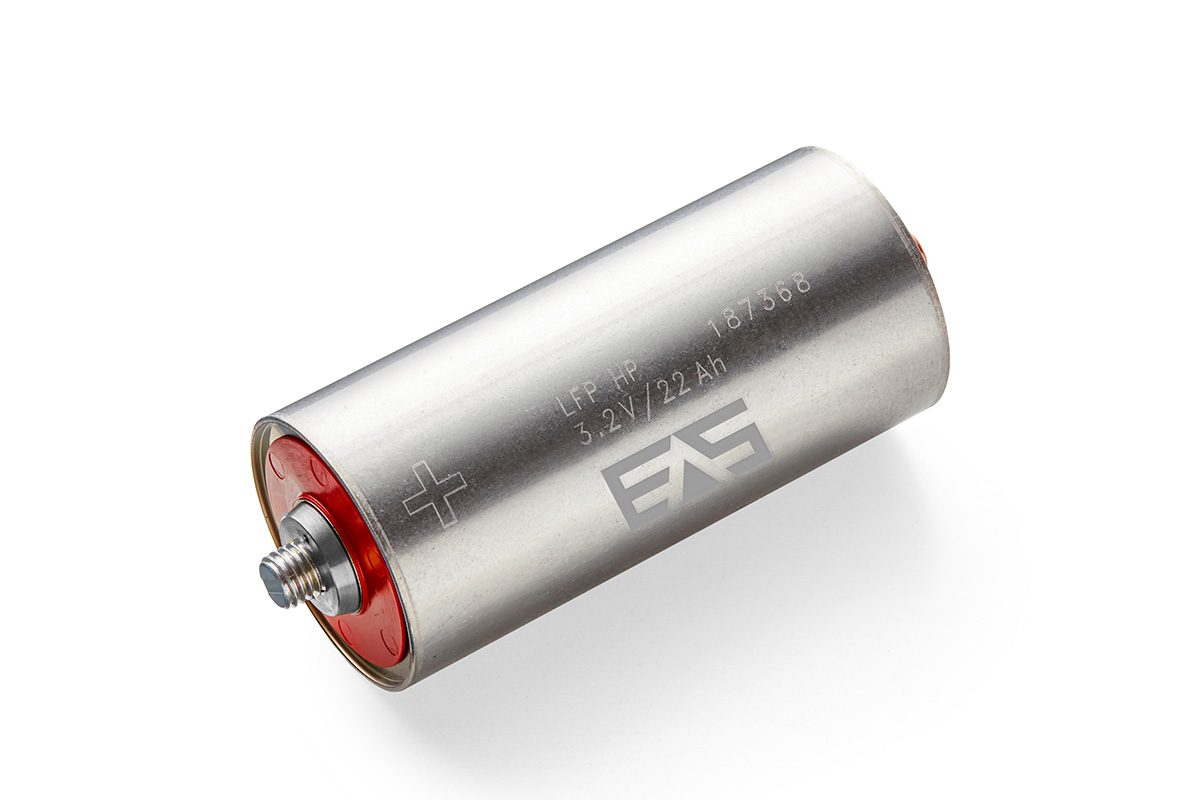
- German battery maker EAS Batteries has commenced commercial sales of its UHP601300 LFP 22, a large-format cylindrical LFP cell.
- The cell incorporates Asahi Kasei’s Acetolyte, an acetonitrile-based electrolyte, which delivers superior ionic conductivity and lower internal resistance compared to conventional carbonate solvents.
- This innovative electrolyte significantly enhances continuous discharge power by 60% and improves both low-temperature power output and high-temperature durability.
- The UHP601300 LFP 22 achieves a continuous discharge power of 2,550 W/kg (880 A at 40C) and a remarkable cycle life of 2,400 cycles at 5C/5C, 100% DoD, maintaining 80% capacity retention.
- The technology is currently undergoing customer evaluation across various high-rate industries, including motorsport, aerospace, and heavy industrial equipment.
- EAS Batteries and Asahi Kasei are also developing a 46xxx cylindrical format for low-voltage EV batteries, aiming to sublicense the combined technology to global OEMs and battery manufacturers.
NEW DELHI, June 19, 2026 – German battery innovator EAS Batteries has announced the commercial launch of its advanced UHP601300 LFP 22, a large-format cylindrical lithium iron phosphate (LFP) cell. This new generation battery leverages Asahi Kasei’s proprietary Acetolyte, an acetonitrile-based electrolyte, promising a significant leap in performance for the electric vehicle (EV) and high-power application sectors.
The introduction of Acetolyte marks a pivotal moment in battery technology. According to joint statements from EAS Batteries and Asahi Kasei, this novel electrolyte offers substantially higher ionic conductivity, critically lower internal resistance, and improved rate capability across a broader spectrum of temperatures. These advancements stand in stark contrast to the limitations often associated with conventional carbonate-solvent-based electrolytes.

Revolutionising LFP Cell Performance
The UHP601300 LFP 22 cell, with its 22 Ah nominal capacity, showcases impressive performance metrics when compared to EAS cells utilising conventional electrolyte formulations. A standout improvement is the 60% gain in continuous power, a critical factor for demanding applications requiring sustained energy delivery.
Specifically, the new cell achieves a continuous discharge rate of 2,550 W/kg, translating to 880 A at 40C. This significantly surpasses the 1,550 W/kg (550 A at 25C) offered by its conventional counterparts. While the pulse discharge capability also sees an enhancement, with 3,760 W/kg (1,320 A at 60C) compared to 3,420 W/kg (1,320 A at 60C), the focus remains on the substantial continuous power boost.
Key Performance Benchmarks
The UHP601300 LFP 22, integrating the Acetolyte solution, demonstrates a marked superiority across several key metrics:

- Nominal Capacity: 22 Ah
- Continuous Discharge: 2,550 W/kg; 880 A (40C) – a 60% improvement over conventional electrolytes.
- Pulse Discharge (2-sec): 3,760 W/kg; 1,320 A (60C) – an approximate 10% gain.
- Cycle Life: 2,400 cycles at 5C/5C, 100% DoD (Depth of Discharge), while retaining 80% of its initial capacity.
This substantial improvement in continuous power is particularly beneficial for high-rate applications where sustained current delivery is paramount. Industries such as motorsport, aerospace, and heavy industrial equipment, which demand consistent, high-power output rather than just brief peak capabilities, are expected to be primary beneficiaries of this innovation.
Addressing Persistent Battery Challenges
The Acetolyte electrolyte is not just about raw power; it also significantly tackles two long-standing challenges in lithium-ion battery performance: operating efficiency at extreme temperatures. Asahi Kasei highlights that Acetolyte facilitates superior power output even at low temperatures, a crucial advantage for EVs operating in colder climates, where battery performance typically degrades.
Concurrently, the new electrolyte enhances durability at elevated temperatures. Conventional carbonate-electrolyte lithium-ion cells often struggle with degradation and reduced lifespan under high heat conditions. Acetolyte’s formulation helps mitigate these issues, promising a more robust and longer-lasting battery solution for diverse operating environments.
EAS Batteries has confirmed that samples of the UHP601300 LFP 22 are currently undergoing rigorous customer evaluation across a multitude of industries, underscoring the broad applicability and anticipated impact of this advanced LFP cell technology.
Strategic Partnership and Future Innovations
The successful commercialisation of the UHP601300 LFP 22 is a direct result of the focused collaboration between EAS Batteries and Asahi Kasei. The partnership, initiated with a license agreement in November 2025, rapidly progressed to serial production by March 2026, demonstrating the efficacy and synergy between the two entities.
Osamu Matsuzaki, Senior Executive Officer and Head of Corporate R&D and IP at Asahi Kasei, lauded the collaborative effort, stating, “The short time from signing our license agreement in November 2025 to the start of serial production in March 2026 reflects the focused and highly collaborative efforts between EAS Batteries and Asahi Kasei.”
Looking ahead, both companies are actively exploring the potential of the 46xxx cylindrical format, a widely adopted form factor in the EV industry. Prototypes of cells in this format are already available, with a targeted product launch later this year. This particular format is primarily envisioned for low-voltage EV batteries, signalling a strategic move to penetrate a significant segment of the electric mobility market.
The long-term vision for this combined technology extends beyond direct sales. EAS Batteries and Asahi Kasei aim to sublicense their innovative LFP cell and electrolyte solution to global original equipment manufacturers (OEMs) and other battery manufacturers. This strategy could accelerate the adoption of high-performance LFP batteries across the global EV landscape, standardising advanced battery capabilities.
Implications for the EV Landscape and Beyond
The advancements brought forth by the UHP601300 LFP 22 and the Acetolyte electrolyte hold profound implications for the future of electric mobility and energy storage. LFP batteries are already celebrated for their enhanced safety, longer cycle life, and cost-effectiveness compared to nickel-manganese-cobalt (NMC) chemistries.
However, they traditionally lag in energy density and power output. This new development from EAS Batteries and Asahi Kasei directly addresses the power output limitations, making LFP cells a more viable and competitive option for a broader range of high-performance applications, potentially including sportier EVs and heavy-duty commercial electric vehicles where sustained power is crucial.
By offering superior performance across varying temperatures, the technology also makes EVs more practical and efficient in diverse climatic conditions, thereby expanding their market appeal globally. The strategic decision to offer sublicensing further democratises this technology, fostering innovation and accelerating the transition to more sustainable transportation solutions worldwide.
The ongoing customer evaluations will provide crucial real-world feedback, paving the way for further refinements and broader industrial adoption. The rapid pace of development and strategic foresight demonstrated by EAS Batteries and Asahi Kasei underscores a strong commitment to pushing the boundaries of battery technology, ensuring that the future of electrification is powered by increasingly efficient, durable, and versatile solutions.
Frequently Asked Questions (FAQs)
What is the UHP601300 LFP 22 battery cell?
The UHP601300 LFP 22 is a new large-format cylindrical LFP (Lithium Iron Phosphate) battery cell developed by EAS Batteries. It features Asahi Kasei’s advanced Acetolyte, an acetonitrile-based electrolyte, designed to deliver superior power and performance across a wide temperature range.
How does Acetolyte electrolyte improve battery performance?
Acetolyte, an acetonitrile-based electrolyte, offers higher ionic conductivity and lower internal resistance compared to conventional carbonate solvents. This translates to a significant increase in continuous discharge power (60% improvement), better power output at low temperatures, and enhanced durability at high temperatures.
What specific performance gains does the UHP601300 LFP 22 offer?
The cell boasts a nominal capacity of 22 Ah and a continuous discharge rate of 2,550 W/kg (880 A at 40C). It also achieves a pulse discharge of 3,760 W/kg (1,320 A at 60C) and a cycle life of 2,400 cycles at 5C/5C, 100% DoD, retaining 80% capacity.
What applications will benefit most from this new battery technology?
The enhanced continuous power and temperature stability make this battery ideal for high-rate applications. This includes sectors such as motorsport, aerospace, and heavy industrial equipment, where sustained energy delivery and reliable performance in challenging conditions are critical.
Is this technology being considered for electric vehicles (EVs)?
Yes, EAS Batteries and Asahi Kasei are actively exploring the 46xxx cylindrical format, primarily targeting low-voltage EV batteries. Prototypes are already available, with a planned launch this year, and the companies aim to sublicense the technology to global automotive OEMs and battery manufacturers.
When did the collaboration between EAS Batteries and Asahi Kasei begin?
The license agreement between EAS Batteries and Asahi Kasei was signed in November 2025. The rapid start of serial production in March 2026 highlights the intense and effective collaboration between the two companies in bringing this innovation to market.