
Key Takeaways:
- The U.S. House of Representatives has initiated a legislative process to repeal federal EV tax credits, proposing an end to the $7,500 new clean vehicle credit by 2026 and the $4,000 used vehicle credit by the end of this year.
- The proposed bill would immediately exclude vehicles from manufacturers exceeding 200,000 qualifying sales, effectively eliminating the credit for many popular models.
- This move aligns with former President Donald Trump’s stance against EV subsidies and comes amid broader industry challenges, including softening demand and new import tariffs.
- Industry stakeholders, like the Zero Emission Transportation Association, warn of potential economic setbacks, emphasizing the 240,000 jobs created in the U.S. battery and EV manufacturing supply chain.
- The bill faces a crucial test in the Senate, where resistance from states with significant EV investments could pose a significant hurdle.
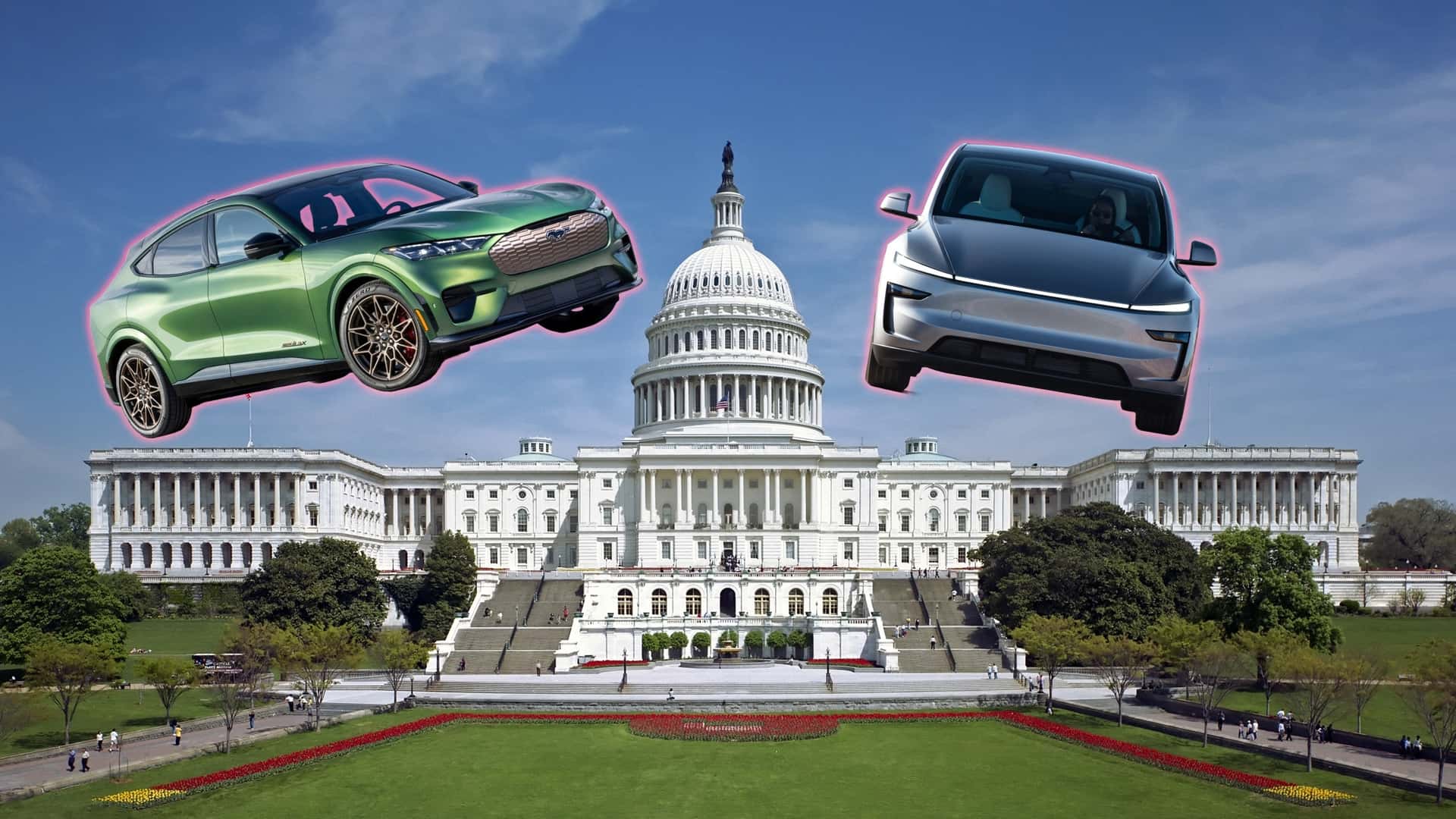
Washington D.C. — The landscape for electric vehicle (EV) adoption in the United States is poised for a significant shift as the U.S. House of Representatives has taken a decisive step toward eliminating the crucial federal EV tax credit. This legislative move, introduced by the powerful Ways and Means Committee, threatens to reshape consumer purchasing decisions and impact the burgeoning domestic EV manufacturing industry.

The proposed bill seeks to repeal the foundational financial incentives that have underpinned the growth of the electric vehicle market. This development, occurring on Monday, May 12, 2025, sets the stage for a contentious debate in Congress over the future of clean transportation policy.
The Proposed Legislation: A Closer Look
The core of the House bill targets the existing federal clean vehicle tax credits. Specifically, it proposes to sunset the $7,500 federal EV tax credit for new clean vehicles after 2026. Even more immediately, the $4,000 federal used clean vehicle tax credit is slated to disappear at the end of the current year.
Adding another layer of complexity, the legislation includes a critical provision that would render the new EV tax credit immediately inapplicable to vehicles from manufacturers that have already sold over 200,000 qualifying units. This threshold has already been surpassed by major players like Ford, General Motors, and Tesla.

Given the stringent sourcing requirements already in place for eligibility, this clause would significantly curtail the list of vehicles qualifying for the EV tax credit. For many prospective buyers and lessees, this could effectively mean an immediate end to the subsidy.
Consider the Chevy Equinox EV, lauded as a breakthrough in 2024 for its ultra-low price point of around $28,000, inclusive of federal incentives. However, its manufacturing location in Mexico, coupled with the potential repeal of the EV tax credit, suggests that such competitive pricing may not be sustainable for long.
Political Undercurrents and Executive Influence
This legislative initiative is not entirely unexpected. It aligns squarely with the expressed policy positions of former President Donald Trump, who has consistently campaigned on a platform of ending the EV “mandate” and promised to eliminate the associated credits. His administration’s “drill, baby, drill” energy philosophy stands in stark contrast to policies promoting electric vehicle adoption.
With Republican majorities currently holding sway in both chambers of Congress, and a presidential stance openly antagonistic towards these incentives, the survival of the EV tax credit has always appeared tenuous. The political environment signals a clear intent to roll back what many conservative lawmakers view as government overreach and unnecessary subsidies.
However, the path to repeal is not without its obstacles. Lawmakers from states boasting significant EV factory investments and related industries have voiced considerable pushback. These states, which have seen a surge in economic activity and job creation due to EV manufacturing, represent a powerful lobby against the proposed changes.
Economic Stakes: Jobs and Investment
The potential elimination of the EV tax credit carries substantial economic implications, particularly for the burgeoning domestic battery and EV supply chain. Industry stakeholders have been vocal about the positive impact these incentives have had on U.S. job growth and investment.
Al Gore, Executive Director of the Zero Emission Transportation Association (ZETA), emphasized the stakes involved. In a public statement, he highlighted: “The U.S. battery and mineral supply chain — and the fast-growing EV manufacturing industry it feeds into — has created more than 240,000 jobs in every corner of the United States.”
Gore further elaborated on the certainty provided by federal support. “Businesses throughout the auto industry, from critical mineral and material developers to battery manufacturers and automakers, are making investments supported by the certainty offered by our federal government. In turn, these investments are creating new economic opportunities in local communities, from Reno, Nevada, to Casa Grande, Arizona, to Savannah, Georgia.”
This network of investment and job creation underlines the broader economic impact of the EV tax credit, extending beyond just vehicle sales to encompass raw material extraction, component manufacturing, and final assembly plants across various states.
A Challenging Climate for the EV Industry
The timing of this legislative push is particularly challenging for the electric vehicle industry. Automakers had already begun scaling back their ambitious EV production targets in response to softer-than-expected consumer demand, signaling a period of recalibration for the market.
Further exacerbating these challenges has been the introduction of new 25% import tariffs. This measure deals a significant blow to the industry, as many electric vehicles—which frequently operate on thin profit margins or are even loss-making for traditional automakers—are often manufactured outside the U.S. to reduce production costs.
Now, these vehicles face an additional 25% tariff burden upon entry into the U.S. market. Even domestically produced EVs must contend with tariffs on imported parts, alongside the looming threat of the $7,500 EV tax credit disappearing altogether. This cumulative strain creates immense pressure on manufacturers.
The debate also touches upon the rationale behind subsidizing EVs built in neighboring countries like Mexico or Canada, especially given that vehicles from other nations do not qualify for the credit. It is worth noting that the free-trade agreement among these three nations was negotiated by the previous Trump administration. Therefore, penalizing businesses for leveraging these established trade deals presents a complex policy conundrum.
Automakers universally emphasize the critical need for stability and clarity in regulatory and trade policies to facilitate long-term business decisions. The current environment, characterized by constant shifts in regulations and tariffs, undermines the predictability essential for companies to invest confidently in manufacturing affordable and compelling electric vehicles that consumers desire.
The Path Ahead: Legislative Battle and Future Implications
Despite the significant step taken in the House, the proposed repeal of the EV tax credit is not yet final. The bill must still successfully navigate both chambers of Congress. A tougher road is anticipated in the Senate, where the political calculus differs significantly.
In the Senate, even a small number of defections from senators representing states with substantial automotive manufacturing or EV-related investments could be sufficient to derail the legislation. These lawmakers are often highly sensitive to policies that could jeopardize local jobs and economic development.
The outcome of this legislative battle will undoubtedly have profound implications for the pace of EV adoption in the U.S. While current market conditions are posing challenges, the underlying technology of electric vehicles continues to improve, fostering high consumer loyalty among those who have made the switch.
Ultimately, the transition to electric vehicles is a global trend that is likely to continue. However, policy shifts like the potential repeal of the EV tax credit could undeniably slow down the pace of this transition within the United States, making the journey to widespread electric mobility longer than initially projected.
Frequently Asked Questions (FAQ)
What is the proposed change to the EV tax credit?
The U.S. House Ways and Means Committee has introduced a bill to repeal the $7,500 federal new clean vehicle tax credit after 2026 and the $4,000 federal used clean vehicle tax credit at the end of this year. This marks a significant policy shift.
Which EVs would be affected immediately?
The bill proposes that the new EV tax credit would no longer apply to vehicles from manufacturers that have already sold over 200,000 qualifying units. This means vehicles from companies like Ford, General Motors, and Tesla would immediately lose eligibility for the federal incentive.
Why is Congress considering this repeal?
The repeal aligns with President Donald Trump’s long-standing opposition to EV subsidies, which he views as unnecessary government intervention. The current Republican majority in Congress supports rolling back such incentives, favoring a market-driven approach to energy and transportation.
What are the economic consequences of repealing the credit?
Industry groups, such as the Zero Emission Transportation Association (ZETA), warn that repealing the EV tax credit could jeopardize over 240,000 jobs in the U.S. battery and EV manufacturing supply chain. It could also deter future investments in domestic production facilities and research.
How will this impact EV prices for consumers?
Without the $7,500 or $4,000 federal EV tax credit, the effective purchase price of eligible electric vehicles would increase. This could make EVs less affordable and attractive to consumers, potentially slowing down adoption rates, especially for lower-cost models.
What is the timeline for this bill?
The bill has been introduced in the House of Representatives. It must pass both the House and the Senate, and then be signed into law by the President, to take effect. The legislative process is expected to be challenging, particularly in the Senate.
Are there any voices opposing the repeal?
Yes, lawmakers from states with significant EV manufacturing facilities and related supply chain investments are expected to oppose the repeal. Industry associations, like ZETA, are also vocal opponents, highlighting the economic benefits and job creation tied to the existing EV tax credit.
How does this relate to broader trade policies?
The debate is intertwined with trade policies, including the 25% import tariffs recently imposed. These tariffs, combined with the potential loss of the EV tax credit, place significant strain on automakers, many of whom produce EVs in North American countries like Mexico and Canada under existing trade agreements.