
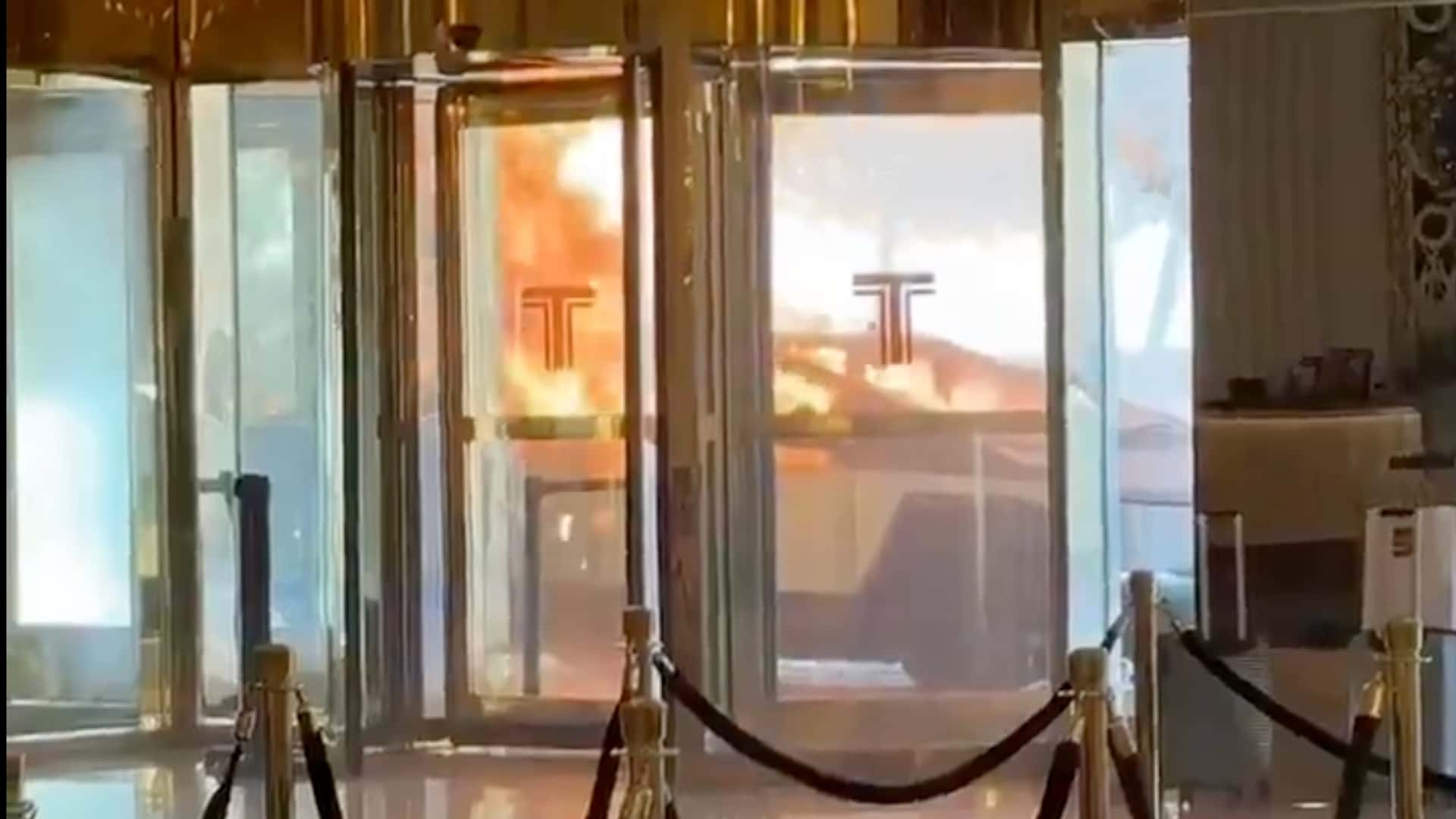
A devastating incident involving a Tesla Cybertruck explosion outside the Trump International Hotel Las Vegas on January 2, 2025, has left one person dead and at least seven others injured. The blast, which occurred around 8:40 a.m. local time, prompted an immediate and extensive response from law enforcement and fire officials, triggering a comprehensive investigation into its precise cause.
Initial reports from the scene, located just off the bustling Las Vegas Strip, quickly garnered widespread attention. Authorities have since confirmed that the explosion was not attributable to the electric vehicle’s lithium-ion battery, a critical distinction in understanding the nature of the tragic event.
Key Takeaways: Fatal Cybertruck Incident in Las Vegas
- A Tesla Cybertruck exploded outside the Trump International Hotel Las Vegas on January 2, 2025, resulting in one fatality and multiple injuries.
- Law enforcement officials confirmed the explosion was not a battery fire but likely caused by fireworks, gas tanks, and camping fuel found within the rented vehicle.
- The deceased driver was identified as Matthew Livelsberger, a 37-year-old active-duty Special Forces agent on leave from Germany.
- Tesla CEO Elon Musk attributed the blast to an explosive device, suggesting the Cybertruck’s stainless steel frame may have mitigated damage and labeling it a “terrorist attack.”
- Authorities continue to investigate the motive behind the incident, urging the public to avoid the area during the ongoing probe.
Initial Response and Scene Management
The Las Vegas Review-Journal first confirmed details of the unfolding situation, noting that police and fire personnel were actively investigating the blaze. Eyewitness accounts and video footage from inside the hotel lobby showed the Tesla Cybertruck engulfed in flames directly outside the building’s entrance, near the valet area.
Firefighters quickly extinguished the fire, preventing further escalation. The Las Vegas Metropolitan Police Department (LVMPD) swiftly took to its X account (formerly Twitter) to confirm the fire had been put out and that an investigation was underway. Residents and visitors were advised to avoid the vicinity to facilitate the ongoing probe and ensure public safety.
Victim Identified Amidst Scene Examination
Tragically, the incident claimed the life of one individual, with the deceased person being recovered from inside the Cybertruck. Multiple U.S. officials later identified the victim as 37-year-old Matthew Livelsberger from Colorado Springs. Livelsberger was an active-duty Special Forces operations agent, reportedly on leave from Germany at the time of the incident, according to information shared with CNN by U.S. officials and local outlets.
In addition to the fatality, at least seven other individuals sustained injuries, the severity of which has not been fully detailed by authorities. The immediate aftermath was characterized by flying debris and thick smoke, creating a chaotic and dangerous scene for bystanders.
Unraveling the Cause: Explosive Contents Confirmed
While the exact cause of the Tesla Cybertruck explosion remains under official investigation, critical details have emerged. New CCTV video footage, circulated on X, depicted the Cybertruck parked behind a white pickup truck near the hotel entrance, with several bystanders nearby. The footage then captured the truck erupting into a dangerous explosion, followed by several secondary blasts.
Law enforcement officials confirmed that the fire was not a result of the vehicle’s battery system. Instead, the Tesla Cybertruck was found to be carrying a dangerous payload: “fireworks, gas tanks and camping fuel,” according to a report by CNN, citing law enforcement officials. This discovery points strongly to external accelerants as the primary cause of the devastating blast.
The Rental Factor and Elon Musk’s Commentary
Further investigations revealed that the Tesla Cybertruck involved in the explosion was rented through the popular vehicle-sharing application, Turo. This detail adds another layer to the ongoing probe, potentially raising questions about rental policies and security checks.
The incident also drew immediate public and media attention due to Tesla CEO Elon Musk’s connection to President-elect Donald Trump, particularly following their New Year’s Eve celebration. However, officials have maintained that a motive for the Cybertruck incident—whether an intentional act or a coincidental accident—has not yet been determined.
Elon Musk, leveraging his platform on X, offered his perspective on the incident. He initially claimed that the Cybertruck explosion was caused by “fireworks or some kind of explosive device, not the vehicle itself.” In a subsequent statement, Musk further asserted that the Cybertruck’s “stainless steel frame…actually contained the explosion and directed the blast upwards,” suggesting that the EV’s unique design may have inadvertently prevented more widespread damage. Musk went on to label the event “a terrorist attack,” a claim that has not been corroborated by law enforcement officials, who have refrained from disclosing any potential motives of the perpetrator or perpetrators.
Contextualizing Electric Vehicle Fires
While the Las Vegas Cybertruck incident was explicitly stated not to be a battery fire, it’s pertinent to acknowledge the broader context of electric vehicle (EV) fires. Statistically, fires involving electric vehicles are rarer than those in gasoline-powered cars. However, when lithium-ion battery fires do occur, their unique chemical properties make them significantly more challenging to extinguish, often requiring large volumes of water and specialized techniques.
In this particular case, the focus of the investigation remains on the highly combustible materials found inside the vehicle, rather than any intrinsic flaw in the Cybertruck’s electric powertrain or battery system. This distinction is crucial for understanding the safety implications and the trajectory of the ongoing inquiry.
Ongoing Investigation and Public Safety
As of the latest updates, the investigation into the Tesla Cybertruck explosion continues. Law enforcement and federal agencies are meticulously gathering evidence, analyzing surveillance footage, and interviewing witnesses to piece together the sequence of events and ascertain a definitive motive. The authorities have reiterated their commitment to public safety, advising continued caution and cooperation from the public as they work towards a comprehensive understanding of this tragic and unusual incident.
The focus remains on determining whether the act was intentional, the identities of any additional individuals involved, and the full extent of the factors that led to the fatal explosion outside the Trump International Hotel Las Vegas.
Frequently Asked Questions (FAQ)
What caused the Tesla Cybertruck explosion in Las Vegas?
Authorities have stated the explosion was not a battery fire. Law enforcement officials indicated the Cybertruck contained “fireworks, gas tanks and camping fuel,” suggesting these items were the primary cause of the blast. The exact trigger for the explosion is still under investigation.
Was the explosion an act of terrorism?
Tesla CEO Elon Musk has publicly referred to the incident as a “terrorist attack.” However, law enforcement officials have not yet disclosed any motive for the perpetrator or perpetrators, nor have they officially labeled the event as an act of terrorism. The investigation into the motive is ongoing.
Who was the victim in the Cybertruck explosion?
The deceased driver was identified as Matthew Livelsberger, 37, from Colorado Springs. Officials confirmed he was an active-duty Special Forces operations agent, reportedly on leave from Germany at the time of the tragic incident in Las Vegas.
How many people were injured in the incident?
In addition to the single fatality, at least seven other individuals sustained various injuries in the explosion. The incident occurred near the valet area of the Trump International Hotel, impacting several bystanders in the vicinity of the blast.
Was the Tesla Cybertruck involved in a rental agreement?
Yes, law enforcement officials confirmed that the Tesla Cybertruck involved in the explosion was rented on the popular vehicle-sharing application, Turo. This detail is part of the ongoing investigation into the circumstances surrounding the incident.
What has Elon Musk said about the Cybertruck’s role in the explosion?
Elon Musk stated on X that the explosion was caused by external explosives, not the vehicle itself. He also claimed the Cybertruck’s stainless steel frame “actually contained the explosion and directed the blast upwards,” suggesting its design may have prevented more extensive damage, and called the incident a “terrorist attack.”
What is the current status of the investigation?
The investigation is ongoing, involving both local law enforcement (Las Vegas Metropolitan Police Department) and potentially federal agencies. Authorities are meticulously examining evidence, reviewing CCTV footage, and interviewing witnesses to determine the full sequence of events and the motive behind the fatal explosion.