
Key Takeaways
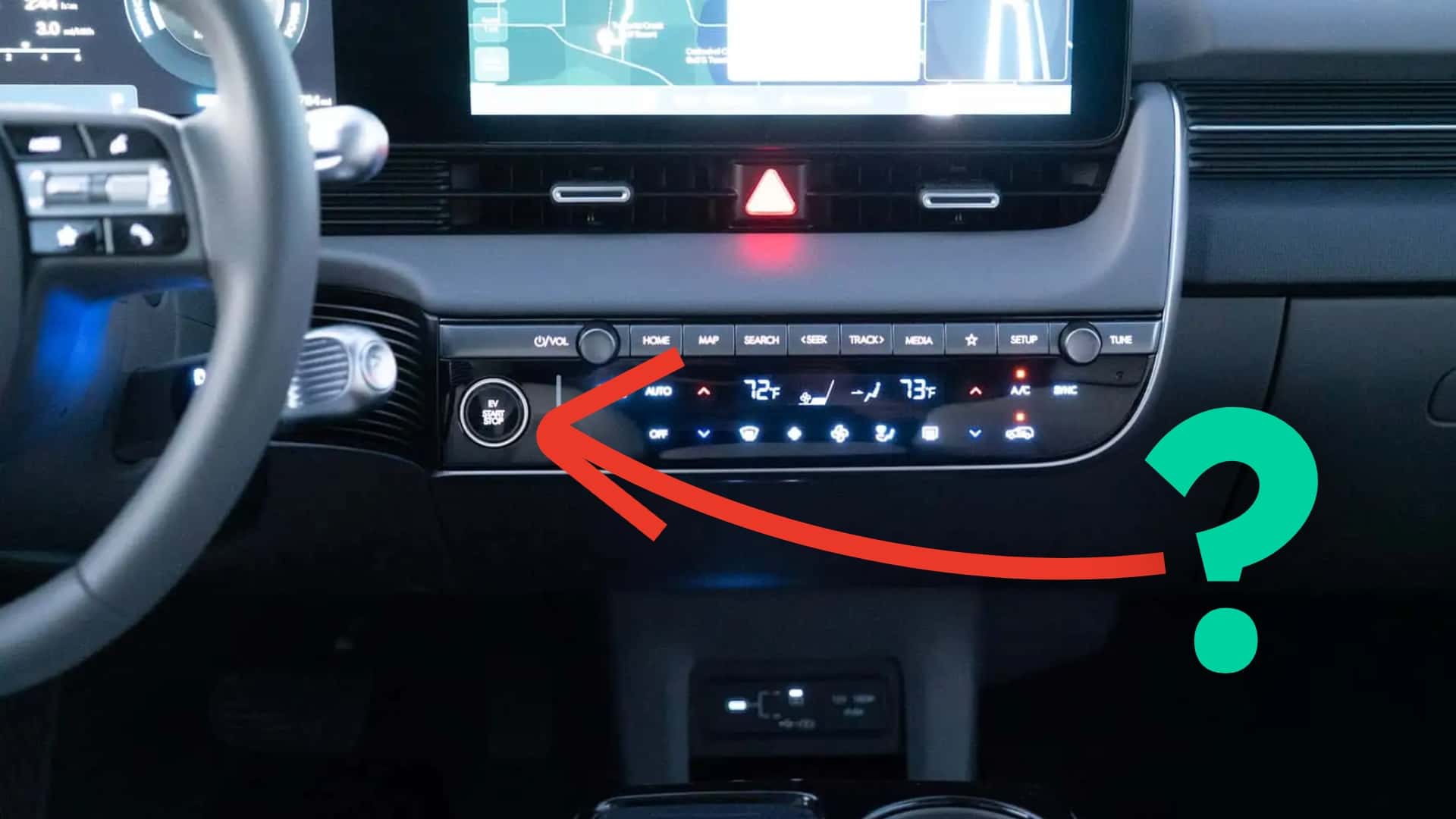
- Many electric vehicles (EVs) still feature a traditional start/stop button, despite it being technically unnecessary in a car without an internal combustion engine.
- In conventional petrol or diesel cars, the button initiates engine combustion and powers critical systems like air conditioning. EVs, however, are always ‘on’ in a basic sense, merely transitioning from a low-power state to a ‘ready-to-drive’ mode.
- Pioneering EV manufacturers like Tesla, Rivian, Lucid, and Polestar, along with some legacy automakers like Volvo and General Motors, have eliminated the button for a more seamless ‘get in and drive’ experience.
- The primary reason for its retention by brands like Hyundai and Toyota is to offer a sense of familiarity and a clear ‘READY’ state indication, easing the transition for first-time EV buyers from traditional vehicles.
- While offering familiarity, the presence of an EV start/stop button also facilitates specific functions like maintaining cabin climate when the driver exits or troubleshooting system glitches.
- The debate over the start/stop button reflects a larger industry challenge: deciding which legacy features should carry over into the electric era and which should be re-imagined or discarded for an optimal electric vehicle user experience.
The transition to electric vehicles (EVs) marks a pivotal moment in automotive history, promising not just zero-emission mobility but also a reimagining of the driving experience. Yet, amidst innovations in powertrain, battery technology, and digital interfaces, one seemingly anachronistic feature persists in many modern EVs: the start/stop button. This control, fundamental to internal combustion engine (ICE) vehicles, presents a curious paradox in electric cars, prompting questions about design philosophy, consumer psychology, and the future of automotive interfaces.
For many drivers, encountering a traditional start/stop button in an electric vehicle can be a source of minor confusion. While reviewing new EV models, a common scenario unfolds: exiting the vehicle, only to be met with persistent alerts indicating the ‘key not in vehicle’ and requiring a manual press of the start/stop button to truly power down the car. This experience underscores a fundamental disconnect: what purpose does an ignition button serve when there’s no engine to start?

The Unnecessary Interaction: Why EVs Don’t Need a Start Button
In traditional internal combustion engine (ICE) vehicles, the start/stop button serves a fundamental mechanical purpose. It initiates a complex sequence: engaging the starter motor to crank the engine, igniting the fuel-air mixture, and bringing the engine to a stable idle. This engine operation is critical not only for propulsion but also for powering various high-draw ancillary systems, such as the air conditioning compressor, power steering pump, and electrical generator. Consequently, drivers require a distinct ‘start’ and ‘stop’ command to manage the engine’s operational state, ensuring vital functions are maintained while the vehicle is in use and properly deactivated when parked.
Electric vehicles, by contrast, operate fundamentally differently. There is no engine to ‘start’ in the conventional sense, as the electric motor is instantaneously responsive. An EV is essentially always ‘on’ in a low-power, diagnostic state once the key fob or paired phone is detected. Pressing a start button in an EV doesn’t ignite an engine; rather, it primarily signals the vehicle to transition from a standby mode to a fully ‘ready-to-drive’ operational state, activating all driving systems and high-voltage components. This makes the physical button somewhat redundant, merely taking the EV from ‘on’ to ‘even more on.’
Pioneering a Seamless Experience: The Tesla Model S Legacy
Many electric vehicle manufacturers have embraced this inherent difference in EV operation by eliminating the traditional start/stop button altogether, pioneering a more intuitive and streamlined user experience. Tesla, with its Model S more than a decade ago, spearheaded this design philosophy. In a Tesla, the process of ‘starting’ the car simply involves entering the vehicle with a paired phone or key card, pressing the brake pedal to awaken the systems, and then selecting a gear to drive.

Similarly, to ‘stop’ the vehicle, drivers merely engage the park function and exit. The car autonomously powers down into a low-energy state. This seamless interaction has been adopted by a growing number of forward-thinking EV-only brands, including Rivian, Lucid, and Polestar, as well as some legacy automakers such as Volvo and General Motors. Once experienced, this simplified approach often feels like the most logical and natural way to interact with an electric car, setting a new benchmark for the automotive user experience.
The shift towards button-less operation in EVs draws parallels to the evolution of personal electronics. Consider the seamless unlocking experience offered by FaceID on modern smartphones. Users no longer consciously ‘turn on’ or ‘turn off’ their devices; instead, the device wakes up instantly upon interaction and enters a sleep mode when not in use. This eliminates unnecessary steps and creates a fluid, uninterrupted user flow. The automotive industry, through innovations like push-to-start and keyless entry, has historically moved towards simplifying user interactions. Eliminating the EV start/stop button aligns perfectly with this trajectory, enhancing convenience and modernity.
Bridging the Gap: Automaker Rationales for Retention
Familiarity and Consumer Comfort
Despite the inherent advantages of a button-less EV experience, a significant segment of the automotive industry, particularly established legacy manufacturers, continues to incorporate the start/stop button in their electric models. The primary motivation for this design choice centers on consumer familiarity and comfort. Ed Kim, president and chief analyst at AutoPacific, a prominent market research firm, articulated this perspective, stating, “Having that start button in some ways is still kind of a security blanket.” He elaborated that “For the uninitiated, not having a way to manually turn the car on and off feels weird.”
This ‘security blanket’ approach aims to mitigate potential apprehension among first-time EV buyers, many of whom are transitioning from decades of driving internal combustion engine vehicles. The familiar ritual of pressing an ignition button provides a tangible and reassuring step, making the otherwise novel EV experience feel less alien. Automakers recognize that rapid changes in driver interfaces can be off-putting, potentially hindering the broader adoption of electric mobility.
Clear ‘READY’ State Indication
Beyond psychological comfort, automakers also cite the benefit of a clear operational delineation. Hyundai, a leading manufacturer of popular EV models, provided insights into their design philosophy:
“While some EV manufacturers have chosen to eliminate the start/stop button, Hyundai continues to use it on its EVs because it gives drivers a clear indication that the vehicle has entered its READY state and is prepared to drive. For many customers, especially those moving from ICE vehicles to an EV for the first time, this familiar interaction helps reduce the learning curve and creates a seamless transition to electric mobility.”
This statement highlights the importance of an unambiguous signal for the vehicle’s operational status. The physical act of pressing a button serves as a definitive moment when the car transitions from dormant to fully operational, ready to be driven. Similarly, a Toyota spokesperson reinforced this approach, noting that the on button “gives customers an EV experience that feels familiar and is easy to use.” This dual emphasis on familiarity and clear operational status underscores a cautious, consumer-centric design strategy aimed at accelerating EV adoption without overwhelming new users.
Beyond Convenience: Functional Arguments for an On/Off Button
While the arguments for a button-less EV experience are compelling, the presence of a distinct on/off button also offers certain practical advantages that extend beyond mere familiarity. One key benefit is the ability to intentionally force the car to remain ‘on’ even when the driver exits the vehicle. This functionality is crucial for situations where maintaining cabin climate, such as keeping the air conditioning running for passengers or pets, is necessary. While some manufacturers that have removed the physical button offer digital alternatives like ‘pet mode’ or ‘leave on’ functions accessible via a touchscreen, a dedicated button provides a more direct and universally understood control.
Volkswagen EVs, for instance, generally do not require a button press to start or stop, but they cleverly integrate a stealth-mounted button on the steering column for these specific control purposes. Furthermore, the ability to manually power cycle a vehicle via a physical button can prove invaluable for troubleshooting or restarting systems in the event of a software glitch or unexpected operational issue. As Ed Kim of AutoPacific pointed out, an easy restart capability can be a significant convenience in a technologically complex vehicle.
The Broader Design Dilemma: Evolution of Automotive Interfaces
The debate surrounding the EV start/stop button is symptomatic of a larger, ongoing discussion within the automotive industry: which elements of the internal combustion era should be carried over into electric vehicles, and which are better left behind as designers chart a new course for electric mobility? Manufacturers often grapple with balancing innovation with established driver expectations. This tension manifests in various design choices beyond the start button.
For example, some high-performance EVs, like those from Porsche and Hyundai, incorporate simulated ‘gears’ that drivers can ‘shift,’ mimicking the tactile feedback of a traditional transmission. Similarly, Dodge’s Charger EV utilizes external speakers to emit artificial ‘engine noise,’ designed to replicate the visceral auditory experience of a powerful combustion engine. Many EVs also feature ‘creep’ functionality, an entirely artificial characteristic where the car slowly moves forward when the brake pedal is released, purely to emulate the behavior of an automatic ICE vehicle at idle. These design decisions highlight automakers’ efforts to provide a ‘familiar’ driving experience, even when the underlying technology no longer necessitates such features.
However, companies must tread carefully when attempting to reinvent the in-car experience, as radical departures from established norms can alienate users. Tesla, for instance, faced significant backlash for removing the turn-signal stalk in its refreshed Model 3, a decision it later reversed by reintroducing it. The company’s move towards screen-operated gear selectors and a predictive ‘Auto Shift’ feature (currently in beta) has also generated mixed reactions. Furthermore, while aesthetically minimalist, screen-operated climate control vents, found in models like Rivians and Teslas, are often perceived as a functional downgrade compared to simple, physical tabs for directing airflow. These instances demonstrate the delicate balance between innovation, functionality, and user acceptance in automotive design.
The Path Forward: Towards Intuitive EV Design
As the electric vehicle market matures, the conversation around the EV start/stop button and other legacy features will continue to evolve. While familiarity remains a potent factor for initial adoption, the long-term trend appears to favor simplification and the embrace of a truly electric-native user experience. The seamlessness offered by systems that eliminate unnecessary steps often proves to be a superior interaction model in the long run, much like keyless entry and push-to-start became standard conveniences.
Ultimately, the industry is navigating a critical juncture, refining what an electric car truly is—beyond just its powertrain. Striking the right balance between preserving a comforting sense of familiarity and pioneering genuinely innovative, user-centric design will be key to shaping the future of electric mobility. For many, the simple act of getting in and driving, without the archaic interruption of an ignition button, represents a forward step towards a more intuitive and enjoyable electric vehicle experience.
Frequently Asked Questions (FAQ)
Why do some electric vehicles still have a start/stop button?
Many EVs retain a start/stop button primarily for driver familiarity. Automakers aim to ease the transition for those moving from internal combustion engine (ICE) cars, providing a recognizable interaction that signals the vehicle is ready to drive and helps reduce the learning curve for new EV owners.
Is an EV start/stop button technically necessary?
No, an EV start/stop button is not technically necessary. Unlike ICE vehicles that require an engine ignition sequence, EVs transition from a low-power state to a ‘ready-to-drive’ mode instantly. Many pioneering EV brands have already eliminated it, demonstrating that a seamless, button-less operation is entirely feasible.
Which EV brands have eliminated the start/stop button?
Pioneering EV brands such as Tesla, Rivian, Lucid, and Polestar have largely eliminated the traditional start/stop button. Some legacy automakers like Volvo and General Motors have also adopted this more streamlined approach, where the car powers up when the driver enters and presses the brake.
What are the benefits of *not* having an EV start/stop button?
Eliminating the start/stop button creates a more seamless and intuitive user experience. It reduces an unnecessary step in the driving process, allowing drivers to simply enter, press the brake, and select a gear. This mirrors the natural interaction with modern personal electronic devices, enhancing overall convenience.
Are there any advantages to keeping the start/stop button in an EV?
Yes, retaining an EV start/stop button can offer some practical advantages. It provides a clear, physical indication of the ‘READY’ state for driving. Additionally, it allows for specific functions like forcing the car to stay ‘on’ for climate control (e.g., ‘pet mode’) or providing an easy way to power cycle the system for troubleshooting glitches.
How does the EV start/stop button reflect broader automotive design trends?
The debate around the EV start/stop button highlights a larger industry trend of balancing innovation with tradition. Automakers are grappling with which legacy features (like simulated gears or engine noise) to carry over from ICE vehicles to make EVs more familiar, versus embracing entirely new, electric-native designs for optimal user experience and functionality.
Will all EVs eventually eliminate the start/stop button?
While some manufacturers prioritize familiarity, the long-term trend points towards increased simplification and intuitive design. As consumers become more accustomed to electric vehicles, the need for ‘security blanket’ features like the start/stop button may diminish, making a button-less experience the industry standard for a truly modern EV user interface.