
Key Takeaways (TL;DR)
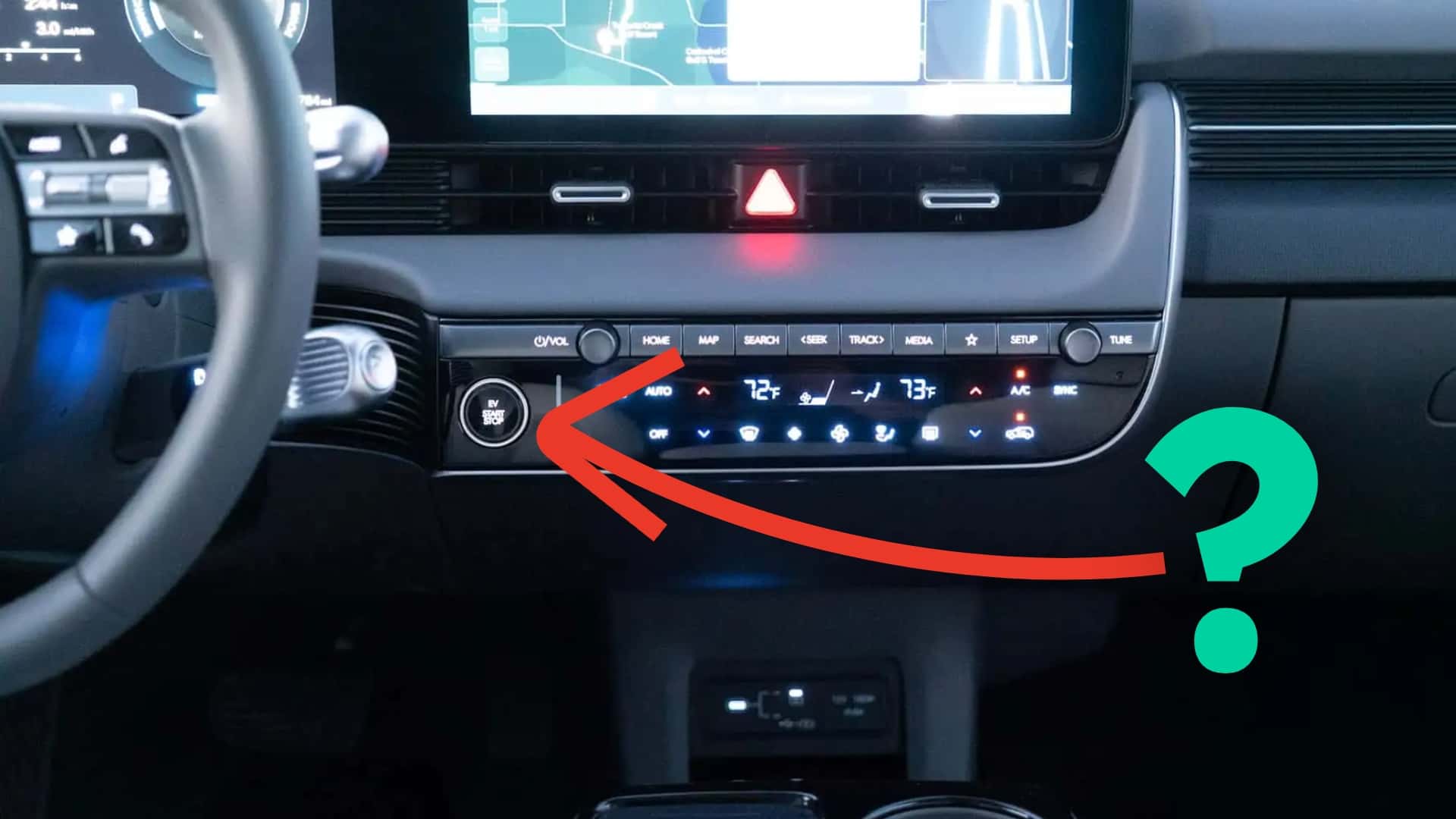
- Many electric vehicles (EVs) from legacy automakers still incorporate a physical start/stop button, a feature functionally unnecessary in a car without an internal combustion engine.
- This design choice aims to provide familiarity and a sense of security for drivers, particularly those transitioning from traditional petrol cars.
- Pioneering EV brands like Tesla, Rivian, and Lucid have largely eliminated this button, offering a more intuitive ‘wake up and drive’ experience.
- While some benefits exist for a physical button, such as clearer ‘READY’ state indication or troubleshooting, the trend points towards a future of simpler, more integrated EV interfaces.
- The debate highlights a broader industry challenge: balancing innovation with consumer comfort during the shift to electric mobility.
In the evolving landscape of electric vehicles, a seemingly minor design detail continues to spark discussion among automotive enthusiasts and industry observers: the persistent presence of a physical start/stop button. While this feature is indispensable in traditional internal combustion engine (ICE) cars, its necessity in an EV, which lacks an engine to start, is increasingly being questioned. This design paradox highlights a fascinating intersection of technological innovation, consumer psychology, and automotive engineering.

The Redundancy of a Start Button in Electric Vehicles
For decades, the ritual of inserting a key into an ignition or pressing a start button to bring a petrol engine to life has been a fundamental part of the driving experience. This action initiates a complex sequence, engaging the starter motor to crank the engine, allowing it to begin its combustion cycle. Crucially, the engine is required to power high-draw systems like air conditioning and heating, making a clear on/off delineation vital for safety and operational control.
However, an electric vehicle operates on fundamentally different principles. There is no engine to ‘start’ in the conventional sense. Instead, an EV’s electric motor is instantly available to provide propulsion. Systems like air conditioning and infotainment draw power directly from the high-voltage battery pack, eliminating the need for an idling engine.
Consequently, for an EV, a physical electric vehicle start/stop button primarily serves to transition the car from a ‘standby’ or ‘accessory’ mode to a ‘ready-to-drive’ state, often described as going from ‘on’ to ‘even more on.’ Many forward-thinking automakers have recognized this inherent redundancy, opting to streamline the driver interface by removing the button altogether.

Pioneering the Button-Less Experience
The paradigm shift towards a truly button-less or minimalist interface in electric vehicles was notably initiated by Tesla more than a decade ago with the introduction of the Model S. In these innovative designs, the act of ‘starting’ an EV becomes an entirely seamless process.
Drivers simply enter the vehicle with a paired smartphone or key fob, press the brake pedal to ‘wake up’ the car’s systems, and then engage a gear to drive. To ‘stop’ the vehicle, the process is equally intuitive: simply shift into park and exit. This integrated experience, which mirrors the interaction with personal electronic devices that wake up upon use and sleep when idle, quickly becomes the preferred method for many EV users.
Beyond Tesla, a growing number of tech-focused electric vehicle brands, including Rivian, Lucid, and Polestar, have adopted this streamlined approach. Even some legacy automakers, like Volvo and General Motors, are integrating similar systems into their latest EV offerings. Once accustomed to this level of simplicity, the traditional electric vehicle start/stop button begins to feel antiquated and an unnecessary extra step.
The Power of Familiarity: A ‘Security Blanket’ for New EV Owners
Despite the technological feasibility of omitting the start/stop button, many traditional automakers continue to include it in their electric vehicle models. Industry experts suggest this decision is largely rooted in consumer psychology and the desire to ease the transition for first-time EV buyers.
Ed Kim, president and chief analyst at AutoPacific, a prominent market research firm, explains this phenomenon: “Having that start button in some ways is still kind of a security blanket. For the uninitiated, not having a way to manually turn the car on and off feels weird.” This sentiment resonates strongly with manufacturers aiming for broad market acceptance.
Hyundai, for instance, a leader among legacy manufacturers in EV development, explicitly stated its rationale. A company spokesperson clarified, “While some EV manufacturers have chosen to eliminate the start/stop button, Hyundai continues to use it on its EVs because it gives drivers a clear indication that the vehicle has entered its READY state and is prepared to drive. For many customers, especially those moving from ICE vehicles to an EV for the first time, this familiar interaction helps reduce the learning curve and creates a seamless transition to electric mobility.”
Similarly, a Toyota spokesperson echoed this perspective, emphasizing that the on button “gives customers an EV experience that feels familiar and is easy to use.” This strategic choice underscores a cautious approach to innovation, prioritising consumer comfort over purely technological optimization during the nascent stages of widespread EV adoption.
Beyond Familiarity: Functional Considerations of the Button
While the primary driver for retaining the electric vehicle start/stop button appears to be consumer familiarity, a physical control does offer some distinct practical advantages. For instance, scenarios requiring the car’s systems to remain active despite the driver exiting – such as keeping the air conditioning running for passengers or pets – are easily managed with a clear ‘on’ state.
In button-less EVs, manufacturers often implement ‘pet modes’ or ‘leave on’ functions accessible via the touchscreen. Volkswagen EVs, while not requiring a button for typical driving, feature a discreetly mounted button on the steering column for this specific purpose. Furthermore, the ability to physically restart a vehicle can be invaluable for troubleshooting potential glitches or system resets, a point highlighted by analyst Ed Kim.
The Broader Design Debate: Innovation vs. Convention
The discussion surrounding the electric vehicle start/stop button is symptomatic of a much larger debate within the automotive industry: which elements of the internal combustion era should be carried forward into the electric age, and which are best left behind? This tension is evident in various design choices across the EV spectrum.
Some manufacturers, like Porsche and Hyundai, experiment with simulated ‘gears’ that drivers can ‘shift,’ while Dodge’s Charger EV even uses external speakers to project artificial engine noise. Many EVs also incorporate an artificial ‘creep’ function when the brake is released, mimicking the behavior of an automatic transmission petrol car. These features are deliberate attempts to make the EV driving experience more analogous to traditional vehicles.
However, the pursuit of innovation can sometimes overstep the mark. Tesla, for instance, faced considerable user backlash after removing the turn-signal stalk in its refreshed Model 3, leading to its reinstatement after two model years. The company’s move to touchscreen-only gear selectors and predictive shifting features has also been met with mixed reviews. Screen-operated vents, seen in brands like Rivian and Tesla, are often perceived as a downgrade from simpler, tactile controls.
Ultimately, the industry faces a delicate balancing act. While a truly intuitive and streamlined electric vehicle experience may eventually render the physical start/stop button obsolete, automakers must navigate consumer expectations carefully. As the market matures and drivers become more accustomed to the unique characteristics of electric mobility, the need for these ‘security blanket’ features is likely to diminish, paving the way for a more minimalist and inherently electric design philosophy.
FAQ Section
Why do electric vehicles still have a start/stop button?
Many electric vehicles retain a start/stop button primarily to offer a familiar interaction for drivers, especially those transitioning from traditional petrol cars. This helps reduce the learning curve and provides a clear indication that the vehicle is in a ‘READY’ state, enhancing a sense of security for new EV owners.
Is a start/stop button technically necessary in an EV?
No, a start/stop button is not technically necessary in an EV. Unlike an internal combustion engine (ICE) car, an EV has no engine to start. Its electric motor provides instant power, and auxiliary systems run directly from the battery, making the physical button functionally redundant for operation.
Which EV brands have removed the start/stop button?
Pioneering electric vehicle brands such as Tesla, Rivian, Lucid, and Polestar have largely eliminated the traditional start/stop button. These vehicles typically ‘wake up’ when the driver enters, presses the brake, and selects a gear, offering a more seamless and intuitive driving experience.
What are the benefits of having a physical start/stop button in an EV?
Beyond familiarity, a physical start/stop button can provide a clear ‘on’ state for keeping systems like HVAC active when the driver exits. It can also be useful for troubleshooting vehicle glitches or performing system resets, offering a tactile control for core vehicle functions.
Will all electric vehicles eventually lose the start/stop button?
The trend suggests that as consumers become more accustomed to EV technology, the physical start/stop button will likely become less common. Many newer EV designs are moving towards more intuitive, seamless interactions, though some automakers may retain the button for the foreseeable future to cater to broader market preferences and ensure consumer comfort.