
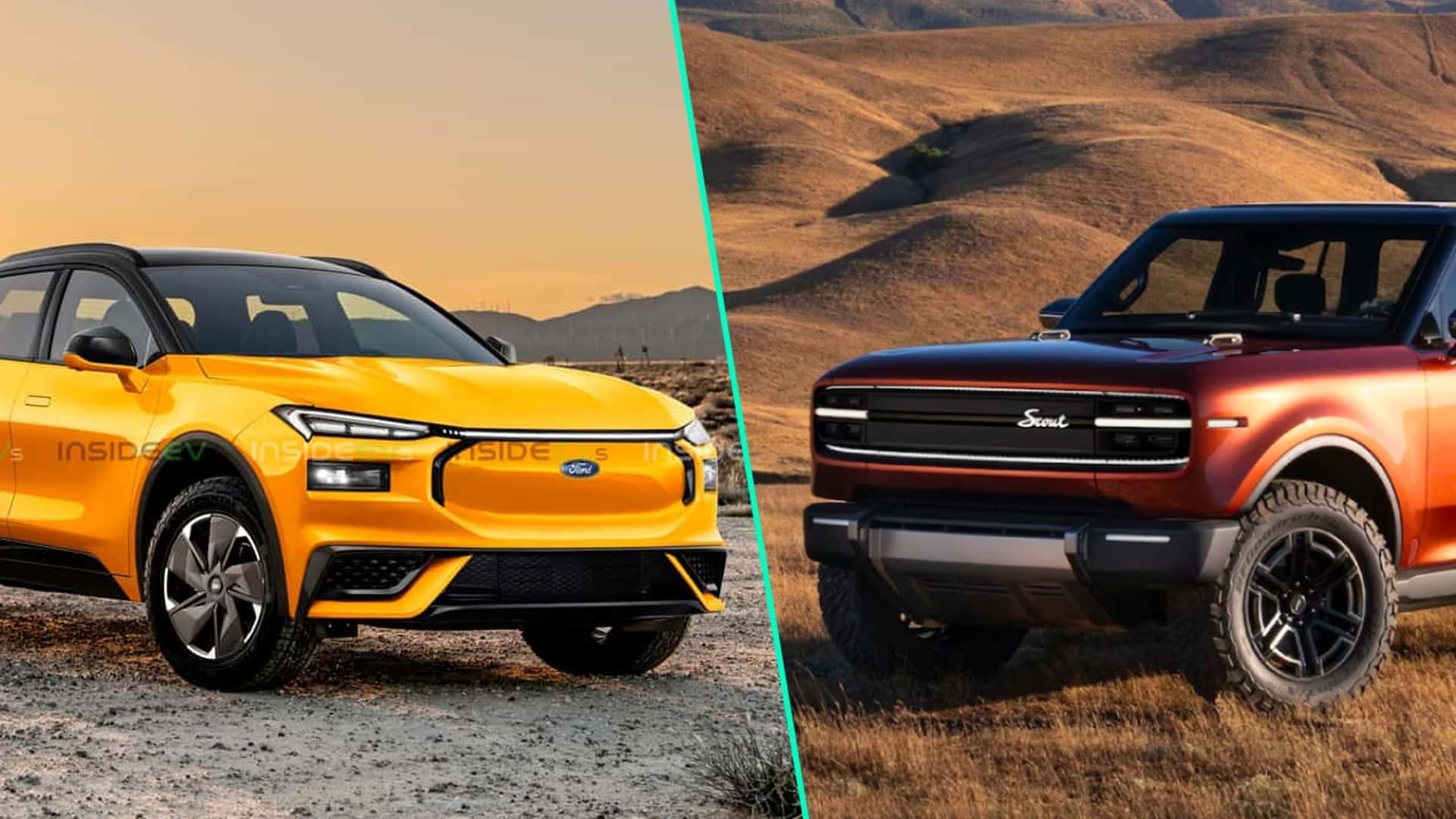
In the rapidly evolving landscape of electric vehicles, a growing trend of prolonged product announcements and delayed launches is testing the patience of consumers and potentially undermining investor confidence. The recent developments surrounding Ford’s upcoming electric pickup truck, now officially named the ‘Fathom,’ serve as a significant illustration of this industry-wide phenomenon.
Key Takeaways (TL;DR)
- Ford’s ‘Fathom’ electric pickup, first announced in August 2025, received its official name and reconfirmation this week, yet remains years away from launch, exemplifying a trend of extended EV reveal cycles.
- Automakers, including Tesla, Land Rover, Rivian, and Scout, frequently announce electric vehicles far in advance of production, often with incomplete details or changing specifications.
- This strategy is primarily driven by the need to excite shareholders, demonstrate long-term growth plans, and capture attention in a competitive news environment.
- However, the approach risks consumer skepticism, diminishes initial hype, and provides competitors with valuable development roadmaps.
- Repeated delays and altered promises can damage brand credibility, leading to customer churn and a loss of market trust by the time products finally reach the market.
Ford Fathom: A Case Study in Protracted Anticipation
The journey of Ford’s affordable electric pickup truck exemplifies the industry’s increasingly drawn-out reveal strategy. Initially announced in August 2025 as a sub-$30,000 electric truck slated for arrival ‘in a couple of years,’ the project recently resurfaced with a new name, the ‘Fathom,’ and a reaffirmed price point of just under $30,000.

Despite multiple announcements and events, including factory tours, the public has gained limited concrete information over this extended period. What is known includes features like native Apple Maps integration, a standard touchscreen interface, BlueCruise hardware, a 400-volt architecture, and more passenger space than a Toyota RAV4. Its anticipated arrival is in late 2027, contingent on development timelines.
Conversely, critical details remain undisclosed. Consumers await information on the final range of its battery packs, the number of available options, towing capacity, power output specifications, pricing for all-wheel-drive configurations, and the presence of physical buttons alongside the touchscreen. The vehicle’s complete exterior and interior design also remain under wraps.
This information asymmetry was highlighted when Ford organized an ‘Ask Me Anything’ Q&A session on the Electric Cars subreddit. Many of the most pressing questions from the public could not be answered, as Ford indicated these details were being reserved for future, staggered announcements. This ‘slow drip’ approach to news dissemination has become a hallmark of EV product launches, creating a cycle of anticipation that risks fizzling out before the product ever reaches market.

The Pervasive Industry-Wide Trend of Extended EV Reveals
The practice of unveiling electric vehicles years before their market availability is not exclusive to Ford; it has become a widespread phenomenon across the automotive industry. This trend, often attributed to Tesla’s pioneering approach, has been adopted by numerous manufacturers eager to generate early buzz and secure investment.
Tesla, for instance, introduced the Model 3 and Cybertruck significantly ahead of their volume production, a strategy that often led to delays and price adjustments exceeding initial promises. The second-generation Tesla Roadster, revealed nine years ago, still awaits production, underscoring the potential for extended timelines.
Other major players have followed suit. Land Rover confirmed an electric Range Rover in 2023, with prototypes already being driven more than a year ago. Yet, key details remain unannounced, and the vehicle is not yet available for purchase. Similarly, Rivian unveiled its R2, R3, and R3X models in the spring of 2024, complete with design renders, initial specifications, and a base price for the R2. However, the R2’s launch version pricing and production-spec reveal took two more years, with deliveries only commencing in June. The R3 and R3X remain distant prospects, without firm production dates, despite being previewed well over two years ago.
Scout, Volkswagen Group’s reborn truck brand, announced its Terra and Traveler EVs in 2024, promising compelling designs and specifications. While initial production is slated for 2027, customer deliveries are not expected until 2028. This implies a four-year gap between the vehicle’s reveal and its market entry, further extending the wait for prospective buyers.
Understanding the Strategic Imperative Behind Early Announcements
The rationale behind these multi-year public development cycles is multifaceted, primarily centering on financial and marketing objectives. A significant driver is the need to engage shareholders and attract capital. By announcing ambitious EV projects early, automakers provide investors with a glimpse into their long-term growth strategies and commitment to electrification, crucial for sustaining investment in what is often a capital-intensive transition.
For companies like Ford, early announcements, such as CEO Jim Farley’s discussions about a ‘skunkworks’ team developing a revolutionary EV, serve to reassure investors that profitable innovations are ‘right around the corner,’ even if current products face market challenges. This is particularly vital for newer entrants like Rivian, which must demonstrate robust long-term plans to maintain investor confidence and market valuation.
Furthermore, the ‘attention economy’ plays a pivotal role. In an era of constant news cycles and fragmented media consumption, a single, comprehensive product launch can easily be overlooked. Automakers therefore adopt a ‘drip-feed’ strategy, releasing bite-sized news over an extended period. This aims to secure multiple news cycles and maintain product visibility, rather than relying on one major announcement that might quickly be overshadowed.
For established brands like the Volkswagen Group, highlighting upcoming EV sub-brands like Scout helps to counterbalance perceived struggles in the current EV market, signaling future strategic directions and potential for market penetration in segments like electric trucks.
The Perilous Path: Risks for Consumers and Car Companies
While strategically beneficial in theory, the practice of drawn-out EV reveals carries significant risks for both consumers and automakers. Years of unfulfilled promises, delays, and revised pricing have cultivated a climate of skepticism among the public and the media. This erosion of trust can dilute the impact of future announcements, making it harder to generate genuine excitement and commitment from potential buyers.
The Ford F-150 Lightning, for example, saw its price quickly climb from an announced $40,000 base MSRP. The Volvo EX90 faced delays and was delivered in an unfinished state. The Chevy Blazer EV SS also experienced multiple launch delays. More drastically, the Honda 0 Series, shown in 2024, was canceled months before its scheduled deliveries. Even premium brands like Porsche face uncertainty with their on-again-off-again 718 Boxster and Cayman EVs.
From a competitive standpoint, announcing a vehicle years in advance provides rivals with a detailed ‘roadmap’ of upcoming products, allowing them to refine their own strategies or even accelerate their development to beat the announced product to market. Moreover, extended timelines leave projects vulnerable to unforeseen global events such as pandemics, geopolitical conflicts, or supply chain disruptions, which can render initial pricing and specifications obsolete or unattainable.
Despite these clear risks, automakers persist, driven by the belief that staying relevant and demonstrating future potential is paramount. Tesla’s model, where ‘hype generates cash,’ illustrates a powerful feedback loop: investor excitement leads to capital, which funds product development, driving sales, and further investor interest. However, this model is contingent on delivering, even if belatedly.
As more companies adopt this playbook, the market is becoming saturated with promises. A reputation for ‘over-promising and under-delivering’ can be severely detrimental. By the time a product navigates its multi-year public development, consumer interest may have waned, and competitors might have seized the opportunity to capture market share. The delicate balance between generating anticipation and maintaining credibility is becoming increasingly critical for success in the dynamic EV market.
FAQ Section
Q1: Why do automakers announce EVs so far in advance?
Automakers primarily announce electric vehicles years ahead of launch to excite shareholders, attract investment, and demonstrate a clear long-term growth strategy. This approach also helps capture public attention over multiple news cycles in a competitive media landscape, providing ongoing visibility for upcoming products.
Q2: What are the main risks of these prolonged EV reveals for consumers?
For consumers, prolonged EV reveals often lead to skepticism due to frequent delays, price changes, or altered specifications from initial promises. This can result in diminished excitement, a loss of trust in brand credibility, and ultimately, a decision to move on to a competitor’s product that is available sooner.
Q3: How does this strategy impact competition in the EV market?
Announcing an EV several years before production inadvertently provides competitors with a strategic roadmap. Rivals can use this information to refine their own product development, adjust their market entry timings, or even accelerate their launches to pre-empt the announced vehicle, potentially eroding the first-mover advantage.
Q4: Can extended timelines affect an EV’s final pricing or features?
Yes, extended development timelines significantly increase the risk of changes to an EV’s final pricing and features. Global economic shifts, supply chain issues, evolving regulatory standards, or unexpected technological advancements can all necessitate adjustments to a vehicle’s specifications or cost, often leading to deviations from initial promises.
Q5: Is the Ford Fathom expected to follow a similar pattern of delays?
While Ford has set a target launch of late 2027 for the Fathom, the pattern of prolonged announcements and often-revised timelines across the EV industry suggests that potential adjustments are possible. The company’s ability to meet this target will be closely watched by consumers and industry observers alike.
Q6: What is the ‘attention economy’ in the context of EV announcements?
The ‘attention economy’ refers to the strategy of competing for consumer and media attention in an information-rich world. Automakers leverage this by ‘drip-feeding’ news about upcoming EVs over an extended period, rather than a single major launch. This aims to secure sustained media coverage and public interest over multiple news cycles.
Q7: How can automakers build trust with consumers despite long announcement cycles?
Automakers can build trust by providing transparent and realistic timelines, communicating any changes promptly, and delivering products that align closely with initial promises regarding price and features. Consistent, credible information, rather than exaggerated hype, is crucial for maintaining consumer confidence over long development periods.