
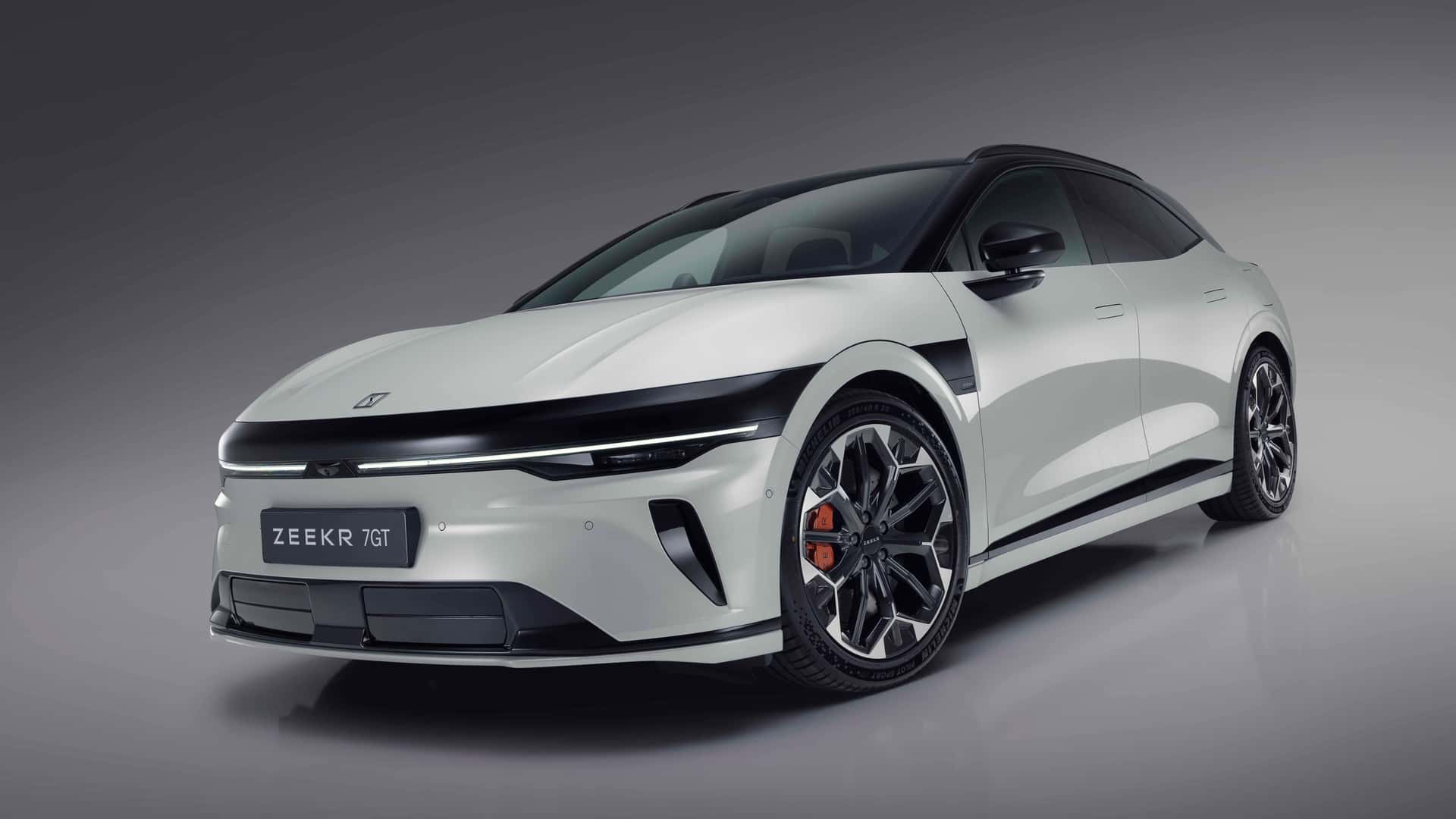
Key Takeaways:
- The 75-kWh Zeekr 7GT charged from 10% to 80% in approximately 11 minutes, surpassing Zeekr’s 13-minute claim.
- Despite peaking at only 325 kW, significantly below its 420 kW theoretical maximum, its exceptionally flat charging curve maintained high power late into the session.
- The LFP battery pack continued to draw around 165 kW at 90% state of charge, achieving a full 100% charge in roughly 21 minutes, a feat uncommon for most electric vehicles.
Zeekr 7GT Achieves Remarkable Fast Charging Despite Missing Peak Power Target
In a significant development for the electric vehicle (EV) industry, China’s Zeekr 7GT has demonstrated an extraordinary ability to fast-charge its battery, setting new benchmarks in real-world tests. The vehicle, specifically the 75-kilowatt-hour (kWh) variant equipped with a Lithium Iron Phosphate (LFP) battery, showcased a charging performance that not only exceeded its manufacturer’s claims but also redefined expectations for electric vehicle battery technology.

This achievement is particularly noteworthy because the Zeekr 7GT did not reach its advertised peak charging power. Despite this, its unique and remarkably flat charging curve allowed it to significantly cut down charging times, proving that sustained power delivery across the charging cycle can be more critical than fleeting peak figures.
The Unconventional Triumph: Beating Claims Without Peak Power
The Zeekr 7GT, with its 800-volt architecture, is marketed with a theoretical peak charging capability of up to 420 kilowatts (kW), making it one of the most potent fast-charging EVs available in Europe. Zeekr had previously claimed that the smaller 75-kWh battery variant could charge from 10% to 80% in just 13 minutes, provided a 480 kW charger was utilised.
However, an independent real-world charging test, conducted by prominent EV tester Bjørn Nyland, revealed a compelling twist. The rear-wheel-drive 7GT Core never approached its claimed maximum charging power, peaking at approximately 325 kW across multiple charging sessions. This figure stands more than 150 kW below its advertised capacity.
Despite this apparent shortfall in peak power, the 75-kWh LFP pack, featuring Zeekr’s in-house-developed second-generation Golden Battery technology, delivered an astounding performance. The vehicle charged from 10% to 80% in an impressive 11 minutes, effectively beating Zeekr’s own 13-minute claim.
Beyond Peak Power: The Crucial Role of the Charging Curve
The testing highlighted a crucial aspect often overlooked in EV charging discussions: the shape and consistency of the charging curve. While many electric vehicles boast high peak charging rates, this power often tapers off dramatically as the battery’s state of charge (SoC) increases, especially beyond 80%.
For the Zeekr 7GT LFP, the charging curve presented an arguably more impressive and practical advantage than a brief, high-power spike. Its ability to sustain high charging speeds throughout the session allowed for significantly faster overall charging times. This characteristic fundamentally alters the user experience, minimising downtime and enhancing convenience for electric vehicle owners.
Dissecting the Zeekr 7GT’s LFP Battery Performance
The detailed results from the independent test underscore the remarkable efficiency of the Zeekr 7GT’s LFP battery. Typically, the final percentages of an EV’s battery charge can take disproportionately longer to fill due to power reduction strategies designed to protect the battery and prevent overheating.
However, the 7GT LFP demonstrated exceptional resilience in maintaining high power. At 80% SoC, it was still drawing a substantial 220 kW. Even more remarkably, at 90% charge, the battery pack continued to accept approximately 165 kW. This robust power delivery continued until the very end, with the charging rate dropping below 100 kW only when the battery reached 97% SoC.
This sustained performance meant that the Zeekr 7GT reached a full 100% charge in about 21 minutes. This figure is significantly quicker than what most other EVs take to complete a 20% to 80% charge cycle, making the prospect of charging to 100% far more practical and time-efficient for Zeekr 7GT owners.
Comparative Analysis: LFP vs. NMC and Competitors
The test also offered a valuable comparative perspective, pitting the 75-kWh LFP Zeekr 7GT against its long-range sibling, which features a 100-kWh Nickel Manganese Cobalt (NMC) battery, and an Xpeng G6 equipped with an 81-kWh LFP battery. Both the 100-kWh Zeekr 7GT and the Xpeng G6 achieved higher peak charging powers early in their sessions.
The 100-kWh Zeekr 7GT briefly surpassed 420 kW, sustaining it between 12% and 20% SoC before dropping to 380 kW. The Xpeng G6 also reached a similar high peak early on, though its power quickly fell below 400 kW.
However, both competitors began tapering their charging speeds much earlier than the 75-kWh LFP variant. The 100-kWh Zeekr 7GT’s charging power dropped below 100 kW near 90% SoC. While the Xpeng G6 performed slightly better at that stage, accepting around 125 kW, neither could match the sustained high power of the 75-kWh LFP model. Although the larger battery Zeekr delivered more actual energy in the early stages due to its higher capacity, the 75-kWh LFP car ultimately demonstrated the flattest charging curve and completed its charging cycle first.
Implications for Electric Vehicle Owners
The findings from this real-world test carry substantial implications for both current and prospective electric vehicle owners. The Zeekr 7GT’s performance highlights that a high peak charging number, while impressive on paper, may not translate directly into the fastest overall charging experience.
Instead, a well-managed, flatter charging curve, like that exhibited by the 75-kWh Zeekr 7GT, offers a more consistent and predictable charging process. This reduces range anxiety and makes long-distance travel in an EV more convenient, as drivers can spend less time waiting at charging stations. The ability to efficiently charge closer to 100% also provides greater usable range for daily driving or extended journeys.
Independent Validation and Future Outlook
It is important to note that this was an independent real-world test, offering valuable insights that complement manufacturer-stated figures. The consistent results suggest a deliberate engineering focus by Zeekr on optimising the entire charging cycle, not just the peak power. This is further supported by observations from a 7X model, equipped with an earlier iteration of the Golden Battery, which charged from empty to full in just over 22 minutes.
Zeekr’s emphasis on both headline-grabbing peak charging power ratings and the practical shape of the charging curve positions it as a significant innovator in electric vehicle battery technology. This balanced approach to fast charging could very well influence future design and development in the rapidly evolving EV market.
FAQ Section
What is the key takeaway from the Zeekr 7GT charging test?
The Zeekr 7GT with its 75-kWh LFP battery demonstrated exceptional fast-charging capabilities, beating its own 10-80% claim in 11 minutes. This was achieved through a remarkably flat charging curve that sustained high power, rather than relying solely on a high peak charging rate.
Did the Zeekr 7GT reach its claimed peak charging power?
No, the Zeekr 7GT in the test peaked at approximately 325 kW, which is more than 150 kW below its advertised maximum of 420 kW. Despite this, its overall charging performance for speed and efficiency was outstanding.
Why is a flat charging curve more important than peak power?
A flat charging curve means an EV can sustain high charging power for a longer duration, leading to quicker overall charging times. In contrast, a high peak power that tapers off quickly may not significantly reduce the total time spent at a charger, especially for reaching higher states of charge.
How long did it take the Zeekr 7GT to reach 100% charge?
The 75-kWh Zeekr 7GT achieved a full 100% charge in approximately 21 minutes. This is a remarkable feat, as many EVs take much longer to top up their final percentages due to significant power reduction at higher states of charge.
How did the 75-kWh LFP Zeekr 7GT compare to other EVs?
It was compared to a 100-kWh NMC Zeekr 7GT and an 81-kWh LFP Xpeng G6. While these rivals achieved higher peak power earlier, their charging rates tapered off sooner. The 75-kWh LFP Zeekr 7GT maintained the flattest curve and completed its full charging cycle first.
What battery technology does the fast-charging Zeekr 7GT use?
The exceptionally performing Zeekr 7GT variant tested was equipped with a 75-kWh Lithium Iron Phosphate (LFP) battery, which incorporates Zeekr’s second-generation Golden Battery technology. This LFP chemistry is known for its stability and ability to handle consistent charging to full capacity.