
Key Takeaways
- The 75-kWh Zeekr 7GT achieved a 10% to 80% charge in approximately 11 minutes, significantly surpassing Zeekr’s own 13-minute claim.
- Despite not reaching its advertised peak charging power of 420 kW, the vehicle delivered a remarkably flat charging curve, sustaining high power levels throughout the session.
- The LFP battery variant completed a 10% to 100% charge in a rapid 21 minutes, maintaining 220 kW at 80% and 165 kW at 90% state of charge.
- This real-world test highlights that a consistent, high-power charging curve is often more crucial for rapid charging than a fleeting peak power figure.
- Zeekr’s second-generation Golden Battery technology demonstrates exceptional efficiency, making full top-ups more practical for electric vehicle owners.
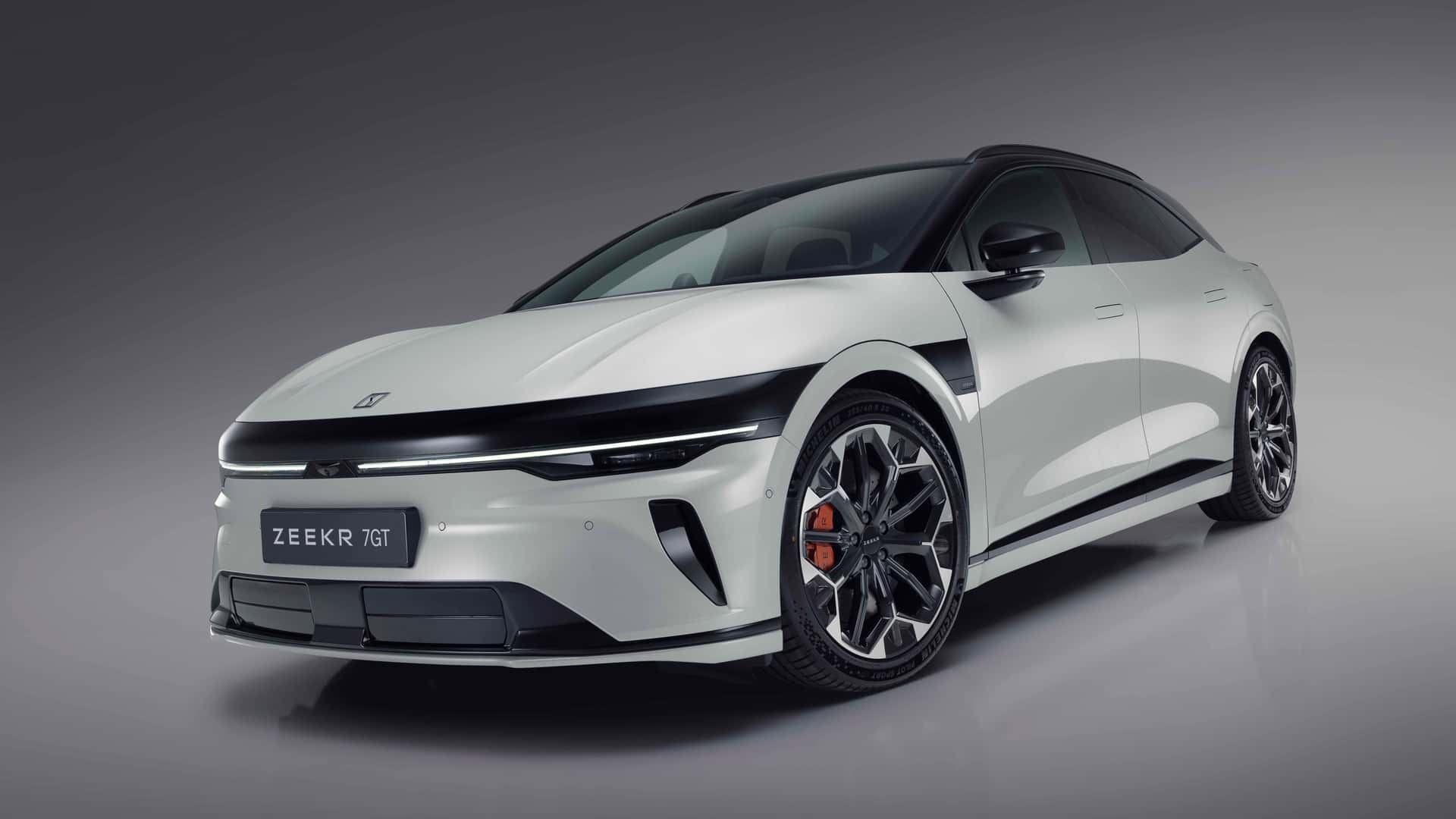
In a compelling demonstration of advanced electric vehicle (EV) technology, the Zeekr 7GT, equipped with its 75-kilowatt-hour (kWh) LFP battery, has delivered a charging performance that redefines expectations for rapid energy replenishment. Despite failing to achieve its theoretical peak charging power, the EV significantly outperformed its own manufacturer’s claims for speed, completing a 10% to 80% charge in a mere 11 minutes. This achievement underscores a critical nuance in EV charging: the sustained rate of power delivery, rather than just the peak, dictates real-world efficiency.
The Zeekr 7GT, featuring an 800-volt architecture, is marketed with a formidable claimed peak charging power of up to 420 kilowatts (kW) in Europe. The manufacturer suggests that its smaller 75-kWh battery variant could charge from 10% to 80% in just 13 minutes, provided a 480 kW charger is available. However, an independent real-world test has revealed that the car’s true strength lies not in hitting maximum theoretical figures, but in its ability to maintain exceptionally high charging rates across a broad state of charge (SoC) spectrum.

Zeekr 7GT Charging Performance: A New Benchmark
The rear-wheel-drive 7GT Core, which underwent testing by renowned EV enthusiast Bjørn Nyland, never approached its advertised 420 kW maximum. On multiple high-power chargers, the vehicle’s 75-kWh LFP battery, incorporating Zeekr’s proprietary second-generation Golden Battery technology, consistently peaked at approximately 325 kW. This figure, while substantial, remained over 150 kW below the claimed theoretical peak.
Yet, the results were nothing short of remarkable. The Zeekr 7GT’s charging performance from 10% to 80% was completed in an astonishing 11 minutes. This not only outpaced Zeekr’s official 13-minute claim but also did so without ever reaching its maximum rated power. Furthermore, the vehicle achieved a full 10% to 100% charge in an impressive 21 minutes, a speed typically seen only for partial top-ups in many other electric models.
The Power of a Flat Charging Curve
The secret behind this rapid Zeekr 7GT charging performance lies in its unusually flat charging curve. Unlike many EVs where charging power drops sharply after reaching 50-60% SoC, and precipitously after 80%, the 7GT maintained robust power delivery deep into its charging cycle. This characteristic is far more beneficial for the average EV user than a brief, high-power spike that quickly tapers off.

For most electric vehicles, extending a charging session beyond 80% can be a test of patience, as the power input often dwindles to below 100 kW, or even lower, making the final percentage points disproportionately time-consuming. However, the Zeekr 7GT LFP variant challenged this norm dramatically. At 80% state of charge, the vehicle was still drawing approximately 220 kW. Even more impressively, at 90% SoC, it continued to accept roughly 165 kW.
The charging rate only dipped below 100 kW when the battery reached a remarkable 97% state of charge. This sustained high-power delivery fundamentally changes the practicality of charging an EV to 100%, transforming it from a time-consuming chore into a viable option for longer journeys or daily routines.
Zeekr’s Golden Battery Technology: A Closer Look
The heart of this impressive charging capability is Zeekr’s in-house-developed second-generation Golden Battery technology. This LFP (Lithium Iron Phosphate) battery pack is designed not only for energy density but also for optimal thermal management and power acceptance, crucial elements for ultra-fast charging. LFP batteries are generally known for their durability, safety, and cost-effectiveness, and Zeekr’s iteration appears to push their performance boundaries significantly.
The 800-volt architecture provides the foundation for such high-power charging, enabling lower currents at higher voltages, which reduces heat losses and allows for faster energy transfer. This advanced system, combined with sophisticated battery management software, optimizes the charging process to deliver a consistent and efficient power flow, even when approaching full capacity.
Comparative Analysis with Other EVs
To put the 75-kWh Zeekr 7GT’s achievement into perspective, the independent test also included comparisons with its long-range counterpart, a 100-kWh NMC (Nickel Manganese Cobalt) battery variant of the 7GT, and an Xpeng G6 equipped with an 81-kWh LFP battery.
Both the 100-kWh NMC Zeekr 7GT and the Xpeng G6 demonstrated higher initial peak charging powers. The larger-battery 7GT briefly surpassed 420 kW, maintaining this figure between 12% and 20% SoC before reducing to 380 kW. The Xpeng G6 also reached a similar high peak early in its charging session. However, the advantage of these higher peaks was short-lived.
Both comparative vehicles began to slow down earlier in their charging cycles. The 100-kWh 7GT saw its power drop below 100 kW near 90% SoC, while the Xpeng G6, though slightly better, accepted roughly 125 kW at the same state of charge. While the large-battery Zeekr delivered more total energy early on due to its higher capacity, the 75-kWh LFP variant’s consistently flatter curve meant it ultimately completed its full charge first.
Real-World Testing vs. Manufacturer Claims
This independent real-world test serves as a crucial reminder that manufacturer claims, while indicative of theoretical maximums, do not always translate directly to everyday user experience. Optimal charging performance is not solely about the highest number on a specification sheet, but rather how effectively an EV can utilize available power over the entire charging duration.
The Zeekr 7GT’s performance highlights a strategic focus by the manufacturer on optimizing the entire charging curve, not just the peak. This approach directly addresses one of the primary concerns for potential EV buyers: the time spent charging. By making a full top-up to 100% a significantly faster and more practical endeavor, Zeekr enhances the usability and convenience of its electric vehicles.
The results from this test are not isolated. Another earlier test of a Zeekr 7X, featuring an earlier generation of the Golden Battery, recorded a full empty-to-full charge time of just over 22 minutes. These consistent outcomes reinforce Zeekr’s commitment to advancing EV charging technology.
It is important to note that, as an independent real-world test, the displayed times and power figures should be considered indicative rather than definitive laboratory validations. Nevertheless, the findings offer compelling evidence of the Zeekr 7GT’s exceptional fast-charging capabilities and its potential to set new standards in the electric vehicle market.
FAQ Section
What is the key takeaway from the Zeekr 7GT charging test?
The Zeekr 7GT demonstrated that a flat, sustained charging curve is more crucial for rapid real-world charging than achieving a high, but fleeting, peak power. It significantly beat its 10-80% charging claim by taking only 11 minutes, despite not reaching its theoretical maximum power.
How long did the Zeekr 7GT take to charge to 100%?
The 75-kWh LFP variant of the Zeekr 7GT achieved a 10% to 100% charge in approximately 21 minutes during an independent real-world test. This is remarkably fast, particularly for reaching a full state of charge, which usually slows down considerably in most EVs.
Did the Zeekr 7GT reach its claimed peak charging power?
No, the Zeekr 7GT did not reach its advertised peak charging power of 420 kW in the test. It peaked at around 325 kW. However, its ability to maintain a high charging rate for a longer duration proved more effective for overall charging speed.
What is unique about the Zeekr 7GT’s charging curve?
The Zeekr 7GT exhibits an unusually flat charging curve. It maintained 220 kW at 80% state of charge and 165 kW at 90%, only dropping below 100 kW at 97% SoC. This sustained power significantly reduces the time needed for the final percentages of charging.
What kind of battery technology does the Zeekr 7GT use for this impressive performance?
The tested Zeekr 7GT Core model features a 75-kWh LFP (Lithium Iron Phosphate) battery pack, which incorporates Zeekr’s in-house-developed second-generation Golden Battery technology. This technology, combined with an 800-volt architecture, is key to its rapid and sustained charging capabilities.