
Key Takeaways (TL;DR)
- Samsung SDI has acquired General Motors’ 49.99% stake in SynergyCells, their joint battery manufacturing venture in New Carlisle, Indiana.
- The facility, now Samsung SDI’s first independently operated North American battery plant, will pivot its initial production to cells for Energy Storage Systems (ESS).
- This strategic adjustment is a direct response to evolving market conditions, including a slower-than-anticipated growth in Electric Vehicle (EV) demand and robust demand in the U.S. storage market.
- While the joint venture structure has changed, Samsung SDI and GM have signed a new agreement to jointly develop prismatic cells for potential future EV applications.
- Production at the Indiana plant is slated to commence in 2027, initially focusing on ESS cells, with the possibility of producing EV prismatic cells developed with GM later.
Samsung SDI Assumes Full Control of Indiana Battery Plant
Samsung SDI, a global leader in battery technology, has announced a significant restructuring of its battery manufacturing joint venture with General Motors (GM) in New Carlisle, Indiana. The South Korean conglomerate has successfully acquired GM’s entire 49.99% stake in SynergyCells, the partnership established between the two automotive and technology giants.

This acquisition marks a pivotal moment for Samsung SDI, transforming the Indiana facility into its first independently operated battery production base in North America. The move signals a strategic recalibration in response to dynamic shifts within the global battery market.
A Strategic Shift Amid Evolving Market Dynamics
The decision to alter the ownership structure stems from a comprehensive reassessment of market conditions since the initial joint venture announcement. Samsung SDI explicitly attributed this shift to factors such as slower-than-expected growth in Electric Vehicle (EV) demand, prompting both partners to explore alternative forms of cooperation beyond a joint venture for this specific plant.
Initially envisioned as a cornerstone for GM’s ambitious EV rollout, the plant’s strategic direction has been realigned to capitalize on immediate and robust market opportunities elsewhere. This demonstrates a flexible and adaptive approach to manufacturing investment in a rapidly evolving energy landscape.

Pivoting Production: Focus on Energy Storage Systems
With Samsung SDI now holding full ownership, the New Carlisle plant’s initial production focus will pivot from EV batteries to cells specifically designed for Energy Storage Systems (ESS). This strategic decision is a direct response to what Samsung SDI identifies as strong and increasing demand within the U.S. energy storage market.
Energy storage systems are crucial for stabilizing renewable energy grids, providing backup power, and managing peak electricity demand. Their importance has grown significantly as nations worldwide accelerate their transition towards cleaner energy sources and improve grid resilience.
The Growing Demand for Stationary Storage
The demand for ESS in North America has surged, driven by factors such as the expansion of renewable energy sources like solar and wind, grid modernization efforts, and the need for reliable power infrastructure. These systems require batteries optimized for different performance metrics compared to those used in electric vehicles.
Cells built for stationary storage are typically optimized with a greater emphasis on cycle life – the number of charge and discharge cycles they can endure – and a lower cost per kilowatt-hour. This contrasts with EV cells, which prioritize high specific energy to maximize range and minimize weight.
In December 2025, Samsung SDI underscored its commitment to the ESS market by signing a three-year contract valued at more than 2 trillion won (approximately $1.35 billion) to supply prismatic LFP (Lithium Iron Phosphate) cells for energy storage systems across North America, with deliveries commencing in 2027. This contract highlights the significant market opportunity Samsung SDI is now directly addressing with the Indiana plant.
Understanding Prismatic Cell Technology
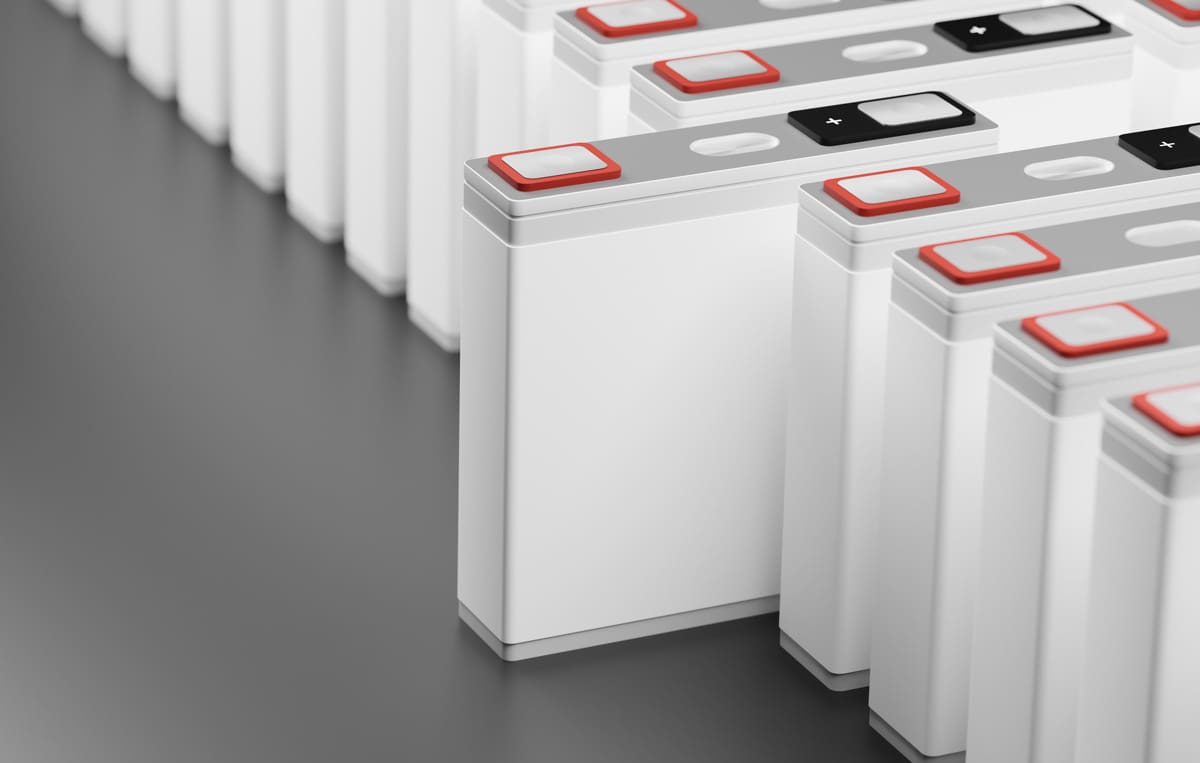
The Indiana plant is slated to produce prismatic cells, a specific form factor for lithium-ion batteries. Prismatic cells are characterized by their rigid, often rectangular-shaped aluminum or steel casings. This design offers several advantages in certain applications.
Compared to cylindrical cells, prismatic cells can be packed into a module with less wasted volume, leading to higher energy density at the pack level. Furthermore, their rigid cans inherently require less external support structure than more flexible pouch cells, potentially simplifying battery module and pack design for stationary applications.
While the initial focus for the New Carlisle facility will be on ESS cells, the jointly developed prismatic cells with GM, which are optimized for EV applications, could potentially be produced at the plant at a later stage, reflecting a long-term strategic view.
Reframing the GM Partnership: A New Path Forward
Despite the change in the joint venture’s ownership structure, the strategic partnership between Samsung SDI and General Motors is set to continue, albeit in a modified form. The two companies have solidified their ongoing collaboration by signing a new joint development agreement.
This agreement specifically covers the development of prismatic cells tailored for potential future Electric Vehicle applications. This ensures that the expertise and synergies between Samsung SDI’s battery technology and GM’s automotive engineering will persist, even as the immediate manufacturing focus of the Indiana plant shifts.
Initial Vision and Investment
The original joint venture, finalized in August 2024, represented a significant commitment from both companies. They had pledged an investment of approximately $3.5 billion towards the construction of the New Carlisle facility, with an ambitious target to begin production in 2027.
The plant’s initial annual capacity was projected at 27 GWh, with plans for expansion to 36 GWh. The initial blueprint also specified the production of nickel-rich NCA (Nickel Cobalt Aluminum) prismatic cells, which are known for their high energy density suitable for EVs.
The adjustments reflect a pragmatic response to market realities without dissolving the underlying strategic intent of collaboration. A Samsung SDI official articulated this perspective, stating: “While reflecting recent market changes, this acquisition decision is to continue the strategic partnership with GM.”
Continued Collaboration on EV Cell Development
The new joint development agreement underscores a mutual understanding that the EV market, despite its current deceleration in some segments, remains a critical long-term growth area. By continuing to collaborate on prismatic EV cell technology, both companies position themselves to adapt quickly to future market upturns and technological advancements.
This strategic framework allows Samsung SDI to leverage its independent operational control to address immediate ESS market demands while simultaneously maintaining a robust research and development pipeline with a major automotive OEM for future EV battery needs.
Implications for North American Battery Manufacturing
Samsung SDI’s move to independently operate the Indiana battery plant and pivot its initial production to ESS cells holds significant implications for the North American battery manufacturing landscape. It highlights the growing recognition of the ESS sector as a standalone, high-growth market, distinct from the EV sector but equally vital for the energy transition.
The shift also demonstrates the agility required from major battery manufacturers to respond to fluctuating market demands and investment priorities. As the facility moves forward with construction and prepares for its 2027 production launch, it will contribute substantially to the domestic supply chain for energy storage solutions, bolstering energy independence and grid stability in the United States.
This strategic realignment by Samsung SDI reinforces the company’s commitment to the North American market, not just for electric vehicles, but as a comprehensive provider of advanced battery solutions across the entire energy ecosystem. The emphasis on ESS production provides a robust foundation, while the ongoing development with GM keeps the door open for future EV battery manufacturing as market conditions evolve.
Frequently Asked Questions (FAQ)
What is the main change regarding the Samsung SDI and GM battery plant in Indiana?
Samsung SDI has acquired GM’s 49.99% stake in SynergyCells, their joint venture in New Carlisle, Indiana. This makes the plant Samsung SDI’s first independently operated battery production facility in North America, with an initial pivot to Energy Storage Systems (ESS) cell production.
Why did the ownership structure of the joint venture change?
The change reflects evolving market conditions, including slower-than-expected growth in Electric Vehicle (EV) demand. Both companies decided to pursue other forms of cooperation, leading to Samsung SDI’s full acquisition of the plant’s ownership.
What type of batteries will the Indiana plant primarily produce now?
The plant will initially focus on manufacturing prismatic cells specifically optimized for Energy Storage Systems (ESS). This decision is driven by the robust demand in the U.S. energy storage market, which prioritizes battery characteristics like long cycle life and cost-effectiveness per kilowatt-hour.
Will Samsung SDI and GM still collaborate on battery technology?
Yes, despite the ownership change, Samsung SDI and GM have signed a new joint development agreement. This agreement focuses on the co-development of prismatic cells intended for potential future Electric Vehicle applications, ensuring continued strategic partnership.
When is the Indiana battery plant expected to begin production?
The New Carlisle, Indiana plant, which is currently under construction, is scheduled to commence production in 2027. It will initially produce cells for energy storage systems, with the possibility of integrating EV prismatic cell production at a later stage.
What are prismatic cells and why are they suitable for ESS?
Prismatic cells are a type of lithium-ion battery characterized by their rigid, often rectangular form factor. They are well-suited for ESS due to their efficient volumetric packing, reduced need for external support, and suitability for optimization towards high cycle life and lower cost per kWh, essential for stationary applications.
What was the initial investment planned for the joint venture?
The original joint venture between Samsung SDI and GM, finalized in August 2024, committed approximately $3.5 billion towards the construction of the New Carlisle battery plant. The initial annual production capacity was set at 27 GWh, expandable to 36 GWh.
What is the significance of this move for Samsung SDI in North America?
This move establishes the Indiana facility as Samsung SDI’s first independently operated battery production base in North America. It allows the company greater flexibility to respond to market demands, particularly in the burgeoning ESS sector, while maintaining a strategic foothold for future EV battery expansion.