
Key Takeaways
- Elon Musk has definitively stated that Tesla and SpaceX will build and operate the massive Terafab semiconductor facility in Texas, asserting full control over its development and daily functions.
- This declaration explicitly closes the door on earlier speculation that Taiwan Semiconductor Manufacturing Company (TSMC) might own or extensively run the plant.
- TSMC’s involvement, if any, would be limited to potentially subleasing a portion of the Terafab complex, functioning as a tenant.
- The Terafab project, a joint venture between Tesla, SpaceX, and xAI, aims to address future AI chip demand for Optimus robots, Cybercab, Full Self-Driving, and SpaceX’s orbital data centers.
- Intel remains a key partner, assisting with chip design, building, and packaging for the ambitious $119 billion project, which seeks to produce one terawatt of computing power annually.
Elon Musk, the CEO of Tesla and SpaceX, has issued a definitive statement regarding the operational control of Terafab, the colossal semiconductor manufacturing facility planned in Texas. Musk unequivocally declared that his companies, Tesla and SpaceX, will be solely responsible for building and running the advanced chip plant, dispelling notions of a potential takeover by external entities.
This firm stance comes amidst prior speculation concerning the involvement of Taiwan Semiconductor Manufacturing Company (TSMC), the world’s largest contract chipmaker. Musk’s clarification leaves no room for ambiguity, outlining a clear path for the future of the ambitious project.

Musk Draws a Firm Line on Terafab Ownership
The clarification from Elon Musk arrived on October 7, 2026, via a post on X (formerly Twitter). Responding to a discussion suggesting that TSMC would likely own and operate the Terafab plant, Musk was explicit in his rebuttal.
“No, we will build and run the fab. Let there be ZERO doubt about that,” Musk wrote. He further elaborated on the extent of any potential TSMC involvement: “Maybe TSMC subleases part of the Terafab if they want, but nothing more than that.”
This statement defines the parameters of TSMC’s role, if any, to that of a tenant renting a section of the expansive complex. Tesla and SpaceX would retain full authority over the facility’s construction, equipment procurement, and day-to-day operational management, underscoring a commitment to in-house control.

The specific tweet that solidified Musk’s position stated:
@herbertong @thejefflutz No, we will build and run the fab. Let there be ZERO doubt about that.
Maybe TSMC subleases part of the Terafab if they want, but nothing more than that.
— Elon Musk (@elonmusk) October 7, 2026
Addressing Prior Speculation and Evolving Discussions
Musk’s recent statement effectively curtails a week of active speculation surrounding TSMC’s potential role in the Terafab initiative. The discussions first emerged on October 2, following reports from tech journalist Tim Culpan, who indicated that TSMC was exploring various avenues to contribute to the operation of Terafab’s factories.
Initially, Musk’s response on October 3 had left room for broader possibilities. At the time, he acknowledged these were “just discussions, but something may come of it,” as reports from that period indicated. This earlier comment had suggested a scenario where the world’s leading contract chipmaker might indeed take a more significant operational role.
However, the latest communication from Musk definitively closes that particular door, reinforcing the integrated, internal operational model for Terafab. The evolution of these discussions highlights the strategic importance and proprietary nature of the semiconductor project to Musk’s broader technology ecosystem.
The Strategic Imperative: Why Terafab Matters for Elon Musk’s Ventures
Meeting Insatiable AI Chip Demand
The establishment of Terafab is a direct response to a burgeoning demand for advanced artificial intelligence (AI) chips that existing global suppliers are struggling to meet. Tesla, for instance, currently designs its own AI chips but relies on external manufacturers like TSMC and Samsung for their production.
Musk unveiled the Terafab project in March as a collaborative effort involving Tesla, SpaceX, and his AI company, xAI. The audacious goal of Terafab is to produce an unprecedented volume of chips each year, sufficient to power one terawatt of computing capacity. This target represents approximately 50 times the current annual output of the entire global AI chip industry.
Powering Future Autonomy and Space Exploration
The advanced semiconductors produced at Terafab are critical for a wide array of high-priority projects across Musk’s portfolio. These include the sophisticated chips required for Tesla’s Optimus humanoid robots, the upcoming Cybercab autonomous vehicles, and the continuous enhancement of Full Self-Driving (FSD) computer capabilities.
Beyond terrestrial applications, Terafab will also supply chips for SpaceX’s planned data centers in orbit, which are integral to its ambitious satellite internet and space exploration initiatives. By owning and operating the fabrication plant, Musk’s companies aim to circumvent the intense competition for production time on third-party manufacturing lines, ensuring a dedicated and reliable supply for their innovative endeavors.
Vertical Integration and Supply Chain Resilience
The decision to vertically integrate chip manufacturing is a strategic move designed to bolster supply chain resilience and reduce dependence on external foundries. This approach, which Tesla also adopted on a smaller scale during the COVID-induced chip shortages, provides greater control over production schedules, technological advancements, and intellectual property.
For projects as critical and technologically advanced as those undertaken by Tesla and SpaceX, direct control over chip production offers significant competitive advantages, ensuring that innovation is not hindered by external manufacturing constraints or geopolitical supply chain disruptions.
Massive Investment and Location Details
The Terafab project transitioned from conceptualization to active construction planning over the summer of 2026. In August, SpaceX officially confirmed Grimes County, Texas, approximately one hour from Houston, as the chosen site for the groundbreaking facility. This strategic location places it within a growing hub for technology and manufacturing.
As part of its engagement with the local community, SpaceX remitted a $10 million payment to Grimes County under a pre-existing tax abatement agreement. The initial phases of civil work were slated to commence shortly after the site confirmation, marking a significant step forward for the project.
The financial scale of Terafab is staggering. The first phase of construction and development alone is budgeted at an estimated $16.8 billion. Projections indicate that the total capital expenditure across all subsequent phases could reach as much as $119 billion, underscoring the unprecedented scope and long-term vision behind this integrated semiconductor production facility.
Key Partnerships: Intel’s Enduring Role
While discussions around TSMC’s potential involvement have been clarified, Intel Corporation remains a steadfast partner in the Terafab initiative. The technology giant signed on in April to lend its considerable expertise to the project, focusing on the design, building, and packaging of chips for the advanced facility.
Lip-Bu Tan, CEO of Intel, recently reaffirmed the company’s commitment to Terafab, emphasizing that Intel would continue its work on the project despite the prior discussions surrounding TSMC. This partnership leverages Intel’s extensive experience in semiconductor manufacturing and process technology, crucial for bringing such a complex fabrication plant online.
The collaboration with Intel is expected to be vital for the full-scale plant, with early indications pointing towards the potential utilization of Intel’s 14A manufacturing process. This blend of in-house vision and strategic external partnerships is designed to ensure the successful realization of the Terafab’s ambitious goals.
Navigating the Path Forward: Challenges and Ambition
Building and operating a state-of-the-art semiconductor fabrication plant is an immensely complex undertaking, typically requiring years of specialized expertise. As TSMC chairman C.C. Wei has previously noted, a new fab generally takes between two to three years to construct, followed by another one to two years to achieve full production output.
Tesla and SpaceX do not possess prior experience in running such a large-scale chip manufacturing facility. This lack of direct operational history was precisely why TSMC’s expertise drew considerable attention and sparked initial speculation. However, Musk’s clear directive indicates a preference for developing this specialized knowledge and operational capability internally.
This approach signifies a strategic choice to internalize a core competency that is central to Tesla’s robotics and autonomy plans, rather than ceding control to an external company, no matter how seasoned. Elon Musk has frequently expressed his personal vision for the facility, as highlighted in an August 6, 2026, tweet:
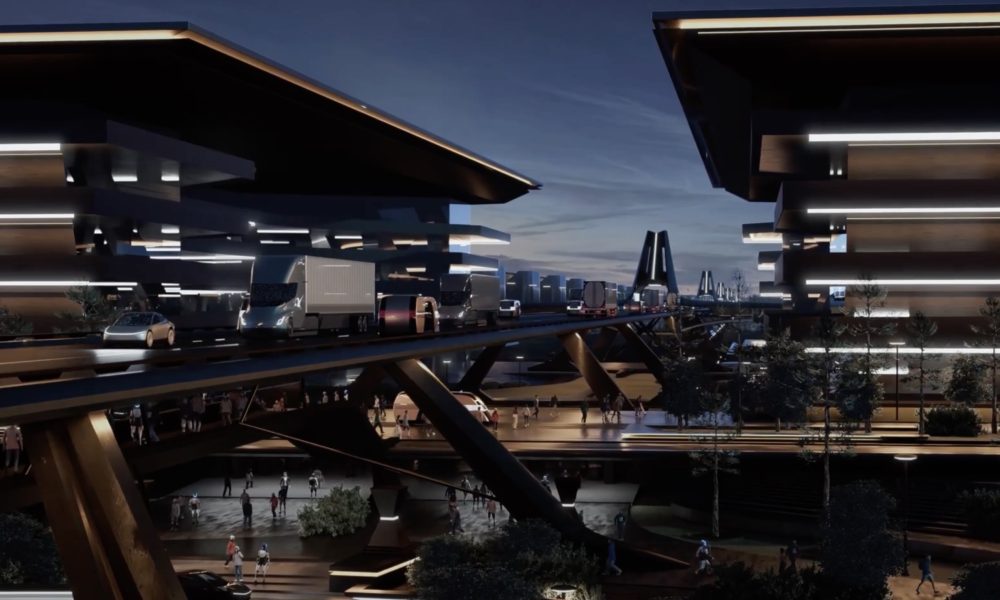
Terafab Texas will be the largest and most valuable building on Earth by far.
And it will be stunningly beautiful. https://t.co/4NweOqTL7y
The journey to realize Terafab will undoubtedly present significant challenges, from mastering the intricate processes of advanced chip production to managing a project of unprecedented scale and capital intensity. Nevertheless, Musk’s unwavering commitment to building and operating Terafab in-house underscores a strategic imperative to control the foundational technology for his interwoven technological ecosystem.
FAQ Section
What is Terafab?
Terafab is an ambitious, large-scale semiconductor manufacturing facility planned in Texas as a joint venture between Elon Musk’s companies: Tesla, SpaceX, and xAI. Its primary goal is to produce advanced AI chips at an unprecedented scale to meet the rapidly growing internal demands of these companies for their various projects.
Who will own and operate Terafab?
Elon Musk has explicitly stated that Tesla and SpaceX will fully own and operate the Terafab facility. This decision clarifies that operational control will remain in-house, preventing external entities like TSMC from taking over the management or primary operations of the plant.
What is TSMC’s role, if any, in Terafab?
TSMC’s involvement is limited to a potential sublease of a section of the Terafab complex, functioning much like a tenant. This means TSMC could rent space to manufacture chips but would not have any control over the overall building, equipment decisions, or the daily management of the Terafab facility itself.
Why is Elon Musk building Terafab?
Musk is establishing Terafab to address the critical need for advanced AI chips that current global suppliers cannot produce fast enough to meet his companies’ future demands. These chips are essential for Tesla’s Optimus robots, Cybercab, Full Self-Driving computers, and SpaceX’s planned orbital data centers, ensuring a dedicated supply chain.
What is the projected scale and investment for Terafab?
Terafab aims to produce enough chips to supply one terawatt of computing power annually, which is roughly 50 times the current global AI chip industry’s output. The first phase carries an estimated price tag of $16.8 billion, with total spending across all phases potentially reaching up to $119 billion, highlighting its immense scale.
Which companies are partnering on the Terafab project?
While the project is spearheaded by Tesla, SpaceX, and xAI, Intel is a confirmed key partner. Intel signed on in April 2026 to assist with the design, building, and packaging of chips for Terafab. Intel’s CEO has reaffirmed their continued involvement in the project.