
Key Takeaways:
- A rigorous 500-mile journey across Romania, including challenging mountain passes and high-speed highway sections, showcased the BMW iX3’s exceptional real-world range and efficiency.
- Despite aggressive driving and multiple strenuous ascents of the Transfăgărășan, the electric SUV completed the trip with a significant 16% battery charge remaining, eliminating the need for en-route charging.
- The BMW iX3 xDrive50, with its 108.7-kWh battery, consistently delivered reliable range predictions and demonstrated superior driving dynamics, comparable to or exceeding its combustion counterparts.
- This comprehensive test highlights how advanced electric vehicles are effectively addressing and rendering outdated common concerns regarding ‘range anxiety’ for long-distance travel.
- The vehicle’s combination of substantial battery capacity, impressive real-world efficiency, and robust performance underscores its suitability for diverse driving conditions, from urban commutes to demanding road trips.
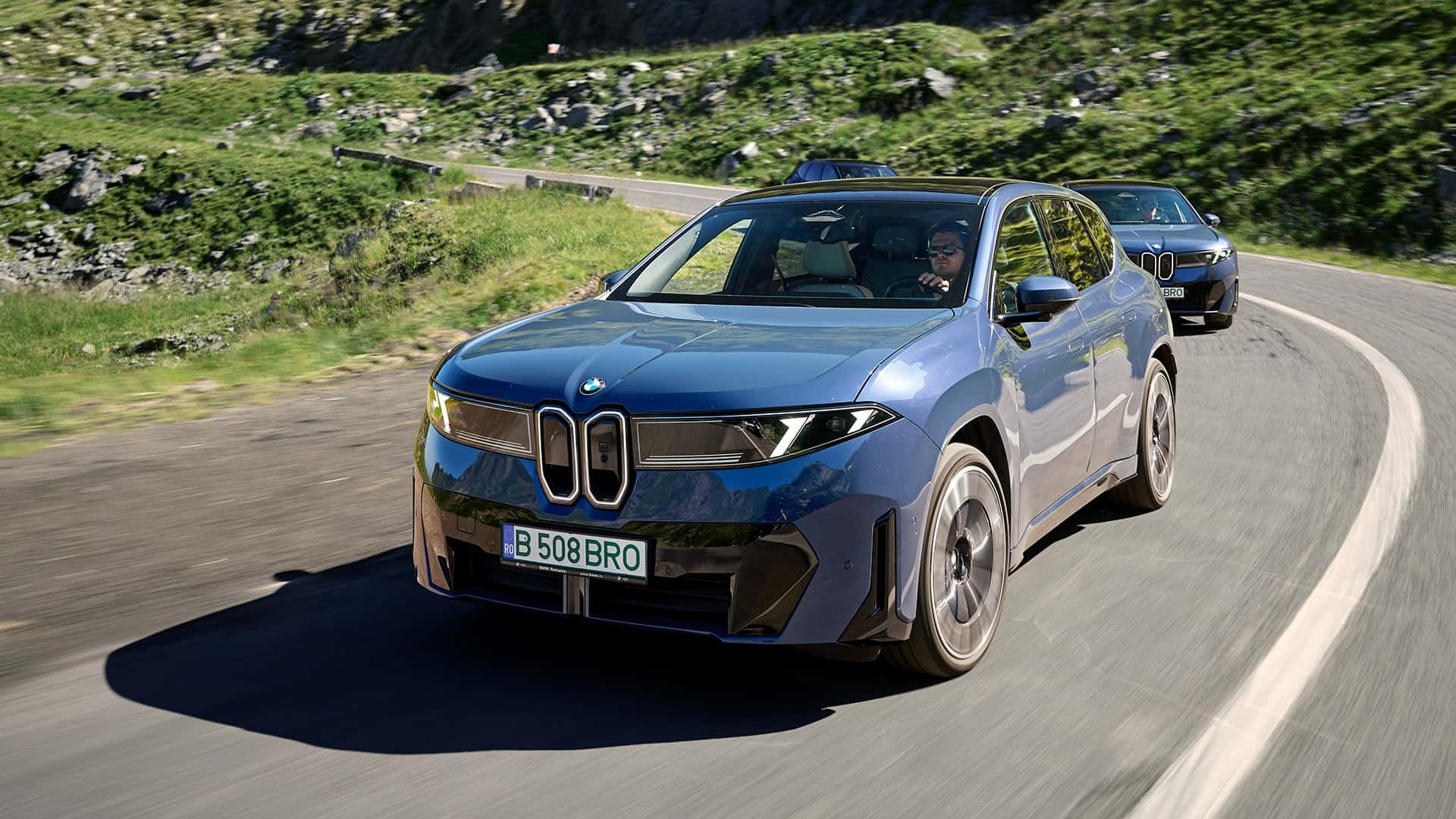
Bucharest, Romania – A recent comprehensive road test involving a BMW iX3 xDrive50 across Romania, spanning over 500 arduous miles, has decisively challenged the prevalent notion of ‘range anxiety’ in the electric vehicle (EV) segment. The journey, encompassing a demanding mix of highways, winding country roads, and high-altitude mountain passes, including the renowned Transfăgărășan, demonstrated the advanced capabilities of modern electric SUVs.

The primary objective was not merely to ascertain if the BMW iX3 could complete such a challenging route – its inherent capabilities suggested it could. Instead, the focus was on evaluating whether the electric SUV could maintain an uncompromised driving experience, free from the necessity to conserve energy, reduce speed, or meticulously plan every charging stop. The results underscore a significant leap in electric vehicle performance and practicality.
The Romanian Odyssey: Challenging Conventional EV Wisdom
The proposed itinerary was ambitious and deliberately crafted to stress-test the BMW iX3. The journey began in Bucharest, the country’s capital, extending to Șona, a small village in central Romania famous for its contemporary art and unique ‘pyramids’. The return leg promised even greater challenges, including multiple crossings of the formidable Transfăgărășan mountain road.
This two-day expedition was strategically designed to evaluate BMW’s asserted range and efficiency figures under real-world, varied conditions. The route minimised slow city driving, focusing instead on open-road cruising on national roads and highways, culminating in the rigorous demands of a mountain road blast. Such a diverse route provides a far more accurate representation of an electric vehicle’s utility than controlled laboratory tests.
Setting Off from Bucharest: Day One’s Performance
The journey commenced from Bucharest in the early morning, with the BMW iX3 xDrive50’s substantial 108.7-kWh battery at a 97% charge. The vehicle’s onboard computer displayed an initial range prediction of 353 miles (568 km). This figure contrasts with the European WLTP rating of 500 miles (805 km) and the U.S. EPA rating of up to 434 miles (698 km), highlighting the typical variations between standardised tests and real-world conditions.
Crucially, the driving philosophy adopted for the test was to operate the BMW iX3 as one would a conventional internal combustion engine (ICE) vehicle, without consciously adapting driving style for maximum efficiency. This meant no ‘hypermiling’ techniques were employed, ensuring the test accurately reflected an average driver’s experience. BMW’s own previous record with an iX3, which covered over 620 miles (1,000 km) on a single charge from Hungary to Germany, further underlines the model’s inherent efficiency potential.
The initial segment of the first day primarily involved extra-urban driving at speeds averaging 62 mph (100 km/h), preceded by a brief highway stint. By the midway point, after covering 112 miles (180.4 km), the electric SUV demonstrated an impressive average efficiency of 3.31 miles/kWh (18.8 kWh/100 km), showcasing its robust performance even under highway conditions.
As the route transitioned to narrower, slower country roads, the BMW iX3’s efficiency further improved. Upon reaching the overnight stop, the vehicle had completed 217.5 miles (350.1 km) with an average efficiency of 3.53 miles/kWh (17.6 kWh/100 km). A remarkable 40% of the battery charge still remained, with the range estimate indicating an additional 173 miles (279 km) of travel. This considerable reserve sparked contemplation of attempting the entire return journey without an overnight charge, a testament to the vehicle’s unexpected endurance.
However, the prospect of tackling the legendary Transfăgărășan with full performance capabilities outweighed the hypermiling experiment. Therefore, the electric SUV was charged overnight. The following morning, the BMW iX3 was returned with 98% charge and a renewed, optimistic range prediction of 437 miles (703 km), based on the previous day’s impressive efficiency data.
Conquering the Transfăgărășan: Power and Efficiency Unveiled
Day two commenced from the picturesque town of Sibiu, heading towards the formidable Transfăgărășan. During the initial slow-speed ascent to the mountain’s twisting sections, the BMW iX3 proved exceptionally frugal, recording an average efficiency of approximately 4.44 miles/kWh (14 kWh/100 km). This figure is particularly remarkable for a heavy, dual-motor electric SUV, which commands 463 hp, weighs over 5,000 pounds (2.3 tons), and possesses acceleration capable of delivering a noticeable G-force.
Engaging Sport mode transformed the range test into a more dynamic, albeit less scientific, exploration of the BMW iX3’s performance capabilities. The electric SUV truly came alive on the demanding mountain roads, exhibiting characteristics typically associated with traditional BMW models. Its considerable mass was remarkably well-managed through the bends, demonstrating strong resistance to understeer and responding eagerly to accelerator inputs for line adjustments. The low-mounted battery pack significantly reduced the top-heavy sensation often experienced when manoeuvring large SUVs, enhancing driver confidence.
Navigating the Transfăgărășan’s notorious switchbacks, the BMW iX3 felt planted, neutral, and surprisingly agile. Its willingness to engage in spirited driving far surpassed expectations for a vehicle of its size and family-oriented design. Indeed, the driving experience on these challenging roads was deemed more engaging and enjoyable than that offered by its combustion-engine equivalent, the BMW X3, highlighting the inherent advantages of electric powertrains in terms of weight distribution and instant torque delivery.
The exhilaration of the first ascent to Bâlea was so compelling that a single climb proved insufficient. After descending to Cârțișoara for lunch, the driver promptly turned around to tackle the entire road again, gaining approximately 5,200 feet (1,580 meters) in elevation for a second time. Upon emerging on the southern side of the mountain, roughly 100 miles (160 km) into the day’s journey, the battery still held a reassuring 57% charge.
At this juncture, the trip computer displayed an average consumption of 2.1 miles/kWh (29.6 kWh/100 km), having briefly touched 1.64 miles/kWh (37.8 kWh/100 km). These figures encompassed the entire drive from Sibiu, including two energetic mountain ascents and the significant energy recuperation provided by regenerative braking during descents.
The Return Journey: Dispelling Range Anxiety on the Highway
Following the demanding mountain phase, the BMW iX3 continued its descent, navigating heavier traffic conditions. Crucially, the vehicle successfully completed the entire return journey to Bucharest without any additional charging stops. Upon arrival at its home base, the BMW iX3 still retained a comfortable 16% of its battery charge. This final leg of the trip included approximately 90 miles (150 km) of highway driving, executed at speeds up to 87 mph (140 km/h), demonstrating its consistent performance across varied terrains and speeds.
The 16% remaining charge, after covering approximately 250 miles (400 km) on the second day alone – including the hard-driven ascents of the Transfăgărășan and significant highway mileage – emerged as the most compelling evidence of the BMW iX3’s capabilities. This achievement was realised without resorting to reduced speeds, disabling climate control, or making any other compromises once typically associated with long-distance electric vehicle travel.
Beyond the Miles: The iX3’s Broader Implications for EV Adoption
The demanding Romanian road trip unequivocally positioned the BMW iX3 as a highly compelling electric vehicle for extensive travel. Its substantial battery capacity is undoubtedly a key factor, yet capacity alone does not tell the full story. The iX3 distinguishes itself through a synergistic combination of robust real-world efficiency, highly accurate and reliable range predictions, and effortless performance that never compels the driver to constantly focus on energy conservation.
The electric SUV proved to be both quick and genuinely enjoyable when navigating challenging roads, showcasing a dynamic chassis and responsive powertrain. Yet, it seamlessly transitioned back into an exceptionally efficient long-distance cruiser, highlighting its versatility. While ‘range anxiety’ may persist in regions with nascent charging infrastructure, the experience with the BMW iX3 strongly suggests that for electric vehicles capable of covering such vast distances with significant charge reserves, the justification for delaying the switch to electric becomes increasingly tenuous.
Frequently Asked Questions (FAQ)
What was the primary goal of the BMW iX3 road trip?
The main goal was to test if the BMW iX3 could complete a challenging 500-mile journey across Romania, including mountain roads and highways, without forcing the driver to conserve energy or plan excessively around charging stops, thus assessing its real-world range and practicality.
What battery capacity does the BMW iX3 xDrive50 feature?
The BMW iX3 xDrive50 tested in this report is equipped with a large 108.7-kWh battery, which is a significant factor in its impressive range capabilities for extended travel.
How did the iX3’s real-world range compare to official ratings?
While official WLTP range is 500 miles (805 km) and EPA is 434 miles (698 km), the test started with a 353-mile (568 km) prediction at 97% charge and completed the 500-mile journey with 16% battery remaining, demonstrating strong real-world performance under diverse conditions.
Was the driving style adapted for maximum efficiency during the test?
No, the driver deliberately maintained a normal driving style, as if operating a combustion-engine vehicle, including spirited driving on mountain roads. The aim was to assess the BMW iX3’s performance without hypermiling or compromises.
How did the BMW iX3 perform on the Transfăgărășan mountain road?
The BMW iX3 demonstrated exceptional performance on the Transfăgărășan, feeling planted, neutral, and surprisingly agile despite its size. Its low-mounted battery contributed to excellent handling, proving more enjoyable to drive than its combustion counterpart, the BMW X3.
Did the BMW iX3 require charging during the 500-mile trip?
No, the BMW iX3 completed the entire 500-mile return journey to Bucharest with just one overnight charge at an intermediate stop. It arrived home with a comfortable 16% battery remaining, even after demanding driving segments.
What implications does this test have for ‘range anxiety’?
The test strongly suggests that ‘range anxiety’ is becoming outdated for advanced electric vehicles like the BMW iX3. Its combination of large battery capacity, reliable real-world efficiency, and uncompromised performance makes long-distance EV travel increasingly effortless and practical.
What was the average efficiency observed during the demanding mountain drive?
After two energetic ascents and regenerative descent on the Transfăgărășan, the trip computer indicated an average consumption of 2.1 miles/kWh (29.6 kWh/100 km), briefly reaching 1.64 miles/kWh (37.8 kWh/100 km) during peak demand.