
Key Takeaways
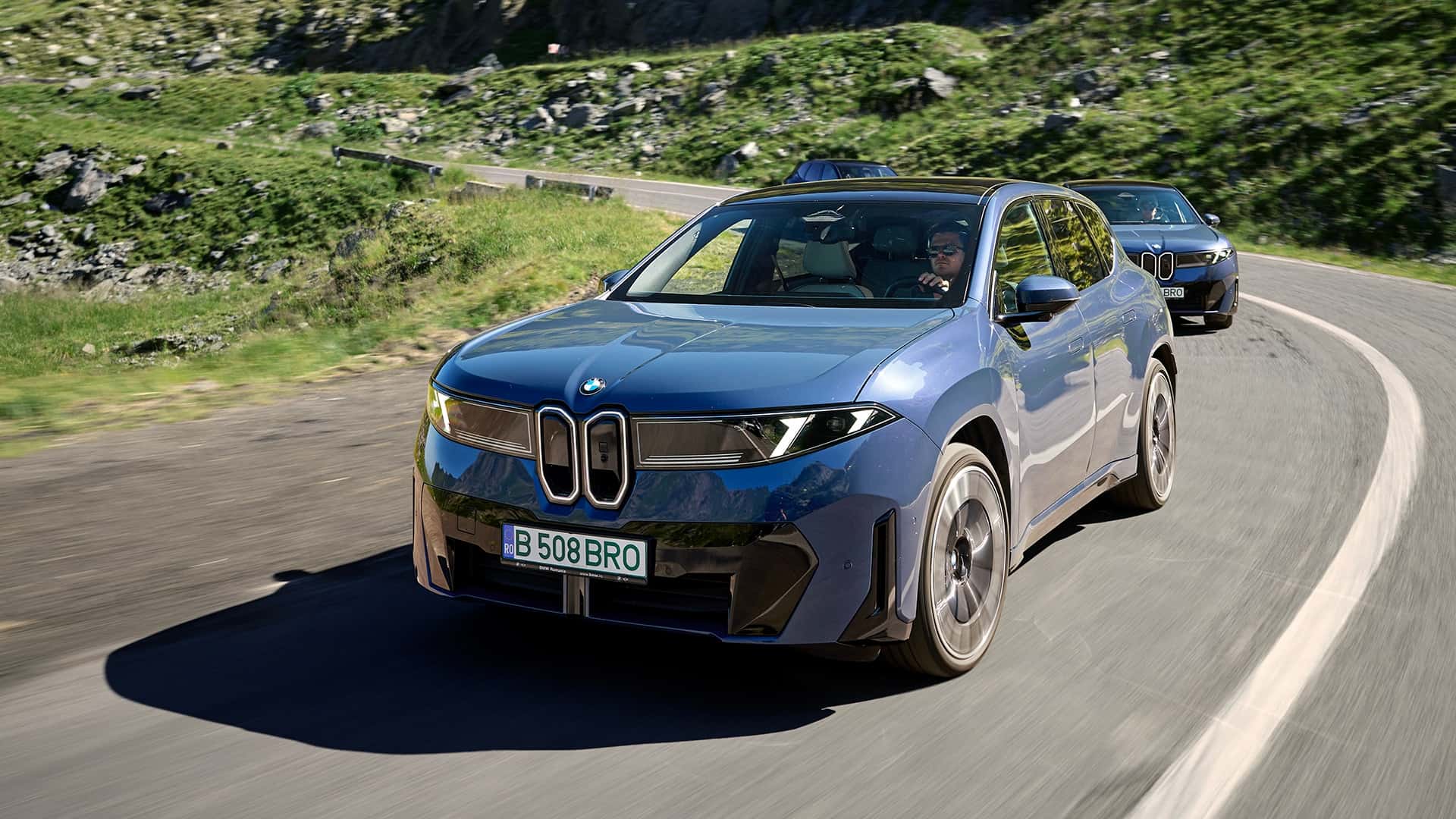
A rigorous 500-mile (approximately 800 km) test drive of the BMW iX3 across diverse Romanian terrains, including highways, country roads, and challenging mountain passes, has profoundly shifted perceptions regarding electric vehicle (EV) range capabilities. The extensive journey, encompassing a significant portion of Romania and two ascents of the formidable Transfăgărășan mountain road, demonstrated the BMW iX3‘s ability to undertake long-distance travel without the typical compromises of reduced speed, conservative driving, or constant charging stop planning. The vehicle consistently delivered strong real-world efficiency, maintained reliable range predictions, and offered robust performance, ultimately proving that range anxiety, while still a concern in areas with sparse infrastructure, is becoming increasingly obsolete for well-engineered EVs like the iX3.
Challenging the Conventional EV Narrative
The journey, initiated by BMW Romania, posed a formidable challenge: traverse the country, conquer its highest mountains, including the iconic Transfăgărășan, and return to Bucharest. The objective was not merely to ascertain if the BMW iX3 could complete such a demanding route—a foregone conclusion for a vehicle of its caliber—but to evaluate its performance without requiring the driver to compromise on speed, conserve energy, or meticulously plan every charging stop. This real-world examination aimed to test the limits of modern electric vehicle capabilities in varied and demanding conditions.
The expedition commenced from Bucharest, heading south to Șona, a quaint village in central Romania renowned for its contemporary art scene and geological ‘pyramids.’ This initial leg covered approximately 220 miles (350 km). The return journey extended beyond this, incorporating the legendary Transfăgărășan mountain road, adding another layer of complexity and elevation changes to the test. This comprehensive route offered a unique opportunity to scrutinize the BMW iX3’s range and efficiency claims across a spectrum of driving environments, including limited city driving, extensive open-road cruising on national roads and highways, and an exhilarating, high-performance mountain road ascent.
Real-World Efficiency on Open Roads
Throughout the test, a deliberate decision was made to drive the BMW iX3 as one would a conventional combustion-engine vehicle, eschewing hypermiling techniques designed to maximize range. This approach aimed to provide a realistic assessment of the vehicle’s everyday usability and performance under typical driving habits, rather than an idealized scenario. While this meant not attempting to replicate BMW’s impressive internal record of over 620 miles (1,000 km) on a single charge from Hungary to Germany, it ensured that the findings directly addressed the practical concerns of electric vehicle ownership.
The journey began with the BMW iX3 xDrive50, equipped with its substantial 108.7-kWh battery, at a 97% charge, indicating an estimated range of 353 miles (568 km). For context, this iX3 variant holds a claimed WLTP range of 500 miles (805 km) in Europe, with a U.S. EPA rating of up to 434 miles (698 km). The initial segment of the first day predominantly involved extra-urban driving at speeds averaging 62 mph (100 km/h), preceded by a brief highway stretch.
At the halfway point of day one, after covering 112 miles (180.4 km), the iX3 displayed an average efficiency of 3.31 miles/kWh (18.8 kWh/100 km). As the route transitioned to narrower, slower country roads, the efficiency further improved. Upon reaching the overnight stop, the electric SUV had covered a total of 217.5 miles (350.1 km), achieving an average efficiency of 3.53 miles/kWh (17.6 kWh/100 km). Significantly, the battery still retained a 40% charge, with the range estimator predicting an additional 173 miles (279 km).
This impressive remaining range prompted consideration of attempting the return journey without an overnight charge. However, the allure of an uninhibited drive across the Transfăgărășan on the following morning led to the decision against a hypermiling experiment. The BMW iX3 was subsequently charged overnight, starting day two with a 98% charge and an optimistic 437-mile (703-km) range prediction, reflecting the previous day’s efficient performance.
Conquering the Transfăgărășan: Power and Poise
Day two commenced from the picturesque town of Sibiu, leading towards the legendary Transfăgărășan. During the slow-speed ascent to the mountain road’s initial twists, the BMW iX3 demonstrated remarkable frugality, achieving an average efficiency of approximately 4.44 miles/kWh (14 kWh/100 km). This figure is particularly striking for a heavy, dual-motor SUV that weighs over 5,000 pounds (2.3 tons), boasts 463 horsepower, and delivers swift acceleration.
Activating Sport mode transformed the test into a less scientific, but equally revealing, experience. The BMW iX3 revealed itself as a true BMW, expertly disguising its considerable mass through corners. It exhibited strong resistance to understeer and responded with eagerness to accelerator inputs, allowing for precise adjustments to its line. The intelligently placed, low-mounted battery mitigated much of the top-heavy sensation often associated with hustling a large SUV, enhancing the driving dynamics.
Navigating the Transfăgărășan’s demanding switchbacks, the iX3 felt remarkably planted and neutral. Its willingness to engage in spirited driving was unexpected for a vehicle of its size and family orientation, proving to be more enjoyable to drive than its combustion-engine counterpart, the BMW X3. Such dynamic prowess, combined with its electric powertrain, offers a compelling blend of performance and practicality.
One ascent of the challenging road proved insufficient. After reaching Bâlea, the vehicle descended to Cârțișoara for lunch, only to immediately embark on a second full ascent, gaining approximately 5,200 feet (1,580 meters) in elevation once more. Emerging on the southern side of the mountain, roughly 100 miles (160 km) into the day’s journey, the battery still held a reassuring 57% charge.
At this juncture, the trip computer displayed an average consumption of 2.1 miles/kWh (29.6 kWh/100 km), having momentarily shown 1.64 miles/kWh (37.8 kWh/100 km) during the most intense driving periods. This consumption figure encompassed the drive from Sibiu, two energetic mountain ascents, and the significant regenerative braking during descents. This performance highlights the sophisticated energy management of the BMW iX3.
The Final Leg: Dispelling Range Anxiety
The journey concluded with the descent down the other side of the mountain, where traffic had become considerably heavier, followed by the drive back to Bucharest. Crucially, the entire return leg, which included approximately 90 miles (150 km) of highway driving at speeds up to 87 mph (140 km/h), was completed without any additional charging. The vehicle arrived back at its destination with a comfortable 16% battery remaining.
This final data point proved to be the most convincing aspect of the entire trip. The BMW iX3 had covered approximately 250 miles (400 km) on the second day, incorporating a highly demanding, hard-driven double ascent of the Transfăgărășan, yet still had a substantial energy buffer upon reaching home. This performance was achieved without requiring reduced speeds, deactivated climate control, or any of the typical compromises historically associated with long-distance EV travel.
Even after thoroughly exploiting its ample performance and superb chassis on one of Romania’s most challenging roads, the vehicle retained a meaningful energy reserve. This exceptional capability makes the BMW iX3 a truly compelling electric vehicle for road trips. Its large battery capacity is undoubtedly a factor, but the full story extends beyond mere size. The car seamlessly integrates strong real-world efficiency, highly reliable and realistic range predictions, and effortless performance, all without compelling the driver to constantly focus on energy conservation.
The BMW iX3 demonstrates that it can be both quick and genuinely engaging when the road presents a challenge, yet effortlessly transition back into an efficient long-distance cruiser. While range anxiety persists in certain regions, particularly where charging infrastructure remains underdeveloped, an EV capable of covering such extensive distances with this level of range in reserve makes it increasingly difficult to justify delaying the transition to electric mobility. The iX3 successfully bridges the gap between performance, luxury, and sustainable long-distance travel, offering a glimpse into the future of electric driving.
FAQ
What was the primary objective of the BMW iX3 test drive in Romania?
The main goal was to determine if the BMW iX3 could complete a challenging, long-distance journey across Romania’s diverse terrain, including mountain roads, without requiring the driver to slow down, conserve energy, or meticulously plan charging stops, thereby evaluating its real-world range and efficiency under typical driving conditions.
How did the BMW iX3 perform on the Transfăgărășan mountain road?
The BMW iX3 performed exceptionally well on the Transfăgărășan, displaying impressive dynamic capabilities for a large SUV. It felt planted and neutral, handled its weight effectively through bends, and proved more engaging to drive than its combustion counterpart, even with two energetic ascents.
What was the BMW iX3’s average efficiency during the test?
During the first day’s 217.5-mile leg, the BMW iX3 averaged 3.53 miles/kWh (17.6 kWh/100 km). On the second day, including demanding mountain driving, it averaged 2.1 miles/kWh (29.6 kWh/100 km) after two ascents and descents.
Did the test driver use hypermiling techniques to conserve energy?
No, the test driver intentionally drove the BMW iX3 as if it were a combustion car, without employing hypermiling techniques. This approach aimed to provide a realistic assessment of the vehicle’s range and efficiency under typical, unconstrained driving conditions.
How much battery charge remained after the 500-mile journey?
After covering approximately 500 miles over two days, including extensive highway and demanding mountain driving, the BMW iX3 arrived back in Bucharest with a comfortable 16% battery charge remaining, demonstrating significant reserve capacity.
What battery capacity does the BMW iX3 xDrive50 feature?
The BMW iX3 xDrive50 model used in the test is equipped with a large 108.7-kWh battery. This substantial capacity is a key factor in its impressive range and ability to undertake long-distance journeys with confidence.
Does this test suggest that range anxiety is outdated for all EVs?
The test suggests that for well-engineered EVs like the BMW iX3, capable of covering significant distances with ample range, range anxiety becomes increasingly difficult to justify. However, it acknowledges that range anxiety may still persist in areas with less developed charging infrastructure.