
Key Takeaways
- Sila, a battery anode technology developer, has received a conditional loan commitment of up to $1.4 billion from the US Defense Department’s Office of Strategic Capital (OSC).
- The significant funding is earmarked for expanding Sila’s silicon-carbon (Si/C) anode manufacturing capacity at its Moses Lake, Washington plant.
- A portion of the commitment will also support the establishment of a new lithium-ion battery cell manufacturing facility, focusing on high-performance specialty applications such as industrial, agricultural, and military drones.
- This investment aims to enhance US technology sovereignty and supply chain security for critical battery components, leveraging Sila’s advanced Titan Silicon anode technology.
- The OSC’s commitment follows a recent $300 million equity funding round, signaling strong confidence in Sila’s innovative battery solutions and its role in domestic manufacturing.
In a pivotal move set to significantly strengthen domestic battery production capabilities, Sila, a leading developer of advanced battery anode technology, has secured a conditional loan commitment of up to $1.4 billion from the US Defense Department’s Office of Strategic Capital (OSC). This substantial federal backing is designed to catalyze the expansion of the company’s crucial US battery anode manufacturing operations and accelerate the development of next-generation battery solutions within the United States.
The financing commitment underscores a strategic national imperative to secure critical technology supply chains, particularly in the rapidly evolving electric vehicle (EV) and specialized high-performance battery sectors. Sila’s innovative silicon-carbon (Si/C) anode technology is at the forefront of this initiative, promising enhanced battery performance vital for a range of strategic applications.

Strategic Expansion at Moses Lake and Beyond
The core of this unprecedented federal investment is directed towards Sila’s existing manufacturing facility in Moses Lake, Washington. The substantial capital injection will facilitate a significant expansion of the plant’s capacity for producing silicon-carbon anodes. This enhancement is critical for scaling up the production of advanced battery materials necessary for future energy storage needs.
Central to Sila’s expansion strategy is the deployment of its next-generation modular manufacturing technology. This innovative approach is engineered for rapid scalability, allowing the company to swiftly adapt its production output to meet escalating market demands. Such modularity is crucial for ensuring agility and responsiveness in a fast-paced industry like battery manufacturing, particularly as demand for advanced energy storage solutions continues to surge.
Beyond the Moses Lake expansion, a portion of the loan commitment is earmarked for the buildout of a new lithium-ion battery cell manufacturing facility. This new plant will focus on developing cells for specialty applications that demand exceptionally high performance. These include critical sectors such as industrial, agricultural, and military drones, where reliable, high-energy-density batteries are paramount for operational efficiency and mission success.

This dual-pronged expansion — increasing anode production and establishing new cell manufacturing — highlights Sila’s comprehensive strategy to not only innovate at the material level but also to integrate its advanced components into complete battery solutions for strategic markets. It represents a significant step towards creating an end-to-end domestic supply chain for cutting-edge battery technology.
Titan Silicon: Advancing Anode Technology
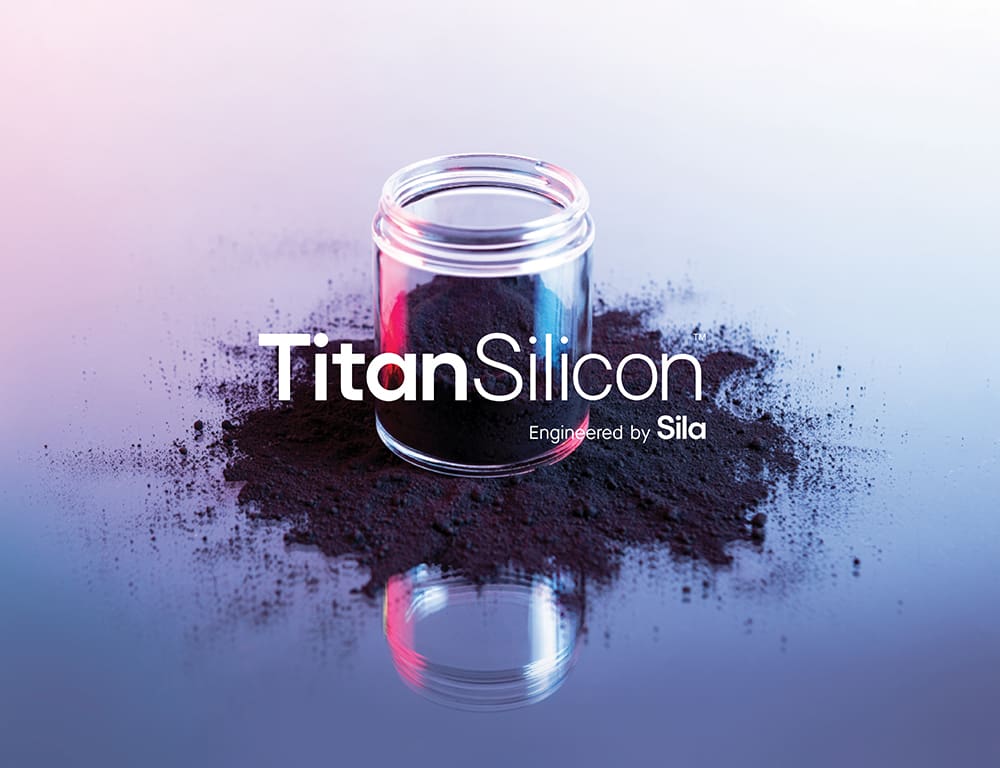
A key focus of Sila’s ongoing efforts, supported by this new funding, is the continued advancement of its proprietary Si/C anode technology, known as Titan Silicon. This material represents a significant leap forward in battery chemistry, offering superior energy density and charging speeds compared to traditional graphite anodes.
The development and scaling of Titan Silicon are crucial for unlocking new possibilities across various high-performance applications. By integrating silicon into the anode, Sila addresses one of the primary limitations of conventional lithium-ion batteries, paving the way for lighter, more powerful, and faster-charging energy storage solutions. This technological edge is particularly valuable for applications where every gram of weight and every minute of charge time can have profound operational implications.
The Defense Department’s investment underscores the critical importance of such technological advancements for national security and economic competitiveness. Ensuring a domestic supply of these advanced materials reduces reliance on foreign sources, mitigating potential supply chain disruptions and enhancing strategic autonomy.
Bolstering US Technology Sovereignty and Supply Chain Security
The conditional loan commitment from the Office of Strategic Capital is not merely financial support; it is a clear strategic investment in America’s industrial base and technological leadership. The OSC, an office within the US Defense Department, is tasked with accelerating the adoption of critical technologies by providing creative capital solutions to innovative companies that align with national security objectives. Sila’s work in US battery anode manufacturing fits squarely within this mandate.
This initiative directly addresses concerns about supply chain vulnerabilities, particularly in sectors crucial for economic growth and national defense. By scaling up manufacturing of advanced battery components like silicon-carbon anodes domestically, the United States aims to reduce its dependence on foreign suppliers, thereby fortifying its technological sovereignty.
Gene Berdichevsky, Sila’s co-founder and CEO, emphasized the profound implications of this scaling effort. He stated, “We solved the hardest problem in battery materials with the invention of the modern silicon anode. But invention is only the first step—manufacturing it at gigascale, here in America, proves that technology sovereignty is possible. By scaling our manufacturing at home, we are ensuring critical technology sectors have the supply chain security they need to thrive.” His comments highlight the dual objective of technical innovation and robust domestic production.
The strategic importance extends beyond military applications. A secure domestic supply chain for advanced batteries impacts the entire clean energy transition, including the burgeoning electric vehicle market, grid-scale energy storage, and a variety of industrial applications. This funding is poised to create high-skill jobs, stimulate regional economic growth in areas like Moses Lake, and foster a robust ecosystem for battery innovation and manufacturing within the US.
Investor Confidence and Future Outlook
The OSC’s significant conditional commitment follows a recent $300 million equity funding round for Sila. This round was notably led by prominent investors Sutter Hill Ventures and Atreides Management. The consecutive waves of substantial financing — first from private equity and now from a critical federal agency — underscore strong investor confidence in Sila’s technology, its manufacturing capabilities, and its long-term market potential.
The combination of private capital and federal strategic investment provides a powerful impetus for Sila to accelerate its R&D, scale up production, and bring its advanced battery materials to a wider market. This financial backing positions Sila as a key player in the global race for superior battery technology and establishes a solid foundation for its growth and impact on the US battery manufacturing landscape.
As the world transitions towards electrification and seeks more sustainable and high-performance energy solutions, companies like Sila, with support from strategic government initiatives, are pivotal in shaping the future of energy storage. The expansion of US battery anode manufacturing capabilities will not only serve the immediate needs of defense and high-performance sectors but also contribute significantly to the broader adoption of electric vehicles and renewable energy technologies, creating a more secure and innovative energy future for the nation.
Source: Sila Nanotechnologies
Frequently Asked Questions About Sila’s Loan and Battery Manufacturing
What is the purpose of the $1.4 billion loan commitment to Sila?
The loan commitment from the US Defense Department’s Office of Strategic Capital (OSC) is intended to expand Sila’s silicon-carbon anode manufacturing capacity at its Moses Lake, Washington plant and to build a new lithium-ion battery cell manufacturing facility for specialty applications.
What is the Office of Strategic Capital (OSC)?
The Office of Strategic Capital (OSC) is an entity within the US Defense Department focused on leveraging private capital to accelerate the development and adoption of critical technologies that enhance national security and maintain a technological edge.
What is Titan Silicon technology?
Titan Silicon is Sila’s proprietary silicon-carbon (Si/C) anode technology. It aims to improve lithium-ion battery performance by offering higher energy density and faster charging capabilities compared to traditional graphite anodes, addressing a key challenge in battery material science.
Where will Sila’s expanded manufacturing operations be located?
Sila’s silicon-carbon anode manufacturing capacity will be expanded at its existing plant in Moses Lake, Washington. Additionally, a new lithium-ion battery cell manufacturing facility will be constructed, though its specific location within the US is not yet detailed.
What types of applications will benefit from Sila’s new battery cell facility?
The new battery cell manufacturing facility will focus on producing lithium-ion cells for specialty applications requiring high performance. These include critical sectors such as industrial, agricultural, and military drones, where advanced battery technology is crucial for optimal operation.
How does this loan commitment contribute to US technology sovereignty?
By scaling up domestic manufacturing of advanced battery components like silicon-carbon anodes and complete battery cells, this investment reduces the US’s reliance on foreign supply chains. This strengthens technology sovereignty, ensuring critical sectors have secure and reliable access to essential battery materials.
Has Sila received other significant funding recently?
Yes, prior to the OSC’s conditional loan commitment, Sila successfully closed a $300 million equity funding round. This round was led by prominent investment firms Sutter Hill Ventures and Atreides Management, demonstrating strong private sector confidence in the company’s technology and vision.
What are the implications of Sila’s modular manufacturing technology?
Sila’s next-generation modular manufacturing technology is designed to scale rapidly with demand. This flexibility allows the company to quickly increase production capacity, ensuring it can meet the growing needs of various industries for advanced battery materials efficiently and effectively.