
Key Takeaways
- ChargePoint has installed a new DC fast EV charging facility at Portland International Airport (PDX) specifically for rental car companies.
- The system features a pioneering overhead design with retractable cable management, aiming to optimize space and reduce installation costs.
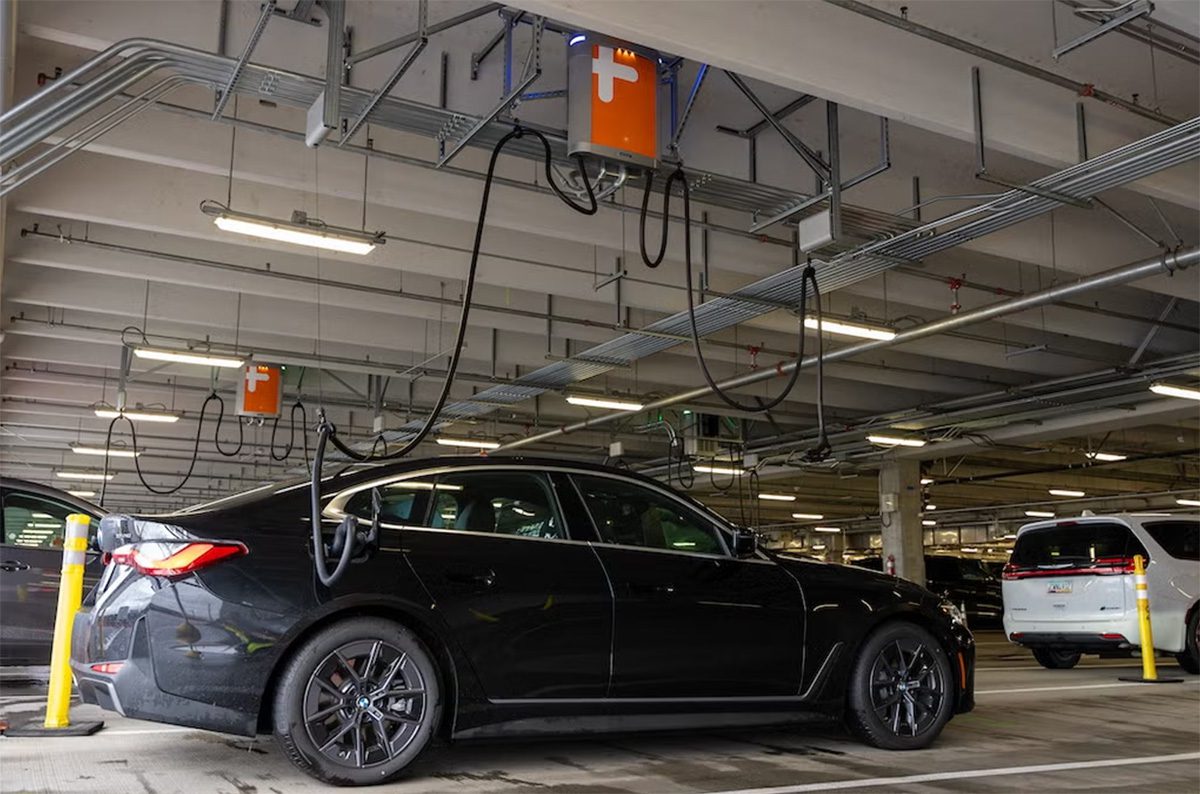
- Ten dual-port fast charging dispensers are mounted overhead, allowing simultaneous connection for up to 20 electric vehicles within the airport’s Quick Turnaround (QTA) Facility.
- This innovative infrastructure reclaims valuable ground-level space, simplifies installation processes, and significantly mitigates the risk of vehicular damage to equipment.
- The deployment is enhanced by ChargePoint’s advanced fleet software, offering real-time visibility, remote monitoring, troubleshooting capabilities, and intelligent charging management tailored to rental car operational demands.
Portland International Airport (PDX) is set to redefine electric vehicle (EV) charging infrastructure for its rental car operations with the deployment of an advanced DC fast EV charging facility by ChargePoint. This groundbreaking installation introduces an innovative overhead charging system, complete with retractable cable management, explicitly designed to address the critical challenges of space optimization and cost efficiency often encountered in high-traffic commercial environments.
The strategic implementation of this state-of-the-art infrastructure underscores a growing commitment within the aviation sector to embrace sustainable mobility solutions. By facilitating rapid charging capabilities for rental car fleets, the project at PDX is poised to enhance operational efficiency, reduce environmental impact, and significantly improve the overall experience for customers opting for electric rental vehicles.

Transforming Rental Car Fleet Operations at PDX
The new EV charging facility is strategically located within the airport’s Quick Turnaround (QTA) Facility. This specific placement is crucial, as QTA facilities are high-volume operational hubs where rental vehicles undergo rapid cleaning, maintenance, and preparation between customer rentals. The ability to rapidly charge electric vehicles in this critical window is paramount for ensuring a seamless fleet rotation and maximizing vehicle availability.
This deployment boasts 10 dual-port fast charging dispensers, cleverly mounted overhead. This configuration enables up to 20 vehicles to be connected and charged simultaneously, demonstrating a significant capacity designed to meet the dynamic demands of a busy rental car fleet. The high-power output of these DC fast chargers ensures that electric vehicles can receive a substantial charge quickly, minimizing downtime and supporting efficient operational flows.
Overhead Design: A Solution for Space and Safety
The most distinctive feature of this new installation is its innovative overhead design. ChargePoint explains that by moving the core charging infrastructure above the vehicles, the design inherently reclaims valuable ground-level space. This is a critical advantage in an airport environment, where real estate is at a premium and every square foot impacts operational logistics and costs.

Furthermore, the overhead system simplifies the installation process, potentially leading to reduced deployment timelines and capital expenditures. A key benefit also highlighted by ChargePoint is the enhanced protection against potential vehicular damage to the equipment. Traditional ground-mounted charging stations are susceptible to accidental impacts from vehicles navigating tight spaces, leading to costly repairs and operational disruptions. The overhead placement effectively mitigates this risk.
The Strategic Vision Behind Innovative EV Infrastructure
Rick Wilmer, CEO of ChargePoint, articulated the broader significance of this initiative, stating, “Airports aren’t just adopting electric mobility—they’re reshaping it.” His comments underscore a pivotal shift in how major transportation hubs are integrating EV technology, moving beyond mere adoption to actively innovating solutions that address unique operational challenges.
Wilmer further elaborated on the core challenge faced by such facilities: “As rental fleet operators add EVs to their fleets, airports face the challenge of delivering high-power charging infrastructure at scale.” He highlighted that the Port of Portland’s investment serves as a compelling example of how advanced fast charging solutions can be seamlessly integrated into existing parking lots without compromising space or operational efficiency, thus setting a precedent for future deployments.
Cost Savings and Equipment Protection
The practical benefits of this overhead design were echoed by Jeremiah Hartley, the airport’s Rental Car Manager. Hartley emphasized the tangible advantages, noting, “The innovative overhead charging system enabled us to save on installation costs by limiting the conduit and wiring needed, and helps protect against potential damage caused by vehicles in the QTA.” This direct feedback from an operational manager confirms the system’s effectiveness in delivering both economic and protective benefits.
Reduced installation costs, primarily stemming from a more efficient use of conduit and wiring, contribute to the project’s overall economic viability. Simultaneously, the enhanced protection of critical charging equipment from vehicle-related damage ensures greater longevity of the infrastructure and minimizes maintenance expenses, reinforcing the financial prudence of this design choice.
Leveraging Advanced Fleet Software for Optimal Management
Beyond the physical infrastructure, the deployment at Portland International Airport also incorporates ChargePoint’s comprehensive fleet software. This integrated software solution provides operators with real-time visibility and unparalleled control across their entire rental car fleets. Such capabilities are essential for managing the complexities of a dynamic EV fleet.
The software features advanced functionalities ranging from remote monitoring and troubleshooting to intelligent charging management. Remote monitoring allows operators to oversee the status of all charging sessions and equipment from a centralized location, facilitating proactive maintenance and rapid response to any issues. Troubleshooting capabilities help to quickly diagnose and resolve technical problems, minimizing vehicle downtime.
Intelligent Charging Management
Perhaps most critically for rental car operations, the intelligent charging management feature adapts to diverse operational demands. This means the system can optimize charging schedules based on vehicle availability, expected demand, and electricity pricing, ensuring that cars are charged when needed most efficiently and cost-effectively. For a rental car company, this translates into maximized asset utilization and reduced operational overheads, further solidifying the business case for EV adoption.
The synergy between robust physical infrastructure and sophisticated software management represents a holistic approach to large-scale EV fleet charging. This integrated solution provides rental car companies at Portland International Airport with the tools necessary to efficiently transition to and manage an electrified fleet, offering superior service to customers while driving sustainable practices.
The Broader Impact on Sustainable Airport Operations
The initiative at Portland International Airport signifies more than just an upgrade to charging facilities; it represents a significant step towards sustainable airport operations. As global efforts to reduce carbon emissions intensify, airports are increasingly looking for ways to green their entire ecosystem, from airside ground support equipment to landside transportation options.
By enabling rental car companies to scale their EV fleets efficiently, PDX is directly contributing to a reduction in local air pollution and greenhouse gas emissions associated with ground transportation. This commitment to sustainable infrastructure aligns with broader environmental goals and positions Portland International Airport as a leader in fostering eco-friendly travel options.
The partnership between ChargePoint and the Port of Portland exemplifies how cutting-edge technology and strategic planning can overcome the logistical challenges of large-scale EV infrastructure deployment. The overhead DC fast EV charging facility at PDX sets a new standard for efficient, space-saving, and resilient charging solutions in critical transportation hubs, paving the way for wider EV adoption across commercial fleets.
FAQ Section
What is the primary innovation of the ChargePoint EV charging system at Portland Airport?
The primary innovation is its overhead design with retractable cable management. This system reclaims valuable ground space, simplifies installation, and protects the charging equipment from potential damage by vehicles, addressing key challenges in high-traffic environments like airports.
How many vehicles can be charged simultaneously at the new facility?
The facility features 10 dual-port fast charging dispensers, allowing up to 20 electric vehicles to be connected and charged simultaneously. This high capacity is crucial for managing the rapid turnaround demands of a busy rental car fleet.
Where is this new EV charging facility located within Portland International Airport?
The new DC fast EV charging facility is located in the airport’s Quick Turnaround (QTA) Facility. This strategic placement ensures that rental car companies can efficiently charge their electric vehicles between rentals.
What benefits does the overhead design offer for installation and maintenance?
The overhead design significantly saves on installation costs by reducing the amount of conduit and wiring needed. It also offers enhanced protection against vehicular damage, leading to lower maintenance costs and greater operational longevity for the charging equipment.
What role does ChargePoint’s fleet software play in this deployment?
ChargePoint’s fleet software provides operators with real-time visibility and control over their rental car fleets. It includes features like remote monitoring, troubleshooting capabilities, and intelligent charging management that adapts to operational demands, ensuring efficient and optimized charging.
Why is DC fast charging important for rental car operations?
DC fast charging is vital for rental car operations because it enables rapid charging of electric vehicles. This speed is essential for ensuring quick turnarounds between rentals, minimizing vehicle downtime, and maximizing fleet availability to meet customer demand.
How does this project contribute to sustainable airport operations?
By providing robust EV charging infrastructure, the project enables rental car companies to expand their electric fleets, directly contributing to a reduction in local air pollution and greenhouse gas emissions associated with ground transportation at and around the airport.