
Key Takeaways:
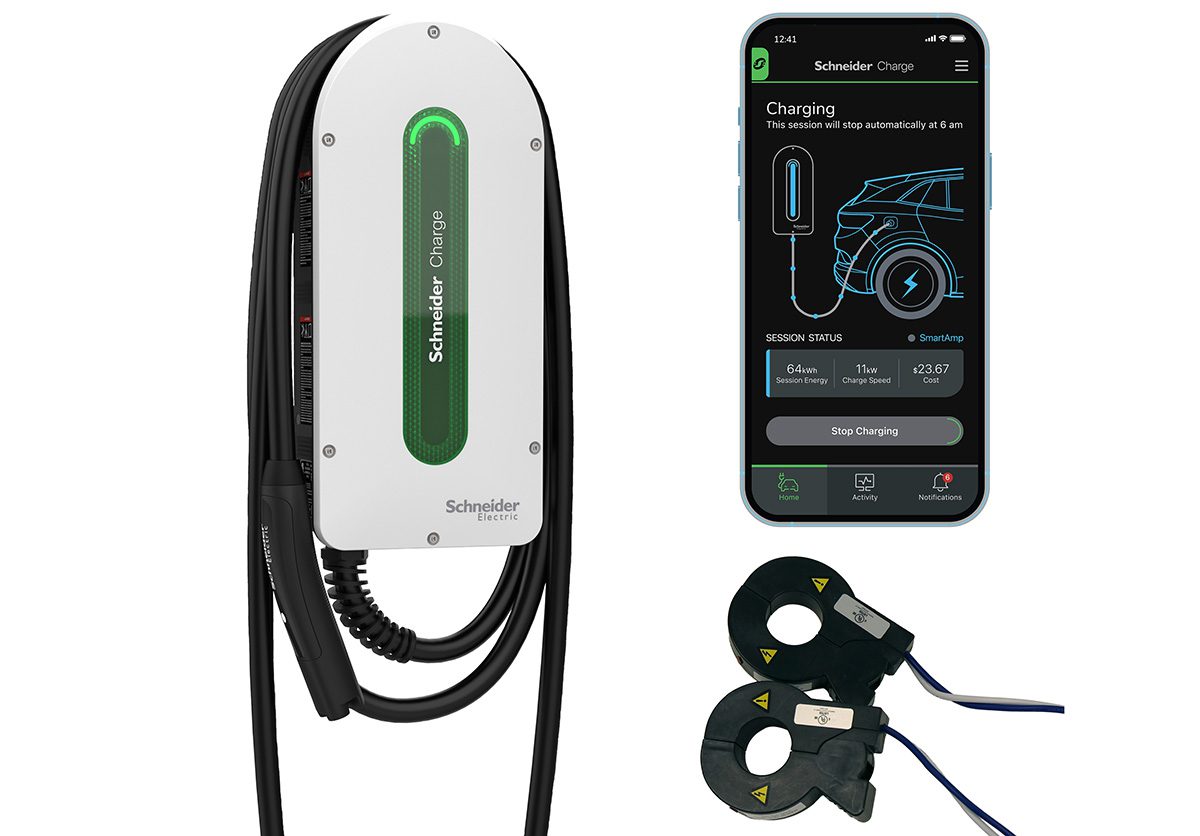
- Schneider Electric has launched the new Schneider Charge, a Level 2 residential EV charger in the US and Canada.
- The charger features SmartAmp, a dynamic load-management technology, enabling installation without requiring expensive electrical service or panel upgrades.
- SmartAmp monitors household electrical use in real-time, automatically adjusting charging speed to prevent overloads and maximize charging output within existing home capacity.
- Delivering 11.5 kW/48 A, the Schneider Charge supports both NACS (J3400) and J1772 connectors, offering versatility for various electric vehicle models.
- Its hardwired design ensures permanent installation, with a plug-in version anticipated in early 2027, and installation support is available through Qmerit.
As electric vehicle (EV) adoption continues to surge across North America, the demand for efficient and accessible home charging solutions has become paramount. Responding to a critical need within the burgeoning EV market, Schneider Electric, a global leader in energy management and automation, has officially introduced its innovative Level 2 residential EV charger, the Schneider Charge.

Launched on August 25, 2026, and now readily available to homeowners in both the United States and Canada, this new smart charger is engineered to address one of the most significant barriers to widespread home EV charging: insufficient existing electrical capacity. Designed with modern electrical demands in mind, the Schneider Charge aims to simplify the transition to home EV charging for countless households.
Addressing the Challenge of Home Electrical Capacity
The transition to electric vehicles often introduces new challenges for homeowners, particularly concerning their existing electrical infrastructure. Many homes, especially those built decades ago, were not designed to accommodate the high-power demands of Level 2 EV charging. Traditional installations of such chargers can frequently necessitate costly and disruptive service upgrades, panel replacements, or extensive rewiring to ensure the home’s electrical system can safely handle the increased load.
These potential electrical upgrades can translate into significant financial burdens and inconvenience for homeowners, often deterring them from installing a faster, more convenient Level 2 charger. This issue is particularly pronounced in older properties where electrical systems might be nearing their maximum capacity, making the addition of another high-draw appliance a complex undertaking.

SmartAmp: The Core of Intelligent Residential EV Charging Solutions
The Schneider Charge differentiates itself through its integrated dynamic load-management technology, dubbed SmartAmp. This proprietary system is a crucial innovation for residential EV charging solutions, effectively circumventing the need for expensive electrical infrastructure overhauls.
SmartAmp continuously monitors the entire household’s electrical usage in real-time. This intelligent monitoring allows the charger to automatically adjust its charging speed dynamically. For instance, if other high-power appliances, such as an electric oven, clothes dryer, or air conditioning unit, activate and draw significant power, SmartAmp will momentarily reduce the EV’s charging rate to prevent the household electrical system from being overloaded. Once the demand from other appliances subsides, the charger seamlessly returns to its maximum available charging speed.
This built-in intelligence means homeowners can maximize their EV charging output within their home’s existing electrical capacity without the need for separate monitoring devices or additional system components. It streamlines the installation process and ensures safe, efficient power distribution, making it an ideal component for advanced residential EV charging solutions.
Performance and Connectivity Standards
Beyond its intelligent load management, the Schneider Charge delivers robust performance suitable for daily use. The unit provides a substantial 11.5 kW/48 A of charging output, enabling significantly faster charging times compared to standard Level 1 chargers that typically plug into a conventional wall outlet.
Compliance with industry standards is another hallmark of this new offering. The Schneider Charge is compliant with OCPP 1.6, the Open Charge Point Protocol, which facilitates communication between EV charging stations and central management systems. Furthermore, it supports managed-load installations in accordance with UL 3141, a crucial safety standard for electric vehicle supply equipment (EVSE) that includes specific requirements for load management features.
Understanding the evolving landscape of electric vehicle connectors, Schneider Electric offers the charger with two prevalent options: the North American Charging Standard (NACS), also known as J3400, and the widely adopted J1772 connector. This dual-connector availability ensures compatibility with a broad spectrum of electric vehicles currently on the market, enhancing its utility as a versatile residential EV charging solution.
Seamless Installation and Future-Ready Design
The Schneider Charge features a hardwired design, intended for permanent installation directly into a home’s electrical system. This approach ensures a secure and robust connection, essential for high-power applications like Level 2 EV charging. For added convenience and flexibility, Schneider Electric has announced plans to introduce a plug-in version of the charger in early 2027, catering to a wider range of installation preferences.
Each unit comes equipped with a generous 25-foot charging cable, providing ample reach for various parking configurations and ensuring convenient access to the vehicle’s charging port. To further simplify the setup process for homeowners, comprehensive installation support for the Schneider Charge is available through Qmerit, a leading nationwide network specializing in electrification services, including EV charger installations.
Expert Perspective on Bridging the Electrification Gap
Shawn Bonacorsi, Head of Electrification Solutions for Schneider Electric North America, highlighted the significance of the Schneider Charge in the context of broader electrification trends. “As homeowners buy EVs and add high-power electric technologies, many are realizing their existing electrical systems were not built for that level of demand,” Bonacorsi stated. This observation underscores a growing concern for many households embracing sustainable technologies.
Bonacorsi further elaborated on how the new product directly addresses this challenge: “Schneider Charge helps remove that installation hurdle by enabling Level 2 charging within a home’s existing electrical capacity. By building load management into the charger, we’re making home EV charging easier to install with less complexity and disruption for homeowners.” This perspective reinforces the product’s role in making advanced residential EV charging solutions more accessible and less daunting for the average consumer.
The Broader Impact on EV Adoption and Energy Management
The introduction of intelligent residential EV charging solutions like the Schneider Charge marks a significant step forward in facilitating the wider adoption of electric vehicles. By mitigating the need for costly and complex electrical upgrades, Schneider Electric is removing a major barrier for prospective EV buyers, particularly those in older homes or with limited electrical panel capacity.
This smart charging technology not only streamlines the installation process but also contributes to more efficient home energy management. By dynamically balancing power usage, it helps homeowners optimize their existing infrastructure, ensuring reliable charging without compromising the operation of other essential appliances. Such innovations are crucial for strengthening the overall EV ecosystem and supporting the global shift towards sustainable transportation and smart energy grids. As the demand for robust EV infrastructure grows, integrated and intelligent charging solutions will play a pivotal role in shaping the future of domestic power supply and electric vehicle charging.
FAQ Section
What is the primary benefit of the Schneider Charge’s built-in load management?
The primary benefit is enabling homeowners to install a Level 2 EV charger without costly electrical service or panel upgrades. Its SmartAmp technology monitors real-time home electrical use, automatically adjusting charging speed to maximize output within existing capacity and prevent overloads, making residential EV charging solutions more accessible.
In which regions is the new Schneider Charge currently available?
The new Schneider Charge Level 2 residential EV charger is currently available for purchase and installation in both the United States and Canada. This strategic release aims to cater to the increasing demand for advanced home EV charging solutions across these key North American markets.
What are the power output specifications of the Schneider Charge?
The Schneider Charge delivers a robust 11.5 kW/48 A of charging output. This power level ensures significantly faster charging times for electric vehicles compared to standard Level 1 chargers, offering convenience and efficiency for daily EV use within a home’s existing electrical infrastructure.
Which EV connectors does the Schneider Charge support?
To ensure broad compatibility with various electric vehicle models, the Schneider Charge is available with two common connector types: the North American Charging Standard (NACS), also known as J3400, and the widely used J1772 connector. This offers flexibility for diverse residential EV charging needs.
Is installation support available for the Schneider Charge?
Yes, installation support for the Schneider Charge is readily available through Qmerit. Qmerit is a reputable network specializing in electrification services, including professional EV charger installations, ensuring that homeowners can receive expert assistance for a safe and proper setup of their new residential EV charging solution.
When will a plug-in version of the Schneider Charge be released?
While the initial launch features a hardwired design for permanent installation, Schneider Electric has announced plans to introduce a plug-in version of the Schneider Charge in early 2027. This upcoming option will provide additional flexibility for homeowners who may prefer a different installation method for their EV charger.