
Key Takeaways:
- Toyota Motor North America launched an ‘Electrification 101’ program to educate employees, many of whom previously had limited knowledge of electric vehicles (EVs) and hybrid technologies.
- The training emphasized Toyota’s ‘multi-pathway’ strategy, covering hybrids, plug-in hybrids (PHEVs), hydrogen fuel cell vehicles (FCEVs), and battery electric vehicles (BEVs).
- Despite being a major automaker, internal knowledge gaps about electrification were significant, prompting Toyota to invest in comprehensive employee education.
- The program debunked common EV myths, highlighted the efficiency and simplicity of electric motors, and included interactive, hands-on learning experiences.
- Internal advocacy for electrification increased among attendees, demonstrating the program’s success in fostering a deeper understanding and encouraging a shift towards electric mobility.
In a surprising revelation, a recent attendance at Toyota Motor North America’s “Electrification 101” program unveiled a significant knowledge gap among employees regarding electric vehicle (EV) technology and broader electrification principles. Despite being at the heart of the automotive industry, many staff members, from corporate accountants to app developers, reportedly lacked in-depth understanding of the nuances of electric powertrains and their benefits.

This observation challenges the common assumption that all personnel within a leading car manufacturer are inherently automotive enthusiasts or experts in emerging technologies. However, this deficit in knowledge is not seen as a setback but rather a strategic opportunity for the global automotive giant to foster a more informed and engaged workforce as it navigates the evolving landscape of sustainable mobility.
Bridging the Knowledge Gap: The Genesis of ‘Electrification 101’
Recognising that a deep understanding of automotive minutiae isn’t a prerequisite for every corporate role, Toyota proactively developed its “Electrification 101” training program. This initiative aims to equip a diverse employee base with foundational knowledge about current and future vehicle technologies. This marks the second such educational endeavor by Toyota, following an earlier “introduction to all things automotive” course, underscoring a broader commitment to internal knowledge enhancement.
The curriculum of Electrification 101 is meticulously designed to cater to staff members who may join the company for varied reasons, from comprehensive benefits to career stability, rather than a singular passion for automobiles. This inclusive approach ensures that critical information about the company’s strategic direction reaches all levels of the organisation, irrespective of an employee’s direct involvement in vehicle development or sales.

Toyota’s Multi-Pathway Approach to Electrification
Crucially, the program is titled “Electrification 101” rather than “EV 101,” a deliberate choice reflecting Toyota’s overarching “multi-pathway” approach to sustainable transportation. This strategy advocates for a diverse range of powertrain solutions, with a strong emphasis on hybrid electric vehicles (HEVs) in the present, while steadily progressing towards battery electric vehicles (BEVs) and hydrogen fuel cell electric vehicles (FCEVs) for the future.
Statistical data from a recent quarter illustrates this strategy’s current leanings: 56.8% of Toyota’s total vehicle sales were categorised as “electrified.” This figure encompasses HEVs, BEVs, plug-in hybrid electric vehicles (PHEVs), and FCEVs. However, pure BEVs constituted a smaller fraction of these sales, representing only 1.7% during that period, highlighting the company’s incremental transition.
Demystifying Electric Vehicles and Highlighting Advantages
A significant portion of the training program was dedicated to educating employees on the fundamental distinctions between various electrified powertrain types, such as the operational differences between HEVs and PHEVs. Furthermore, considerable effort was expended on dispelling common misconceptions surrounding electric vehicles, addressing prevailing myths with factual information and practical demonstrations.
The program drew a compelling historical parallel to the early 20th-century automotive industry, when gasoline cars faced challenges akin to today’s EVs. Early vehicles contended with nascent infrastructure, a need for public education, limited service options, and evolving regulations, much like the transition away from horse-drawn carriages. This historical context served to illustrate that new technologies inevitably overcome initial hurdles to achieve widespread adoption.
Efficiency, Cleanliness, and Resource Utilisation
Central to the Electrification 101 curriculum were the fundamental advantages of electrification, primarily focusing on enhanced efficiency and environmental cleanliness. The training underscored how electric propulsion systems offer superior energy conversion compared to internal combustion engines. Additionally, it highlighted the reduced carbon footprint associated with electrified vehicles, particularly BEVs, over their lifecycle.
Toyota’s multi-pathway strategy was presented not only as a means to offer diverse customer choices but also as an optimal approach to manage finite battery resources. While this perspective, which suggests that hybrids make the most beneficial use of limited battery supplies, remains a subject of ongoing debate within the industry, with much research indicating that BEVs generally offer the cleanest option over their full operational life, the program articulated Toyota’s rationale for this balanced portfolio.
Examining Diverse Powertrain Technologies
The program delved into the specific characteristics of each powertrain type. While effectively outlining the core concepts, some observers noted that the section on the relative advantages of each technology could have been more balanced. It tended to focus more on the current limitations of BEVs, such as range anxiety, without equally highlighting the additional maintenance requirements or noise, vibration, and harshness (NVH) associated with traditional gasoline cars.
Hydrogen fuel cell vehicles, like the Toyota Mirai, received particularly optimistic coverage, with slides emphasising a potential reduction in “range anxiety” as refuelling station networks expand. The Mirai’s impressive range of up to 402 miles per tank was cited, a figure that was indeed groundbreaking in the nascent stages of EV development. However, the rapidly advancing BEV market now features at least eight models in the U.S. offering comparable or superior ranges, with more on the horizon, presenting a dynamic competitive landscape for FCEVs, which also face challenges such as higher fuel costs and limited infrastructure, primarily in select areas of California within the U.S.
Core Concepts and Interactive Learning
Beyond specific powertrain discussions, the classroom sessions thoroughly covered fundamental concepts crucial to understanding electrification. Topics included an overview of various battery chemistries, the different types of charging available, and essential electrical concepts such as kilowatts (kW) and kilowatt-hours (kWh). Efforts in battery recycling were also discussed, providing a holistic view of the electric vehicle ecosystem.
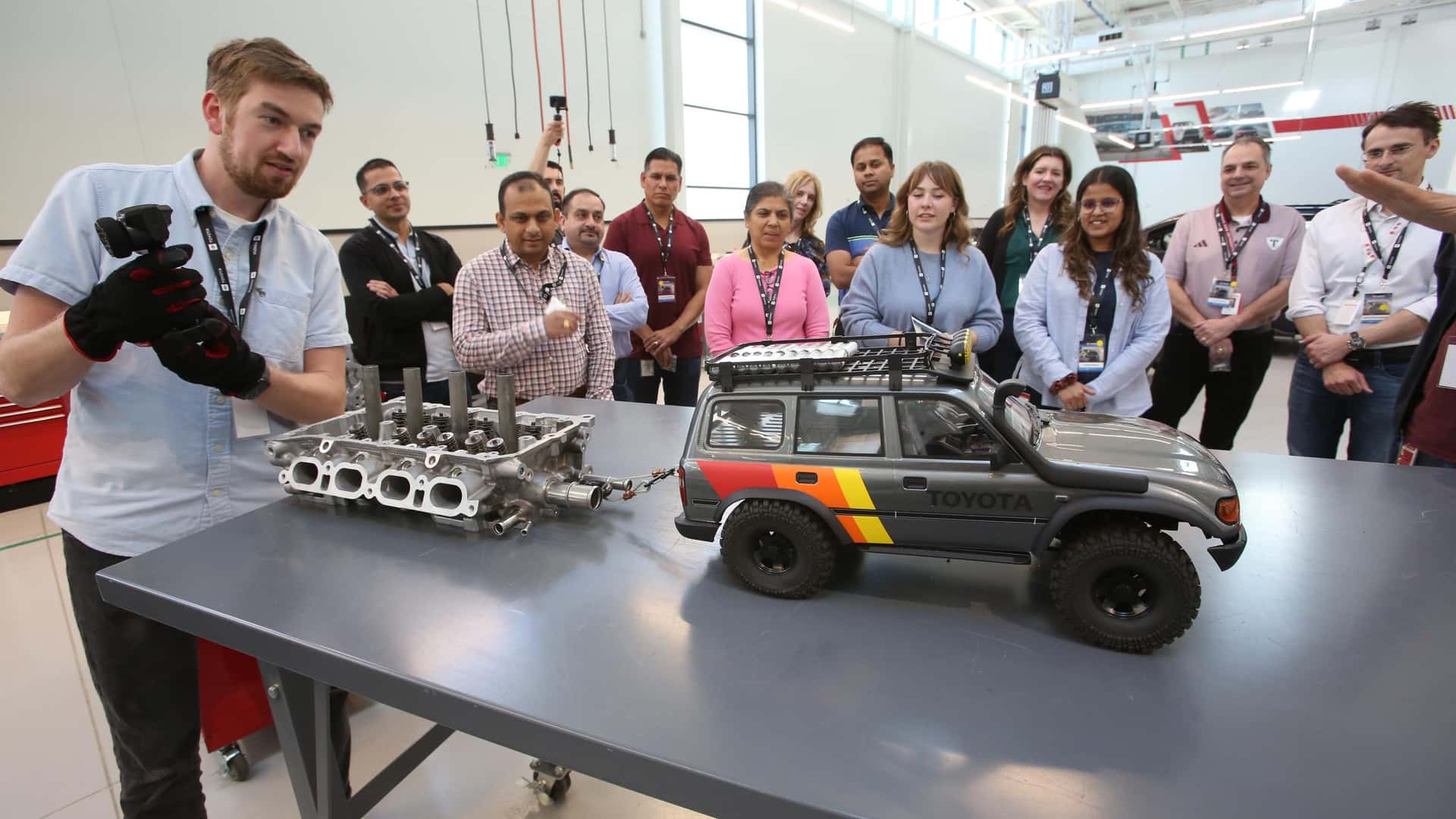
Perhaps the most impactful segment of the training was its interactive component. Employees engaged in hands-on activities, including constructing a basic electric motor from a screw, a magnet, a AA battery, and a piece of wire. Participants also assembled a rudimentary potato-based battery and observed diverse charging outputs in real-time. A compelling demonstration showcased the instant torque capabilities of an EV motor, using a small remote-controlled Land Cruiser to effortlessly tow a cylinder head weighing over 30 pounds, effectively illustrating the raw power and responsiveness of electric propulsion.
The Transformative Power of Electric Propulsion
The overarching lesson from these interactive experiences and theoretical discussions was unequivocal: electric motors represent an extraordinary technological advancement. Presenters contrasted a complex, stripped-out Toyota V-6 engine, with its numerous intricate parts and accessories, against a significantly smaller, simpler electric motor that produced greater power. This comparison starkly illustrated the inherent efficiency and reduced mechanical complexity of electric powertrains.
Even when integrated into traditional gasoline powertrains, as seen in Toyota’s hybrid systems, electric motors enhance efficiency and reduce overall mechanical complexity by potentially eliminating the need for a finicky transmission. The core message underscored that integrating electric propulsion invariably leads to more efficient systems with minimal compromises. As the progression moves towards fully battery electric vehicles, the potential for reduced mechanical failure points becomes even more pronounced.
Cultivating Internal Advocates for a Greener Future
Toyota representatives clearly articulated the company’s long-term vision, expressing a desire for significant advancements in battery chemistry and charging infrastructure before BEVs become a universal solution. Yet, the palpable enthusiasm generated during the training indicated a concerted effort to galvanise employees towards an all-electric future. This internal cultural shift is vital for enabling long-horizon strategic decisions across all corporate functions.
An uninformed perspective, particularly in roles like corporate procurement, might only perceive the immediate challenges of new component designs or the complexities of onboarding new suppliers, potentially fostering resistance to change. However, by igniting excitement and understanding, such training empowers employees to embrace short-term complexities in pursuit of long-term goals and to champion these objectives throughout the organisation.
Brigette Armato, a Toyota employee who participated in the class, exemplifies this transformative impact. Admitting she previously knew “nothing” about EVs and hybrids, she now finds herself an informed advocate. “I work with our lease experience team, so I’m actually working with the customers and the vehicles. This was extremely helpful because now I can have an educated conversation with them and maybe convince them to go for an electric vehicle, whereas before I don’t think I had that skill,” Armato stated as the session concluded.
Her newfound knowledge extends beyond customer interaction; Armato is now actively considering an EV for herself, expressing a desire for an electric alternative to her current Toyota 4Runner. “I wish we would gravitate more towards electric vehicles across the lineup,” she remarked. This sentiment, echoed by a growing number of newly educated employees, suggests a significant internal shift. With hundreds attending these sessions and a substantial waitlist for future classes, Toyota’s North American headquarters is cultivating a rapidly expanding cohort of EV proponents, bridging a crucial knowledge gap that, much like for many car buyers, simply stemmed from a lack of prior exposure and understanding.
FAQ Section
What was the main goal of Toyota’s ‘Electrification 101’ program?
The primary objective was to educate Toyota Motor North America employees on the basics of vehicle electrification, including hybrid, plug-in hybrid, battery electric, and hydrogen fuel cell technologies. The program aimed to address existing knowledge gaps and foster a deeper understanding of the company’s multi-pathway electrification strategy.
Why did Toyota feel the need to offer this training to its employees?
Many employees, particularly those in non-engineering or corporate roles, did not possess in-depth knowledge of electrification or its benefits. Toyota recognised that a more informed workforce would be crucial for making strategic decisions and effectively communicating the company’s vision for sustainable mobility.
What is Toyota’s ‘multi-pathway’ approach to electrification?
Toyota’s multi-pathway strategy focuses on offering a diverse range of electrified vehicles, including conventional hybrids, plug-in hybrids, battery electric vehicles, and hydrogen fuel cell vehicles. This approach aims to provide customer choice and, according to Toyota, optimally utilise limited battery resources during the transition to a fully electric future.
What were some key topics covered in the ‘Electrification 101’ curriculum?
The program covered the fundamentals of different powertrain types (HEVs, PHEVs, BEVs, FCEVs), basic battery chemistries, various charging methods, and electrical concepts like kilowatts and kilowatt-hours. It also addressed common myths about EVs and highlighted the efficiency benefits of electric propulsion.
Did the training include any hands-on or interactive elements?
Yes, the program featured engaging interactive sessions. Employees participated in building a rudimentary electric motor and a potato battery. A notable demonstration involved using a remote-controlled vehicle to showcase the instant torque and power of an electric motor by pulling a heavy cylinder head.
What was the impact of the training on employees?
The training significantly increased employee understanding and enthusiasm for electrification. Many attendees, like Brigette Armato, transformed from having little knowledge to becoming internal advocates for EVs. This enhanced understanding empowers them to better engage with customers and consider electric vehicles for personal use.