
Key Takeaways
- The Jeep Recon Moab’s 222-mile EPA range and $66,995 starting price have drawn criticism from consumers and journalists alike.
- This range figure is a direct consequence of engineering choices prioritizing extreme off-road capability, including high ground clearance, aggressive tires, robust skid plates, and unique gearing.
- Unlike on-road focused EVs, an electric off-roader faces inherent efficiency challenges, mirroring those seen in traditional gasoline-powered 4×4 vehicles.
- Comparisons with vehicles like the Jeep Wagoneer S (294 miles with same battery) highlight the efficiency trade-offs made for the Recon’s rugged design.
- Competitors like the Rivian R1S and Mercedes-Benz G580 EQ also demonstrate that superior off-road capabilities in an EV often come with compromises in range and a significantly higher price point.
- The discourse around the Jeep Recon EV range underscores the need for consumers to adjust expectations regarding the electrification of historically inefficient vehicle segments.
The announcement of the all-electric Jeep Recon Moab’s official range has stirred considerable debate within the automotive community. With a projected 222 miles of range and a starting price of $66,995, the vehicle has been met with significant skepticism from both journalists at events like the L.A. Auto Show and prospective buyers. Many have questioned why Jeep could not deliver greater range at a more accessible price point.
While the initial figures might seem underwhelming for a mass-market electric vehicle, a closer examination reveals that the Jeep Recon EV range is a direct outcome of fundamental engineering trade-offs. These decisions prioritize unparalleled off-road capability, a cornerstone of the Jeep brand, over maximizing on-road efficiency or affordability. The perception that Jeep could have offered more without sacrificing crucial attributes, according to industry experts, overlooks the inherent compromises central to vehicle design, particularly in the demanding realm of electric off-roading.

The Inherent Challenges of Electrifying Off-Road Vehicles
The journey towards an all-electric future presents unique hurdles for different vehicle segments. For vehicles engineered for rugged terrain and extreme performance, the path to electrification is fraught with specific design challenges that directly impact energy consumption and, consequently, electric vehicle range.
The Efficiency Challenge in Traditional Off-Roaders
Historically, gasoline-powered 4×4 trucks and SUVs built for off-roading have never been synonymous with fuel efficiency. It is a widely accepted fact within the off-roading community that these vehicles typically achieve less than 20 miles per gallon, with many falling into the 10 to 15 mpg range. This low efficiency is not an oversight but a direct result of design choices critical for conquering challenging landscapes.
Consider the core components: tall suspension systems provide crucial ground clearance for navigating obstacles, but they significantly increase aerodynamic drag. Large, knobby all-terrain tires offer superior grip in mud, sand, and rocks, yet their aggressive tread patterns create substantial rolling resistance and road noise at highway speeds, drastically reducing fuel economy. Furthermore, a robust 4×4 system, while essential for traction, introduces additional drivetrain losses, diminishing overall efficiency whenever engaged.

Aggressive gearing, designed to maximize torque at the wheels for climbing steep inclines and navigating difficult terrain, also plays a significant role. While it enhances low-speed capability, this same gearing typically causes the engine to spin at higher RPMs during highway cruising, consuming more fuel. The interplay of these specialized features creates a vehicle optimized for capability rather than efficiency, a truth intuitively understood by seasoned off-road enthusiasts.
Translating Challenges to Electric Vehicles
The fundamental principles governing efficiency losses in traditional off-roaders largely translate to their electric counterparts. High ground clearance, a boxy and upright vehicle design, and the use of substantial all-terrain tires, all critical for off-road performance, inherently increase aerodynamic drag and rolling resistance. These factors demand more energy from the battery pack, directly reducing the electric vehicle’s range.
Moreover, dual-motor powertrain configurations, often employed in high-performance electric off-roaders for superior traction and torque distribution, add weight and complexity, which can further impact energy consumption. The robust underbody protection, such as heavy skid plates, necessary to shield vital components from impacts on rough trails, also contributes to the vehicle’s overall mass. Every additional pound requires more energy to move, directly impacting the Jeep Recon EV range.
Therefore, when critics call for a higher range in an electric off-roader without understanding these engineering realities, they are essentially asking for a vehicle that compromises its core purpose. An off-road vehicle must possess sufficient ground clearance and appropriate tires; without these, it cannot genuinely claim to be an off-roader.
The Jeep Recon Moab: A Deep Dive into its Engineering
The Jeep Recon Moab is not designed to be an urban commuter or a long-distance highway cruiser where maximum range is the paramount concern. Instead, its design philosophy is firmly rooted in delivering authentic off-road capability, consistent with the brand’s legendary heritage. The specifications of the Recon reveal a series of deliberate engineering choices, each impacting the overall Jeep Recon EV range.
Design Choices Prioritizing Capability
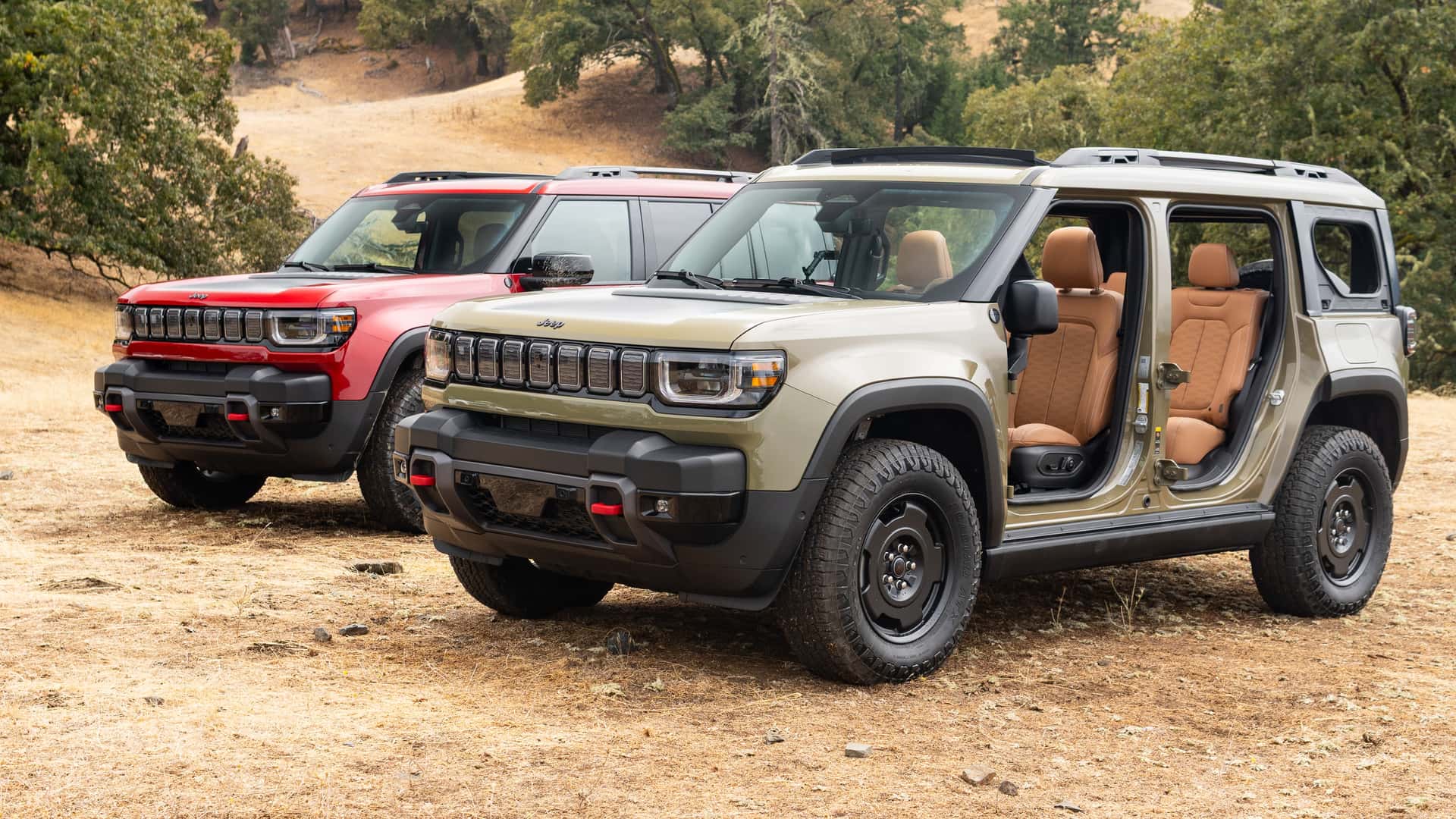
At the heart of the Recon’s off-road prowess are several key physical attributes. The vehicle boasts 9.1 inches of ground clearance, a significant increase compared to more road-oriented EVs. This elevated stance is crucial for clearing rocks, logs, and uneven terrain without damaging the undercarriage. Beneath the vehicle, a comprehensive array of heavy skid plates provides vital protection for the battery pack and other sensitive components, adding to the vehicle’s overall weight but ensuring durability in harsh environments.
The Recon is also fitted with aggressive 33-inch all-terrain tires. These tires, while indispensable for traction on loose surfaces, are inherently less efficient than standard street tires due to their larger size, heavier construction, and pronounced tread blocks. Furthermore, the Recon’s upright and boxy design, characteristic of traditional Jeep vehicles, is engineered to optimize approach and departure angles, enabling the vehicle to navigate steep inclines and declines without scraping. However, this design directly contrasts with the sleek, aerodynamic shapes favored by efficiency-focused EVs, leading to higher air resistance at speed.
The Critical Role of Gearing
Perhaps one of the most overlooked aspects influencing the Jeep Recon EV range is its gearing. While electric vehicles do not have multi-speed transmissions in the same way gasoline vehicles do, they still employ gear ratios to manage how the electric motors deliver torque to the wheels. These ratios are fundamental in determining a vehicle’s performance characteristics, from acceleration to efficiency.
Taller gear ratios, characterized by a lower first number (e.g., 9:1), are generally preferred for maximizing cruising efficiency and extending range, as they allow the motor to operate at lower RPMs at higher road speeds. Conversely, shorter gearing significantly increases the torque delivered to the wheels from a standstill. This enhancement in low-end torque is crucial for off-roading, enabling the vehicle to climb over formidable obstacles and power through challenging conditions with greater ease.
The Jeep Recon, specifically its rear motor, features aggressive 15:1 gearing. This decision underscores its commitment to extreme off-road capability, providing the substantial wheel torque necessary for rock crawling and challenging ascents. An added benefit of this aggressive gearing is brisk acceleration, with the Recon capable of reaching 60 mph in a reported 3.6 seconds. However, this engineering choice comes with an inherent compromise: lower gearing substantially reduces efficiency, particularly at higher speeds. During testing, the Recon demonstrated an efficiency of just 2.5 miles per kWh, illustrating the direct impact of these design priorities on its real-world energy consumption.
Battery Size vs. Energy Consumption
The Recon Moab is equipped with a 100.5 kWh battery pack, which is by no means small in capacity. However, the energy stored within this substantial pack is rapidly consumed due to the vehicle’s inherent design inefficiencies. The combination of its large size, heavy construction, boxy aerodynamics, formidable all-terrain tires, high ground clearance, and aggressive gearing means that each kilowatt-hour of energy stored translates to fewer miles of travel compared to a more aerodynamically optimized, lighter, and road-focused EV. This high energy consumption rate is a primary factor limiting the Jeep Recon EV range, despite its considerable battery capacity.
Contextualizing the Recon’s Range: Competitor Analysis
To fully appreciate the engineering trade-offs inherent in the Jeep Recon Moab’s design, it is helpful to compare its specifications and range with other electric vehicles, especially those within or adjacent to the off-road segment. These comparisons underscore the complex interplay between capability, range, and price.
The Jeep Wagoneer S: A Range Benchmark
Jeep itself provides a stark contrast to the Recon’s design philosophy with the Wagoneer S. This electric SUV, while sharing the same 100.5 kWh battery as the Recon, is built for on-road comfort and efficiency. It features a lower stance with approximately 6 inches of ground clearance and is equipped with street-oriented tires. These design choices, prioritizing aerodynamics and lower rolling resistance, allow the Wagoneer S to achieve a significantly higher estimated range of up to 294 miles on a single charge. The difference in range between the Wagoneer S and the Recon, despite identical battery packs, vividly illustrates the direct impact of design decisions made for specific use cases.
Rivian R1S: Balancing Range and Off-Road Prowess
The Rivian R1S, another prominent electric SUV with significant off-road capabilities, offers a different set of compromises. While generally more efficient than the Recon, even with all-terrain tire options, the R1S demonstrates similar range reduction patterns when off-road features are added. For instance, Rivian does not even offer all-terrain tires on models equipped with its base 108 kWh battery pack, implicitly acknowledging the efficiency penalty. To get AT tires, buyers must upgrade to the larger 140 kWh battery version, which then sees its range drop from an impressive 410 miles to 370 miles. This configuration comes with an approximate price tag of $96,000. While offering substantial range, the R1S typically features taller gearing and lacks certain advantages present in the Recon, such as a locking rear differential, making it a different kind of off-road performer.
Mercedes-Benz G580 EQ: Pinnacle of Electric Off-Roading
For those seeking the absolute peak of electric off-road capability, the Mercedes-Benz G580 with EQ Technology stands as a testament to advanced engineering, albeit at a premium price. Offering even greater off-road prowess than both the Recon and R1S, the G580 features separate low-range gears for each of its four motors. This sophisticated system allows for superior climbing ability on trails and then seamlessly transitions to higher gears for more efficient on-road cruising. Despite this clever hardware, a substantial 116 kWh of usable battery capacity, and a staggering $163,000 price tag, the G580 still achieves an EPA-estimated range of only 239 miles. This figure further reinforces the reality that maximizing extreme off-road capability in an EV inherently limits range, and these factors are compounded at higher speeds, where highway range estimates often fall significantly below combined figures for all such vehicles.
The Broader Implications for the EV Market
The market reception and engineering realities surrounding the Jeep Recon EV range carry significant implications for the broader electric vehicle industry and consumer expectations.
Realigning Consumer Expectations
The ongoing discourse surrounding vehicles like the Jeep Recon highlights a crucial need for consumers to adjust their expectations regarding the electrification of historically inefficient vehicle segments. The push for an all-electric future is a complex endeavor, and it is becoming increasingly evident that the vehicles traditionally characterized by their high energy consumption—such as large SUVs, heavy-duty trucks, and extreme off-roaders—will be the most challenging to electrify without compromising on either range, price, or both. Equipping such vehicles with batteries as large as 91 kWh or 100.5 kWh is already a substantial investment in terms of cost and weight. However, the energy contained within these large packs simply does not translate into the same mileage when the vehicle is designed to be large, boxy, heavy, and equipped with features like all-terrain tires, enhanced ground clearance, and aggressive gearing. These elements are indispensable for its intended purpose but are detrimental to pure energy efficiency.
The Future of Electric Off-Roading
The current state of electric off-roaders is a reflection of present technological limitations and economic realities. As battery technology continues to advance, offering higher energy density and faster charging capabilities, and as the charging network expands and becomes more robust, many of these existing compromises will undoubtedly begin to diminish. Future innovations may allow for more efficient powertrains, lighter yet stronger materials, and breakthroughs in aerodynamic design that better balance ruggedness with range. However, for the foreseeable future, consumers seeking a highly capable electric off-roader will likely need to continue embracing a trade-off: exceptional capability will typically come at the expense of maximized range and a potentially higher purchase price. The Jeep Recon Moab stands as a clear example of this current industry paradigm.
Frequently Asked Questions (FAQ)
Q1: Why is the Jeep Recon EV range only 222 miles?
The 222-mile range of the Jeep Recon Moab is a direct result of its design prioritizing extreme off-road capability. Features like high ground clearance, heavy skid plates, aggressive 33-inch all-terrain tires, a boxy aerodynamic profile, and specialized 15:1 gearing all increase energy consumption. These elements are essential for its rugged purpose but reduce overall efficiency compared to road-focused EVs.
Q2: How does the Recon’s off-road capability impact its range?
Off-road features significantly increase energy demand. High ground clearance and a boxy shape create more aerodynamic drag. Large, knobby tires increase rolling resistance. Aggressive gearing provides vital low-end torque for climbing but makes the vehicle less efficient at highway speeds. These factors combined contribute to a lower miles-per-kilowatt-hour efficiency, thus reducing the overall range of the Jeep Recon EV.
Q3: Is the Recon’s 100.5 kWh battery considered small for an EV?
No, a 100.5 kWh battery pack is a substantial size for an electric vehicle. However, the energy it stores is consumed more quickly in the Recon due to its specialized off-road design, weight, and component choices. The battery itself is robust, but the vehicle’s inherent inefficiencies for its intended use lead to the stated 222-mile range.
Q4: How does the Jeep Recon compare to other electric off-roaders in terms of range?
Compared to a road-focused Jeep Wagoneer S (294 miles with the same battery), the Recon has lower range due to its off-road focus. The Rivian R1S offers higher range (up to 370 miles with AT tires and a larger 140 kWh pack) at a higher price. The Mercedes-Benz G580 EQ, despite its 116 kWh battery and premium cost, achieves 239 miles, illustrating that advanced off-road EVs universally trade range for capability.
Q5: Why are off-road EVs generally less efficient than regular EVs?
Off-road EVs are inherently less efficient because their design prioritizes ruggedness and capability over aerodynamic sleekness and low rolling resistance. Elements like increased ground clearance, non-aerodynamic body shapes, heavier construction, and aggressive all-terrain tires all contribute to higher drag and rolling resistance. This demands more energy from the battery, leading to lower overall efficiency and reduced range compared to passenger EVs.
Q6: What is the significance of the Recon’s 15:1 gearing?
The Recon’s 15:1 gearing on its rear motor is crucial for maximizing low-end torque. This allows the vehicle to climb over challenging obstacles and navigate steep inclines more effectively. While it enhances off-road performance and provides quick acceleration (0-60 mph in 3.6 seconds), it also means the motor spins faster at highway speeds, significantly reducing the vehicle’s energy efficiency and contributing to its 222-mile range.