
Key Takeaways (TL;DR)
The Jeep Recon Moab’s 222-mile range and $66,995 starting price have drawn criticism, but this perspective often overlooks the fundamental engineering trade-offs inherent in building a capable electric off-road vehicle.
Achieving robust off-road prowess – including high ground clearance, aggressive tires, and powerful gearing – inherently reduces energy efficiency, regardless of whether the vehicle is powered by gasoline or electricity.
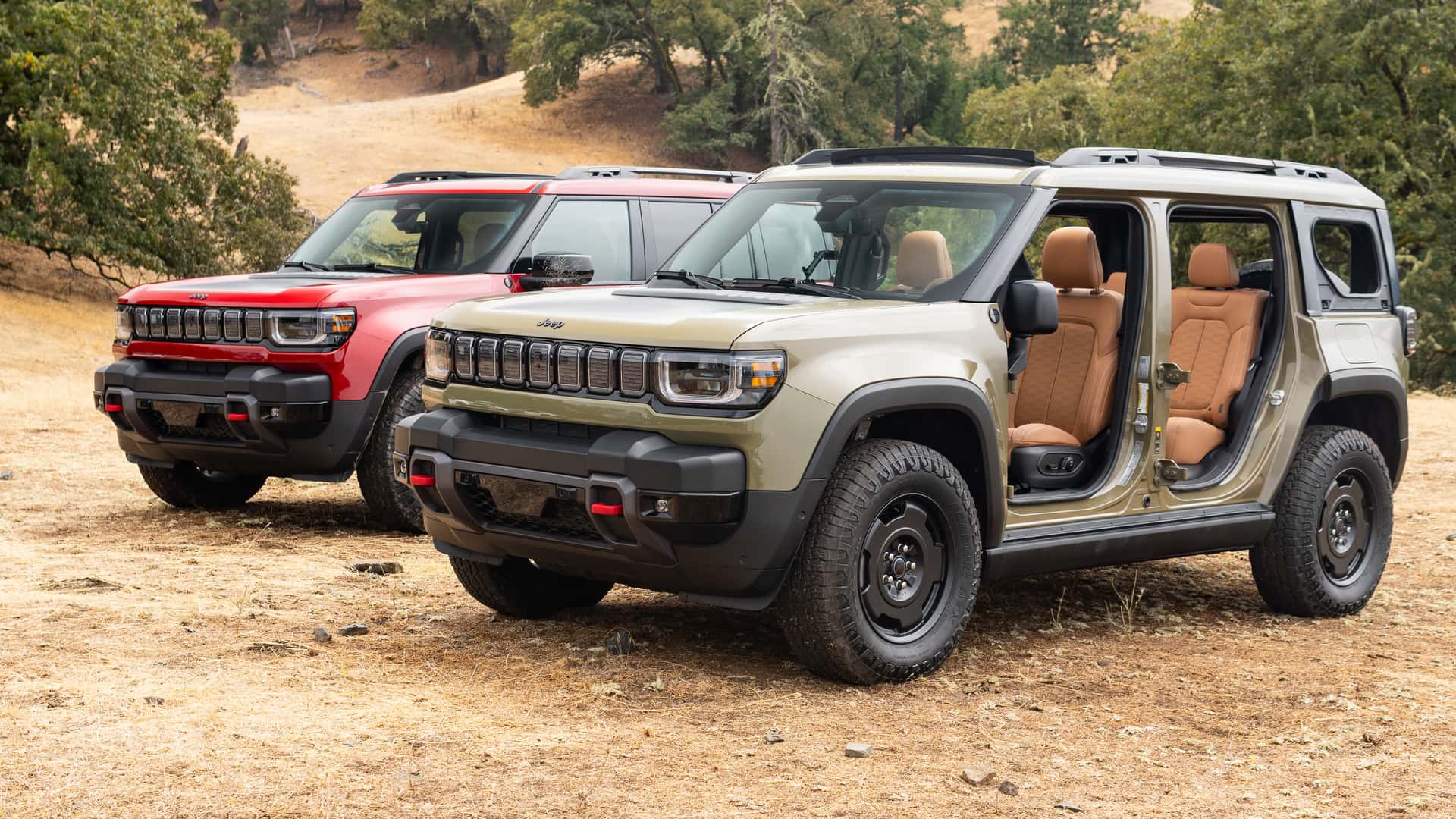
Jeep made deliberate design choices for the Recon Moab, prioritizing extreme off-road capability with features like 9.1 inches of ground clearance, 33-inch all-terrain tires, and a specific 15:1 rear motor gearing, which directly impacts its range and cost.
Comparisons with other electric SUVs like the Jeep Wagoneer S, Rivian R1S, and Mercedes G580 w/EQ Technology demonstrate that superior off-road capability in EVs consistently leads to either reduced range, higher prices, or both, underscoring the current technological limits in the sector.
The announcement of the all-electric Jeep Recon Moab’s range, reportedly under 230 miles, ignited considerable discussion among automotive journalists and potential buyers. Initial reactions, including those observed at the L.A. Auto Show, suggested widespread dissatisfaction, with many critics advocating for greater range at a lower price point. The 2026 Jeep Recon Moab, with an estimated 222-mile range and a starting price of $66,995, is indeed positioned as a niche offering rather than a mass-market electric vehicle.
However, these expectations may stem from a fundamental misunderstanding of the complex engineering compromises involved in automotive design, particularly in the specialized segment of off-road vehicles. The notion that manufacturers can concurrently deliver exceptional off-road capabilities, extended range, and an accessible price without concessions is largely a misconception within the industry.
The Intricacies of Off-Roading Vehicle Design
Off-roading and vehicle manufacturing are disciplines deeply rooted in the art of compromise. For traditional internal combustion engine (ICE) vehicles, the pursuit of superior off-road capabilities invariably leads to reduced fuel efficiency. A body-on-frame, 4×4 truck with lifted suspension and aggressive gearing typically delivers fuel economy significantly below 20 miles per gallon, often closer to 10 or 15 mpg.
Several design elements crucial for off-road performance directly contribute to this inefficiency. Tall suspension systems, while providing essential ground clearance for navigating challenging terrains like rock crawling, dramatically increase aerodynamic drag. Similarly, large, knobby all-terrain (AT) tires excel at gripping through mud and loose surfaces but are inherently inefficient and noisy on paved roads, especially at highway speeds.
Furthermore, a robust 4×4 system offers invaluable traction in slippery conditions, yet its engagement significantly diminishes fuel efficiency. Aggressive gearing, designed to maximize torque at the wheels for improved climbing and low-speed obstacle traversal, typically results in the engine operating at higher RPMs during highway cruising, leading to increased fuel consumption.
For instance, an older Chevrolet Tahoe equipped with 33-inch AT tires, a 4WD system with low range, and a powerful V-8 engine, despite not being a dedicated off-roader, would exhibit city fuel economy figures around 13 mpg. This illustrates the inherent efficiency penalty associated with off-road-oriented vehicle modifications.
The stark difference in design philosophy between a fuel-efficient vehicle like a Toyota Prius and a rugged off-roader such as a Jeep Wrangler perfectly encapsulates this principle. One is meticulously engineered for optimal fuel efficiency, while the other is purpose-built for extreme off-road performance. Modifying a Prius for off-road capability by lifting it, adding larger tires, and removing aerodynamic bodywork, would inevitably sacrifice its exemplary 50 mpg efficiency.
EVs and the Off-Roading Equation: Inherent Trade-offs
These principles of compromise are not exclusive to gasoline-powered vehicles; they apply equally to Electric Vehicles (EVs). High ground clearance, the integration of multiple electric motors, the use of large and aggressive tires, boxy aerodynamic profiles, and specialized aggressive gearing all contribute to a reduction in an EV’s overall energy efficiency and, consequently, its driving range.
Crucially, many of these characteristics are not merely desirable but essential for a vehicle to credibly claim significant off-road capability. A vehicle cannot be genuinely marketed as an off-roader if it offers minimal ground clearance or utilizes thin, street-focused tires. These are foundational requirements for tackling demanding terrains.
The Jeep Recon Moab’s Strategic Engineering Choices
Jeep’s approach with the Recon Moab exemplifies these strategic trade-offs. The company also offers the Jeep Wagoneer S, an EV utilizing the same 100.5 kWh battery pack, which achieves an estimated 294 miles of range. This higher range is largely attributable to its design as a vehicle with 6 inches of ground clearance and street-oriented tires, prioritizing on-road efficiency and comfort.
In contrast, the Jeep Recon Moab is engineered with genuine off-road capability as its primary objective. It boasts a substantial 9.1 inches of ground clearance, is fitted with numerous heavy-duty skid plates for underbody protection, and comes equipped with aggressive 33-inch all-terrain tires. Its more upright and angular body design, optimized for superior approach and departure angles, further enhances its ability to navigate obstacles but inherently increases aerodynamic drag.
The Critical Role of EV Gearing in Off-Road Performance
A often-overlooked factor in EV performance, particularly for off-road applications, is the vehicle’s gear ratio. While EVs do not have multi-speed transmissions in the conventional sense, they employ fixed gear ratios that significantly influence how the electric motor delivers its torque to the wheels. Taller gear ratios, characterized by a lower first number (e.g., 9:1), are generally optimized for higher cruising speeds and improved energy efficiency.
Conversely, shorter gear ratios substantially increase the torque delivered to the wheels from a standstill, which is paramount for off-roading. This enhanced wheel torque allows the vehicle to climb steep inclines and power through challenging obstacles more effectively. However, this engineering choice inevitably leads to reduced efficiency at higher road speeds, as the motor operates at higher rotational velocities for a given vehicle speed.
For the Jeep Recon Moab, optimizing for low-end torque was a key design decision, resulting in a 15:1 gearing ratio on its rear motor. This configuration delivers the necessary grunt for extreme off-road conditions and also contributes to its rapid acceleration, allowing the Recon to reach 60 mph in approximately 3.6 seconds. This performance-oriented gearing, however, directly impacts its energy consumption, with observed efficiency figures around 2.5 miles per kWh.
Competitive Landscape: Other Electric Off-Roaders
Examining other electric off-road vehicles in the market further underscores these inherent compromises. The Rivian R1S, a heavier vehicle, often demonstrates better efficiency than the Recon. However, Rivian’s strategy involves significant differentiation based on battery capacity and tire choice. All-terrain tires, which contribute to off-road capability but reduce efficiency, are not offered on models equipped with the base 108-kWh battery pack.
To obtain AT tires on the Rivian R1S, consumers must upgrade to the larger 140-kWh battery version. Even with this larger battery, the estimated range drops from 410 miles to 370 miles when equipped with AT tires. This configuration pushes the vehicle’s price point to approximately $96,000. Moreover, the Rivian R1S typically features taller gearing and does not offer a locking rear differential, features present in the Recon Moab that enhance its extreme off-road advantages.
At the pinnacle of electric off-road capability, the Mercedes G580 w/EQ Technology offers even more advanced features than the Recon or R1S. It incorporates separate low-range gears for each of its four motors, allowing for superior climbing ability off-road and the flexibility to switch to higher gearing for more efficient on-road cruising. Despite this sophisticated hardware, a premium price tag exceeding $163,000, and a substantial 116 kWh of usable battery capacity, the G580 still achieves an EPA-estimated range of only 239 miles.
It is also important to note that for all these off-road focused EVs, highway range is often significantly lower than combined range estimates. The combined effects of aerodynamic drag, rolling resistance from large tires, and aggressive gearing are compounded at higher speeds, leading to a notable reduction in practical range during extended highway driving.
Future Outlook: Navigating the Electric Off-Road Frontier
The overarching takeaway for consumers and the automotive industry is the necessity to adjust expectations for the electrification of inherently inefficient vehicle segments. The challenge of electrifying large, heavy, and aerodynamically inefficient vehicles is considerably greater than for more streamlined passenger cars. Consequently, it should not be surprising when models like the Volkswagen ID. Buzz or the Jeep Recon Moab offer ranges that may appear modest compared to other EVs.
Integrating an exceptionally large battery pack to compensate for inefficiency comes at a significant financial cost, and even a 91- or 100-kWh battery, though substantial, does not yield vast ranges when coupled with the inherent energy demands of off-road design. When all-terrain tires, additional ground clearance, and aggressive gearing are factored in, the energy stored in these batteries simply does not propel the vehicle as far.
As battery technology continues to evolve, charging times become faster, and the global charging network expands, many of these challenges are expected to diminish. However, in the current landscape, consumers seeking decent EV off-roading capabilities must anticipate making concessions in both driving range and purchase price.
Frequently Asked Questions (FAQ)
Why does the Jeep Recon Moab have a relatively low range?
The Jeep Recon Moab’s 222-mile range is a result of prioritizing extreme off-road capability. Features like high ground clearance (9.1 inches), heavy skid plates, large 33-inch all-terrain tires, a boxy aerodynamic profile, and aggressive 15:1 gearing for low-end torque all significantly reduce energy efficiency compared to on-road EVs, directly impacting its driving range.
Is the Jeep Recon Moab’s price justified given its range?
The $66,995 starting price for the Jeep Recon Moab reflects the high cost of engineering an electric vehicle with such specialized off-road hardware. Building an EV battery capable of powering a heavy, inefficient off-roader is expensive. The price-to-range ratio is a direct consequence of the extensive modifications made for its robust off-road performance.
How do EV gear ratios affect off-road performance and range?
EVs use fixed gear ratios. Shorter gear ratios (higher numerical value, like the Recon’s 15:1) multiply motor torque more effectively at the wheels, crucial for climbing and navigating obstacles off-road. However, this also means the motors spin faster at higher vehicle speeds, consuming more energy and reducing range compared to taller, more efficient highway gearing.
How does the Jeep Recon Moab compare to other electric off-roaders like Rivian R1S or Mercedes G580 w/EQ Technology?
The Recon Moab’s specific compromises for range and price are common in the segment. The Rivian R1S offers more range but requires a larger, more expensive battery for AT tires and uses taller gearing. The Mercedes G580 w/EQ Technology provides even greater capability with dedicated low-range gears but comes at a significantly higher price and still has a modest range, reinforcing the universal trade-offs.
Will EV off-roaders improve in range and affordability in the future?
Yes, improvements are anticipated. Advances in battery technology, leading to higher energy density and lower costs, will allow for more efficient power storage. Coupled with faster charging infrastructure development and continued refinements in electric powertrain efficiency, future EV off-roaders are expected to offer better ranges and potentially more competitive pricing, mitigating current compromises.