
Key Takeaways (TL;DR)
- Hyundai has strategically postponed the launch of its advanced in-house driver-assistance system (ADAS), Atria AI, to late 2029.
- This delay aims to ensure the delivery of a superior ‘Level 2++’ system, avoiding a ‘middling’ product.
- The automaker is pursuing a two-pronged development strategy: an initial rollout of an Nvidia-based Level 2 system by 2028, followed by its proprietary Atria AI.
- Hyundai’s ADAS technology is designed to compete directly with offerings like Tesla’s Full Self-Driving (Supervised).
- The company is leveraging extensive real-world driving data from its 7 million annual vehicle sales to accelerate development and refine its autonomous driving systems.
Hyundai Motor Group (HMG) has announced a significant strategic decision to delay the widespread launch of its next-generation in-house advanced driver assistance system (ADAS) until late 2029. This postponement, a shift of two years from its initial timeline, underscores the South Korean automaker’s commitment to delivering a highly refined and robust autonomous driving system rather than rushing a premature offering to market.
The move reflects a calculated gamble in the fiercely competitive race for vehicle autonomy, where precision and safety are paramount. By extending its development phase, Hyundai aims to ensure its technology can effectively rival existing sophisticated systems, including Tesla’s Full Self-Driving (Supervised).
Strategic Delay and Dual-Path Development
Hyundai’s revised timeline for its autonomous driving systems is part of a broader, two-phase strategy. This approach is designed to systematically advance its driver-assistance capabilities, ensuring comprehensive development and rigorous testing.
The company announced its detailed plans during its HMG Autonomous Driving Media Day, outlining a phased deployment that prioritises quality and functionality over speed. This deliberate pacing is intended to build a more capable and trustworthy autonomous driving ecosystem.
Phased Rollout: Nvidia-Powered Foundation
The initial phase of Hyundai’s updated strategy involves the rollout of a Level 2 driver-assistance system based on Nvidia’s platform. This system is slated to begin appearing in vehicles by the second half of 2028.
This collaboration with Nvidia provides a powerful, proven hardware and software foundation. It allows Hyundai to deploy advanced supervised driving features to its extensive customer base sooner, gathering valuable real-world data and user feedback.
The In-House Atria AI: Aiming for Advanced Supervised Driving
Following the Nvidia-based deployment, the second phase will see the introduction of Hyundai’s proprietary Atria AI autonomous driving system, scheduled for release in late 2029. This date, as noted by Reuters, marks a two-year extension from Hyundai’s original plan.
Park Min-woo, the head of HMG’s advanced vehicle platform division, articulated the rationale behind this revised schedule to *Korea JoongAng Daily*: “We made a strategic decision to slow down.” He further elaborated, “Rushing into mass production now risks delivering a middling Level 2++ system, far short of our real target.” This statement highlights the company’s ambition to avoid compromising on the quality and capability of its Hyundai ADAS technology.
Hyundai aims for its Atria AI to be a ‘Level 2++’ system. This classification signifies a highly capable advanced driver-assistance system that, while offering extensive automation, still requires continuous human supervision. It represents a significant step beyond standard Level 2 systems, blending advanced features with the responsibility of an attentive driver.
The Race for Autonomous Mobility
The global automotive industry is in a fervent race to develop sophisticated autonomous driving systems. Automakers worldwide are investing heavily, believing that self-driving vehicles will not only enhance road safety but also unlock substantial new revenue streams.
Hyundai’s commitment to developing its Hyundai autonomous driving systems positions it firmly among the leading contenders. The company is strategically leveraging its vast operational scale to gain an edge in this transformative sector.
Benchmarking Against Global Competitors
Hyundai is not alone in its pursuit of advanced vehicle autonomy; numerous major global automakers are striving to build cars capable of independent acceleration, braking, steering, and navigation through complex traffic scenarios. Toyota, for instance, has also revealed its plans to introduce an FSD-like system in 2028, aligning with the aggressive timelines of its competitors.
The competition is intense, with companies from Asia, Europe, and North America pushing the boundaries of what is technologically feasible. Hyundai’s strategic delay aims to ensure its offering is competitive and class-leading upon release.
Real-World Testing in Urban Environments
To demonstrate the current capabilities of its Hyundai ADAS technology, Hyundai recently released footage showcasing an Ioniq 5 electric vehicle navigating the intricate and often chaotic urban landscape of Seoul’s Gangnam District. This demonstration highlighted the vehicle’s ability to drive from point A to point B autonomously, albeit with a human supervisor on board.
The Ioniq 5, equipped with Hyundai’s latest Level 2+ ADAS, deftly handled the demanding traffic conditions, underscoring the significant progress made in real-world operational scenarios. Such rigorous testing in challenging environments is crucial for refining autonomous driving systems before broader deployment.
Deep Dive into Hyundai’s Technology Stack
Hyundai’s dual-path development strategy involves integrating cutting-edge hardware and software platforms. This approach ensures a robust foundation for its Level 2 and Level 2++ autonomous driving systems, reflecting a comprehensive strategy for advanced vehicle intelligence.
The combination of a powerful external partnership and proprietary in-house innovation positions Hyundai uniquely in the race for self-driving capabilities. The company is meticulously building its technology stack to address the complexities of real-world driving conditions.
Nvidia Drive Hyperion: Sensors and Capabilities
The first phase of Hyundai’s rollout will utilise the Nvidia Drive Hyperion 10 architecture. This advanced platform is designed to support a wide spectrum of autonomous driving functionalities, ranging from Level 2 supervised ADAS to unsupervised Level 4 autonomy.
Hyundai indicated that this system will rely on a suite of sensors, including cameras, ultrasonic sensors, and radar, but will notably omit lidar in this initial configuration. Interestingly, an executive mentioned that lidar could be integrated for future Level 3 systems. Mercedes-Benz also employs the Nvidia Drive Hyperion platform for its MB.Drive Assist Pro system, similarly opting for cameras and radar over lidar.
Atria AI’s End-to-End Approach
Hyundai’s in-house Atria AI autonomous driving system, slated for late 2029, represents a sophisticated ‘Level 2++’ solution. This system is envisioned as Hyundai’s direct answer to offerings like Tesla’s FSD (Supervised), leveraging an end-to-end architecture.
In an end-to-end system, an artificial intelligence model directly processes raw sensor inputs and translates them into precise driving commands. Junghyun Kwon, the head of HMG’s autonomous driving development center, highlighted the importance of rapid learning: “Autonomous driving competitiveness depends not on how much data you secure, but on how rapidly you can connect data to learning, validation and performance improvement.” He added, “Through the data flywheel system now in full operation, we expect continuous improvement of issues identified on real roads and rapid technology advancement.” This emphasis on iterative learning is central to refining Hyundai’s autonomous driving systems.
Beyond Passenger Cars: Hyundai’s Vision for Autonomy
Hyundai’s ambitions for autonomous technology extend far beyond individual passenger vehicles. The automaker is actively pursuing a comprehensive vision that integrates robotics, ride-sharing services, and cross-platform standardisation, solidifying its position as a leader in future mobility solutions.
This multi-faceted approach showcases Hyundai’s commitment to revolutionising various aspects of transportation and logistics. The company’s strategic investments and partnerships highlight a broad engagement across the autonomy spectrum.
Expanding into Robotaxis and Robotics
Hyundai is making significant inroads into the robotaxi sector. Its AV division, Motional, plans to roll out its first Ioniq 5 robotaxis in Las Vegas by the end of this year. Simultaneously, Hyundai is supplying Ioniq 5 robotaxis to Waymo, with these vehicles expected to join Waymo’s driverless fleet also by the close of the year.
Beyond vehicle autonomy, Hyundai holds a deep investment in humanoid robotics through its wholly-owned subsidiary, Boston Dynamics. This diversification into robotics signals a broader strategy to develop intelligent machines that can operate in various environments, complementing its automotive endeavors.
Standardisation Across Subsidiaries
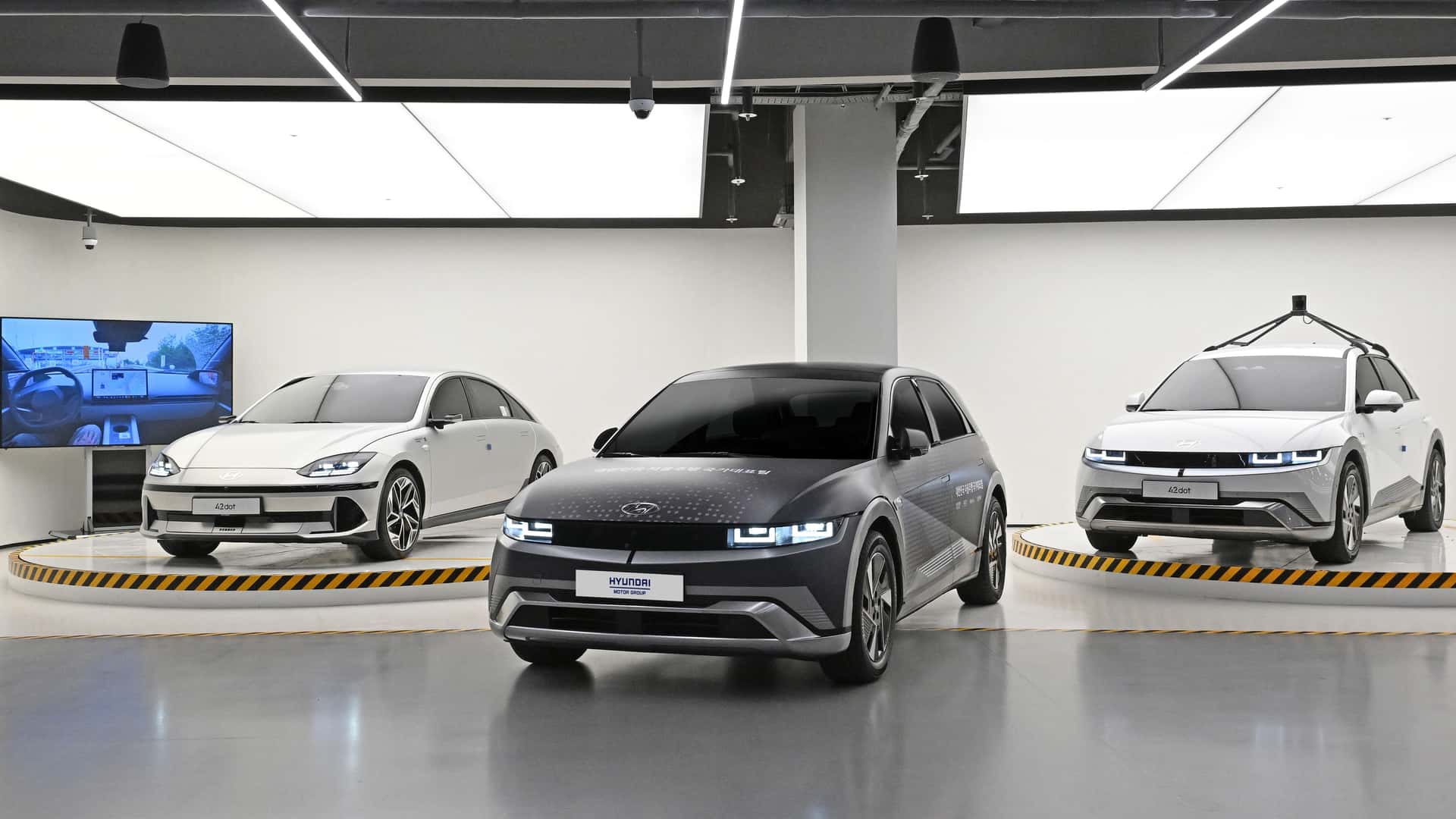
A crucial element of Hyundai’s future strategy involves the standardisation of software and hardware across its various entities. The rollout of the Level 2+ ADAS, starting in the second half of 2028, will bring this standardisation not only between Hyundai and Kia vehicles but also across its robotaxi and AV software development divisions, Motional and 42dot.
This integrated approach ensures seamless compatibility and accelerates development by centralising data and technological advancements. Such standardisation is vital for creating a cohesive and efficient autonomous ecosystem across the entire Hyundai Motor Group.
Hyundai’s decision to delay its advanced in-house ADAS launch to 2029 underscores a strategic pivot towards meticulous development and uncompromising quality. By prioritising a robust ‘Level 2++’ system over a hasty release, Hyundai aims to deliver a competitive and highly capable autonomous driving experience.
The dual-path strategy, combining Nvidia’s platform with its proprietary Atria AI, positions Hyundai to leverage the best of both worlds. This, coupled with extensive real-world testing and a broad vision encompassing robotaxis and robotics, reinforces Hyundai’s commitment to shaping the future of mobility.
Frequently Asked Questions (FAQ)
What is the core reason for Hyundai delaying its in-house ADAS?
Hyundai strategically delayed its in-house ADAS to 2029 to avoid rushing a ‘middling Level 2++’ system to market. The company prioritises delivering a highly robust and capable autonomous driving system that meets its stringent quality and performance targets, aiming for a superior product that can effectively compete with rivals like Tesla’s FSD.
What is Hyundai’s two-phase approach to autonomous driving?
Hyundai is pursuing a dual-path development. The first phase involves rolling out an Nvidia-based Level 2 system to vehicles starting in the second half of 2028. The second phase, commencing in late 2029, will introduce Hyundai’s more advanced in-house Atria AI autonomous driving system, aiming for a ‘Level 2++’ capability.
How does Hyundai’s Atria AI compare to Tesla’s Full Self-Driving?
Hyundai describes its Atria AI as a ‘Level 2++’ system, positioning it as a direct competitor to Tesla’s Full Self-Driving (Supervised). Both systems represent highly capable advanced driver-assistance technologies that, despite offering significant automation, still require active human supervision. Atria AI will use an end-to-end AI model for processing sensor inputs.
What is a ‘Level 2++’ ADAS system?
A ‘Level 2++’ system is industry jargon for a highly advanced Level 2 driver-assistance system that goes beyond typical Level 2 capabilities but still requires human supervision. While it can perform complex driving tasks like navigation on urban roads, the driver must remain attentive and ready to intervene, unlike higher levels of autonomy.
What role does Nvidia play in Hyundai’s autonomous driving plans?
Nvidia provides the foundational technology for Hyundai’s initial rollout of its Level 2 system. Vehicles in the first phase will utilise the Nvidia Drive Hyperion 10 architecture, which supports functionalities from Level 2 supervised ADAS up to Level 4 autonomy. This partnership allows Hyundai to rapidly deploy advanced features and gather critical operational data.
How is Hyundai using real-world data for its ADAS development?
Hyundai leverages driving data collected from its approximately 7 million vehicles sold annually across 190 markets. This extensive dataset is crucial for the continuous learning, validation, and performance improvement of its autonomous driving systems. This ‘data flywheel system’ helps identify and address issues encountered on real roads, accelerating technological advancement.
Beyond passenger cars, what are Hyundai’s autonomy ambitions?
Hyundai’s ambitions extend to robotaxis, with Ioniq 5 robotaxis set to launch in Las Vegas via Motional and join Waymo’s fleet. The company is also deeply invested in humanoid robotics through Boston Dynamics. Furthermore, Hyundai plans to standardise software and hardware across its Hyundai, Kia, Motional, and 42dot divisions for a cohesive autonomous ecosystem.