
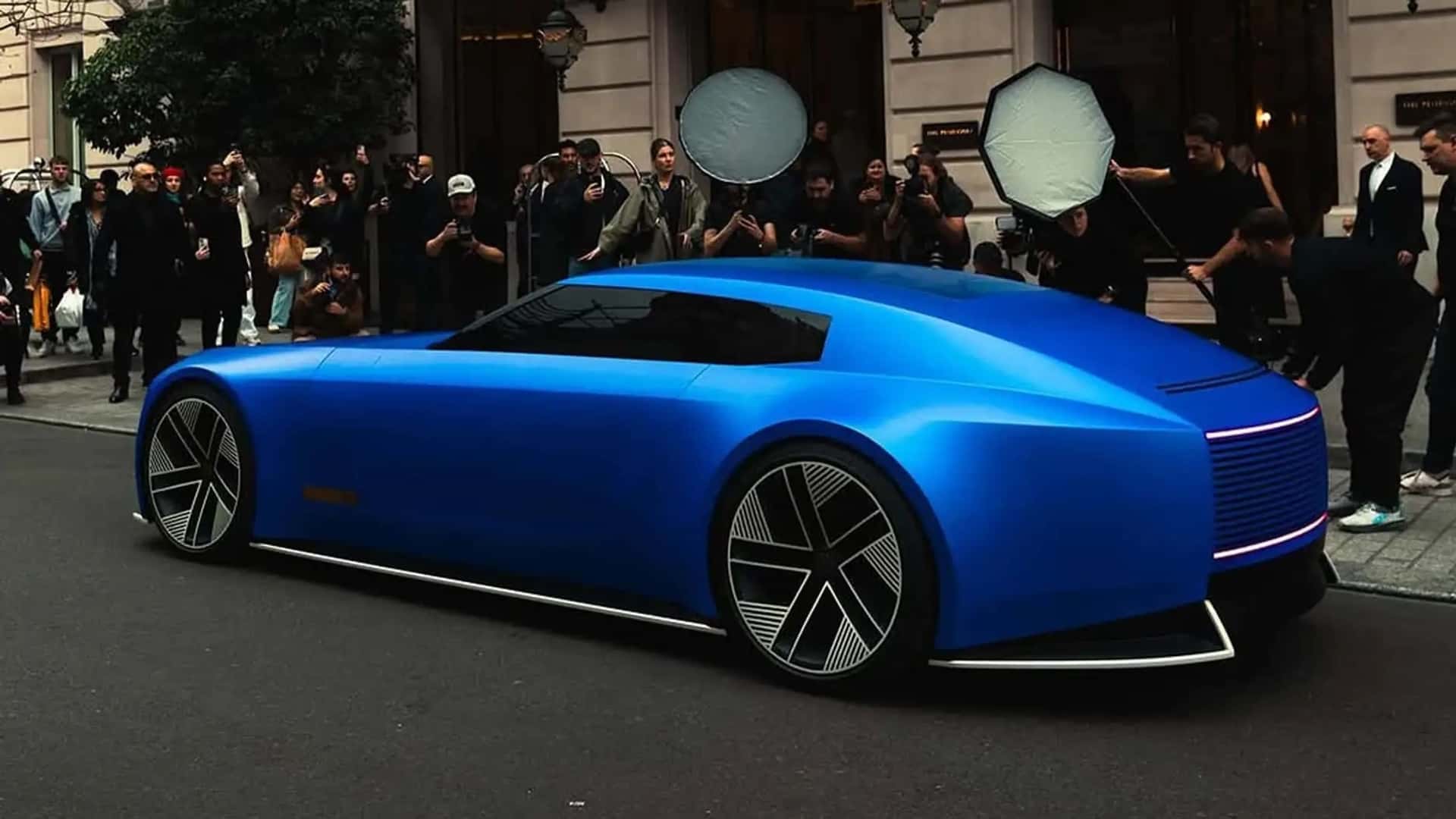
Contrary to beliefs that the electric vehicle (EV) transition might be slowing, 2026 is poised to be the most significant year yet for the EV market. Automakers are preparing to introduce a remarkable 32 new EV models in the United States, in addition to substantial upgrades and price reductions for approximately a dozen existing models. This influx signals the maturation of the EV market, promising greater choice across various vehicle segments and price points.
Anticipated EV Launches in 2026
Acura RSX
Honda and Acura are stepping up their EV game with the upcoming 0 Series platform, set to debut with the Acura RSX in the first half of the year. This dual-motor compact crossover coupe will feature Honda’s Asimo OS, an AI assistant, and over-the-air update capabilities, promising over 300 miles of range. The critical question remains whether Honda can overcome its delayed entry into the long-range EV market with this ambitious launch.

BMW iX3
The BMW iX3 marks the debut of the brand’s Neue Klasse architecture, designed as a true software-defined vehicle. It boasts a panoramic display, a new AI assistant, and an impressive electrical platform capable of over 400 miles of range and 400-kilowatt fast charging. While electric equivalents for the 3 Series sedan and X5 SUV are anticipated for 2027, the iX3 is set to be the vanguard.
Chevrolet Bolt
The iconic Chevrolet Bolt is set to return with significant improvements. The 2027 model addresses its predecessors’ limitations with upgraded software, a heat pump, 150-kilowatt fast charging, and General Motors’ first U.S.-market lithium iron phosphate (LFP) battery. This LFP battery offers enhanced durability and cost-effectiveness, making the new Bolt an even more practical and affordable option, with prices expected to remain under $30,000.
Ferrari Elettrica
Ferrari is entering the EV space with its first electric model, tentatively named Elettrica. Scheduled for unveiling in the first half of 2026, it will feature a quad-motor powertrain, four seats, over 1,000 horsepower, and approximately 300 miles of range. The exact specifications, driving dynamics, and final design are highly anticipated.

Genesis GV60 Magma and GV90 EV
Genesis is expanding its performance-oriented lineup with the GV60 Magma, boasting 609 horsepower (650 hp with overboost) and a 0-60 mph time of 3.4 seconds. Additionally, the brand is expected to launch the three-row electric SUV, the GV90, serving as a flagship model. This expansion aims to challenge established German luxury brands.
Honda 0 Series SUV
Following the Acura RSX, the Honda 0 Series SUV is expected to be a more mainstream offering on the same platform. It is anticipated to provide around 300 miles of range and aims to avoid the initial teething problems that have affected other manufacturers’ first major EV platform launches.
Hyundai Ioniq 6 N
Building on the success of the Ioniq 5 N, the Ioniq 6 N is expected to offer an even more exhilarating driving experience. With its lower center of gravity and potentially less weight, it should provide sharper handling. The 641 hp overboost and drift capabilities are anticipated to make this performance sedan a standout.
Jaguar Type 00
Jaguar is pivoting to the ultra-luxury market with its Type 00 concept, a high-dollar ground tourer previewed by the Type 00 concept. This new era for Jaguar promises 986 horsepower and a bold design, aiming to mark a significant rebirth for the brand.
Jeep Grand Wagoneer EREV and Recon
The Grand Wagoneer will be introduced as an extended-range electric vehicle (EREV), offering the benefits of electric power with an onboard generator for longer journeys. It is expected to achieve over 600 miles of range. The Jeep Recon, positioned as an electric alternative to the Wrangler, will feature off-road capabilities like 33-inch tires and significant ground clearance, though its EPA range is estimated at around 230 miles. These models represent key product developments for Jeep.
Kia EV3
Already available in global markets, the Kia EV3 is set to launch in the U.S. as an affordable electric option. It will feature available all-wheel-drive, Kia’s latest software, and faster charging capabilities. The key factor for its success will be its final pricing, especially considering recent import tariffs.
Land Rover Range Rover EV
The electric Range Rover aims to combine ultra-luxury with off-road prowess. It is expected to offer nearly 300 miles of EPA range, 800-volt architecture for fast charging, and exceptional torque distribution capabilities. Its unique dual-motor setup, capable of sending 100% torque to either wheel on an axle, is a notable departure from typical quad-motor designs.
Lexus ES
Toyota and Lexus are significantly increasing their EV offerings, with the electric ES sedan being a key launch. This model serves as a direct replacement for its gas/hybrid counterparts and will be available in 220-hp front-wheel-drive and 338-hp dual-motor variants. While range figures are respectable (up to 300 miles for FWD), improvements in software are highly anticipated.
Lucid Gravity
Following the success of the Air sedan and Gravity SUV, Lucid is preparing to launch a mid-size electric SUV, potentially named “Earth.” This model is intended to be more affordable, with a projected starting price around $48,000. While Lucid has proven its capability in producing high-range and efficient EVs, the success of this more mainstream offering is crucial.
Mercedes-AMG EV and Mercedes-Benz CLA, GLC, and Van
Mercedes-Benz is undergoing a significant EV push. The first AMG EV on the dedicated AMG.EA platform is expected, previewed by the Concept GT XX EV, boasting 1,341 horsepower and revolutionary 850 kW charging speeds. The new CLA will debut the MB.OS software platform, offering around 400 miles of range, fast charging, and advanced driver assistance features, starting at $48,000. The GLC EV, arriving in late 2027, aims to compete in the popular midsize crossover segment with over 350 miles of range and fast charging. Additionally, Mercedes is introducing a new segment of luxury electric limousine vans, previewed by the Vision V Concept.
Mitsubishi Lancer EV
Mitsubishi is entering the affordable EV segment with a model expected to be named the Lancer EV. Positioned to compete with the Nissan Leaf, it is expected to offer value, potentially matching or exceeding the Leaf’s price point and range (up to 303 miles with a 75 kWh battery).
Polestar 5
The Polestar 5, a rival to the Porsche Taycan, is slated to offer 884 hp and up to 330 miles of EPA range, supported by an 800-volt architecture and 350-kW fast charging. However, its U.S. market availability remains uncertain due to potential tariffs on Chinese-made vehicles.
Porsche Cayenne Electric
Porsche’s electric Cayenne is set to redefine EV charging with support for 400-kW fast charging and available wireless charging. The Turbo model is expected to deliver up to 1,139 hp, with prototypes demonstrating impressive range capabilities. This electric version will coexist with upcoming gasoline and hybrid generations.
Ram 1500 REV
Ram is focusing on an extended-range electric vehicle (EREV) for its full-size truck, the 1500 REV. It will utilize electric motors and a 92 kWh battery for approximately 145 miles of electric range, supplemented by a gasoline V6 engine acting as a generator for longer trips. This approach aims to address range anxiety and towing endurance concerns.
Rivian R2
The Rivian R2 is arguably the most important vehicle on the list, aiming to bring the brand’s adventurous appeal and technology to the mainstream market with a starting price around $45,000 and over 300 miles of range. Its success is critical for Rivian’s transition from a startup to a major EV player.
Slate Truck
The Slate truck is targeting a niche market with a bare-bones, customizable vehicle. While its initial $20,000 price point was compelling, its projected $25,000 to $30,000 price range with only 150 miles of range may face challenges against established models like the Ford Maverick. Its appeal lies in its potential for extensive customization.
Sony-Honda Mobility Afeela 1
The Afeela, a product of the Sony-Honda Mobility joint venture, will launch under its own brand with standalone dealerships. It offers 483 hp, over 300 miles of range, and 150 kW fast charging, but its $103,000 starting price and performance specs have drawn criticism. The company is betting heavily on its advanced entertainment experience to differentiate the vehicle.
Subaru Trailseeker and Uncharted
Following improvements to the bZ4X and Solterra, Subaru is launching two new EVs. The Trailseeker, similar to the Toyota bZ Woodland, will offer 375 hp and over 260 miles of range for around $40,000. The smaller Uncharted, comparable to the Crosstrek, will provide up to 338 hp and over 300 miles of range for approximately $35,000.
Toyota bZ Woodland and C-HR
The Toyota bZ Woodland shares its platform and specifications with the Subaru Trailseeker. The Toyota C-HR will be the most affordable and compact electric Toyota crossover, offering up to 290 miles of range in FWD form and the same 338-hp dual-motor powertrain as its larger siblings. Software improvements, particularly for road trip planning, are highly desired.
Volvo EX60
Volvo’s third-generation EV, the EX60, will be built on a new 800-volt platform with significantly revised software. While full specifications are pending release on January 21, it is expected to offer up to 400 miles of range and 400-kilowatt charging speeds, aiming to overcome the issues faced by earlier Volvo EVs.
The year 2026 promises to be a landmark year for electric vehicles, offering consumers an unprecedented array of choices and technological advancements across all market segments.