
KEY TAKEAWAYS
- Wevo has unveiled WEVOPUR 60210 FL T, a new polyurethane compound engineered specifically for the protection of critical multilayer printed circuit boards (PCBs) within automotive battery management systems (BMS).
- This innovative compound is applied using the selective dam-and-fill method, ensuring precise encapsulation of sensitive components while maintaining accessibility for connectors and testing points.
- Designed for electric vehicles operating with voltages up to 800 V, the material offers exceptional protection against severe environmental stressors including mechanical shock, vibration, extreme temperature fluctuations, and moisture.
- Key properties include a Shore hardness of D 40-50 for mechanical robustness, a thermal conductivity of 0.8 W/m·K for efficient heat dissipation, and a dielectric strength exceeding 20 kV/mm for high-voltage insulation.
- The WEVOPUR 60210 FL T system is compatible with standard two-component mixing and dosing equipment, thereby simplifying material qualification, storage, and overall process management for manufacturers.
In a significant development for electric vehicle (EV) technology, Wevo, a renowned material specialist, has introduced an advanced polyurethane potting solution designed to enhance the reliability and longevity of automotive battery management systems (BMS). The new compound, WEVOPUR 60210 FL T, specifically targets the selective protection of multilayer printed circuit boards (PCBs) that are integral to monitoring and controlling high-voltage batteries in modern EVs.

This innovative material addresses the increasingly complex challenges faced by automotive electronics, particularly in the demanding operational environment of electric vehicles. As EVs become more prevalent, the integrity and performance of their core electronic components, like the BMS, are paramount for both safety and overall vehicle efficiency.
Protecting the Nerve Centre of Electric Vehicles
The battery management system functions as the brain of an EV battery pack, meticulously monitoring cell voltages, temperatures, and current flows to ensure optimal performance, safety, and longevity. These systems are under constant pressure to perform flawlessly, given their direct impact on the vehicle’s range, charging efficiency, and overall operational safety.
Modern BMS PCBs are characterized by high integration density, a necessity driven by the increasing demand for sophisticated diagnostic, communication, and safety functions. This complexity, however, makes them highly susceptible to a range of environmental and mechanical stresses encountered during vehicle operation.

The operational environment for automotive electronics is notoriously harsh. PCBs in EV battery packs must withstand relentless mechanical stress, including constant vibrations and shocks from road conditions. Furthermore, they are exposed to wide-ranging environmental conditions, from extreme cold to intense heat, alongside significant fluctuations in operating temperatures generated during charging and discharging cycles.
Without adequate protection, these stressors can lead to component failure, electrochemical corrosion, and the degradation of solder joints, ultimately compromising the reliability and safety of the entire EV powertrain. Ensuring robust protection for these vital components is therefore not just an engineering challenge but a critical aspect of electric vehicle development.
Introducing WEVOPUR 60210 FL T: A Specialized Polyurethane Solution
Wevo’s WEVOPUR 60210 FL T is a high-performance polyurethane potting compound formulated to provide comprehensive protection for these sensitive electronic assemblies. Potting, a common technique in automotive electronics, involves encasing a circuit board in a cured polymeric compound to shield it from external elements.
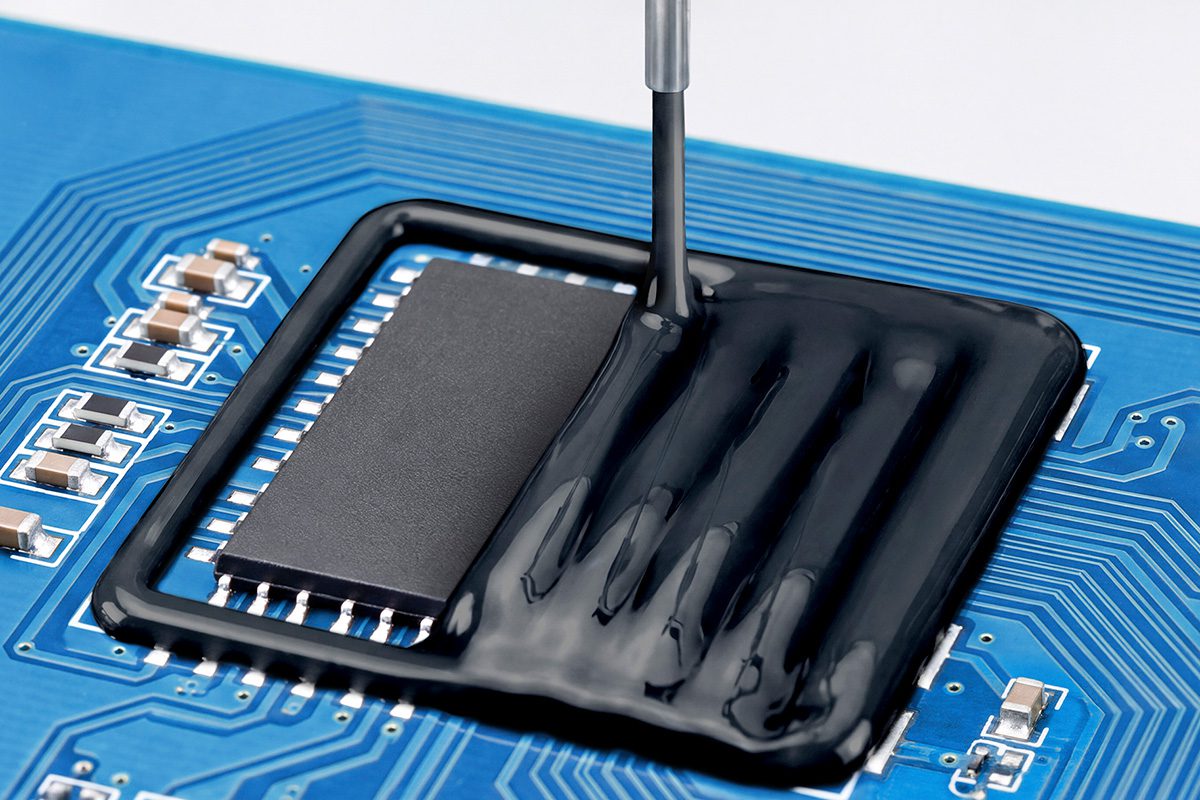
The distinguishing feature of this new system is its application via the dam-and-fill method, a selective potting technique. Unlike full encapsulation, selective potting applies the protective compound only to specific areas of the PCB where protection is most critical. This approach ensures that essential connectors, test points, and other interfaces remain accessible, which is crucial for manufacturing, testing, and potential servicing.
Tailored for High-Voltage Environments
Electric vehicles, especially those designed for fast charging and higher power output, often operate with battery systems up to 800 V. The WEVOPUR 60210 FL T system is specifically engineered for boards that monitor and control these high voltages, demanding superior electrical insulation and material stability under high electrical fields.
The compound’s robust dielectric strength is a critical factor in preventing electrical breakdowns and ensuring the long-term safety of high-voltage components. This makes it an ideal choice for the rigorous demands of advanced electric vehicle platforms where safety margins are paramount.
Engineering for Durability: Key Material Properties
The effectiveness of WEVOPUR 60210 FL T stems from its meticulously engineered material properties, which are optimized to counter the specific threats faced by automotive PCBs.
Robust Mechanical Protection Against Stress and Vibration
With a Shore hardness of D 40 to 50, the cured compound provides significant mechanical stability. This hardness level ensures that the material can effectively absorb and dampen shocks and vibrations that would otherwise be transmitted directly to the sensitive electronic components and solder joints on the PCB. By physically fixing components in place, the potting reduces the risk of fatigue and damage caused by constant movement.
Advanced Thermal Management for Longevity
Thermal management is a significant concern in high-power electronic systems. The WEVOPUR 60210 FL T boasts a thermal conductivity of 0.8 W/m·K. This property allows the material to efficiently conduct heat away from critical components and distribute it more evenly across the potted assembly. This helps to reduce localized hot spots and minimizes temperature differences between various components, thereby significantly lowering the risk of stress cracks and premature solder joint detachment that often arise from thermal cycling.
Dielectric Strength: Ensuring Electrical Safety
A crucial safety feature, the compound’s dielectric strength exceeds 20 kV/mm. This high value indicates the material’s excellent electrical insulation capabilities, making it highly effective in preventing electrical arcing and short circuits even in the presence of the high voltages, up to 800 V, that characterize modern EV battery systems. This superior insulation is fundamental to maintaining operational safety and preventing catastrophic failures within the battery management unit.
Beyond these primary characteristics, Wevo highlights that the WEVOPUR 60210 FL T is formulated to prevent electrochemical corrosion, a common issue in humid environments, and offers robust protection against moisture ingress. Optimized adhesion ensures a durable bond with the substrate, effectively preventing delamination over the operational lifespan of the vehicle, contributing to enhanced reliability and durability.
Precision Application: The Dam-and-Fill Method
The dam-and-fill process is central to the efficacy and versatility of WEVOPUR 60210 FL T. In this method, the compound performs a dual role: it first acts as a barrier, defining the perimeter of the area to be protected, and then as a filler, encapsulating the components within that defined space.
Wevo has meticulously tuned the flow behavior and thixotropy of the compound. Thixotropy refers to the property of a fluid to become less viscous when subjected to shear stress (like during application) and then to thicken when the stress is removed. This precise control ensures that the barrier material maintains its shape and integrity once dispensed, preventing it from spreading beyond the intended boundaries.
Concurrently, the filler material is designed to wet the protected area effectively without trapping air pockets. Air pockets can compromise thermal dissipation and lead to localized stress concentrations. The precise control over layer thickness and the amount of material applied can be adjusted to accommodate a diverse range of PCB geometries, simply by modifying the process design and application speed, offering significant manufacturing flexibility.
Streamlined Integration for Manufacturers
Recognizing the operational realities of automotive manufacturing, Wevo formulated the WEVOPUR 60210 FL T system for compatibility with standard two-component mixing and dosing equipment. This compatibility is a significant advantage for manufacturers as it reduces the need for specialized machinery and complex process overhauls.
By leveraging existing infrastructure, manufacturers can significantly reduce the work involved in material qualification, simplify storage requirements, and streamline overall process management. This ease of integration contributes to lower production costs, faster time-to-market for new EV models, and a more efficient manufacturing footprint, ultimately benefiting the wider electric vehicle industry.
The Broader Impact on EV Reliability and Safety
The introduction of advanced protection solutions like WEVOPUR 60210 FL T represents a crucial step forward in enhancing the reliability and safety of electric vehicles. As the global automotive industry continues its rapid shift towards electrification, the performance and robustness of core electronic systems, particularly battery management units, become increasingly critical.
By providing superior protection against the harsh operational realities faced by EV components, Wevo’s new polyurethane potting compound contributes directly to improved vehicle longevity, reduced maintenance, and ultimately, greater consumer confidence in electric mobility. This innovation underscores the ongoing commitment within the materials science sector to support and accelerate the transition to a sustainable transportation future.
Frequently Asked Questions (FAQ)
What is WEVOPUR 60210 FL T and its primary application?
WEVOPUR 60210 FL T is a specialized polyurethane potting compound developed by Wevo. Its primary application is the selective protection of multilayer printed circuit boards (PCBs) used in automotive battery management systems (BMS) within electric vehicles.
How does WEVOPUR 60210 FL T protect EV battery management systems?
It protects by encasing sensitive PCB components in a cured compound, shielding them from mechanical stress, vibrations, changing environmental conditions, and high operating temperatures. It also prevents electrochemical corrosion and moisture ingress.
What voltage levels can the WEVOPUR 60210 FL T system support?
The compound is specifically built for PCBs that monitor and control voltages of up to 800 V in electric vehicles, ensuring robust electrical insulation and safety for high-power battery systems.
What is the dam-and-fill method used for applying this compound?
The dam-and-fill method is a selective potting process where the compound first forms a barrier to define the protection area, then fills it. This precise application ensures critical connectors and testing points remain accessible while encapsulating sensitive components.
What are the key material properties of WEVOPUR 60210 FL T?
It has a Shore hardness of D 40-50 for shock absorption, a thermal conductivity of 0.8 W/m·K for efficient heat dissipation, and a dielectric strength exceeding 20 kV/mm for high-voltage electrical insulation.
How does this compound contribute to thermal management in EV batteries?
With a thermal conductivity of 0.8 W/m·K, WEVOPUR 60210 FL T helps dissipate heat from components, reducing temperature differences across the PCB. This minimizes the risk of stress cracks and solder joint detachment caused by thermal fluctuations.
Is WEVOPUR 60210 FL T compatible with existing manufacturing processes?
Yes, Wevo formulated the system to run on standard two-component mixing and dosing equipment. This compatibility simplifies material qualification, storage, and overall process management for automotive manufacturers, aiding efficient integration.