
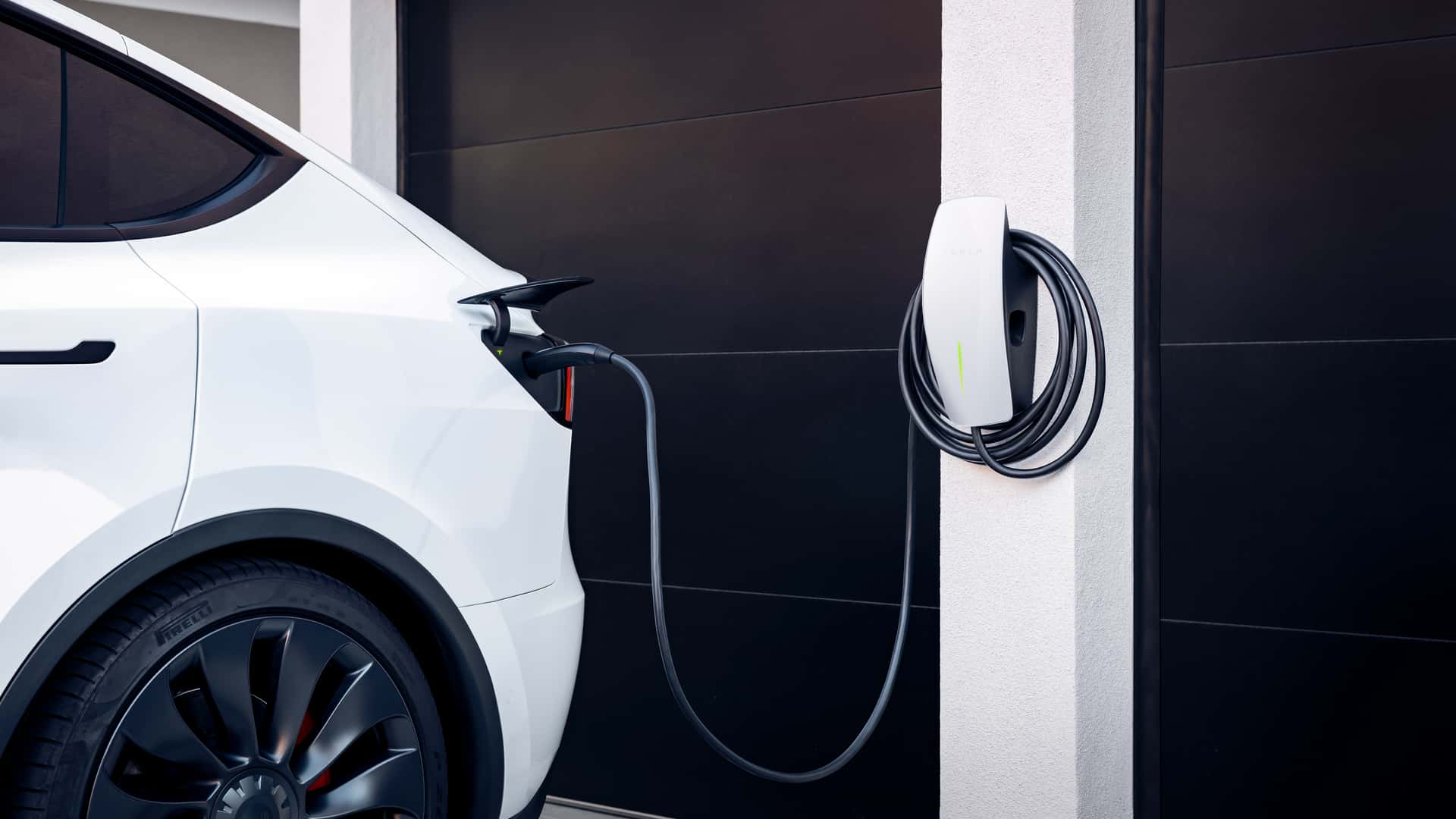
In a significant move poised to redefine home energy resilience, Tesla has officially announced the expansion of its revolutionary Powershare vehicle-to-home (V2H) technology to its highly popular Model 3 and Model Y electric vehicles. This development empowers owners of these vehicles to utilize their car’s substantial battery capacity as a crucial backup power source during grid outages and blackouts, offering a new layer of energy independence.
The announcement, made on October 6, marks a pivotal moment for Tesla, broadening the accessibility of a feature previously available only to Cybertruck owners. This strategic integration positions the Model 3 and Model Y alongside a growing cohort of electric vehicles capable of bi-directional charging, enhancing their utility beyond mere transportation.
Key Takeaways: Tesla Powershare Expansion
Tesla has officially expanded its innovative Powershare vehicle-to-home (V2H) feature to include the Model 3 and Model Y, allowing these popular electric vehicles to serve as backup power sources during blackouts. Previously exclusive to the Cybertruck, this functionality requires compatible models (purchased on or after October 1, 2023, or select older units) and specific hardware, including a Tesla Powerwall and Wall Connector, totaling approximately $15,585. This integration enhances energy independence and extends home backup duration by up to two days with a fully charged EV.
Understanding Tesla’s Powershare Feature
The Powershare feature represents Tesla’s foray into bi-directional charging, allowing an electric vehicle to not only draw power from the grid for charging but also to export energy back to a connected home. This capability transforms the EV into a mobile power bank, capable of sustaining essential household functions when the conventional power supply is interrupted.
Fundamentally, vehicle-to-home (V2H) technology leverages the large battery packs inherent in electric vehicles. Instead of relying solely on stationary home battery solutions, such as a Powerwall, the EV’s battery can seamlessly integrate into the home’s energy ecosystem. This provides a flexible and powerful solution for managing energy needs, particularly in emergency scenarios.
Eligibility and Essential Hardware for Model 3 and Model Y Owners
Implementing the Tesla Powershare feature for Model 3 and Model Y vehicles comes with specific eligibility criteria and hardware prerequisites. Tesla confirms that this capability is available for vehicles purchased on or after October 1, 2023. Additionally, a select number of vehicles acquired prior to this date may also be compatible, subject to a detailed evaluation by Tesla.
For these models to effectively power a home during an outage, owners must invest in Tesla’s dedicated energy infrastructure. This includes a Tesla Powerwall, the company’s established battery storage system, and a Wall Connector. The Powerwall 3, a critical component of this setup, is estimated to cost around $15,000, which typically includes installation fees. The essential Tesla Wall Connector adds an additional $585 to this investment, bringing the total initial outlay to approximately $15,585. Once fully installed, the system enables the Model 3 or Model Y to deliver a robust 15 kW of power back to the home, ensuring critical appliances remain operational.
A Comparative Look: Cybertruck vs. Model 3/Y Setup
While the Model 3 and Model Y now offer home backup capabilities, the implementation differs notably from the Cybertruck’s Powershare configuration. The Cybertruck inherently integrates an onboard DC-to-AC converter, simplifying its setup for vehicle-to-home applications. This design means Cybertruck owners do not require the extensive Powerwall system to utilize the feature.
Instead, Cybertruck owners only need to install a Universal Wall Connector and a Powershare Gateway. These components are conveniently bundled in Tesla’s Powershare Home Backup Bundle, priced at $1,970. This significantly lower hardware cost for Cybertruck owners highlights a strategic difference in Tesla’s approach to V2H across its diverse vehicle lineup, emphasizing integrated design in its latest offerings.
Enhanced Energy Resilience and Practical Benefits
The primary advantage of integrating the Tesla Powershare feature with the Model 3 and Model Y is the significant enhancement of home energy resilience. In regions prone to power disruptions, having an electric vehicle capable of supplying power offers peace of mind and substantial practical benefits. It reduces reliance on traditional generators, which often require fossil fuels and emit noise and fumes.
For households already equipped with a Tesla Powerwall, the addition of a Powershare-enabled vehicle dramatically extends the duration of backup power. Tesla estimates that by coupling a Model 3 or Model Y with an existing Powerwall system, owners can prolong their home’s backup power supply by an additional two days. This calculation is based on an average household energy consumption of 30 kWh per day, illustrating the considerable energy storage potential resident in these popular electric vehicles.
The Expanding Landscape of Vehicle-to-Home (V2H) Technology
Tesla’s move to extend V2H capabilities to the Model 3 and Model Y underscores a broader trend within the automotive industry. The ability of electric vehicles to double as mobile power stations is rapidly gaining traction, transforming perceptions of what an EV can accomplish. This technology is increasingly seen as a cornerstone of future smart grids and sustainable energy ecosystems.
Beyond Tesla, several other prominent electric vehicle manufacturers have already introduced or are planning V2H capabilities. General Motors, for instance, has enabled this feature across various Chevy and Cadillac EV models. Similarly, the Kia EV9 and the Nissan Leaf have been notable pioneers in offering bi-directional charging, allowing their owners to feed energy back into their homes or even the grid. This growing adoption signals a shift towards viewing EVs not just as transportation but as integral components of a distributed energy infrastructure, enhancing home resilience and potentially offering economic benefits through grid services.
Strategic Implications for Tesla’s Ecosystem
The integration of Powershare into the Model 3 and Model Y is more than just a new feature; it represents a strategic advancement for Tesla’s comprehensive energy ecosystem. By linking its most widely adopted vehicles with its Powerwall home battery solution, Tesla reinforces its vision of vertical integration across transportation and energy. This ecosystem approach aims to offer customers a holistic solution for sustainable living, from driving to home power.
This development could further incentivize the adoption of both Tesla vehicles and Powerwall systems. Prospective buyers looking for robust home backup solutions might find the combined value proposition of a Tesla EV and Powerwall particularly appealing, especially given the rising frequency of power outages globally. The synergy between vehicle and home energy management strengthens Tesla’s competitive edge in both the automotive and renewable energy sectors.
Navigating Initial Investment and Long-Term Value
While the prospect of a Tesla Model 3 or Model Y powering one’s home is enticing, potential adopters must consider the initial investment. The combined cost of a Powerwall 3 and Wall Connector, at approximately $15,585, represents a significant outlay. However, this cost should be weighed against the long-term benefits of enhanced energy security, potential savings on traditional backup generators, and the increasing value placed on energy independence.
For those already owning a Powerwall, the incremental benefit of extending backup duration by two days with a compatible vehicle offers substantial peace of mind. The ability to mitigate the impact of prolonged blackouts, protect against food spoilage, and maintain essential services like heating, cooling, and communication can significantly justify the investment for many households.
Conclusion: A Step Towards Greater Energy Independence
The introduction of Powershare capabilities for the Tesla Model 3 and Model Y marks a significant milestone in the evolution of electric vehicles. By transforming these popular EVs into essential components of home energy backup systems, Tesla is not only enhancing the utility of its vehicles but also contributing to a broader movement towards greater energy independence and resilience. As grid instabilities continue to be a concern, the ability of electric vehicles to serve as powerful, clean, and quiet emergency generators will undoubtedly become an increasingly valued attribute for consumers worldwide.
Frequently Asked Questions (FAQ)
Q1: Which Tesla models now support the Powershare vehicle-to-home feature?
A1: The Tesla Powershare feature, enabling vehicle-to-home (V2H) power supply, is now available for new Model 3 and Model Y vehicles purchased on or after October 1, 2023. Select older Model 3 and Model Y units may also be compatible. Previously, this capability was exclusive to the Tesla Cybertruck, making it a significant expansion for the brand.
Q2: What specific hardware is required for a Model 3 or Model Y to power a home?
A2: To utilize the Powershare feature with a compatible Model 3 or Model Y, owners must install a Tesla Powerwall (specifically Powerwall 3) and a Tesla Wall Connector. The Powerwall acts as the primary battery storage and inverter system, while the Wall Connector facilitates the bi-directional power flow between the vehicle and the home.
Q3: What is the approximate cost of the necessary hardware for Model 3/Y Powershare?
A3: The estimated cost for the required hardware includes approximately $15,000 for the Tesla Powerwall 3, which typically covers installation. Additionally, a Tesla Wall Connector costs $585. This brings the total initial investment to roughly $15,585 for Model 3 and Model Y owners seeking this home backup solution.
Q4: How does the Model 3/Y Powershare setup differ from the Cybertruck’s?
A4: The Cybertruck includes an onboard DC-to-AC converter, simplifying its setup. Cybertruck owners only need a Universal Wall Connector and a Powershare Gateway (available for $1,970 in a bundle). Model 3 and Model Y, however, require the more extensive Powerwall and Wall Connector system due to their existing architecture.
Q5: How much power can a Model 3 or Model Y output to a home during an outage?
A5: Once the complete Powershare system, including the Powerwall and Wall Connector, is installed, a compatible Tesla Model 3 or Model Y can effectively output up to 15 kW of power back to the connected home. This capacity is sufficient to run essential household appliances and systems during a blackout.
Q6: How long can a Tesla EV extend home backup power with this feature?
A6: For households already equipped with a Tesla Powerwall, linking a Powershare-enabled Model 3 or Model Y can extend the duration of home backup power by an additional two days. This estimate is based on an assumed average household energy usage of 30 kWh per day, significantly enhancing energy resilience.
Q7: What are the main benefits of using a Tesla Model 3 or Model Y for home backup?
A7: The primary benefits include enhanced energy independence during blackouts, reduced reliance on traditional, often fossil-fuel-powered generators, and the ability to extend the duration of existing Powerwall backup. It also positions the EV as a multi-functional asset, integrating transportation with home energy management.
Q8: Are other electric vehicles offering similar vehicle-to-home (V2H) capabilities?
A8: Yes, the trend of V2H technology is growing across the EV industry. Other electric vehicles that offer or plan to offer similar bi-directional charging capabilities include various Chevy and Cadillac EVs, the Kia EV9, and the Nissan Leaf, indicating a broader industry shift towards EVs as integrated energy solutions.