
Key Takeaways:
- LG Energy Solution (LGES) posted record preliminary Q3 earnings, demonstrating strong financial resilience.
- The company’s success is largely attributed to a robust market for electric vehicle (EV) batteries in Europe and significant growth in stationary energy storage batteries in the U.S.
- These gains successfully offset an earlier slowdown in EV battery production in North America due to softer demand.
- U.S. Inflation Reduction Act (IRA) manufacturing credits and compensation from automakers further bolstered the company’s bottom line.
- LGES is strategically expanding its production and supply chain in North America, including a new gigafactory in Michigan and a lithium supply deal in Canada.
Seoul, South Korea – LG Energy Solution, a global battery powerhouse, has reported record quarterly earnings for the third quarter, fueled by a strategic dual-pronged growth approach focusing on the burgeoning European electric vehicle (EV) market and the expanding energy storage sector in the United States. Preliminary results released by the company in a South Korean regulatory filing on October 8, 2023, indicate a period of significant growth and successful navigation of complex market dynamics.
The remarkable financial performance comes as battery manufacturers in North America have experienced a challenging period, marked by a slowdown in EV sales that necessitated adjustments to production plans. However, LGES has adeptly offset these regional headwinds by capitalizing on high demand for stationary energy storage batteries and the sustained momentum of EV adoption across Europe.
Strategic Diversification Fuels Record Growth
According to its preliminary Q3 disclosures, LG Energy Solution recorded an impressive revenue of $7.21 billion, marking a substantial 59% increase year-over-year. The company’s operating profit also saw a robust rise, growing by 25% to reach $565 million. These figures underscore the effectiveness of LGES’s diversified strategy in a rapidly evolving global energy landscape, particularly in the competitive market for EV and energy storage batteries.
The full official results are anticipated to be disclosed in November, providing further granular detail into these impressive preliminary numbers. The ability of LGES to achieve such growth amidst fluctuating market conditions highlights its strategic foresight and operational agility.
Europe’s Electric Vehicle Momentum
A significant driver of LGES’s record performance stems from the thriving electric vehicle market in Europe. Reports from
The Korea Herald
indicate strong demand from key automotive players such as Volkswagen and Renault, whose expanding EV sales in the region have directly benefited LGES’s battery operations.
The company’s plant in Poland has been instrumental in meeting this demand, serving as a critical hub for supplying electric vehicle battery components to European automakers. This localized production capability allows LGES to respond effectively to regional market needs and reinforces its position as a leading supplier in Europe’s accelerating shift towards electrification.
Booming Demand for Energy Storage Batteries in the U.S.
Concurrently, the United States has emerged as a powerhouse for stationary energy storage systems (ESS), driven by two major trends: the rapid expansion of power-hungry AI data centers and ongoing grid infrastructure upgrades. Modern data centers, essential for supporting artificial intelligence and other advanced computing, require massive and reliable power supplies, making energy storage solutions indispensable.
Similarly, the modernization of aging electricity grids across the U.S. necessitates advanced energy storage to enhance reliability, integrate renewable energy sources, and manage peak demand effectively. LGES has strategically tapped into this burgeoning market, producing ESS batteries locally at multiple U.S. facilities to meet the escalating domestic demand.
This pivot towards stationary storage has proven to be a highly successful venture for LGES, effectively mitigating the impact of slower-than-expected EV sales growth experienced in the North American market over the past couple of years. The company’s proactive investment in local U.S. manufacturing for these critical energy storage solutions demonstrates a keen understanding of evolving market needs.
Impact of U.S. Policy and Manufacturing Credits
Further bolstering LGES’s impressive earnings are significant battery-manufacturing credits received through the U.S. Inflation Reduction Act (IRA), alongside compensation from certain automakers for failing to meet minimum EV battery purchase requirements, as reported by
Reuters
.
The Inflation Reduction Act, a landmark piece of U.S. legislation, includes Section 45X Advanced Manufacturing Production tax credits. These credits are specifically designed to incentivize domestic manufacturing of clean energy components, including EV and energy storage batteries. For LGES, these tax credits provide a substantial financial benefit for its U.S.-based production.
Crucially, these Section 45X credits are slated to remain available through 2032, offering long-term stability and incentives for battery manufacturers investing in the U.S. This policy continuity is particularly noteworthy, as it was largely preserved even as other pro-climate policies enacted under the Biden administration, such as federal tax credits for certain EVs and fuel economy rules, faced changes under a different proposed legislative framework.
Strengthening North American Supply Chains and Production Footprint
LGES is not merely benefiting from existing market conditions and policy support; it is actively investing in strengthening its North American presence and supply chain. A recent multi-year offtake agreement signed with Canada’s Elevra Lithium on October 5, 2023, is a testament to this commitment.
Under this agreement, LGES will secure 240,000 metric tonnes of raw lithium concentrate from Elevra’s mine in Quebec. This move is vital for establishing a more secure and localized supply chain for critical raw materials, reducing dependency on overseas sources, and enhancing the resilience of its North American operations.
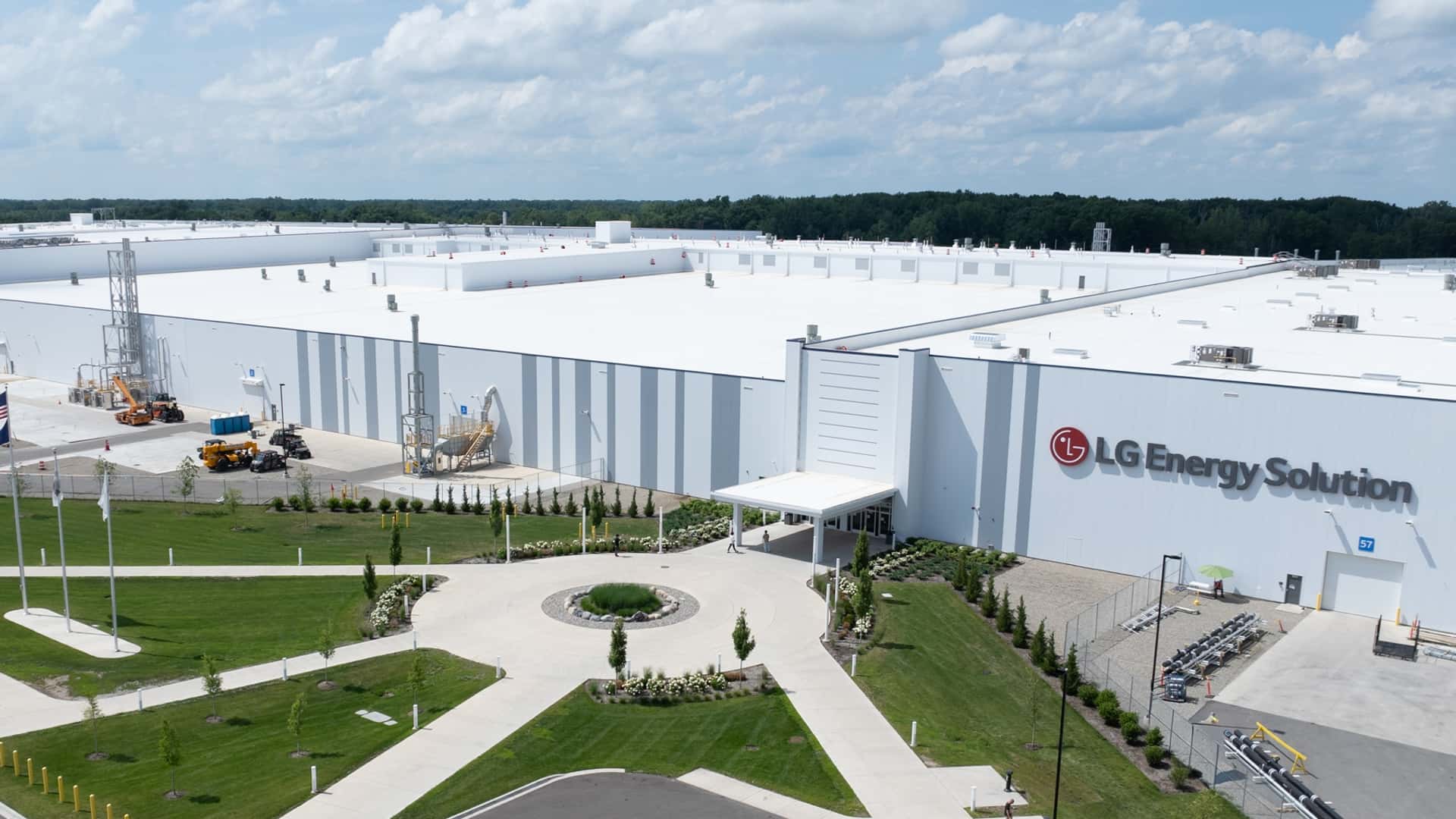
Adding to its expanding footprint, the company inaugurated its $2 billion gigafactory in Lansing, Michigan, in August. This state-of-the-art facility is a cornerstone of LGES’s North American manufacturing strategy, producing energy storage lithium-iron-phosphate (LFP) batteries for Tesla and nickel-manganese-cobalt (NMC) EV batteries for Toyota. The Lansing plant underscores LGES’s dedication to supporting diverse battery chemistries and catering to the specific needs of its major automotive and energy partners.
Navigating a Dynamic Battery Market
The record earnings reported by LG Energy Solution reflect its successful navigation through a dynamic and often challenging global battery market. By diversifying its product offerings across EV and energy storage batteries and strategically expanding its geographic reach and production capabilities, LGES has established a robust foundation for continued growth.
The company’s ability to adapt to regional market fluctuations—such as scaling back North American EV battery production while boosting energy storage—demonstrates a flexible and responsive business model. The continued strong performance in Europe’s EV sector, combined with the escalating demand for grid-scale and data center energy storage in the U.S., positions LGES favorably for the foreseeable future in the critical battery industry.
FAQ Section
What factors contributed to LG Energy Solution’s record Q3 earnings?
LG Energy Solution’s record Q3 earnings were primarily driven by strong demand for electric vehicle batteries in Europe and a significant surge in the U.S. market for stationary energy storage batteries, particularly for data centers and grid upgrades. U.S. Inflation Reduction Act (IRA) credits also provided a notable boost.
How did LGES offset the slowdown in North American EV battery demand?
The company successfully offset the slowdown in North American EV battery production by strategically expanding its focus and investments into stationary energy storage batteries for the U.S. market. This diversification helped balance its overall performance.
What role did the U.S. Inflation Reduction Act play in LGES’s earnings?
The U.S. Inflation Reduction Act provided crucial Section 45X Advanced Manufacturing Production tax credits for domestic battery manufacturing. These credits significantly contributed to LGES’s bottom line by incentivizing its local production efforts in the United States.
Where is LGES expanding its manufacturing capabilities in North America?
LGES is actively expanding in North America. It recently opened a $2 billion gigafactory in Lansing, Michigan, producing batteries for Tesla and Toyota. Additionally, it secured a multi-year lithium supply agreement with Canada’s Elevra Lithium to strengthen its raw material supply chain.
What types of batteries is LGES producing at its new Michigan gigafactory?
At its new Lansing, Michigan gigafactory, LG Energy Solution is producing lithium-iron-phosphate (LFP) batteries specifically for Tesla’s energy storage solutions, and nickel-manganese-cobalt (NMC) electric vehicle batteries for Toyota, catering to diverse client needs.