
Key Takeaways (TL;DR)
- LG Energy Solution (LGES) posted record Q3 earnings, demonstrating robust performance despite North American EV battery market fluctuations.
- The surge is primarily attributed to high demand for stationary energy storage batteries in the U.S. and strong electric vehicle (EV) sales across Europe.
- Significant contributions also stem from battery-manufacturing credits under the U.S. Inflation Reduction Act and compensation from automakers for unfulfilled purchase commitments.
- LGES, a key Tesla supplier, is actively localizing its North American supply chain, exemplified by new raw material agreements and domestic gigafactory operations.
- The company’s strategic pivot and diversified portfolio are proving effective in navigating a dynamic global battery market.
Seoul, South Korea – LG Energy Solution (LGES), a global powerhouse in battery manufacturing and a significant Tesla supplier, has reported an unprecedented quarterly earnings performance, largely propelled by a burgeoning energy storage business in the United States and resilient electric vehicle (EV) battery sales across Europe. The preliminary results, disclosed in a regulatory filing in South Korea on Thursday, paint a picture of strategic adaptation and growth amidst evolving market dynamics.
For the third quarter, the company’s revenue witnessed a substantial 59% year-over-year increase, reaching an impressive $7.21 billion. Concurrently, operating profit saw a commendable 25% rise, settling at $565 million. These preliminary figures underscore LGES’s capacity to navigate a complex global landscape, with full official results anticipated in November.
Shifting Tides: From EV Slowdown to Storage Boom
The past couple of years have presented a disruptive environment for battery manufacturers, particularly in North America. Initial ambitious projections for the EV market faced a reality check, leading to a slower-than-expected sales trajectory and requiring some battery makers to scale back their production plans for electric vehicle batteries.
In response to this shifting landscape, many industry players, including LGES, have strategically re-evaluated their focus. A significant pivot has been made towards tapping into the escalating demand for stationary energy storage batteries, a market segment experiencing rapid expansion.
Strategic Pivot to Stationary Storage
This strategic redirection towards stationary storage systems (ESS) has now begun yielding substantial returns for LG Energy Solution. The demand for these robust energy storage solutions is escalating rapidly, driven by several key factors in the U.S. market.
One primary driver is the exponential growth of power-hungry AI data centers. These facilities require stable, reliable, and large-scale energy storage to ensure uninterrupted operation and to manage their considerable power consumption. Additionally, extensive grid modernization and upgrades across the U.S. are necessitating advanced battery storage technologies to enhance stability, integrate renewable energy sources, and improve overall energy efficiency.
LGES has proactively established local production capabilities for ESS batteries at multiple facilities within the U.S., positioning itself to meet this surging domestic demand directly and efficiently.
Driving Forces Behind Record Performance
Beyond the pivot to stationary storage, several other critical factors have underpinned LG Energy Solution’s impressive Q3 performance. A robust European EV market and supportive legislative measures in the U.S. have played pivotal roles in strengthening the company’s bottom line.
European EV Market Resilience
While the North American EV market presented challenges, Europe has emerged as a stronghold for LGES’s electric vehicle battery business. According to The Korea Herald, the company’s manufacturing plant in Poland has experienced significant demand. This is largely due to the sustained and growing electric vehicle sales by major automotive clients such as Volkswagen and Renault across the European continent.
The consistent uptake of plug-in vehicles in Europe has provided a steady revenue stream and offset some of the market adjustments seen elsewhere, highlighting the diversified nature of global EV adoption and LGES’s ability to capitalize on regional strengths.
Impact of U.S. Manufacturing Credits
A crucial element contributing to LGES’s surge in earnings comes from policy support within the United States. The company has benefited significantly from battery-manufacturing credits provided through the U.S. Inflation Reduction Act (IRA).
The IRA, a landmark piece of legislation, includes Section 45X Advanced Manufacturing Production tax credits. These credits are designed to incentivize domestic manufacturing of clean energy components, including battery cells and modules. For LGES, as a major Tesla supplier and a key player in the U.S. battery ecosystem, these credits provide a substantial financial boost, enhancing the profitability of its U.S.-based production. Importantly, these specific manufacturing credits are slated to remain available through 2032, providing long-term stability and incentives for domestic battery production.
Furthermore, the company also received compensation from various automakers. These compensations were a result of these manufacturers failing to meet predetermined minimum purchase requirements for EV batteries, further bolstering LGES’s financial performance.
Strengthening North American Supply Chains
In a strategic move to enhance its resilience and capitalize on the growing North American market, LG Energy Solution is actively working to localize and fortify its battery supply chain within the region. This involves securing critical raw materials and expanding domestic manufacturing capabilities.
Raw Material Security and Domestic Production
Demonstrating its commitment to regional self-sufficiency, LGES recently solidified a multi-year offtake agreement with Canada’s Electra Lithium. This crucial deal, signed on Thursday, ensures that LGES will receive 240,000 metric tonnes of raw lithium concentrate from Electra’s mining operations in Quebec. Such agreements are vital for securing the foundational components required for advanced battery manufacturing, mitigating supply chain risks, and supporting regional economic development.
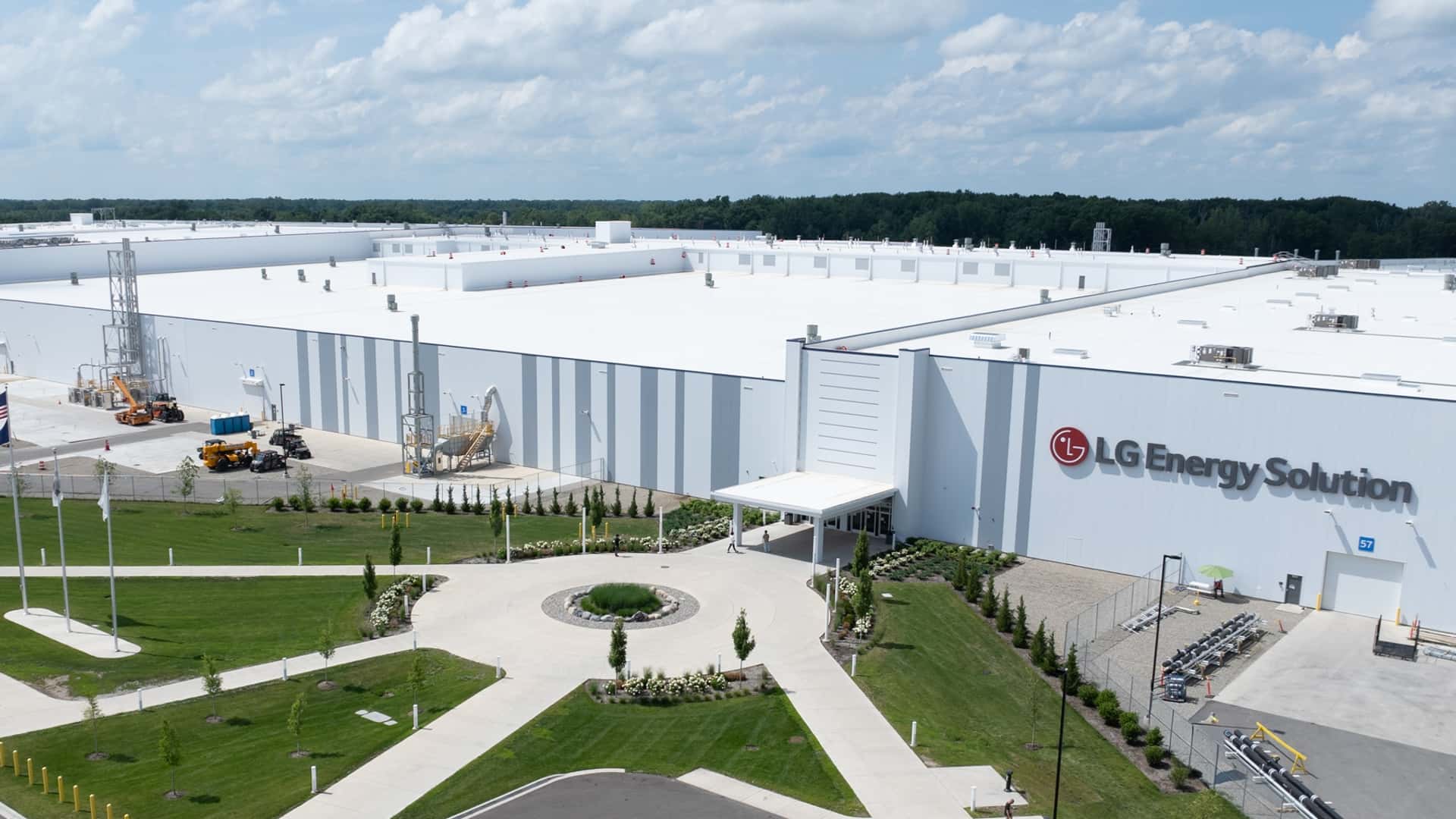
Concurrently, in August, the company marked a significant milestone with the opening of its $2 billion gigafactory in Lansing, Michigan. This state-of-the-art facility is pivotal to LGES’s North American strategy. Here, the company is producing advanced lithium-iron-phosphate (LFP) batteries specifically for Tesla’s energy storage solutions, alongside nickel-manganese-cobalt (NMC) EV batteries tailored for Toyota’s electric vehicle lineup. The Michigan gigafactory exemplifies LGES’s dedication to meeting localized demand with cutting-edge battery technology, further solidifying its position as a critical Tesla supplier and a leader in the battery sector.
Looking Ahead: Sustaining Growth
LG Energy Solution’s record-breaking third-quarter performance highlights a successful strategy of diversification and regional optimization. By adeptly pivoting towards the high-demand energy storage market in the U.S. and leveraging consistent growth in the European EV sector, the company has effectively mitigated challenges in other areas.
The ongoing commitment to strengthening North American supply chains, combined with the beneficial impact of government incentives like the Inflation Reduction Act, positions LGES for continued expansion. As a vital Tesla supplier and a key partner to numerous global automotive brands, LGES is poised to remain at the forefront of the global battery industry, driving innovation and sustainable energy solutions worldwide.
Frequently Asked Questions (FAQ)
Q1: What were LG Energy Solution’s key financial results for Q3?
LG Energy Solution reported a 59% year-over-year revenue increase to $7.21 billion and a 25% rise in operating profit to $565 million for the third quarter, as per preliminary regulatory filings in South Korea.
Q2: What primarily drove LGES’s record earnings?
The record earnings were primarily driven by strong demand for stationary energy storage batteries in the U.S., propelled by AI data centers and grid upgrades, coupled with robust electric vehicle (EV) battery sales in the European market.
Q3: How did U.S. policies contribute to LGES’s performance?
The U.S. Inflation Reduction Act played a significant role by providing Section 45X Advanced Manufacturing Production tax credits for domestic battery manufacturing. Additionally, compensation from automakers for not meeting EV battery purchase requirements also boosted earnings.
Q4: Why is there high demand for energy storage batteries in the U.S.?
Demand for energy storage systems (ESS) in the U.S. is high due to the escalating power needs of new AI data centers and ongoing nationwide efforts to upgrade and modernize the electrical grid infrastructure.
Q5: How is LGES strengthening its North American supply chain?
LGES is strengthening its North American supply chain by signing raw material agreements, such as with Canada’s Electra Lithium for 240,000 metric tonnes of lithium concentrate, and by expanding domestic manufacturing like its $2 billion gigafactory in Lansing, Michigan.
Q6: Which automakers are supplied by LGES’s Michigan gigafactory?
The $2 billion gigafactory in Lansing, Michigan, produces lithium-iron-phosphate (LFP) batteries for Tesla’s energy storage systems and nickel-manganese-cobalt (NMC) EV batteries for Toyota.
Q7: What is the significance of the European market for LGES?
The European market remains a vital area for LGES, with its Poland plant experiencing strong demand for EV batteries from automakers like Volkswagen and Renault, contributing significantly to the company’s overall sales.