
Key Takeaways:
- The Paris Auto Show has transformed from a sparsely attended event in 2022 to a vibrant showcase of electric vehicle innovation in 2026.
- Chinese automakers, initially seen as disruptors, have cemented their presence in Europe, often by offering compelling affordable EV choices.
- European brands, once hesitant, have launched an aggressive counter-offensive with new, budget-friendly electric models and strategic concepts.
- Collaboration and investment from Chinese firms in European manufacturing bases signal a shift towards deeper integration within the global electric vehicle market.
- The rapid development cycles and focus on accessible electrification in Europe stand in stark contrast to the comparatively slower progress in the United States concerning affordable EV choices.
The global automotive landscape, particularly concerning electric vehicles, is witnessing a profound transformation. What was once perceived as a waning event in 2022, the Paris Auto Show has re-emerged in 2026 as a pivotal battleground, showcasing fierce competition and collaborative innovation between European and Chinese manufacturers. This year’s exhibition underscores a critical shift: the pursuit of widespread electrification, driven by a burgeoning demand for affordable EV choices, is now a global imperative, with Europe leading a spirited fight for market share.
The evolution from a lacklustre gathering just four years ago to a dynamic display of cutting-edge technology and strategic vision highlights a renewed sense of urgency. European automakers, initially slow to adapt to the rapid influx of competitive Chinese electric vehicles, have demonstrably recalibrated their strategies, presenting a unified front against what was once an unchecked challenge.
The 2022 Turning Point: Chinese Innovation Meets European Apathy
Only four years ago, the atmosphere surrounding the Paris Auto Show was notably different. Many established European brands, including major players like Mercedes-Benz, opted to forgo an official presence, choosing instead to unveil new models, such as the EQE SUV, at alternative venues like the Musée Rodin. This absence contributed to a prevailing sentiment that the traditional auto show model was in decline, mirroring similar trends observed in the United States.
Amidst this perceived stagnation, a new force began to assert itself. Chinese automakers, largely unknown to the broader European public at the time, seized the opportunity. Brands such as BYD and Great Wall Motors, through its sub-brands Ora and WEY, arrived in Paris with a compelling array of new electric vehicle (EV) and plug-in hybrid electric vehicle (PHEV) models.
These offerings were not merely aspirational concepts; they were practical, relatively affordable EV choices, primarily consisting of small hatchbacks and crossovers. Crucially, they offered impressive range capabilities for their price point, directly addressing a critical segment of buyers that existing European manufacturers had largely overlooked: the value-conscious consumer actively seeking an electrified vehicle.
The reception from French attendees was markedly positive, a clear signal of unmet market demand. This interest, at times to the visible consternation of long-standing European automotive giants, demonstrated that Chinese manufacturers had identified and successfully tapped into a vital niche, setting the stage for significant inroads into the European electric vehicle market.
Chinese Automakers Solidify European Foothold
Following their initial foray in 2022, Chinese automotive brands and their diverse EV portfolios have successfully expanded their presence across the European continent. Their strategy centred on providing accessible and affordable EV choices, effectively disrupting a market where premium electric vehicles were dominant and entry-level options were scarce.
This strategic positioning allowed them to rapidly capture a segment of buyers eager to embrace electrification without incurring prohibitive costs. The success of these Chinese models underscored a fundamental shift in consumer priorities, highlighting the importance of balancing innovation with affordability in the transition to sustainable transport solutions.
Europe’s Resurgent Strategy: The 2026 Paris Auto Show
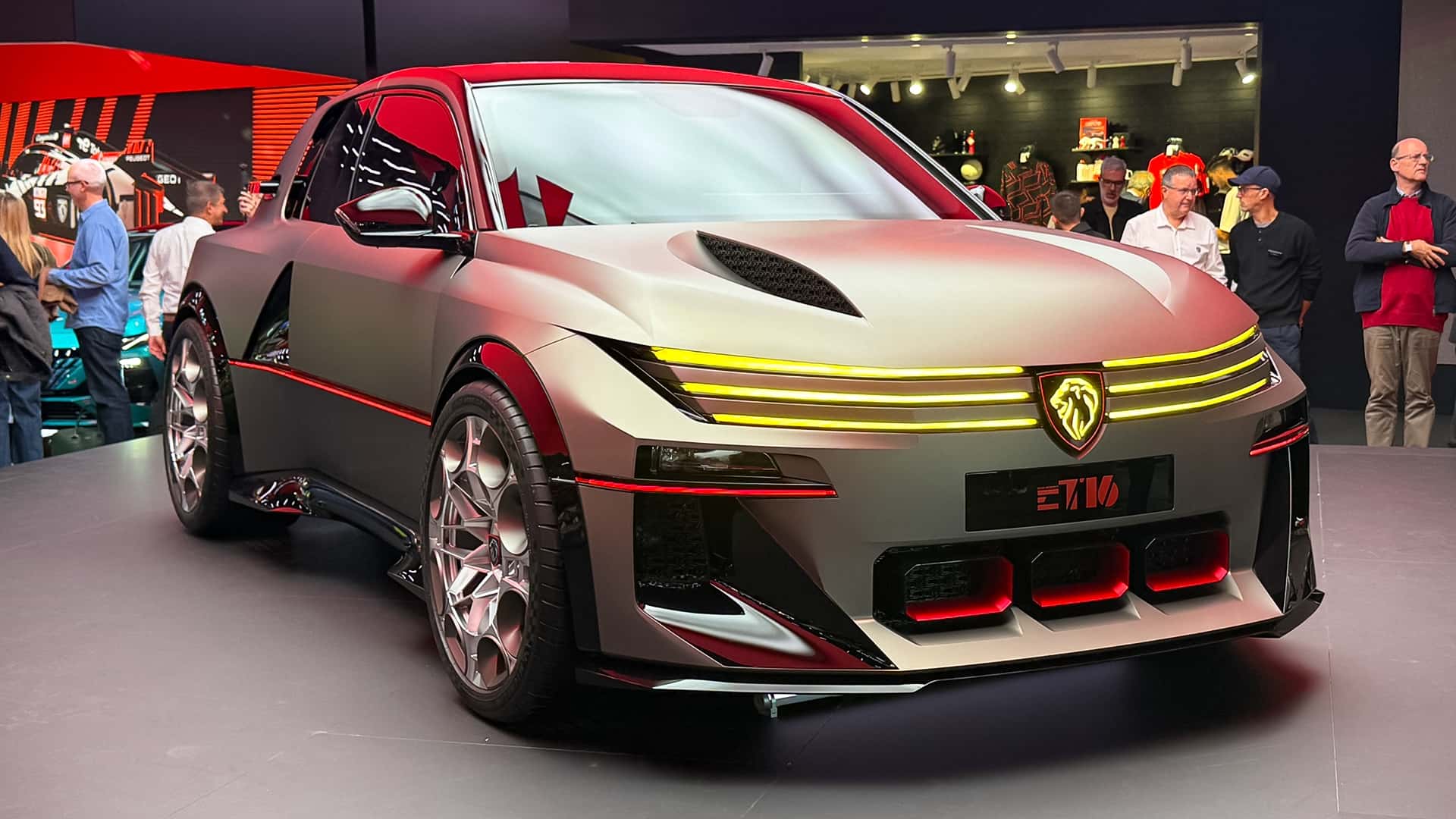
Fast forward to 2026, and the narrative has undergone a complete reversal. The Paris Auto Show this year has become a vibrant testament to Europe’s determination to compete aggressively in the evolving electric vehicle market. The exhibition was characterized by an overwhelming showcase of new models and innovative concepts, signalling a robust re-engagement from European automakers.
This renewed vigor suggests that European brands are no longer content to cede ground. Instead, they are actively challenging the status quo, pushing the boundaries of design, technology, and, crucially, affordability, to reclaim their position in the global automotive industry.
Renault Group’s Vision: “Voitures à vivre” Reimagined for Electrification
Renault Group, a prominent force in the European automotive industry, made a significant statement at the 2026 Paris Auto Show. The company impressed attendees with its production models from Dacia and unveiled visionary concepts from its Alpine and Renault brands, all geared towards a fully electrified future.
A notable highlight was the Renault E-Space concept, an electric Multi-Purpose Vehicle (MPV) that elegantly referenced the iconic original Renault Espace design from the 1980s. This concept, along with others showcased by the group, firmly positioned electrification at the core of their future strategy. Fabrice Cambolive, Renault Group Chief Growth Officer, articulated this philosophy as “Voitures à vivre”, or “cars for living,” emphasizing vehicles designed to seamlessly integrate electrification into everyday life.
The group is openly exploring how electrification can address emerging consumer needs and redefine the direction for its diverse portfolio of brands. This approach signals a holistic commitment to developing affordable EV choices and practical mobility solutions for a broad customer base.
Stellantis and the Allure of Affordable Electric Mobility
Similarly, the Stellantis conglomerate showcased a compelling array of concepts from its various European brands, with a strong emphasis on electric vehicle models. The overarching strategy among European automakers appears to be a direct effort to counter Chinese competition by meeting the escalating demand for reasonably-priced EVs through vehicles that are both economical and appealing.
Perhaps the most captivating reveal from Stellantis was the Citroën 2CV concept. This modern reinterpretation successfully captured the inherent charm of its legendary predecessor, offering a retro-inspired design at an ambitious target price of 15,000 euros, equivalent to just under $17,000 at current exchange rates. The 2CV concept stands as a powerful symbol of the burgeoning focus on affordable EV choices from European brands.
Upon its eventual market launch, the Citroën 2CV will join a growing roster of budget-friendly European electric vehicles. This expanding list includes models such as the Renault Twingo, Dacia Spring, Nissan Pixo, Kia EV2, and Volkswagen ID. Polo. This rapid proliferation of new nameplates, many of which did not exist or were not publicly conceived during the 2022 show, signals a robust and concerted effort by European manufacturers to saturate the market with accessible electric options.
Chinese Presence: Integration and Investment, Not Just Exports
The 2026 Paris Auto Show also saw Chinese brands return in full force, with an estimated 25 different manufacturers exhibiting models across various price ranges. However, this robust presence is no longer viewed solely as a looming threat of market disruption. A significant shift in strategy is evident, with several leading Chinese automotive companies committing to substantial investments in Europe’s manufacturing infrastructure.
Giants like BYD, Geely, and Xpeng have announced plans for deep integration into the European production ecosystem. Xpeng, for instance, has reported an impressive 12,000 orders for its L03 compact crossover since its summer launch, with production slated to take place in Austria by Magna-Steyr. This strategic move highlights a progression beyond mere exports, signaling a commitment to local job creation, technology transfer, and deeper engagement with the European electric vehicle market.
Analyst and consultant Lei Xing offered a comprehensive summary of the evolving dynamics observed at this year’s event. “If I had to summarize this year’s Paris Motor Show, it would be hope, introspection, and integration. European brands are trying hard, and they are starting to figure some things out, even if it means the Chinese providing a compromise in terms of halving the hybrid/plug-in export volume but at the same time getting help from the Chinese,” Xing stated via email, underscoring a nuanced relationship of competition and cooperation.
Strategic Collaborations and Accelerated Development Cycles
The evolving relationship between Chinese and European automakers extends beyond direct competition to strategic collaborations. Companies like Leapmotor are emerging as crucial partners, sharing their expertise and accelerated development methodologies with long-standing European brands. Reuters reported that Antonio Filosa, head of Stellantis Pro One, indicated that working with Leapmotor has fostered a complementary relationship, where Leapmotor’s speed and specialized knowledge have been invaluable to the conglomerate’s efforts to rapidly produce models and meet market demand for affordable EV choices.
This collaborative spirit was evident with the debut of the Leapmotor B03 hatchback at the Paris Auto Show, complementing its B03X small crossover sibling. Both models were launched in Europe mere weeks after their Chinese counterparts, demonstrating a remarkable acceleration in market rollout. Similarly, the Dacia Spring, a product of the Renault Group, was developed and brought to market in less than two years.
These examples underscore a critical trend: the entire automotive industry is learning from accelerated timelines and adopting more agile development processes. This rapid pace is essential for meeting consumer expectations and effectively competing in a dynamic global electric vehicle market, particularly in the battle to offer compelling and affordable EV choices to a mass audience.
Global Implications: The U.S. lags on Affordable EV Choices
From an international perspective, the proactive stance of Europe in fostering a diverse range of affordable EV choices presents a stark contrast to the current situation in the United States. While European consumers are now witnessing an explosion of accessible electric vehicle options, the American market continues to grapple with a comparatively limited selection, particularly in the lower price segments.
Historically, much of the global discourse surrounding affordable EV choices has centred predominantly on China, a nation that continues to lead in this crucial area. However, the developments at the 2026 Paris Auto Show signal a broadening of the landscape. It finally feels as though there is a genuinely robust and serious selection of electrified vehicles emerging from a wider array of international manufacturers, extending beyond Chinese dominance.
This escalating global competition and the concerted effort to produce more accessible electric vehicles represent a significant positive development for both consumers and the environment. The widespread availability of affordable EV choices is paramount for accelerating the transition to sustainable transportation, reducing carbon emissions, and combating climate change. There is a palpable hope that this heightened sense of urgency and commitment to developing and deploying affordable electric mobility solutions will soon resonate and translate into similar progress within the U.S. market.
FAQ Section
Q1: What significant change occurred at the Paris Auto Show between 2022 and 2026?
A1: The show transformed from a sparsely attended event, largely ignored by European brands in 2022, into a vibrant and highly competitive platform in 2026, showcasing aggressive strategies by both European and Chinese automakers in the electric vehicle market.
Q2: How did Chinese automakers initially enter the European market?
A2: In 2022, Chinese brands like BYD and Great Wall Motors capitalized on European brands’ absence by introducing a range of affordable EV choices, primarily small hatchbacks and crossovers, which met the demand of value-conscious buyers.
Q3: What is Europe’s strategy to counter Chinese EV dominance?
A3: European automakers are focusing on launching their own range of reasonably-priced electric vehicles, such as the Citroën 2CV concept priced around €15,000, and accelerating development timelines to meet consumer demand for affordable EV choices.
Q4: How are Chinese brands evolving their presence in Europe beyond exports?
A4: Major Chinese manufacturers like BYD, Geely, and Xpeng are investing significantly in Europe’s manufacturing base, planning to produce vehicles locally, which signals a deeper integration into the European automotive industry rather than just exporting.
Q5: What role do collaborations play in Europe’s EV strategy?
A5: European brands are engaging in strategic partnerships, such as Stellantis working with Leapmotor, to leverage Chinese expertise and speed in manufacturing. This allows for faster development and market introduction of new affordable EV choices.
Q6: Why is the U.S. market considered to be lagging in affordable EV choices?
A6: Unlike Europe, which is now seeing a wide variety of budget-friendly electric vehicles, the U.S. market continues to have a limited selection of accessible EV options, primarily in higher price segments, leading to a slower adoption rate for mass consumers.
Q7: What does the analyst Lei Xing say about the 2026 Paris Motor Show?
A7: Lei Xing summarized the 2026 show as a period of “hope, introspection, and integration,” noting that European brands are “starting to figure some things out,” even if it involves a degree of cooperation or compromise with Chinese manufacturers.
Q8: What is the ‘Voitures à vivre’ philosophy by Renault?
A8: Renault Group’s ‘Voitures à vivre’ concept, meaning ‘cars for living,’ defines vehicles built to seamlessly integrate electrification into everyday life, exploring how electric mobility can answer new questions about future transportation needs and consumer lifestyles.