
Key Takeaways (TL;DR)
- The 2026 Paris Auto Show marks a significant turning point in the global electric vehicle (EV) landscape, particularly within the European EV market.
- Unlike the 2022 event, where Chinese automakers largely dominated the affordable EV segment, European manufacturers showcased a robust and diverse array of new electrified models and concepts.
- Major European groups like Renault and Stellantis unveiled affordable, charming EVs designed to appeal to value-conscious buyers, directly challenging the once-uncontested Chinese lead.
- Chinese brands maintained a strong presence, demonstrating increased investment in European manufacturing and forging strategic collaborations with established European players.
- The heightened competition and accelerated development timelines are fostering a healthier, more diverse global EV market, though the affordable EV segment in the U.S. continues to lag behind.
PARIS – Four years after a subdued Paris Auto Show in 2022, which saw many European automotive giants conspicuously absent or presenting minimal innovations, the 2026 iteration has unfolded as a vibrant spectacle of electrified ambition. This year, the renowned exhibition has become a battleground of innovation, with both established European powerhouses and aggressive Chinese challengers bringing their A-game, fundamentally reshaping the trajectory of the European EV market.
The sentiment prevalent in 2022 was one of decline for traditional auto shows, mirroring trends observed in the United States. Major European brands, including Mercedes-Benz, opted for off-site reveals, leaving a significant void. Amidst this backdrop, Chinese manufacturers stepped into the spotlight, showcasing a range of new electric and plug-in hybrid (PHEV) models designed specifically for European consumers. These vehicles, often smaller, more affordable, and offering competitive range, began to capture the attention of a segment that traditional European automakers had largely overlooked: the value-conscious buyer seeking electrification.
The Pivotal Shift: From 2022’s Absence to 2026’s Resurgence
The 2022 Paris Auto Show served as a crucial precursor, highlighting a nascent but potent challenge from the East. Brands like BYD and Great Wall Motors, through its Ora and WEY sub-brands, made their debut on the Parisian stage. Their offerings of compact hatchbacks and crossovers, which were both relatively affordable and boasted impressive electric range, quickly piqued the interest of the French public, much to the disquiet of their European counterparts.
This early incursion allowed Chinese automakers to make substantial inroads into the European EV market. They successfully identified and catered to a demand for accessible electrified vehicles that existing manufacturers struggled to meet. This strategic advantage underscored a period where, from an outsider’s perspective, the European automotive industry appeared to be losing ground in the race for mass EV adoption.
Europe’s Renewed Commitment to Electrification
Fast forward to 2026, and the narrative has dramatically shifted. The prevailing mood at this year’s Paris Auto Show is one of fierce determination and robust competition. What was once perceived as a floundering industry, particularly in the EV sector, has now ignited with renewed vigor, directly challenging the strong foothold established by Chinese brands.
Renault Group’s Vision: ‘Voitures à vivre’ for an Electric Future
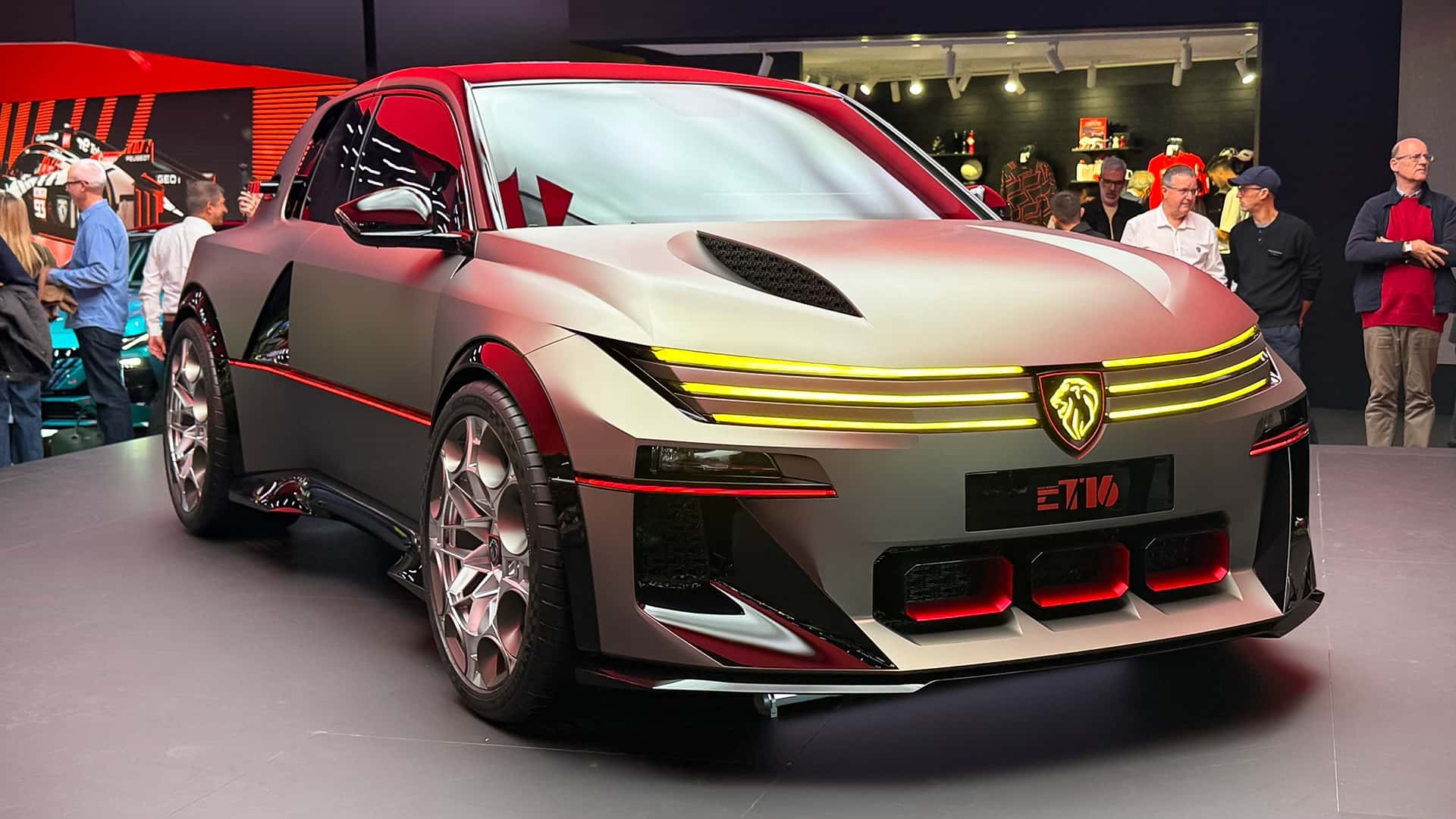
The Renault Group, a cornerstone of European automotive manufacturing, delivered a striking display of its commitment to an electrified future. The company unveiled an impressive lineup of production models from Dacia, alongside forward-looking concepts from Alpine and Renault itself. A notable highlight was the Renault E-Space concept, an electric MPV that skillfully harked back to the iconic original Renault Espace design from the 1980s, demonstrating a blend of heritage and future-forward thinking.
All concepts presented by the Renault Group were definitively electrified, emphasizing a unified strategic direction. Fabrice Cambolive, Renault Group Chief Growth Officer, articulated this philosophy as “Voitures à vivre” – or “cars for living.” This concept centers on designing vehicles where electrification seamlessly integrates into daily life, with the company actively exploring how this paradigm shift can redefine the future direction of its diverse brands within the evolving European EV market.
Stellantis Drives Towards Affordable EV Accessibility
Similarly, Stellantis showcased a comprehensive collection of EV concepts across its European brands, underscoring a collective effort to directly counter the growing influence of Chinese manufacturers. The overarching strategy for European automakers is now clear: to meet the surging demand for reasonably-priced electric vehicles with models that are both economical and appealing.
The Citroën 2CV concept emerged as a particular showstopper, successfully recapturing the endearing charm of its iconic predecessor. Critically, this concept is targeting an accessible price point of 15,000 euros, translating to just under $17,000 at current exchange rates. The potential market entry of the 2CV concept exemplifies a broader trend, poised to join a growing roster of affordable European EV options. This new wave includes models such as the Renault Twingo, Dacia Spring, Nissan Pixo, Kia EV2, and the Volkswagen ID. Polo – a diverse array of nameplates that were either non-existent or mere whispers during the 2022 exhibition.
Chinese Expansion and Strategic Collaborations in Europe
While European brands demonstrated a strong offensive, Chinese automakers were undeniably present in full force at the 2026 Paris Auto Show. An estimated 25 different Chinese brands presented models spanning all price ranges, signaling their continued, deep commitment to the European EV market. However, this robust presence is not necessarily indicative of a market meltdown for European players, but rather a complex dynamic of competition and collaboration.
Investing in Europe’s Manufacturing Future
Crucially, several leading Chinese manufacturers, including BYD, Geely, and Xpeng, have initiated concrete plans to significantly invest in Europe’s existing manufacturing base. This strategic move suggests a long-term commitment beyond mere exports, aiming to localize production and integrate more deeply into the European economic fabric. Xpeng, for instance, reported an impressive 12,000 orders for its L03 compact crossover since its summer launch. Furthermore, the L03 is slated for production in Austria by Magna-Steyr, highlighting a significant joint venture that benefits both Chinese innovation and European manufacturing expertise.
Analyst and consultant Lei Xing offered a concise summary of the 2026 Paris Motor Show, noting, “If I had to summarize this year’s Paris Motor Show, it would be hope, introspection, and integration. European brands are trying hard, and they are starting to figure some things out, even if it means the Chinese providing a compromise in terms of halving the hybrid/plug-in export volume but at the same time getting help from the Chinese.” This insight underscores a new phase of market evolution, characterized by both competitive spirit and pragmatic cooperation.
Leapmotor’s Role in Accelerating European EV Development
This dynamic of integration extends to technology transfer and accelerated development. Some Chinese brands are effectively serving as catalysts for their longstanding European counterparts. Reports from Reuters, citing Antonio Filosa, head of Stellantis Pro One, indicate that working with Leapmotor has fostered a complementary relationship. Leapmotor’s agility and specialized expertise have proven invaluable to the conglomerate, enabling a swifter response to market demands for rapidly manufactured EV models.
The 2026 Paris Auto Show notably featured the debut of the Leapmotor B03 hatchback, complementing its B03X small crossover sibling. Both models were launched mere weeks after their Chinese market counterparts, showcasing an unprecedented speed-to-market. This rapid deployment mirrors the development trajectory of the newly released Dacia Spring, which was brought to market in less than two years. These accelerated timelines across the board reflect a collective learning curve and an urgent drive to meet consumer needs head-on, effectively challenging the dominance of early Chinese entrants in the affordable European EV market.
A Divergent Path: The US Market and Global Implications
From a transatlantic perspective, the vibrant competition and burgeoning availability of affordable EV choices in Europe present a stark contrast to the comparatively stagnant offerings in the United States. While the discourse around affordable EVs has historically been dominated by China – and for good reason, given their early lead – the 2026 Paris Auto Show signals a crucial diversification.
The global landscape now boasts a genuine, expansive selection of electrified vehicles from a multitude of manufacturers beyond China. This heightened level of competition is ultimately beneficial for consumers, offering greater choice and potentially driving down costs. Furthermore, it holds profound positive implications for environmental sustainability through accelerated EV adoption. The urgent momentum witnessed in the European EV market provides a clear blueprint and a hopeful precedent for a similar shift to occur in the U.S. market in the foreseeable future.
FAQ Section
Q1: What was the key difference between the 2022 and 2026 Paris Auto Shows regarding EVs?
In 2022, European brands were largely absent or showed minor updates, allowing Chinese automakers to introduce affordable EV and PHEV models. By 2026, European manufacturers showcased a comprehensive range of new electrified models and concepts, directly challenging Chinese dominance in the European EV market.
Q2: Which European brands demonstrated a strong comeback at the 2026 show?
Renault Group, with its Dacia and Alpine brands, emphasized “Voitures à vivre” with electrified concepts and production models. Stellantis also unveiled numerous EV concepts across its European brands, notably the affordable Citroën 2CV concept, signaling a concerted effort to compete.
Q3: How are Chinese automakers responding to the intensified competition in Europe?
Chinese brands remain a strong presence, with an estimated 25 companies showcasing models. Many, like BYD, Geely, and Xpeng, are investing heavily in Europe’s manufacturing infrastructure, with Xpeng planning L03 production in Austria. This indicates a long-term commitment and integration into the European EV market.
Q4: What role do partnerships play between Chinese and European companies?
Collaborations are emerging, such as Stellantis working with Leapmotor. Analyst Lei Xing highlights this as an “integration” phase, where European brands can gain speed and expertise from Chinese partners. This mutual learning is accelerating development timelines, as seen with models like the Dacia Spring and Leapmotor B03.
Q5: Why is the availability of affordable EVs in Europe significant for the global market?
The surge in affordable EV options from diverse manufacturers in Europe signifies a maturing global EV market beyond China’s initial lead. This increased competition benefits consumers with more choices and lower costs, fostering greater environmental sustainability through wider EV adoption. It also sets an example for other regions, including the U.S.