
Key Takeaways
The upcoming Tesla Roadster is set to redefine electric vehicle performance with its highly advanced battery pack, engineered for extreme power density and rapid charging. Unlike Tesla’s mass-market models, this battery prioritises raw performance and quick energy delivery. Featuring in-house developed 4680 cylindrical cells with bespoke chemistry, the Roadster’s battery boasts a sophisticated double-sided thermal management system. This innovation, coupled with lightweight aluminum and titanium construction, facilitates a remarkable 15-85% charge in approximately 10 minutes, making it one of the fastest-charging EVs globally. While exact specifications for charging speed and voltage architecture remain broad, the technology signifies a leap forward in automotive battery innovation, with potential future implications for mainstream electric vehicles.
The Heart of Hyper-Performance: Tesla Roadster’s Groundbreaking Battery
While the highly anticipated Tesla Roadster has garnered significant attention for its futuristic SpaceX-developed cold gas thrusters and powerful suction systems, the core of its promised on-road prowess lies in its fundamental electric vehicle (EV) technology. Central to this is Tesla’s most advanced high-voltage battery pack to date, designed to deliver unparalleled performance.
This cutting-edge battery is not merely an incremental upgrade; it represents a culmination of decades of engineering expertise. Lars Moravy, Tesla’s vice president of engineering, elaborated on this achievement, stating, “It’s everything we learned at Tesla for 20+ years making electric vehicles put into one,” in an interview with *Hagerty*’s Henry Catchpole. This commitment to innovation underpins the Tesla Roadster’s ambition to set new benchmarks in the electric supercar segment.
Engineering for Extreme Power: Prioritising Performance Over Longevity
The battery pack’s exact capacity remains undisclosed. However, Tesla has confirmed it will provide a substantial range exceeding 300 miles. Crucially, its design prioritises exceptional charging and discharging capabilities, distinguishing it from the company’s existing offerings.
In contrast to the battery packs found in mass-market models like the Tesla Model Y and Model 3, which are primarily engineered for extended longevity and daily usability, the Tesla Roadster’s cells are specifically optimised for power density and raw performance. This strategic shift reflects the demanding requirements of a high-performance supercar, where instantaneous power delivery and rapid energy replenishment are paramount.

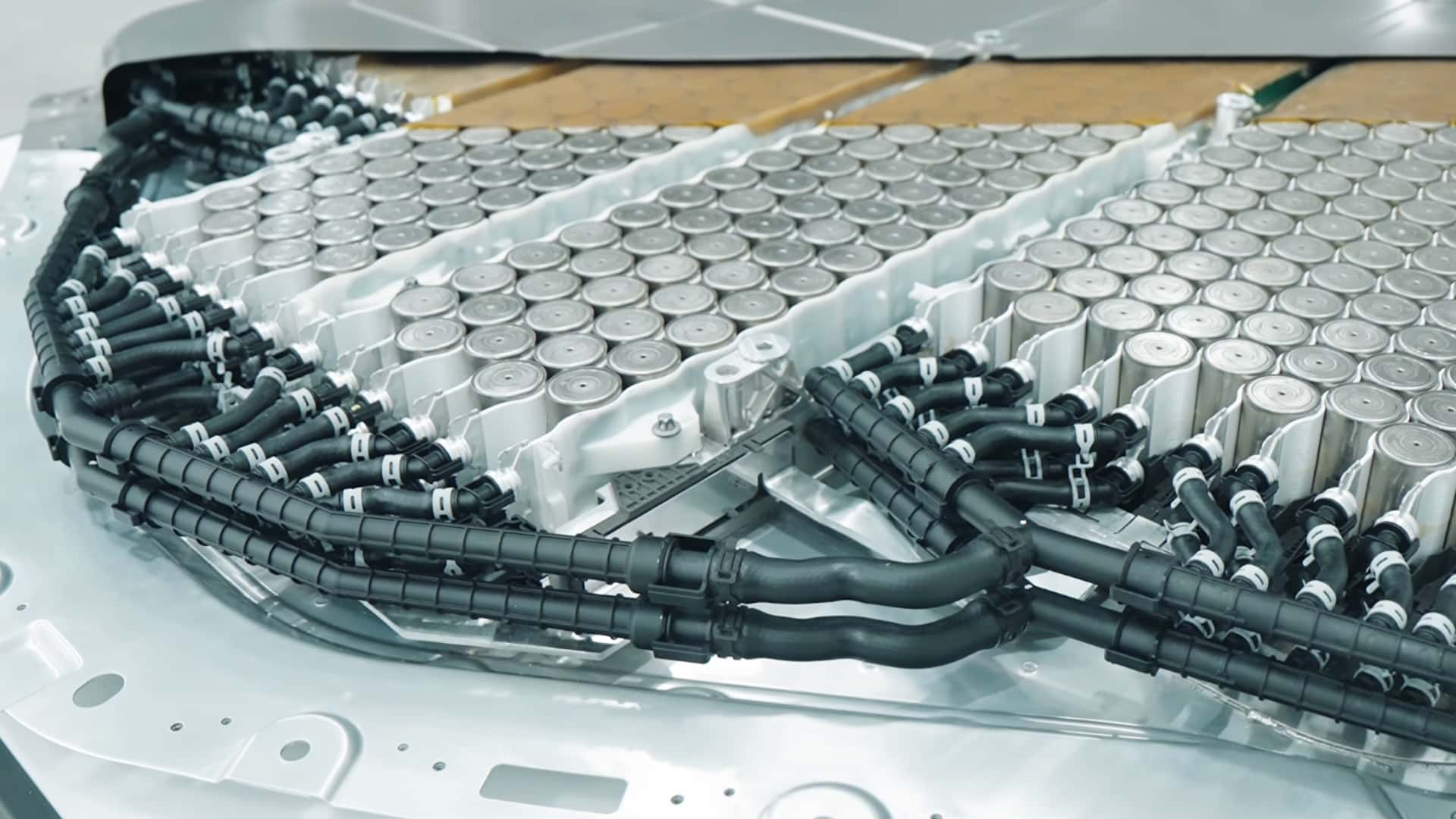
At the core of this advanced system are Tesla’s in-house developed 4680 cylindrical cells. Moravy, in a *Top Gear* video, described the battery as featuring a “bespoke chemistry for high power throughput.” He clarified that despite its specialised nature, the materials remain lithium-ion and nickel-based, adhering to established, high-energy battery compositions.
Mastering Heat: A Revolutionary Thermal Management System
One of the most critical challenges in high-performance electric vehicles is managing the immense heat generated by rapid energy discharge and recharge cycles. The Tesla Roadster’s dual rear motors collectively generate a staggering peak output of 1,341 horsepower and 1,032 pound-feet of torque on its top trim. Such extreme power output inevitably leads to rapid temperature increases within the battery cells, necessitating an exceptionally robust cooling system.
To effectively mitigate this thermal challenge, Tesla has implemented an innovative thermal management system. Moravy detailed that the company employs double-sided coolant tubes for each individual cell. This advanced configuration ensures maximum surface contact with the cooling medium, allowing for superior heat dissipation compared to conventional single-sided cooling approaches. Efficient thermal management is vital for maintaining optimal battery performance, ensuring safety, and extending the lifespan of the high-power cells under strenuous operating conditions.
Further enhancing the thermal efficiency and overall weight of the battery pack, the cells themselves are encased in aluminum cans. Moravy noted that aluminum offers a significant advantage over steel cans due to its lighter weight and superior ability to dissipate heat. This material choice directly contributes to both the performance and structural integrity of the battery.
The protection of the battery pack also features advanced material science. A titanium upper plate covers the entire pack, chosen for its lighter weight and thinner profile compared to traditional steel, while simultaneously offering enhanced thermal insulation. For impact resistance, particularly on the vehicle’s underbody, the lower plate continues to be constructed from robust aluminum, balancing protection with weight considerations. These material innovations collectively allow the cells to not only discharge power at an incredibly rapid rate but also to recharge within a matter of minutes, a crucial attribute for any high-performance electric vehicle.
Redefining Rapid Charging for the Tesla Roadster
The Tesla Roadster is poised to redefine expectations for electric vehicle charging speeds. Moravy indicated that the supercar will be capable of charging from 15% to 85% in approximately 10 minutes. This places the Tesla Roadster at the forefront of fast-charging technology among Western automakers, showcasing a significant leap in EV infrastructure capability.
To put this into perspective, the new battery-powered Mercedes-AMG GT demonstrates similar capabilities, achieving an 11-80% charge in just 11 minutes, primarily due to its peak charging rate of 600 kilowatts. In comparison, typical charging times for the latest high-end electric vehicles usually fall within the range of 16-20 minutes for a 10-80% charge.
While the precise peak charging speed for the Tesla Roadster has not been definitively stated, Moravy provided a broad estimate, suggesting it could handle anywhere between 500 kW and a megawatt (1,000 kW). This wide range indicates the ambition for extreme power delivery. Similarly, the exact voltage architecture of the battery remains somewhat ambiguous, with Tesla specifying it will be somewhere between 800 and 1,000 volts. These high-voltage systems are fundamental to achieving ultra-rapid charging, minimising heat loss, and optimising the efficiency of the power transfer.
Implications and Future Outlook for Advanced Battery Technology
The engineering marvels integrated into the Tesla Roadster’s battery pack underscore Tesla’s commitment to pushing the boundaries of electric vehicle technology. While the vehicle itself is positioned as a high-priced, exclusive supercar, the innovations embedded within its power source have broader implications for the automotive industry.
The development of such advanced battery technology, particularly in areas like power density, thermal management, and ultra-fast charging, is crucial for the continued evolution of electric mobility. There is considerable anticipation that some of these groundbreaking technologies and lessons learned from the Tesla Roadster project will eventually trickle down into Tesla’s more mass-market electric vehicle offerings. Such advancements would not only enhance performance across the product line but also improve the practicality and appeal of EVs for a wider consumer base, further accelerating the global transition to sustainable transportation.
FAQ Section
Q1: What makes the Tesla Roadster’s battery unique?
A1: The Tesla Roadster’s battery is uniquely engineered for high power density and performance, unlike mass-market models focused on longevity. It uses in-house developed 4680 cylindrical cells with a bespoke chemistry and an advanced double-sided coolant tube thermal management system, ensuring rapid discharge and charge capabilities crucial for a supercar.
Q2: How does the Roadster’s battery compare to other Tesla models?
A2: While batteries in models like the Model Y and Model 3 prioritise longevity, the Tesla Roadster’s battery focuses on power density and extreme performance. It integrates 20+ years of Tesla’s EV learning into a pack designed for intense power throughput, acceleration, and ultra-fast charging, showcasing a distinct engineering philosophy.
Q3: What is the estimated charging time for the Tesla Roadster?
A3: Tesla states the Roadster will charge from 15% to 85% in approximately 10 minutes. This remarkable speed places it among the fastest-charging electric vehicles currently available, driven by its advanced battery chemistry, robust thermal management, and high-voltage architecture.
Q4: What role does thermal management play in the Roadster’s battery?
A4: Thermal management is critical for the Tesla Roadster’s high-performance battery. It uses double-sided coolant tubes for each cell and lightweight aluminum cans to dissipate heat efficiently. This system prevents overheating during rapid discharge and charge cycles, maintaining optimal performance, safety, and battery health.
Q5: What are 4680 cylindrical cells, and why are they used?
A5: 4680 cylindrical cells are Tesla’s larger, in-house developed battery cells. They are used in the Tesla Roadster for their advantages in energy density, power output, and potential for structural integration into the vehicle chassis. Their design supports higher power throughput, which is essential for the Roadster’s extreme performance metrics.
Q6: Will the Roadster’s battery technology be available in other Tesla models?
A6: While not guaranteed, it is a common industry practice for advanced technologies developed for high-end models to eventually trickle down to mass-market vehicles. It is anticipated that some of the innovations in the Tesla Roadster’s battery, particularly in thermal management and power density, could influence future Tesla models.
Q7: What is the battery’s voltage architecture?
A7: The exact voltage architecture of the Tesla Roadster’s battery is not precisely confirmed but is stated to be somewhere between 800 and 1,000 volts. This high-voltage system is fundamental for enabling the vehicle’s ultra-fast charging capabilities and efficient power delivery to its high-performance motors.
Q8: What materials are used in the battery pack’s construction?
A8: The Tesla Roadster’s battery cells are housed in lightweight aluminum cans for better heat dissipation. The pack features a titanium upper plate for reduced weight and improved thermal insulation, while the lower underbody plate remains aluminum to ensure robust dent and impact resistance, balancing performance with durability.