
Key Takeaways
- Pilot Company and Tesla are collaborating to deploy over a dozen high-power Megacharger stations for the Tesla Semi.
- The first operational station is in Ellabell, Georgia, featuring six Megacharger stalls, each delivering up to 1.2 megawatts.
- Strategic locations along major freight corridors like I-5, I-10, and others in California, Indiana, Nevada, and Texas are being prioritized.
- These stations, integrated into Pilot’s existing travel centers, will offer amenities for truckers, enhancing the appeal of heavy-duty electric vehicle adoption.
- The initiative marks a significant step towards building robust charging infrastructure for the nascent electric long-haul trucking sector.
In a significant development for the heavy-duty electric vehicle sector, Pilot Company, North America’s largest travel center network, has announced a major collaboration with Tesla to build an extensive Tesla Semi Megacharger network across key freight routes in the United States. This strategic partnership aims to accelerate the transition to electric long-haul trucking by providing essential charging infrastructure where truckers already operate.
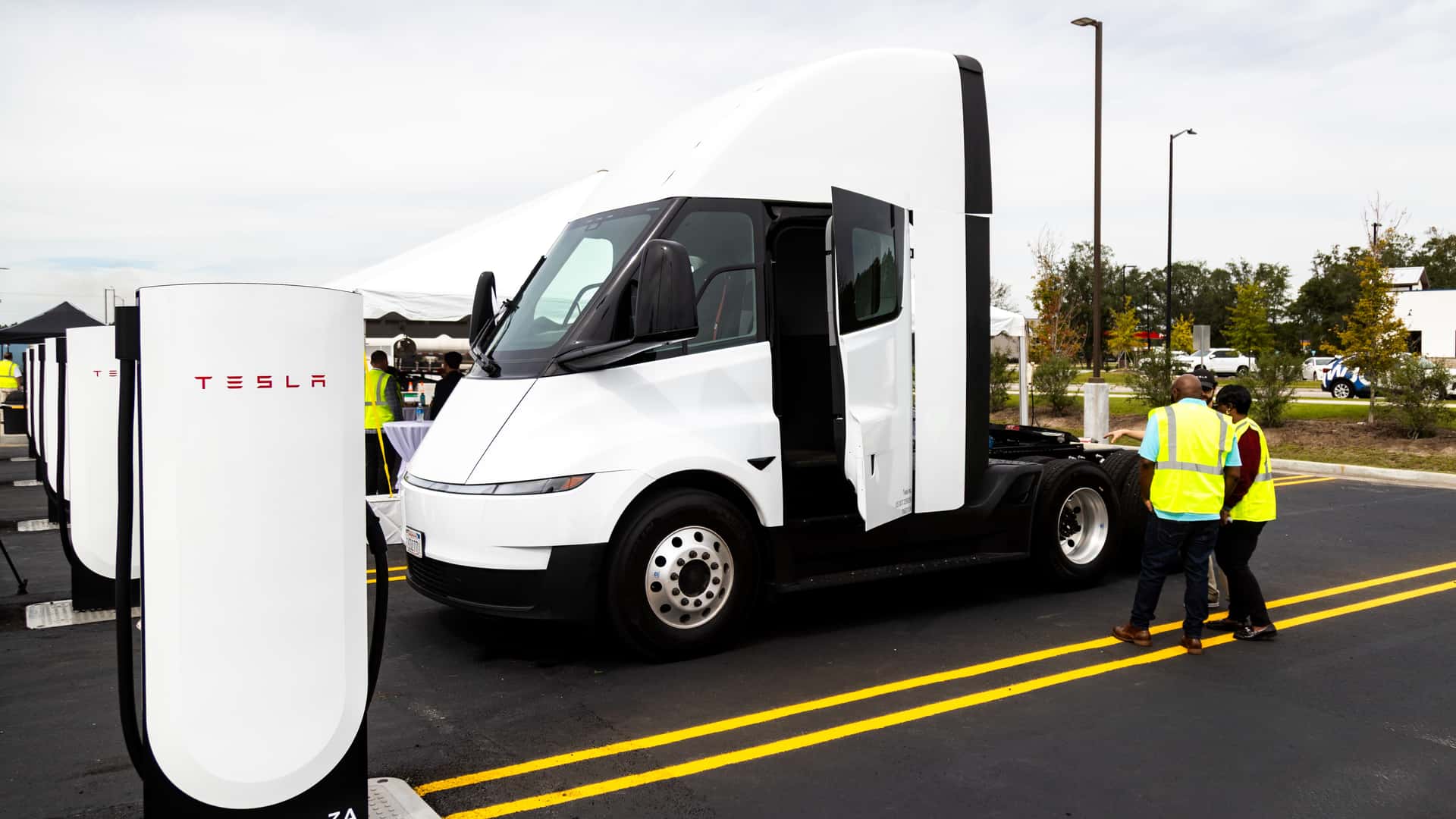
The first operational Tesla Megacharger station under this alliance is already serving electric trucks at a Pilot location in Ellabell, Georgia. This initial facility sets a precedent for future deployments, demonstrating the practical application of high-capacity charging solutions at strategic points along the nation’s logistics arteries.

Inaugural Station and Expanding Footprint
The Ellabell, Georgia, Megacharger station is equipped with six charging stalls, each engineered to deliver an impressive 1.2 megawatts (MW) of power. This capability ensures rapid energy replenishment for the Tesla Semi, crucial for maintaining tight delivery schedules typical in the freight industry. While the current design requires drivers to back into the charging bays, the deployment marks a foundational step in establishing widespread charging access.
Beyond Ellabell, Tesla has also energized another standalone Semi charging station in Conley, Georgia, though this particular site operates independently of the Pilot partnership. Notably, the Conley facility incorporates pull-through stalls, a design feature that could enhance operational efficiency for future heavy-duty electric vehicle charging sites.
Strategic Integration with Existing Trucker Hubs
The core strategy behind the Pilot-Tesla collaboration is to integrate advanced charging solutions into existing, well-established trucker hubs. Pilot’s travel centers are renowned for their comprehensive amenities, including quick-service restaurants, rest areas, and retail offerings, making them ideal stops for long-haul drivers. This integration ensures that electric truck drivers can seamlessly charge their rigs while accessing necessary services, optimizing downtime.

The plan involves deploying between four and eight Megachargers at select Pilot and Flying J locations. These sites are strategically positioned along vital freight corridors such as I-5, I-10, and other significant routes traversing California, Indiana, Nevada, and Texas. This targeted approach is designed to create a cohesive Tesla Semi Megacharger network that supports cross-country electric freight operations.
Quotes on the Future of Fleet Electrification
Addressing the significance of this initiative, Shannon Sturgil, senior vice president of alternative fuels at Pilot, underscored the company’s commitment to facilitating the transition to electric transportation. She articulated the vision behind integrating heavy-duty charging into familiar logistical touchpoints.
“Pilot is proud to bring heavy-duty charging directly to key trucking routes and pair it with the services and amenities drivers rely on,” Sturgil stated. She further added, “With these initial locations, we’re making fleet electrification a more accessible option for long-haul transportation and are excited to continue working with Tesla to move at the pace and preference of our customers.”
Expanding the Tesla Semi Megacharger Network: Current and Future Sites
The expansion of the Tesla Semi Megacharger network is progressing rapidly. Following the Ellabell launch, the second Pilot-Tesla Semi charging station is slated to commence operations at the Flying J location on E. Paige Ave. in Tulare, California. This will be swiftly followed by another Megacharger station at a Flying J in Fort Stockton, Texas, and a Pilot Travel Center in North Las Vegas, Nevada.
Currently, an additional nine sites are actively under construction, although their precise locations have not yet been publicly disclosed. This rapid build-out highlights the joint commitment of Pilot and Tesla to establishing a robust and expansive charging infrastructure to support the growing adoption of the Tesla Semi.
Charging Efficiency and Driver Experience
The technical specifications of the Megachargers are tailored for the demands of heavy-duty electric trucks. A significant advantage for electric truck drivers is the ability to achieve a 60% boost in the Tesla Semi’s state of charge with approximately a 30-minute top-up. This efficiency is critical for long-haul operations, minimizing idle time and maximizing route productivity.
Moreover, the integration of these high-power charging facilities within existing travel centers enhances the overall driver experience. The availability of amenities means drivers can utilize their mandatory rest periods for charging, turning what could be a logistical challenge into a productive stopover. This convenience is paramount for the successful integration of electric vehicles into commercial fleets.
Broader EV Charging Initiatives by Pilot
The partnership with Tesla for heavy-duty charging is part of Pilot’s broader commitment to electric vehicle infrastructure. The company has already established a substantial network of fast-charging stalls for conventional electric passenger vehicles. Through collaborations with General Motors and EVgo, Pilot has energized 1,300 fast-charging stalls across 300 locations nationwide.
Looking ahead, Pilot plans to significantly expand this network, aiming for no fewer than 2,000 chargers across 500 travel centers in the near future. This dual focus on both passenger and commercial EV charging underscores Pilot’s strategic vision for a comprehensive electrification strategy across the transportation spectrum, positioning itself at the forefront of the evolving energy landscape.
The Impact on Logistics and Sustainability
The development of a widespread Tesla Semi Megacharger network represents a critical enabler for the decarbonisation of the logistics industry. Heavy-duty trucks are major contributors to greenhouse gas emissions and urban air pollution. The shift to electric semis, supported by reliable charging infrastructure, offers a viable pathway to reduce the environmental footprint of freight transportation.
Furthermore, this initiative could inspire other truck manufacturers and charging infrastructure providers to accelerate their own deployments, fostering a more competitive and robust ecosystem for electric commercial vehicles. The collaboration between Pilot and Tesla is not just about charging stations; it is about laying the groundwork for a sustainable and efficient future for freight logistics in North America.
Frequently Asked Questions (FAQs)
What is the Tesla Semi Megacharger network?
The Tesla Semi Megacharger network is a developing infrastructure of high-power charging stations specifically designed for the Tesla Semi electric truck. It’s being built in partnership with Pilot Company across major freight corridors in the United States to support long-haul electric trucking operations.
Where is the first Tesla Megacharger station located?
The first operational Tesla Megacharger station under the Pilot partnership is located at a Pilot travel center in Ellabell, Georgia. This station features six stalls, each capable of delivering up to 1.2 megawatts of power for rapid charging.
What is the charging capacity of a Tesla Megacharger?
Each Tesla Megacharger stall can deliver up to 1.2 megawatts (MW) of power. This high-capacity charging allows the Tesla Semi to gain approximately a 60% charge in about 30 minutes, significantly reducing downtime for commercial operations.
Which states will see new Tesla Megacharger installations?
Initial Megacharger stations are planned for strategic locations along major freight corridors in states including California, Indiana, Nevada, and Texas. These sites are selected to provide critical charging access for electric heavy-duty vehicles on key transportation routes.
How does this partnership benefit electric truck drivers?
This partnership integrates Megachargers into Pilot’s existing travel centers, offering electric truck drivers access to essential amenities like restaurants and rest areas while their vehicles charge. This approach enhances convenience and optimizes the use of mandatory rest periods for efficient charging.
Is Pilot involved in charging for other electric vehicles?
Yes, Pilot Company is also heavily invested in general EV charging infrastructure. They have partnered with General Motors and EVgo to energize over 1,300 fast-charging stalls for regular electric passenger vehicles across 300 locations, with plans for further expansion.
What is the long-term impact of this Megacharger network?
The establishment of a robust Tesla Semi Megacharger network is crucial for accelerating the adoption of electric heavy-duty trucks. It supports the decarbonisation of the logistics industry, reduces emissions, and provides a viable, efficient infrastructure for the future of sustainable freight transportation.