
Key Takeaways:
- Rivian’s proprietary DC fast-charging network, the Adventure Network, has expanded by a substantial 39% over the past year.
- The network now boasts over 1,100 individual chargers across 165 locations nationwide, offering up to 300 kilowatts of power.
- Despite gaining access to Tesla Superchargers, Rivian continues its robust investment in its dedicated fast-charging infrastructure.
- In contrast, the slower Level 2 Waypoints network has experienced a considerably more modest growth rate.
- Rivian’s expanding network underscores its commitment to enhancing the electric vehicle ownership experience for its customers.
Rivian’s Strategic Push in EV Charging Infrastructure
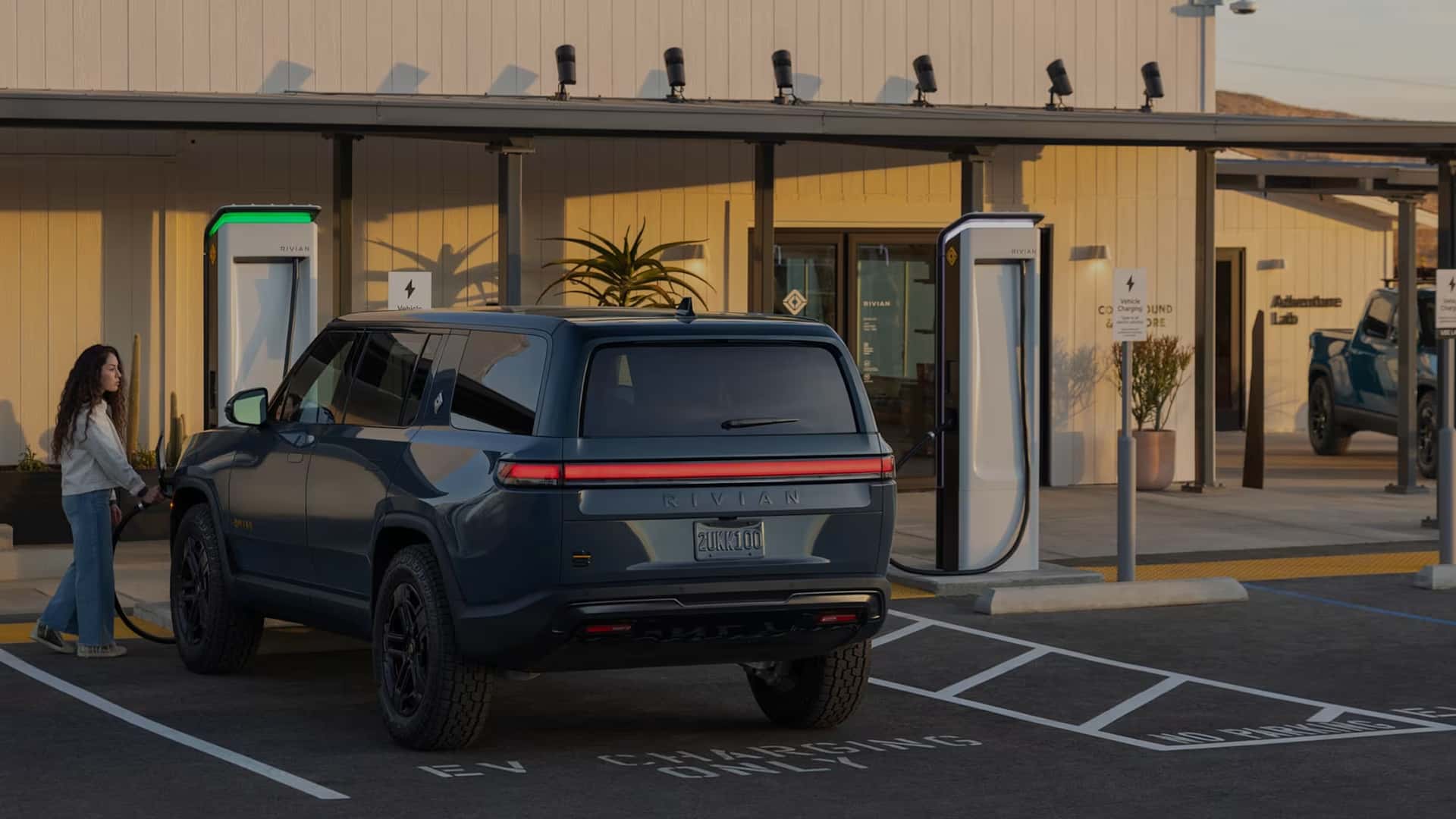
Electric vehicle manufacturer Rivian has significantly ramped up its charging capabilities, with its dedicated Adventure Network of DC fast chargers experiencing a remarkable 39% growth over the last twelve months. This expansion is a clear indicator of the company’s commitment to building a robust charging ecosystem for its vehicles, even as the broader EV landscape evolves with new access agreements.
The latest figures, highlighted in Rivian’s third-quarter earnings report, reveal a substantial increase in both the number of charging ports and locations across the United States. This investment is crucial for supporting the growing fleet of Rivian R1T pickups and R1S SUVs, enhancing convenience and reducing range anxiety for owners.
The Rivian Adventure Network: Rapid Expansion and Green Credentials
The Rivian Adventure Network (RAN) now encompasses 1,185 individual ports, each capable of delivering up to 300 kilowatts of power, marking a 39% increase compared to the third quarter of last year. These high-speed chargers are distributed across 165 locations, reflecting a 26% growth in station count over the same period.
A distinctive feature of Rivian’s DC fast chargers is their commitment to sustainability. The startup asserts that its fast chargers are powered by 100% renewable energy. This is achieved by matching every kilowatt-hour delivered through a RAN charger with renewable energy credits sourced from various clean energy generators, which could be located in different regions.
This approach highlights Rivian’s broader environmental ethos, ensuring that the energy consumed by its vehicles, even when away from home, contributes to a cleaner grid. Such initiatives are becoming increasingly important as consumers consider the full lifecycle impact of their electric vehicles.
Strategic Investment Amidst Broader Access
Rivian’s continued investment in its proprietary charging infrastructure comes at a pivotal time for the electric vehicle industry. The company’s passenger models recently gained access to Tesla’s extensive Supercharger network, thanks to the adoption of the North American Charging Standard (NACS).
Despite this significant increase in available charging points, Rivian has not slowed its efforts to expand its own purpose-built stalls. This dual strategy suggests a focus on brand-specific user experience, control over charging technology, and potentially optimizing locations that cater specifically to Rivian drivers’ travel patterns and vehicle capabilities.
Maintaining a dedicated Rivian charging network allows the company to ensure consistent service quality and integrate unique features or benefits for its customers. This control can be a key differentiator in a competitive market where charging reliability and convenience are paramount to customer satisfaction.
The Waypoints Network: A Slower, Complementary Growth Trajectory
While the Adventure Network has seen rapid expansion, Rivian’s Waypoints network of Level 2 chargers has received considerably less attention in recent company disclosures. These slower chargers, typically found at destinations such as hotels, parks, and retail centers, were not mentioned in Rivian’s latest earnings presentation, signaling a strategic prioritization towards fast charging.
Data from the Department of Energy’s Alternative Fuels Data Center (AFDC) indicates a significantly slower growth rate for the Waypoints network. Only ten 11-kilowatt chargers were installed this year, with the most recent additions going online in October. In total, Rivian operates 540 Waypoint Level 2 chargers across 208 locations throughout the U.S.
The disparity in growth rates between the two networks reflects the immediate need for robust long-distance travel support offered by DC fast chargers. Waypoints, while important for everyday charging at destinations, may be considered a secondary focus compared to the critical role of the Rivian charging network in enabling longer journeys.
Navigating the Competitive EV Charging Landscape
Despite its impressive growth, the Rivian charging network remains a smaller player when compared to established giants in the electric vehicle charging sector. Tesla, the industry leader, operates a vast network comprising over 40,000 fast charging ports at nearly 3,300 locations across the U.S. Furthermore, Tesla also provides approximately 14,000 Level 2 Destination Chargers at close to 4,000 sites.
This comparison highlights the scale of investment and infrastructure required to serve a mass market effectively. For newer entrants like Rivian, strategically building out a reliable and accessible network is vital for competitive positioning and fostering consumer confidence in electric adventure vehicles.
The proliferation of charging options, including third-party networks and the growing adoption of NACS by other manufacturers, suggests a future where EV owners will have more choices than ever before. Rivian’s strategy appears to be a hybrid approach: leveraging broader access while concurrently refining its unique brand-aligned charging experience.
The Broader Vision: Enhancing the Rivian Ownership Experience
Rivian’s continued dedication to expanding its Adventure Network underscores a broader commitment to enhancing the overall ownership experience for its customers. A reliable and convenient Rivian charging network is not just about power delivery; it’s about instilling confidence in vehicle range and journey planning.
For a company that positions itself around adventure and exploration, having dependable charging infrastructure in diverse locations is paramount. It allows owners to fully utilize their vehicles’ capabilities without constant concern about charging availability, which is a significant factor in mainstream EV adoption.
As the electric vehicle market matures, the quality and accessibility of charging infrastructure will increasingly become a key determinant of brand loyalty and market share. Rivian’s proactive steps in this domain aim to solidify its position and attract more customers to its unique vision of sustainable mobility.
FAQ Section
What is the Rivian Adventure Network (RAN)?
The Rivian Adventure Network (RAN) is Rivian’s proprietary network of DC fast chargers designed to provide rapid charging for its electric vehicles. It offers high-power charging, capable of delivering up to 300 kilowatts, primarily aimed at facilitating long-distance travel and reducing charging times for Rivian owners across the United States.
How much has the Rivian charging network grown recently?
The Rivian Adventure Network has experienced significant growth, expanding by 39% over the past 12 months. This surge has increased its capacity to 1,185 individual fast-charging ports across 165 locations nationwide, demonstrating Rivian’s ongoing commitment to building out its charging infrastructure.
Are Rivian chargers powered by renewable energy?
Yes, Rivian claims its fast chargers within the Adventure Network are powered by 100% renewable energy. This is achieved through a matching system where every kilowatt-hour dispensed at a RAN charger is offset by renewable energy credits from various clean energy sources, supporting environmental sustainability.
Why is Rivian still investing in its own network despite NACS access?
Rivian continues to invest in its own network even after gaining access to Tesla Superchargers via NACS. This strategic decision allows Rivian to maintain control over the charging experience, ensure specific brand standards, optimize locations for its customer base, and potentially integrate unique features for Rivian vehicle owners, enhancing overall satisfaction.
What is the difference between Rivian’s Adventure Network and Waypoints?
The Rivian Adventure Network consists of high-power DC fast chargers designed for quick top-ups and long-distance travel. In contrast, Waypoints are Level 2 (slower) chargers, typically found at destination spots like hotels or retail areas, intended for longer stays or overnight charging. The Adventure Network has seen much faster growth recently compared to Waypoints.
How does Rivian’s charging network compare to Tesla’s?
Rivian’s network, while growing rapidly, is considerably smaller than Tesla’s. Tesla operates over 40,000 fast-charging ports at nearly 3,300 locations, alongside 14,000 Level 2 Destination Chargers. Rivian’s 1,185 fast-charging ports highlight its position as a newer, but actively expanding, player in the EV charging infrastructure market.