
Key Takeaways
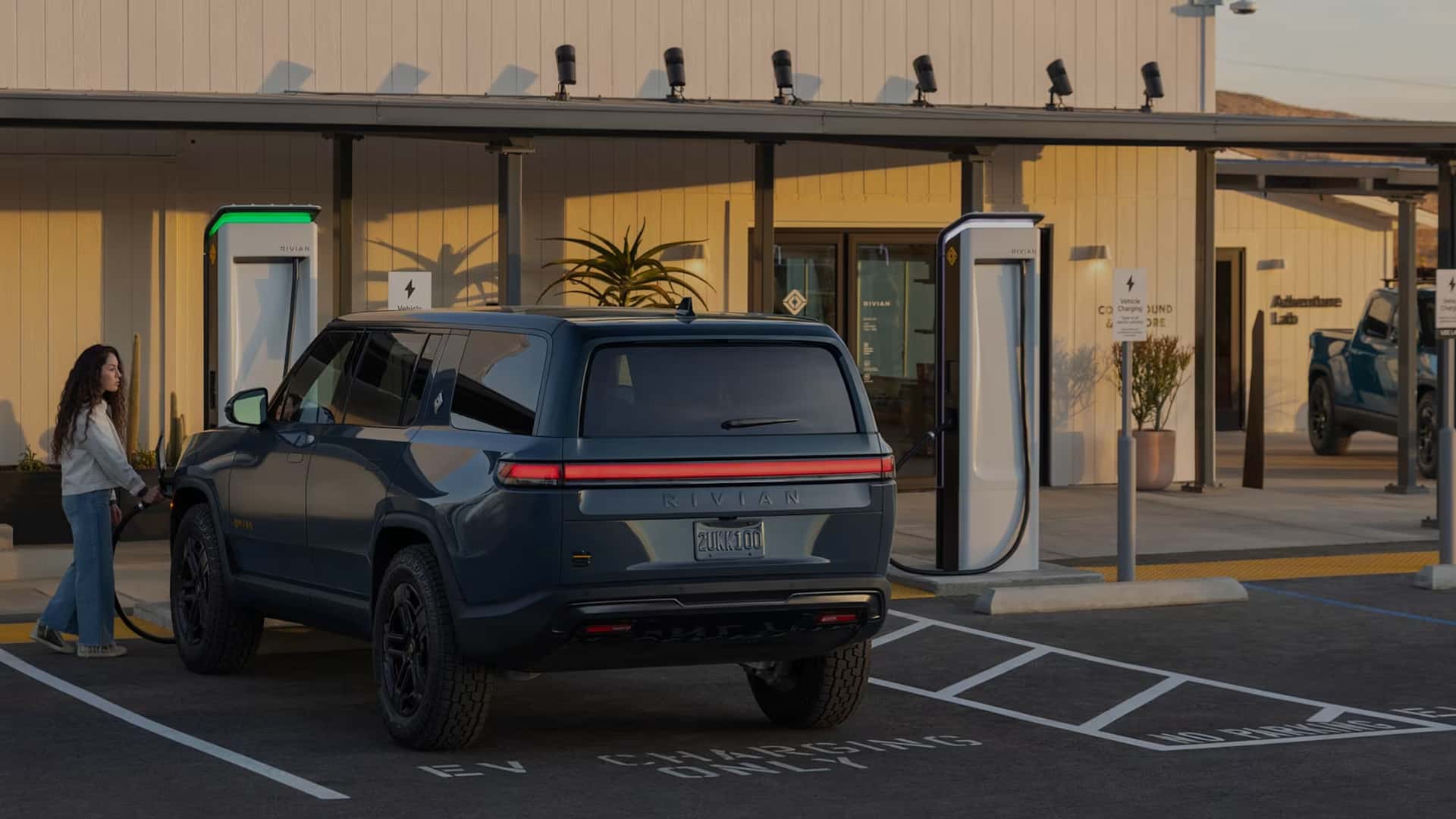
- Rivian’s proprietary DC fast charging network, the Rivian Adventure Network (RAN), expanded by 39% over the past 12 months.
- The RAN now boasts 1,185 individual chargers across 165 locations in the United States, offering up to 300 kilowatts of power.
- Despite adopting the North American Charging Standard (NACS) for access to Tesla Superchargers, Rivian continues strategic investment in its own infrastructure.
- The slower Level 2 Waypoints network saw limited growth, adding only ten 11-kilowatt chargers this year, bringing its total to 540 chargers at 208 locations.
- Rivian’s charging network remains a smaller player when compared to industry leader Tesla, which operates tens of thousands of fast chargers.
In a significant stride towards bolstering electric vehicle (EV) support, Rivian has announced a substantial expansion of its proprietary fast-charging network. The Rivian Adventure Network (RAN), critical for long-distance travel for its vehicle owners, has grown by an impressive 39% over the past year, successfully surpassing the 1,000-charger milestone.
This rapid development underscores Rivian’s commitment to building a robust EV charging infrastructure, even as the broader industry moves towards greater interoperability, including its own models gaining access to the extensive Tesla Supercharger network. The strategic investment highlights the company’s vision for a comprehensive charging ecosystem for its customers.
Rivian Adventure Network Sees Robust Expansion
Rivian’s third-quarter earnings report detailed the remarkable growth of its direct current (DC) fast-charging capabilities. The company’s dedicated EV fast charging network now features a total of 1,185 ports, each capable of delivering up to 300 kilowatts (kW) of power, ensuring quick and efficient recharges for its R1T and R1S vehicles.
This figure represents a substantial 39% increase in port count when compared to the corresponding period last year. Concurrently, the number of Rivian Adventure Network stations has climbed to 165, marking a 26% rise from the figures reported at the end of Q3 2025, according to company statements.
A distinctive feature of the Rivian Adventure Network is its commitment to sustainability. The startup asserts that its fast chargers are powered by 100% renewable energy. This often translates to a system where every kilowatt-hour (kWh) dispensed through a RAN charger is matched with renewable energy credits sourced from solar or wind farms, potentially operating in different geographical locations.
Strategic Investment Amidst Industry Shifts in EV Charging Infrastructure
Rivian’s continued investment in its own charging infrastructure, featuring purpose-built stalls, is particularly noteworthy given the evolving landscape of EV charging. The company’s passenger models now have access to a vast array of public DC chargers across the U.S., including the extensive network of North American Charging Standard (NACS)-equipped Tesla Superchargers.
Despite this expanded access, Rivian’s decision to press forward with its proprietary network reflects a broader strategy. Automakers often invest in their own networks to provide a differentiated customer experience, ensure charging reliability, and maintain control over the brand’s charging ecosystem. This approach can be vital for brand loyalty and addressing early adopter range anxiety.
The strategic imperative behind maintaining a dedicated network extends beyond mere availability. It ensures that Rivian owners experience consistent service, streamlined payment processes, and optimal charging performance tailored specifically for their vehicles, thereby enhancing the overall ownership experience.
The Status of Rivian Waypoints: A Slower Growth Trajectory
While the Rivian Adventure Network has been a focal point of recent updates, the company’s Level 2 Waypoints network has received considerably less attention. These slower chargers, designed for destinations like hotels, restaurants, and workplaces where vehicles can charge over several hours, were conspicuously absent from recent company presentations and documents.
Data from the Department of Energy’s Alternative Fuels Data Center (AFDC) indicates a significantly slower growth rate for the Waypoints network compared to its fast-charging counterpart. This year, Rivian installed only ten new 11-kilowatt (kW) Level 2 chargers, with the most recent pair activated in October.
In total, Rivian currently operates 540 Waypoint Level 2 chargers spread across 208 locations throughout the U.S. While less glamorous than the high-speed DC fast chargers, Level 2 stations play a crucial role in providing convenient, everyday charging solutions for EV owners, often serving as the primary charging method for many drivers.
Comparative Landscape of EV Charging Networks
Despite its impressive growth, Rivian remains a relatively nascent player in the burgeoning and highly competitive electric vehicle charging industry. The scale of its network, while expanding, is modest when compared to established giants in the sector.
For instance, Tesla, a pioneer in EV charging infrastructure, boasts a formidable network of over 40,000 fast charging ports distributed across nearly 3,300 locations within the United States alone. In addition to its Supercharger network, Tesla also operates approximately 14,000 Level 2 Destination Chargers at close to 4,000 sites, demonstrating a comprehensive dual-tier approach to charging solutions.
This comparison highlights the significant investment and infrastructure build-out required to support widespread EV adoption. As more automakers transition to electric powertrains, the demand for robust, reliable, and accessible charging solutions will only intensify, making network expansion a critical area of focus for all industry participants.
The Broader Impact on Electric Vehicle Adoption
The expansion of EV charging infrastructure, whether proprietary like Rivian’s or part of larger public networks, is paramount for accelerating electric vehicle adoption. A common concern among prospective EV buyers is ‘range anxiety’ and the availability of convenient charging options, especially for long journeys.
Investments by companies like Rivian, alongside government initiatives and partnerships among automakers, are collectively working to alleviate these concerns. A denser and more reliable network of DC fast chargers enables seamless travel, making electric vehicles a more viable and attractive option for a wider consumer base.
Furthermore, the focus on renewable energy sourcing for these charging stations contributes to the overall environmental benefits of electric mobility, aligning with global efforts to decarbonize the transportation sector. The increasing sophistication of these networks, including smart charging capabilities and improved user interfaces, promises to further enhance the EV ownership experience in the years to come.
Challenges and Future Outlook for EV Charging
The electric vehicle charging landscape is dynamic, presenting both opportunities and challenges. While the overall growth in public charging ports is encouraging, issues such as charger reliability, payment system interoperability, and equitable distribution of charging stations remain key areas for improvement.
As the market matures, collaboration between automakers, energy providers, and technology companies will be crucial to standardize charging protocols, improve user experience, and ensure grid stability. The eventual widespread adoption of NACS, coupled with individual brand investments like Rivian’s, suggests a future where charging options are plentiful and seamless for EV drivers.
Rivian’s aggressive expansion of its Adventure Network, even while embracing broader industry standards, signals a commitment to cultivating a premium and reliable charging experience for its customers. This dual approach will likely become a benchmark for other automotive manufacturers navigating the complexities of the rapidly evolving EV market.
FAQ Section
What is the Rivian Adventure Network (RAN)?
The Rivian Adventure Network (RAN) is Rivian’s proprietary DC fast charging network designed to provide rapid charging for its electric vehicles. It is strategically placed along popular routes and near outdoor adventure locations to support Rivian owners’ travel needs, offering high-power charging for quick turnarounds.
How much has Rivian’s fast-charging network grown recently?
Rivian’s DC fast charging network, the Rivian Adventure Network, has expanded by a significant 39% over the last 12 months. This growth has pushed the total number of individual chargers beyond the 1,000 mark, indicating a robust investment in its dedicated EV charging infrastructure.
What is the power output of Rivian Adventure Network chargers?
Chargers within the Rivian Adventure Network are capable of delivering up to 300 kilowatts (kW) of power. This high-power output ensures that Rivian vehicles can achieve substantial range additions in a relatively short charging session, making long-distance travel more convenient for owners.
Does Rivian use renewable energy for its charging stations?
Yes, Rivian states that its fast chargers are powered by 100% renewable energy. This typically means that for every kilowatt-hour of electricity consumed by a RAN charger, an equivalent amount of renewable energy is generated and accounted for through various mechanisms, such as purchasing renewable energy credits.
What are Rivian Waypoints, and how are they expanding?
Rivian Waypoints are Level 2 (slower) chargers, typically offering 11-kilowatt power, designed for destination charging where vehicles can be parked for longer durations. Their expansion has been considerably slower than the RAN, with only ten new chargers installed this year, bringing the total to 540 across 208 locations in the U.S.
How does Rivian’s charging network compare to Tesla’s Supercharger network?
Rivian’s charging network is currently much smaller than Tesla’s. Tesla operates over 40,000 fast charging ports at nearly 3,300 locations and an additional 14,000 Level 2 Destination Chargers at approximately 4,000 sites in the U.S. Rivian’s network, while growing, has 1,185 fast chargers and 540 Level 2 chargers.