
Key Takeaways:
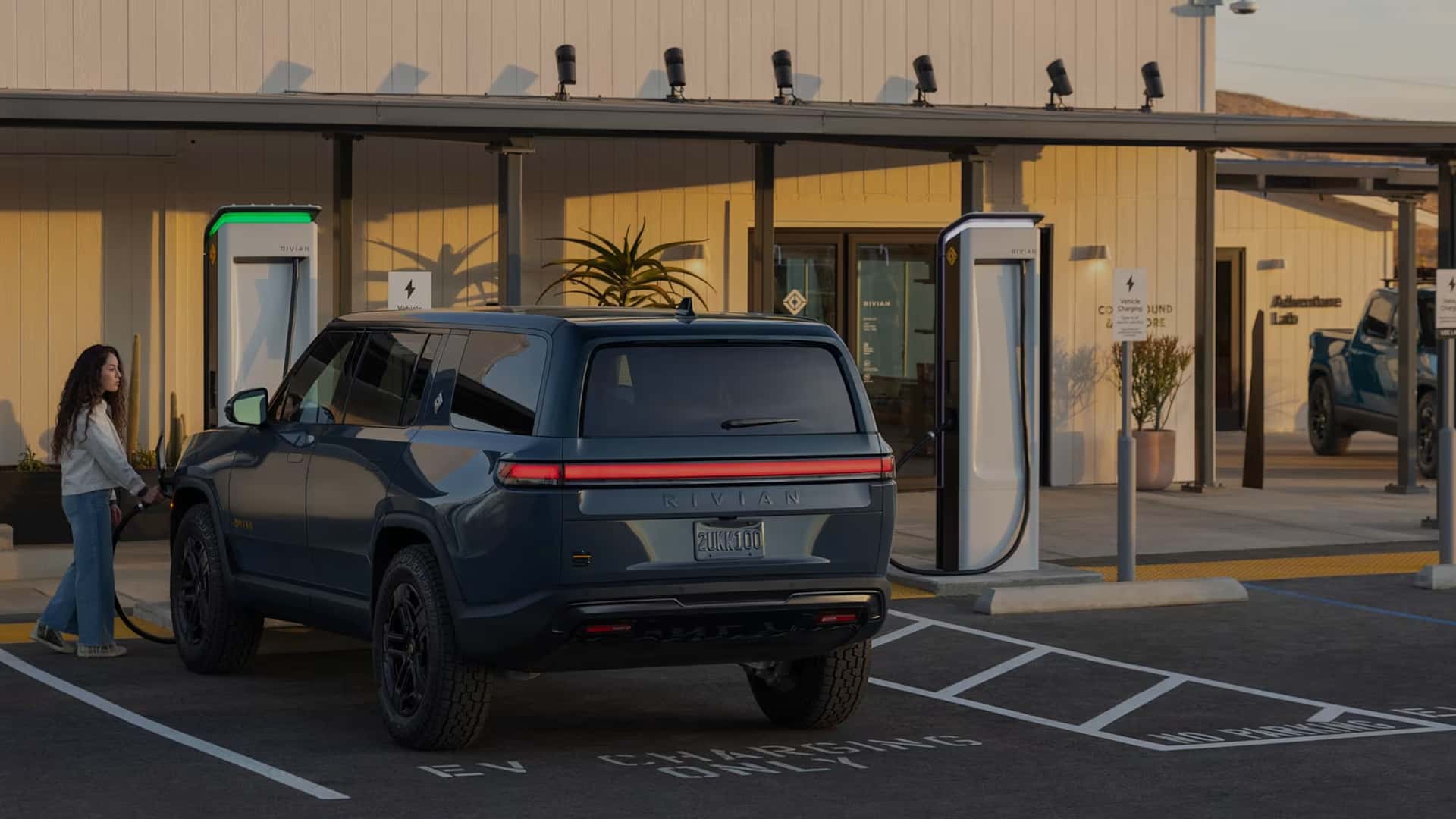
- Significant Growth: Rivian’s Adventure Network (RAN) of DC fast chargers expanded by 39% over the past 12 months, now boasting 1,185 individual charging ports across 165 locations in the United States.
- High-Power Delivery: These RAN chargers offer up to 300 kilowatts of power, crucial for rapid electric vehicle charging.
- Renewable Energy Commitment: All RAN chargers are claimed to be powered by 100% renewable energy, achieved through matching energy consumption with renewable sources.
- Continued Investment: Rivian is actively investing in its proprietary charging infrastructure despite its vehicles gaining access to Tesla Superchargers via the North American Charging Standard (NACS).
- Slow Waypoint Growth: In contrast to the RAN, Rivian’s Level 2 Waypoint chargers have seen significantly slower expansion, with only ten new 11-kilowatt units added this year, bringing the total to 540 chargers across 208 locations.
- Industry Context: Despite impressive growth, Rivian remains a relatively small player in the broader EV charging landscape, particularly when compared to market leader Tesla’s extensive network.
Rivian, the American electric vehicle manufacturer, has significantly bolstered its charging infrastructure, with its dedicated DC fast-charging network, the Rivian Adventure Network (RAN), experiencing a notable expansion of nearly 40% over the past year. This strategic investment underscores the company’s commitment to enhancing the charging experience for its owners, even as the broader electric vehicle (EV) landscape rapidly evolves.
The growth comes at a critical juncture for EV adoption, highlighting Rivian’s proactive approach to addressing range anxiety and supporting long-distance travel capabilities for its R1T, R1S, and future electric vehicle models. This expansion is a key component of building a robust and reliable ecosystem around its vehicles.
Significant Expansion of Rivian Adventure Network
According to Rivian’s latest third-quarter earnings report, its EV fast charging network has reached a substantial milestone. The network now features an impressive 1,185 individual charging ports, each capable of delivering up to 300 kilowatts (kW) of power. This represents a robust 39% increase in port count when compared to the figures from the third quarter of the previous year.
Furthermore, the number of active charging stations within the Rivian Adventure Network has also seen considerable growth, expanding to 165 locations across the United States. This marks a 26% increase in station count compared to the figures reported at the end of Q3 2025.
Commitment to Sustainable Power
A distinctive feature of Rivian’s charging philosophy is its commitment to sustainability. The startup proudly asserts that its fast chargers are powered by 100% renewable energy. While this does not imply that every electron originates directly from an adjacent solar array or wind farm, it signifies a broader environmental pledge.
Under this model, every kilowatt-hour (kWh) delivered through a Rivian Adventure Network (RAN) charger is meticulously matched with renewable energy credits (RECs). These credits ensure that for every unit of electricity consumed by a Rivian vehicle, an equivalent amount of clean energy has been generated and fed into the grid from renewable sources, potentially operating in diverse geographical locations.
Strategic Investment Amidst Broader Access
Rivian’s unwavering investment in its proprietary charging infrastructure stands out, especially given that its passenger vehicles now possess access to tens of thousands of public DC chargers across the U.S. This includes a significant number of Tesla Superchargers, which are increasingly adopting the North American Charging Standard (NACS) – a standard Rivian has also committed to integrating.
The decision to continue developing a purpose-built charging network, complete with dedicated stalls and a distinctive brand experience, reflects a strategic choice. It aims to offer Rivian owners a consistent and premium charging experience, differentiating it from the more generalized public charging options. This approach allows Rivian to maintain control over the reliability, user interface, and overall quality of its charging services, which are critical factors in customer satisfaction and brand loyalty within the rapidly expanding EV market.
The integration of NACS-equipped Tesla Superchargers provides Rivian drivers with expanded access and convenience. However, maintaining a proprietary network like Rivian’s Charging Network ensures a fallback and a premium option, particularly in less-served or adventure-focused destinations where RAN stations are strategically located.
The Stagnation of Waypoint Chargers
While the Rivian Adventure Network has received significant attention and investment, the company’s Level 2 Waypoint chargers present a contrasting picture. These slower charging units, typically found at destinations where vehicles are parked for longer durations, have seen considerably less emphasis in Rivian’s recent communications and development efforts.
The Waypoints network, designed for overnight charging or extended stops, was conspicuously absent from mentions in the company’s most recent financial documents and presentations. This suggests a shift in focus towards the faster DC charging infrastructure, which directly addresses immediate charging needs for longer journeys.
Data from the Department of Energy’s Alternative Fuels Data Center (AFDC) corroborates this trend of slower growth. The data indicates that Rivian installed merely ten 11-kilowatt (kW) Waypoint chargers throughout the current year, with the latest pair becoming operational in October. In total, Rivian operates 540 Waypoint Level 2 chargers spread across 208 locations within the U.S.
This disparity in growth rates between the DC fast chargers and the Level 2 Waypoints highlights Rivian’s strategic prioritization of rapid charging solutions, crucial for alleviating range anxiety and facilitating long-distance travel, over the slower destination charging options.
Rivian’s Position in the Broader EV Charging Landscape
Despite the commendable growth of Rivian’s Charging Network, the California-based startup still operates as a relatively modest player within the expansive and fiercely competitive electric vehicle charging industry. The landscape is dominated by established giants and rapidly expanding networks, making market penetration a significant challenge for new entrants.
To contextualize Rivian’s network scale, a comparison with industry leader Tesla is illustrative. Tesla, an early pioneer in EV infrastructure, boasts a vastly larger network, comprising over 40,000 fast-charging ports across nearly 3,300 locations in the U.S. In addition to its Supercharger network, Tesla also operates an extensive network of approximately 14,000 Level 2 Destination Chargers at almost 4,000 sites.
This significant difference underscores the monumental task ahead for Rivian as it continues to build out its infrastructure. While Rivian’s focused approach caters specifically to its adventure-oriented clientele, the sheer scale of Tesla’s network provides a significant competitive advantage in terms of accessibility and ubiquity. The ongoing evolution of the EV charging ecosystem, with various players like Electrify America and ChargePoint also expanding rapidly, means that Rivian’s sustained investment and strategic placement of its charging assets will be crucial for its long-term success and customer retention.
The Future of Rivian’s Charging Strategy
The latest figures demonstrate Rivian’s steadfast commitment to enhancing its proprietary fast-charging capabilities, a move that is vital for supporting its growing fleet of electric trucks and SUVs. This dedication ensures that Rivian owners have reliable access to high-speed charging, particularly in remote or scenic locations that align with the brand’s adventure-lifestyle ethos.
While the integration of NACS access offers a significant boon by expanding available charging options, Rivian’s continued investment in its own network signifies a strategy to control the end-to-end customer experience. The future trajectory of Rivian’s Charging Network will likely involve a balance between expanding its proprietary high-speed infrastructure and leveraging universal charging standards to provide maximum convenience for its users.
As the EV market continues its rapid expansion, the robustness and accessibility of Rivian’s Charging Network will remain a critical differentiator and a cornerstone of its brand promise, driving confidence and convenience for electric vehicle adventurers across the nation.
Frequently Asked Questions (FAQ)
What is the Rivian Adventure Network (RAN)?
The Rivian Adventure Network (RAN) is Rivian’s proprietary network of DC fast chargers designed specifically for its electric vehicles. It provides high-speed charging solutions, primarily for long-distance travel and adventure-focused routes, ensuring Rivian owners have reliable access to power.
How much has Rivian’s Charging Network grown recently?
Rivian’s Adventure Network of DC fast chargers has expanded by a significant 39% in terms of ports over the last 12 months. The number of charging stations has also grown by 26% to 165 locations, now totaling 1,185 individual ports.
Are Rivian’s fast chargers powered by renewable energy?
Yes, Rivian claims its fast chargers within the Adventure Network are powered by 100% renewable energy. This is achieved by matching every kilowatt-hour delivered through a RAN charger with renewable energy credits generated from clean sources.
Why is Rivian still investing in its own network if its vehicles can use Tesla Superchargers?
Rivian continues to invest in its proprietary network to maintain control over the charging experience, ensure reliability, and offer a consistent brand-aligned service. While access to Tesla Superchargers via NACS expands options, the RAN provides a dedicated and often strategically located infrastructure for its customers.
What are Rivian Waypoint chargers, and how are they expanding?
Rivian Waypoint chargers are Level 2 (slower) chargers designed for destination charging, such as at hotels or parks, where vehicles are typically parked for longer periods. Their growth has been significantly slower compared to the RAN, with only ten new 11-kilowatt units installed this year, bringing the total to 540 chargers at 208 locations.
How does Rivian’s charging network compare to Tesla’s?
Rivian’s network, while growing rapidly, is considerably smaller than Tesla’s. Tesla operates over 40,000 fast-charging ports across nearly 3,300 locations in the U.S., in addition to 14,000 Level 2 Destination Chargers. Rivian’s 1,185 fast-charging ports indicate it is a newer, albeit fast-growing, player.